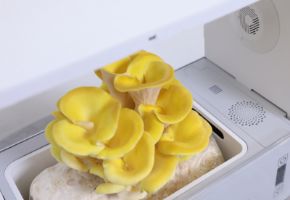
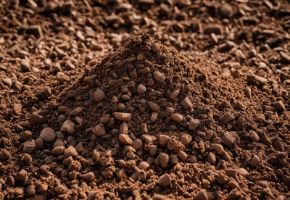
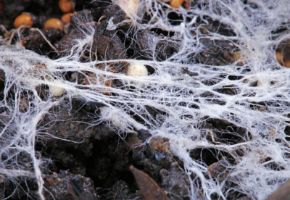
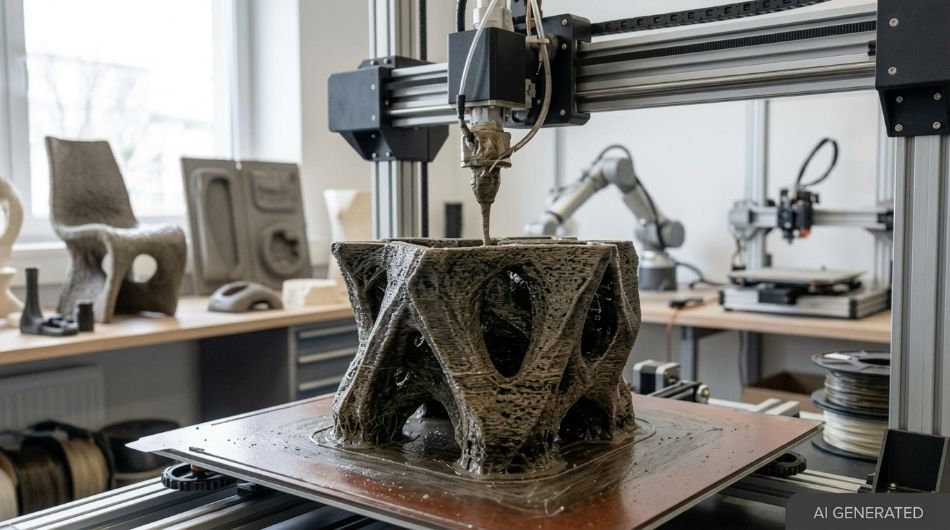
Per oltre quattro decenni la stampa 3D ha lavorato quasi esclusivamente con materiali inerti: polimeri derivati dal petrolio, polveri metalliche, resine fotopolimerizzabili, ceramiche tecniche. Oggi qualcosa di profondamente diverso sta uscendo dai laboratori di biotecnologia e dai dipartimenti di ingegneria dei materiali di mezzo mondo. L'ugello di una stampante non deposita più soltanto plastica fusa, ma una pasta viva, biancastra, densa come un impasto per pane, popolata di ife fungine che continuano a crescere dopo la deposizione. È l'inizio di una manifattura che non costruisce oggetti, ma li coltiva.
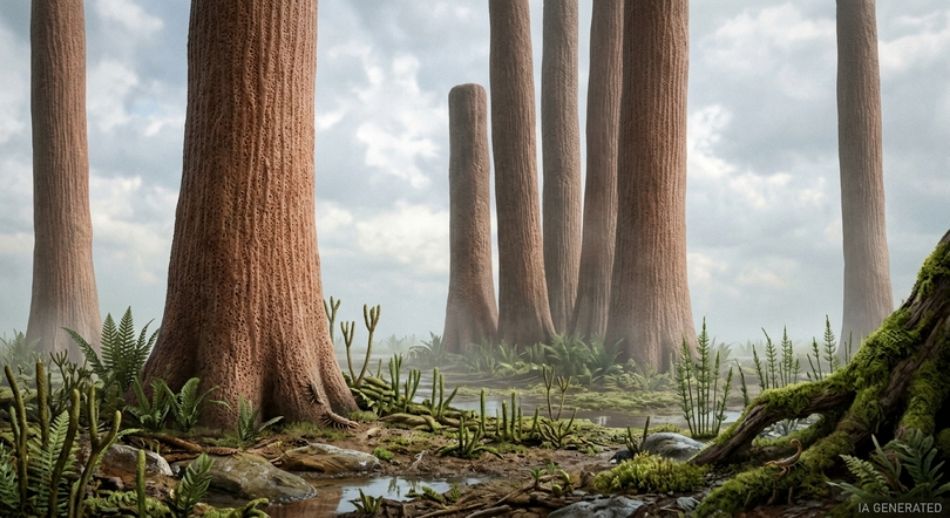
Imagine walking on a coastal plain in the late Silurian, about 420 million years ago. There are no trees. There are no forests, no birdsong, not a single air-breathing vertebrate. The vegetation surrounding you barely reaches your ankles: tiny primitive vascular plants, carpets of bryophytes, crusts of algae and cyanobacteria colonizing the wet mud along the waterways. And then, every now and then, on the horizon, something absurd looms: a smooth, tapered, dark column, as wide at the base as the trunk of a centuries-old oak and up to eight meters tall. It has no branches and no leaves. It has no visible roots. It's simply there, a biological monolith towering thirty or forty times higher than any other terrestrial life form on the planet. That monolith is called Prototaxites, and it is probably the most baffling, most debated, and most fascinating Prototaxites fossil in the history of paleobotany.
Guttation in mushrooms is a fascinating spectacle that transforms the mycelium and fruiting bodies into seemingly sentient organisms, capable of "crying." This phenomenon, known as guttation, isn't a tear of sadness, but a sophisticated physiological mechanism that reveals the intimate connection between the fungal kingdom and its surrounding environment. For the experienced grower, mycology enthusiast, or researcher, guttation is a signal, a warning light indicating the health of the mycelium, the efficiency of the substrate, and the microclimatic conditions.