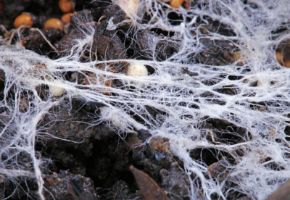
Where there is no deforestation, we walk through a forest and our gaze is captivated by the majesty of a centuries-old beech tree, the rustling of leaves, the flight of a bird. However, we rarely stop to think about what lives beneath our feet, just a few centimeters below, in a world of intricate connections that literally sustains the life we see above ground. This mostly invisible kingdom is the kingdom of fungi, a complex and fragile ecosystem that is suffering a mortal blow from logging. While we rightly worry about the loss of trees and their associated fauna, an entire universe of mycelia, symbioses, and essential biochemical processes is silently disappearing, with consequences we are only beginning to understand. This article aims to bring this silent crisis to light, exploring in depth the intricate relationships between trees and fungi, the mechanisms through which deforestation disrupts these networks, and the ripple effects throughout the forest ecosystem and beyond.
Urbanization represents one of the most significant anthropogenic landscape transformations, with profound and long-lasting effects on natural ecosystems. While public attention often focuses on the consequences for higher flora and fauna, fungal communities, essential components of terrestrial ecosystems, undergo equally significant but less visible alterations. This article explores in depth how urbanization processes affect local fungal biodiversity, analyzing changes in species composition, reductions in fungal richness, and the ecological implications of these transformations. Through scientific data, case studies, and statistical analyses, we seek to understand the complex dynamics governing fungal communities in urban and peri-urban environments. Fungi play fundamental ecological roles: as decomposers, they recycle essential nutrients; as mycorrhizal symbionts, they facilitate the uptake of water and minerals for plants; and as pathogens, they regulate plant populations. Their sensitivity to environmental changes makes them excellent bioindicators of ecosystem health. Understanding how urbanization modifies these communities is therefore not only a question of mycological interest, but has broader implications for the management of urban ecosystems and the conservation of biodiversity in human-influenced contexts.
Italy, with its extraordinary variety of forest ecosystems, represents one of the richest and most interesting mycological basins in Europe. The search for fungal richness is not just a passion for thousands of seekers, but a true ecological study that allows us to understand the health of our forests. This article aims to explore, in an extremely detailed and technical manner, the concept of richness in Italian mycological forests, providing a mental and scientific map of the most productive fungal habitats in Italy. We will analyze the biogeographic, climatic, and pedological factors that make certain forests with rich mushroom populations true sanctuaries of biodiversity, supporting each assertion with data, tables, and specific studies. An indispensable guide for mycologists, mycologists, and enthusiasts who wish to deepen their knowledge of the fungal kingdom in our country.