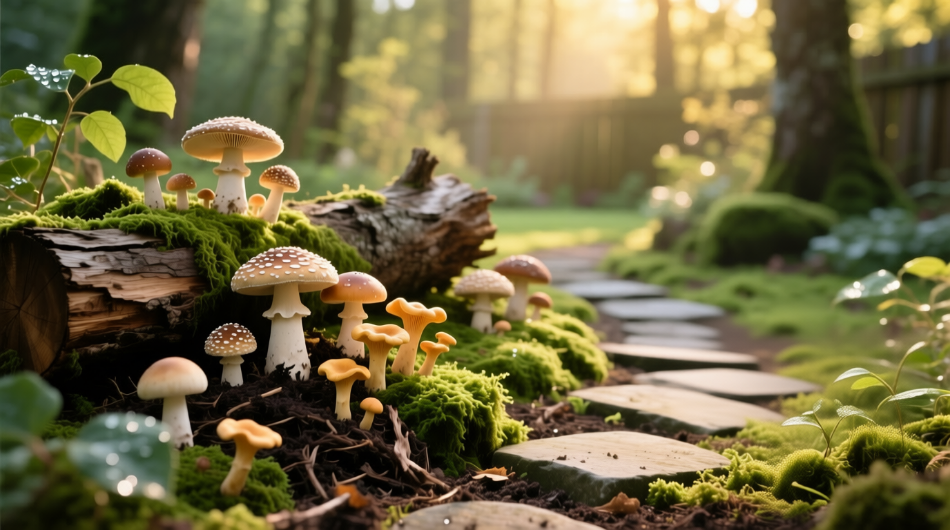
Creating a mushroom-friendly garden represents one of the most fascinating frontiers of applied mycology. This technical article aims to guide enthusiasts, botanists, and mycologists through the complex processes that transform a simple green space into a productive and sustainable fungal ecosystem. Through an in-depth analysis of morphological characteristics, preferred habitats, and the most advanced mycoculture techniques, we will explore how to optimize every aspect of your garden to encourage the spontaneous and controlled growth of edible and beneficial fungal species.
Welcome to this in-depth ecological dictionary for all mycology enthusiasts, from casual foragers to expert botanists, from mushroom cultivators to academic researchers. In this comprehensive guide, we explore the complex world of ecological relationships that govern the life of fungi, with particular attention to the environmental factors that determine their presence, distribution, and development. Through a systematic and detailed approach, we analyze the key ecological concepts that every mycologist should master to fully understand the wonderful kingdom of fungi and their intricate connections with the environment.
Where there is no deforestation, we walk through a forest and our gaze is captivated by the majesty of a centuries-old beech tree, the rustling of leaves, the flight of a bird. However, we rarely stop to think about what lives beneath our feet, just a few centimeters below, in a world of intricate connections that literally sustains the life we see above ground. This mostly invisible kingdom is the kingdom of fungi, a complex and fragile ecosystem that is suffering a mortal blow from logging. While we rightly worry about the loss of trees and their associated fauna, an entire universe of mycelia, symbioses, and essential biochemical processes is silently disappearing, with consequences we are only beginning to understand. This article aims to bring this silent crisis to light, exploring in depth the intricate relationships between trees and fungi, the mechanisms through which deforestation disrupts these networks, and the ripple effects throughout the forest ecosystem and beyond.