



Italy’s historic gardens are not only open-air museums of architecture, art, and botany: they are living ecosystems, where the mushrooms of historic gardens represent an invisible bridge between cultural and natural heritage. In this article we will explore, region by region, how mushrooms have adapted among monuments, villas, parks, and monumental trees, why this phenomenon should attract the attention of enthusiasts, growers, researchers, and hobbyists, and how their presence is an indicator of environmental health and historical memory.
A fascinating journey that combines mycology, art history, and conservation, with references to products and solutions for enthusiasts.
In this article...
An invisible heritage
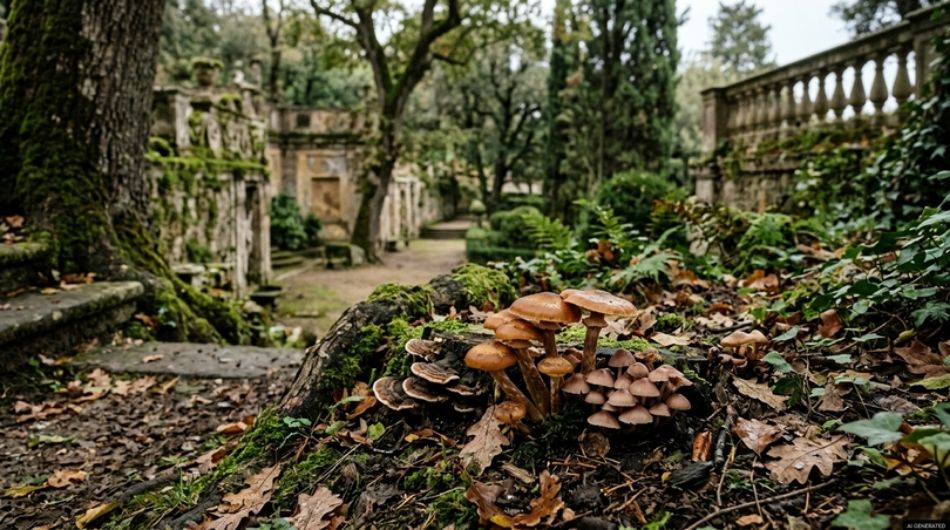
When people think of Italy’s historic gardens, the collective imagination runs to geometric hedges, Baroque fountains, statues, and tree-lined avenues. Yet beneath the soil surface and among the bark of centuries-old trees lies an equally precious universe: that of the mushrooms of historic gardens. These organisms, often ignored by visitors, are an integral part of cultural and natural heritage, because they tell the story of the place through their symbioses, their ability to adapt, and their silent presence. The mushrooms of historic gardens are not mere occasional extras: they are indicators of biodiversity, soil quality, and ecological continuity over time.
In Italy, a country with the highest concentration of UNESCO sites and historic residences, mushrooms have colonized very different environments: from the sessile oaks of Monte Sole Historical Park to the pinewoods of the Royal Palace of Caserta, from Sardinian castles to Piedmontese royal parks. Understanding how the mushrooms of historic gardens have adapted means reading an unpublished chapter in the history of the Italian landscape, combining mycological, historical, and agronomic expertise. This article aims to guide the reader on a detailed journey, with data, regional examples, and references to external resources, to shed light on a fascinating and still little-publicized topic.
Why the mushrooms of historic gardens matter to everyone
Enthusiasts, growers, researchers, and hobbyists: a cross-cutting interest
The mushrooms of historic gardens represent a crossroads of interests. For mycology enthusiasts, they offer the opportunity to observe rare species in accessible and documented contexts; for growers, they suggest techniques of symbiosis and reproduction of natural environments; for researchers, they constitute an open-air laboratory for studying the evolution of mycorrhizae and the impact of climate change; for hobbyists, finally, they are an incentive to explore the area with new eyes. The presence of mushrooms in historic gardens is not an isolated case, but a phenomenon that deserves scientific and popular attention.
One statistic above all: according to surveys conducted in urban and historic parks, over 40% of rare or vulnerable fungal species in Italy has been reported at least once within gardens, villas, or monumental parks. This is because centuries-old trees, with their deep roots and hollow trunks, create stable microhabitats over time that are difficult to replicate in intensively managed forest environments.
An indicator of environmental health and cultural value
The presence of mushrooms of historic gardens is also an indicator of ecosystem health. Species such as Alessioporus ichnusanus or Amanita dryophila are considered sensitive to pollution and soil compaction; their presence signals a well-preserved environment. In addition, mushrooms contribute to the decomposition of organic matter and the nutrient cycle, keeping fertile the soil on which monuments and centuries-old plants stand. Protecting the mushrooms of historic gardens means protecting cultural heritage itself, because the stability of monumental trees also depends on their fungal symbioses.
Region by region: mushrooms among monuments
Northern Italy: Piedmont, Lombardy, Veneto, Friuli-Venezia Giulia
In Piedmont, the Royal Parks of Turin (Parco della Mandria, Reggia di Venaria) host a variety of mushrooms linked to lowland woods and tree-lined avenues. Mycological training initiatives, such as those organized at Cascina Brero, testify to the interest in the mushrooms of historic gardens in monumental contexts[reference:0]. In Monte Sole Historical Park (Emilia-Romagna, but close to Piedmont), a monumental sessile oak has been verified in symbiosis with two rare species: Alessioporus ichnusanus (Vulnerable according to IUCN) and Amanita dryophila. This example demonstrates how a single historic tree can be a hotspot of fungal biodiversity.
In Lombardy, the Ticino Park, Europe’s oldest river park and a UNESCO Biosphere Reserve, hosts over 6,000 species of plants, animals, and fungi. Collection is regulated, but the presence of mushrooms of historic gardens is monitored and enhanced. In Veneto and Friuli-Venezia Giulia, Venetian villas and historic parks (such as those along the Riviera del Brenta) offer shady and humid environments ideal for saprophytic and mycorrhizal fungi, although specific research is less documented.
Central Italy: Tuscany, Lazio, Umbria, Marche
In Tuscany, the gardens of the Medici villas and the historic parks of Lucca (such as the Botanical Garden) have been the subject of studies on fungi associated with centuries-old chestnut trees. A 2023 event focused on the “Renaio chestnut trees and their mushrooms,” emphasizing the link between monumental trees and mycology. In Lazio, Villa Ada in Rome was the subject of a publication dedicated to the park’s mushrooms, with symbiotic, parasitic, and saprophytic species, including Hypochnella violacea, which is very rare and should be preserved. This demonstrates that even large historic urban parks can harbor species of high conservation value.
In Umbria and Marche, the historic gardens of noble residences and medieval villages host mushrooms linked to oaks and holm oaks, often little studied but of great interest to researchers. The fragmentation of habitats makes these gardens true “refuges” for the mushrooms of historic gardens.
South and Islands: Campania, Apulia, Sardinia, Sicily
In Campania, the English Garden of the Royal Palace of Caserta has been the subject of specific studies on mushrooms, as reported in mycological publications. The presence of exotic and centuries-old trees creates unique ecological niches. In Sardinia, the Colle San Michele Park in Cagliari has been surveyed for its fungal species: from 2012 to 2022 numerous taxa were collected and studied, including Agaricales, Boletales, and Russulales, in a historic context dominated by a medieval castle. This is a striking example of how the mushrooms of historic gardens intertwine with architectural history.
In Apulia, the historic gardens of masserie and trulli, as well as archaeological parks, host mushrooms linked to olive and oak trees, although systematic research is still limited. In Sicily, the gardens of Baroque villas and the urban parks of Palermo and Catania represent potential reservoirs of fungal biodiversity, still entirely to be explored.
Rare species and symbiosis with monumental trees
Alessioporus ichnusanus: a vulnerable treasure
Alessioporus ichnusanus is a mycorrhizal fungal species associated with oaks (especially sessile oaks). Its presence has been documented in symbiosis with a monumental sessile oak in Monte Sole Park, where it is classified as “Vulnerable” on the IUCN Red List. This mushroom is a perfect example of how the mushrooms of historic gardens can be species of high conservation value, whose survival depends on the protection of centuries-old trees and their habitats.
Amanita dryophila and Hypochnella violacea
Amanita dryophila is another species associated with oaks, reported on the same monumental sessile oak in Monte Sole. Hypochnella violacea, on the other hand, is a rare species that develops on oak stumps and was found at Villa Ada in Rome[reference:8]. These species demonstrate that historic gardens can act as “living archives” of fungal biodiversity, often better preserved than forest areas subject to logging and disturbance.
Saprophytic and parasitic fungi: the ecological role
In addition to mycorrhizal species, historic gardens host saprophytic fungi (which decompose organic matter) and parasitic fungi (which attack weakened trees). For example, Laetiporus sulphureus has been reported on trees along the avenues of the Piedmontese Royal Parks, contributing to structural decay but also to nutrient recycling[reference:9]. The balanced presence of these fungal communities is essential for the health of monumental trees and for soil stability.
FAQ: frequently asked questions
Why are mushrooms important in historic gardens?Mushrooms in historic gardens play a fundamental role in symbiosis with monumental trees, contributing to ecosystem health and biodiversity. They are indicators of environmental balance and natural heritage to be preserved. |
Which rare mushroom species are found in Italian parks?Rare species include Alessioporus ichnusanus, Amanita dryophila, and Hypochnella violacea, often associated with centuries-old oaks and historic environments. |
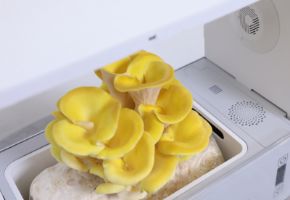
How can I grow mushrooms at home sustainably?By using cultivation kits such as those offered by NaturNext.eu, which include grow boxes with humidity control and full-spectrum LED lighting, for a practical and sustainable experience. |
Are the mushrooms of historic gardens edible?Some species are edible, but many are rare or protected. It is essential not to collect mushrooms in historic gardens without authorization and without correct identification by an expert mycologist. |
Where can I find more information on the mycology of historic parks?You can consult specialized publications, national and regional park websites (such as parks.it), and local mycological associations. The NaturNext.eu website also offers useful resources for enthusiasts. |
From history to cultivation: the role of NaturNext.eu
Growing mushrooms at home: a bridge between past and future
If, on the one hand, the mushrooms of historic gardens teach us the importance of symbiosis and conservation, on the other hand, interest in home cultivation is growing. NaturNext.eu offers concrete solutions for enthusiasts who want to experiment with mushroom cultivation in controlled environments, with kits that reproduce optimal conditions of humidity, temperature, and light. The starter kits from NaturNext.eu are designed to guarantee an accessible experience even for beginners, with grow boxes equipped with humidity sensors and full-spectrum LED lighting.
Home cultivation does not replace the conservation of natural habitats, but it can help spread mycological knowledge and reduce pressure from indiscriminate collection. Integrating a passion for the mushrooms of historic gardens with the practice of conscious cultivation is a winning strategy for hobbyists and growers.
Lighting and environment: the importance of LED technology
NaturNext.eu grow boxes use full-spectrum LED lights that simulate sunlight, promoting mushroom fruiting. This technological approach, applied to cultivation, ideally connects with the reflection on the mushrooms of historic gardens: even in nature, light filtered through the canopy of centuries-old trees creates unique microclimatic conditions. Understanding these mechanisms helps improve cultivation techniques and respect natural rhythms.
This article was developed with the support of artificial intelligence and subsequently reviewed, corrected, and validated by the technical team of NaturNext.eu, which guarantees its reliability and compliance with official sources.
The kingdom of fungi is a constantly evolving universe, with new scientific discoveries emerging every year about their extraordinary benefits for gut health and general well-being. From now on, when you see a mushroom, you will no longer think only of its flavor or appearance, but of all the therapeutic potential contained in its fibers and bioactive compounds. ✉️ Stay connected - Subscribe to our newsletter to receive the latest studies on: Nature offers us extraordinary tools to take care of our health. Mushrooms, with their unique balance between nutrition and medicine, represent a fascinating frontier that we are only beginning to explore. Keep following us to discover how these extraordinary organisms can transform your approach to well-being.Continue your journey into the world of mushrooms