




In the heart of temperate forests, beneath the leaf litter, among tree roots and within decaying wood, lies a kingdom of life boasting extraordinary biodiversity that remains largely unexplored: the fungal kingdom. These organisms, which have fascinated humanity for millennia due to their forms, flavors, and occasionally their toxicity, represent a fundamental component of global biodiversity. Their presence and diversity serve as crucial indicators of forest ecosystem health—yet they rank among the most vulnerable to ongoing planetary changes.
This article, designed for mycology enthusiasts, botanists, mushroom cultivators, and foragers, aims to explore the concept of biodiversity as applied to fungi, examine the richness of Italy’s fungal heritage, and analyze in depth the threats endangering this hidden treasure—supporting every claim with scientific data, updated research, and detailed statistics.
Biodiversity: understanding a key concept for the mycologist
Before delving into the subterranean world of hyphae and mycelia, it is essential to precisely define the term "biodiversity." Often used yet frequently misunderstood, this concept serves as the lens through which we grasp the significance of fungi and the severity of threats they face. Biodiversity is not merely a species inventory; it is a complex, dynamic system of relationships sustaining life on Earth.
What is meant by biodiversity? definitions and scientific approaches
The term "biodiversity," a contraction of "biological diversity," was coined in the 1980s by biologist Walter G. Rosen. The most internationally recognized definition comes from the United Nations Convention on Biological Diversity (CBD), which describes it as: "the variability among living organisms from all sources including, inter alia, terrestrial, marine and other aquatic ecosystems and the ecological complexes of which they are part; this includes diversity within species, between species and of ecosystems." For the mycologist, this translates to studying the extraordinary variety of existing fungi (from macrofungi visible to the naked eye to microscopic yeasts and molds), genetic differences among individuals of the same species (which may influence disease resistance or symbiotic capacity), and the multitude of roles they fulfill across forest environments—from mycorrhizal symbiosis to wood decomposition.
When discussing fungal biodiversity, we refer not only to the number of species in a given habitat (species richness) but also to the relative abundance of each species (evenness), their spatial distribution, and the intricate web of interactions linking them to plants, animals, microorganisms, and the physical environment. A woodland may host hundreds of fungal species in a single season, yet if only a few dominate the community at the expense of rarer ones, biodiversity—understood as balance and variety—is compromised.
The three pillars of biodiversity: genetic, species, ecosystem
Science categorizes biodiversity into three interdependent yet conceptually distinct levels. For fungal enthusiasts, understanding these tiers is essential to fully appreciate the complexity of the fungal kingdom.
| Type of biodiversity | Definition applied to the fungal world | Concrete example in a temperate forest | Ecological and mycological importance |
|---|---|---|---|
| Genetic Biodiversity | The variety of genes within a fungal population or species. It encompasses DNA-level differences determining traits such as fruiting body morphology, drought tolerance, ability to degrade specific wood compounds, or production of particular metabolites (e.g., toxins, antibiotics). | Different populations of Boletus edulis (Porcini) across Europe exhibit genetic variations influencing their compatibility with different oak or beech species, or resistance to specific pathogens. | It forms the foundation of adaptation and evolution. High genetic diversity enables fungal species to withstand environmental shifts, diseases, and stressors. For cultivators, it is vital for selecting productive, resilient strains. |
| Species Biodiversity | The number and variety of fungal species within a given habitat. This is the most intuitive—and commonly cited—measure, though only an estimated 5–10% of fungal species have been scientifically described. | A mature Apennine beech forest may host over 200 distinct macrofungal species in a single season, spanning genera such as Amanita, Russula, Lactarius, Cortinarius, alongside countless microscopic ascomycetes and wood-inhabiting fungi. | Each species fulfills a unique ecological role (niche). Losing one can disrupt vital processes like nutrient cycling, soil formation, or tree health. For foragers, it means greater variety and stability in wild harvests. |
| Ecosystem Biodiversity | The variety of environments, biological communities, and ecological processes involving fungi. It includes diversity of forest habitats (e.g., clearings, litter layers, standing or fallen deadwood, rhizosphere) and trophic relationships. | Comparing a Black Pine forest, a Mediterranean Holm Oak woodland, and an Alpine Fir stand reveals how each temperate forest type hosts distinct fungal communities adapted to specific climates, soil types, and tree species. | It ensures resilience across the entire forest landscape. Diverse ecosystems better absorb shocks (fires, storms, droughts). For botanists, the presence of specific symbiotic fungi (mycorrhizae) often signals ecosystem maturity and health. |
To explain biodiversity to children using fungi, consider this metaphor: the forest is like an orchestra performing a symphony. Fungi are some of the instruments (violins, flutes, percussion). Genetic biodiversity resembles violins of varying sizes and tones; species biodiversity means having many different instrument types; ecosystem biodiversity is like having multiple orchestras (chamber, symphonic) performing in different halls. Losing instruments or orchestras makes the music poorer and less beautiful—the entire forest symphony weakens.
Italian biodiversity: a hotspot for the fungal kingdom
Italy, owing to its central Mediterranean location, climatic variety, and complex geological and vegetational history, represents one of the most precious reservoirs of biodiversity in Italy—a distinction especially true for fungi. The peninsula harbors a fungal richness few European regions can match, forged over millennia within diverse—and often isolated—ecosystems.
Italy’s temperate forests—ranging from Apennine beech woods to Alpine fir stands, from Turkey oak groves to coastal pine forests—constitute the primary habitat for a myriad of fungal species. Recent estimates suggest 7,000 to 10,000 macrofungal species occur in Italy, approximately 2,000 of which are considered edible and around one hundred toxic or poisonous. These figures are likely underestimates, as new species—particularly among microscopic and hypogeous fungi (truffles)—are regularly discovered.
A cornerstone study for understanding Italy’s fungal biodiversity is the "Checklist of Italian Fungi" project coordinated by the Italian Botanical Society, aiming to catalog all species present nationally. Preliminary data highlight exceptionally high diversity in families like Russulaceae and Boletaceae across the peninsula, with numerous endemic or Mediterranean-distributed species.
| Forest type in Italy | Estimated macrofungal species | Percentage of endemic or range-restricted species | Characteristic fungal groups | Conservation status (trend) |
|---|---|---|---|---|
| Apennine and Alpine Beech Forests | 800 – 1,200 | 8–12% | Amanita, Cortinarius, Russula, Lactarius, Boletus (representative species: Boletus edulis, Amanita caesarea) | Vulnerable (declining for species linked to mature forests) |
| Thermophilous Oak Forests (Turkey Oak, Holm Oak) | 600 – 900 | 10–15% | Boletus, Amanita, Lepiota, xerophilous ground fungi (representative species: Boletus aereus) | Endangered (intense anthropogenic pressure and fragmentation) |
| Larch and Alpine Fir Forests | 500 – 750 | 5–8% | Suillus, Rozites, Cortinarius, conifer-associated wood fungi (representative species: Tricholoma matsutake in select zones) | Relatively stable (but threatened by high-altitude climate change) |
| Mesophilous Mixed Forests (Chestnut, Hornbeam) | 700 – 1,000 | 6–10% | Cantharellus, Hydnum, generalist symbiotic fungi (representative species: Cantharellus cibarius) | Declining (due to specific diseases like chestnut ink disease) |
Though seemingly distant from our focus, marine biodiversity offers a compelling parallel. Just as the Mediterranean seabed hosts extraordinary yet fragile life, the "forest floor"—with its intricate hyphal network (the "wood wide web")—is a rich, delicate ecosystem. Soil-based processes of symbiosis, competition, and decomposition rival coral reefs in complexity. For insights into biodiversity across all domains, consult the portal of ISPRA (Institute for Environmental Protection and Research), which publishes detailed reports on Italy’s biodiversity status.
Temperate forests: a sanctuary for fungal biodiversity
Temperate forests, encircling the boreal hemisphere between subtropical and boreal zones, rank among Earth’s most fungus-rich terrestrial ecosystems. In Europe, forests dominated by beech, oak, fir, and pine offer a unique combination of climatic conditions, abundant organic matter, and exceptional host-plant diversity, creating ideal substrates for the evolution of countless fungal forms. This chapter explores fungi’s ecological roles and distribution within these environments.
Ecological roles of fungi: far more than simple decomposers
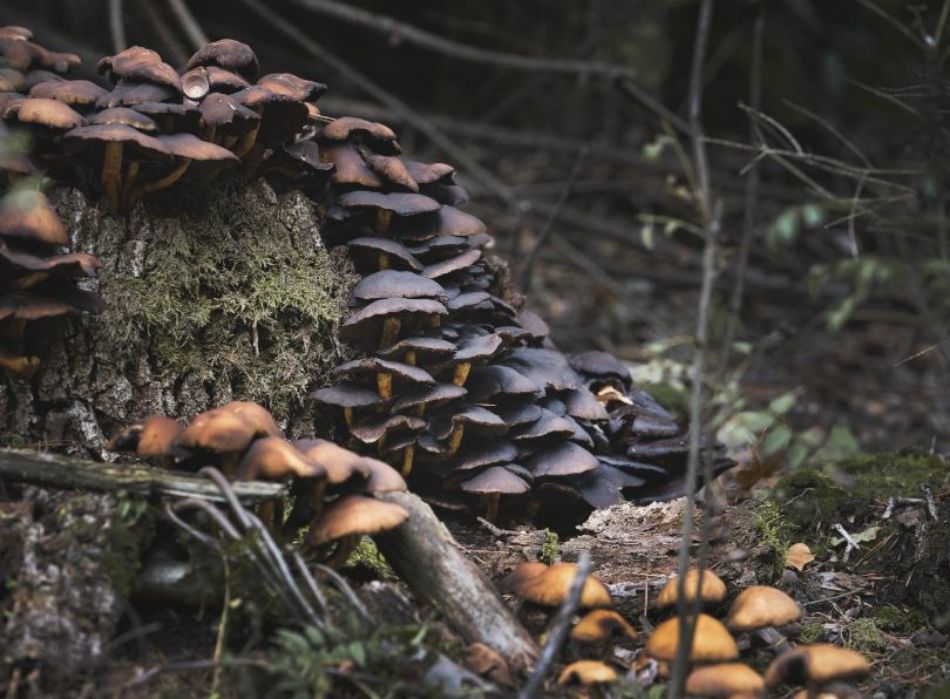
Fungi are commonly associated with decomposition—and indeed, saprotrophic fungi like those in the genera Armillaria or Pleurotus play an irreplaceable role in organic matter recycling. They secrete potent enzymes degrading lignin and cellulose in wood, returning carbon, nitrogen, and phosphorus to the soil. Without them, forests would be buried under undecayed wood, and nutrient cycles would collapse.
Yet reducing fungi to this role is a grave oversight. Approximately 90% of forest plants live in symbiosis with mycorrhizal fungi. This mutualistic association—where fungal hyphae envelop or penetrate plant roots—is a cornerstone of terrestrial life. The fungus supplies the plant with water and mineral nutrients (especially phosphorus and nitrogen) absorbed more efficiently from soil, while the plant reciprocates with photosynthetically produced sugars. This exchange enables trees to thrive in nutrient-poor soils, enhances drought and pathogen resistance. Species like the Black Truffle (Tuber melanosporum) or Porcini (Boletus edulis) are the visible fruit of these subterranean symbioses, involving tens of meters of hyphae per centimeter of root.
A third, often underestimated role belongs to parasitic fungi. Species such as Heterobasidion annosum (cause of conifer heart rot) or Cryphonectria parasitica (chestnut blight) can inflict severe economic damage and alter forest structure. Nevertheless, from a biodiversity and evolutionary perspective, these fungi fulfill vital ecological functions: acting as agents of natural selection by removing weaker or diseased individuals, contributing to wood recycling, and creating niches for other organisms (tree cavities becoming shelters for birds and insects).
Distribution and factors influencing fungal diversity
Fungal distribution within forests is non-random, following precise gradients shaped by biotic and abiotic factors. Understanding these patterns is essential for conservation studies.
| Factor | Influence mechanism | Impact on fungal biodiversity | Research example / data |
|---|---|---|---|
| Dominant tree species | Many mycorrhizal fungi are specific or preferential to one or few host plant species. Forest composition thus determines the fungal "guest list." | A mixed forest (e.g., beech-fir) hosts richer, more diverse fungal communities than a monoculture (e.g., pure Black Pine stand). | A Swiss forest study recorded ~120 mycorrhizal fungal species in pure beech stands versus over 180 in mixed beech-fir forests. |
| Forest age and structure | Mature forests—with trees of varying ages, standing deadwood (snags), and fallen logs—offer broader microhabitat and resource diversity. | Fungal biodiversity increases with forest age, peaking in old-growth or minimally disturbed woodlands. | Research in Italy’s Foreste Casentinesi National Park: old-growth beech forests (>150 years) host 40% more wood-inhabiting fungal species than 50–80-year-old stands. |
| Soil characteristics (pH, texture, organic matter) | Soil pH affects nutrient availability and element toxicity. Texture (clay, silt, sand) influences water retention and porosity, conditioning hyphal growth. | Distinct fungal communities associate with acidic vs. alkaline, sandy vs. clay soils. Diversity is generally higher in well-aerated, humus-rich soils. | The genus Russula often associates with acidic soils, while many Agaricus prefer alkaline, humus-rich substrates. Tuber magnatum (White Truffle) occurrence links to well-drained calcareous soils with specific physicochemical traits. |
| Local climate (precipitation, temperature) | Fungal activity heavily depends on moisture and temperature. Fruiting body formation is a precise phenological event, often triggered by rain followed by mild periods. | Exceptionally dry or wet years can drastically reduce fruiting across many species, impacting reproduction and spore dispersal. | Multi-year monitoring in Piedmont shows Boletus edulis fruiting declines 60–80% during summers with >30% rainfall deficit versus average. |
For deeper insight into fungal biodiversity monitoring techniques and available datasets, consult the website of the Italian Mycological Association (AMI), which advances research and scientific outreach in this field.
Major threats to fungal biodiversity in temperate forests
Despite their apparent resilience, fungal communities in temperate forests face unprecedented pressure from combined anthropogenic stressors. These threats often act synergistically, amplifying negative effects and driving a silent yet alarming decline in fungal diversity. We examine each threat in detail, supporting analysis with concrete data.
Habitat fragmentation and forest loss
Conversion of forests to agricultural, urban, or infrastructure land is the most direct threat. Yet even when forests remain partially intact, fragmentation into small patches isolated by roads, fields, or settlements severely damages fungal biodiversity—especially specialized species with limited dispersal capacity.
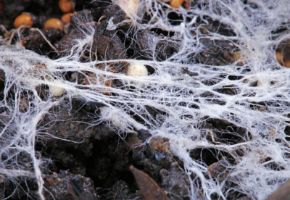
Mycorrhizal fungi, dependent on host tree roots, are among the most impacted by fragmentation. Fungal hyphae form underground networks connecting multiple plants, enabling nutrient and information exchange. Severing these networks—via tree removal or road construction— isolates fungal populations, reduces genetic pools, and hinders recolonization of cleared areas. Species producing large spores or fruiting infrequently (like many hypogeous fungi, truffles) struggle to reach new suitable habitats.
| Fragmentation parameter | Effect on generalist fungal species (e.g., some decomposers) | Effect on specialist fungal species (e.g., mature-forest mycorrhizae) | Case study data (Padano plain forest, Italy) |
|---|---|---|---|
| Reduction in forest area | Limited. Some saprotrophs may even increase due to abundant deadwood at edges. | Drastic. Mycorrhizal species richness declines exponentially as forest area shrinks. | In residual forest patches < 10 hectares, mycorrhizal species richness is only 30% of that found in areas > 100 hectares. |
| Increased forest edge ("edge effect") | Introduction of opportunistic, often non-native species thriving in warmer, drier margins. | Disappearance of interior-forest species sensitive to higher temperatures, lower humidity, and invasive competitive vegetation. | Up to 50 meters from edges, soil moisture drops 25% and temperature rises 2–3°C. Fungal communities shift toward grassland types, losing characteristic forest species. |
| Isolation of fragments (distance from other forests) | Moderate. Spores of many decomposers travel long distances via wind. | Severe. Spore dispersal for many mycorrhizae is limited (via insects or small mammals). Isolation prevents genetic exchange and recolonization after disturbances. | Fragments isolated > 500 meters from other forests show a 5% annual local extinction rate for mycorrhizal species, especially after dry summers. |
Climate change: heat, drought, and extreme events
Global warming is altering temperate forest climate regimes faster than many fungal species can adapt. Rising temperatures, increased frequency/intensity of heatwaves and summer droughts, and disrupted precipitation cycles are profoundly reshaping fungal communities.
Effects are complex and varied. Some studies suggest initial warming may boost decomposition activity in certain regions, releasing more soil CO₂. However, prolonged drought inhibits hyphal activity, which requires a water film for growth and nutrient transport. Mycorrhizal symbioses are especially vulnerable to water stress. A drought-stressed tree reduces sugar allocation to its symbiotic fungus, weakening the entire partnership and increasing vulnerability to pathogens and parasites for both partners.
Additionally, climate change is shifting species' distribution ranges. Thermophilic (heat-loving) species are moving uphill or poleward, invading areas previously occupied by cooler-climate species. This may trigger "tropicalization" of Mediterranean fungal communities, with local disappearance of alpine or Apennine species. A telling example involves fungi associated with European Beech (Fagus sylvatica), a tree highly sensitive to hot, dry summers. Predictive models indicate that by century's end, vast areas of the central-southern Apennines may become unsuitable for beech—and with it, dozens of strictly associated fungal species could vanish.
A further threat stems from increased frequency/intensity of extreme weather: windstorms toppling entire forest slopes, or torrential rains causing soil erosion. Such events physically destroy fungal habitats, stripping humus layers and burying mycelium under debris.
To follow cutting-edge research on climate change impacts on Italian biodiversity—including fungal components—consult the website of the Euro-Mediterranean Center on Climate Change (CMCC), which produces highly detailed national models and scenarios.
Atmospheric pollution and nitrogen deposition
Temperate forests, especially in Europe, have endured decades of excessive nitrogen compound loads (ammonia, nitrogen oxides) from intensive agriculture, livestock farming, and fossil fuel combustion. Deposited via rain (wet deposition) or directly (dry deposition), these compounds act as uncontrolled fertilizers, drastically altering soil chemistry and biological equilibria.
Nitrogen is essential—but in excess triggers cascading negative effects on fungal biodiversity:
- Competitive imbalance: saprotrophic fungi decomposing litter generally absorb available nitrogen more efficiently than mycorrhizal fungi. Excess nitrogen thus favors decomposers, accelerating litter breakdown and depleting soil organic carbon. This undermines mycorrhizal fungi, whose competitive advantage (providing nitrogen to plants) diminishes in nitrogen-rich environments.
- Soil acidification: certain nitrogen deposition forms contribute to soil acidification. While some fungi are acidophilic, many forming ectomycorrhizae with canopy trees are sensitive to sharp pH drops. Acidification also mobilizes toxic metals like aluminum, damaging fungal hyphae.
- Community composition shift: long-term studies (e.g., Europe’s ICP Forests program) clearly show high nitrogen loads simplify fungal communities. Sensitive, specialized species disappear (especially genera like Cortinarius and Russula), while few nitrogen-tolerant generalists dominate. Species richness and ecological functionality decline.
| Nitrogen load (kg N/ha/year) | Total mycelial biomass in soil | Ectomycorrhizal fungal species richness | Mycorrhizal / Saprotrophic fungi ratio | Fruiting body (carpophore) production |
|---|---|---|---|---|
| Low (< 10) | High | High (> 40 species per site) | High (> 3:1) | Normal / High |
| Moderate (10 – 20) | Stable or slight decline | Moderate decline (25–35 species) | Declining (2:1) | 20–30% reduction |
| High (> 20 – critical threshold for many ecosystems) | Significant decline | Drastic decline (< 15 species) | Low (< 1:1, saprotrophs dominate) | 50–80% reduction |
Unsustainable forestry practices and intensive harvesting
Forest management directly and immediately impacts fungal communities. Practices like clear-cutting, systematic removal of deadwood, simplification into monocultures, and heavy machinery use causing soil compaction pose significant threats.
Deadwood—in all forms (fallen logs, stumps, standing dead trees)—is a critical habitat for approximately 25–30% of all forest fungal species. Wood-inhabiting fungi (e.g., Polyporaceae, Hymenochaetaceae families) specialize in decomposing wood at various decay stages. Their diversity is a key indicator of forest naturalness. "Cleaning" forests for production or fire-risk reduction eliminates this vital substrate, causing local extinction of numerous species, many already rare or threatened.
Even harvesting of above-ground fungi—a beloved, culturally rooted Italian activity—can become threatening if unregulated and intensive. While harvesting fruiting bodies (carpophores) itself, when done correctly (cutting stems rather than uprooting), does not harm the perennial underground mycelium, excessive pressure causes negative consequences:
- Reduced spore dispersal: carpophores are reproductive organs. Mass harvesting before spore release diminishes sexual reproduction potential and colonization of new sites.
- Mechanical soil disturbance: intense, repeated trampling—especially with tools like rakes that overturn litter—compacts soil, damages surface mycelium, and destroys humus.
- Impact on animal populations: many fungi (truffles, volvate species) rely on animals (invertebrates, mammals) for spore dispersal. Overharvesting deprives these species of a crucial food source, disrupting dispersal cycles.
Importantly, respectful, regulated harvesting—governed by permits, daily limits, and closed seasons (as enacted in many Italian regions)—is generally compatible with conservation. Problems arise from indiscriminate commercial harvesting and poaching, often linked to informal markets.
Conservation strategies and the future of fungal biodiversity
Faced with this complex, interconnected web of threats, developing and implementing effective fungal biodiversity conservation strategies is urgent. These strategies must stem from recognizing fungi not as incidental ecosystem components, but as fundamental architects of forest structure and function. Their conservation is inseparable from forest preservation itself.
Monitoring, research, and citizen science
The first step toward protection is knowledge. A critical lack of baseline data on distribution, ecology, and population status for most fungal species remains a major conservation obstacle. Strengthening is essential:
- Long-term monitoring programs: networks of permanent plots in representative forests, regularly sampling and identifying fungal communities (via molecular and morphological methods) while tracking environmental parameters. Programs like the aforementioned ICP Forests require expansion and reinforcement.
- Applied research: studies on specific impacts of forestry practices, species resilience to climate change, functionality of mycelial networks. Research should also explore fungal potential in bioremediation of polluted soils or carbon sequestration.
- Citizen science: mushroom foragers and mycology enthusiasts represent an invaluable resource. Projects compiling regional checklists via dedicated apps (e.g., iNaturalist, specialized mycological apps) gather vast distribution and phenology data. Crucially, citizens must be trained in accurate data collection (high-quality photos, precise location/habitat notes) and an ethics of absolute respect for rare species and sensitive habitats.
Sustainable forest management and active conservation
Forest management practices must evolve to explicitly integrate fungal biodiversity conservation. Core principles include:
- Maintain and increase quantity and variety of deadwood: leave significant percentages of dead trees standing and fallen, across sizes and species. Create "islands" or corridors of deadwood to aid dispersal of wood-inhabiting species.
- Promote mixed, structured, mature forests: prefer selective logging over clear-cutting. Conserve and encourage natural regeneration of diverse tree species—including non-commercial but mycologically important ones (e.g., poplars, willows, rowans). Actively protect and manage old-growth forests, true biodiversity sanctuaries.
- Minimize soil disturbance: use low-impact extraction techniques (e.g., horse logging in sensitive areas), establish fixed machinery routes, and avoid compaction in species-rich zones.
- Create ecological networks: connect residual forest fragments via ecological corridors (hedgerows, linear woodlots, riparian buffer strips) to enable spore dispersal and genetic exchange among fungal populations.
For deeper exploration of forest management guidelines incorporating biodiversity (including fungal), an excellent reference is the manual published by Pro Silva Italia, an association promoting close-to-nature forestry.
Outreach, education, and legislation
Protecting fungal biodiversity demands cultural shift. Essential actions include:
- Integrate fungi into environmental education curricula: teach children and youth about fungal importance beyond culinary aspects, explaining biodiversity simply and engagingly.
- Educate foragers: promote mycology courses and awareness campaigns on sustainable harvesting, legal compliance, and recognition/protection of rare or protected species (many regions maintain fungal Red Lists).
- Strengthen legislation: national and regional laws must explicitly recognize fungi as a biodiversity component requiring protection. Fungal Red Lists should carry binding weight in land-use planning. Illegal trade in fungi harvested against regulations must be more effectively countered.
Protecting fungal biodiversity in temperate forests is not merely a biological conservation issue—it is an ecological imperative for forest ecosystem health and, by extension, for our planet. Fungi, with their intricate mycelial networks, are not simple forest floor inhabitants but true architects and regulators of the forest environment, guarantors of nutrient cycling, tree resilience, and soil complexity.
The analyzed threats—habitat fragmentation, climate change, nitrogen pollution, unsustainable management—act synergistically, demanding an equally integrated, conscious response. The responsibility falls on the scientific community, forest managers, legislators, and every individual—enthusiast, forager, or nature lover—to become stewards of this invisible yet vital heritage. Advancing research, adopting close-to-nature forestry, regulating harvest sustainably, and above all, spreading knowledge are the tools at our disposal to reverse current trends.
Only by recognizing the intrinsic and ecological value of every fungal species—from the humblest decomposer to the most sought-after Porcini—can we ensure temperate forests continue to resonate with their silent, yet immensely powerful, symphony of life.
This article was developed with the support of artificial intelligence and subsequently reviewed, corrected, and validated by the NaturNext.eu technical team, which guarantees its reliability and compliance with official sources.