



Arancini are much more than a simple fried rice ball. They are a symbol of Sicilian street food, a ritual that unites generations, an excuse to gather around a table or to enjoy a quick bite between one class and another. But arancini are also a territory of endless experimentation, where tradition meets the creativity of cooks, enthusiasts and growers.
This guide explores a fascinating and still little-explored variation: arancini with fresh champignon mushrooms, a perfect meeting between the crunchiness of golden rice and the deep umami of mushrooms. Whether you are devotees of the Catania recipe, admirers of the Palermo butter version, or simply curious to discover how champignon mushrooms can transform a classic, here you will find everything you need to master the art of arancini in their earthiest and most surprising version.
In this article...
What arancini are: definition and identity
Arancini are small rice timbales, cooked and seasoned, filled with various ingredients, breaded and fried. Their shape recalls that of an orange (hence the name) and their versatility has made them one of the most recognizable gastronomic symbols of Sicily in the world. They are a rotisserie-style product that has its roots in popular tradition and that today is experiencing a second youth thanks to the rediscovery of quality street food and the endless interpretations of chefs.
The structure of an arancino is apparently simple but requires precision. The rice, cooked in broth or water with saffron and creamed with butter and cheese, must cool completely before being shaped. The filling, traditionally meat ragù with peas and stringy cheese, or ham and mozzarella in the butter version, is enclosed in the center. The breading, which can be based on egg and breadcrumbs or a batter of water and flour, is what guarantees external crunchiness and protects the filling during frying.
Arancini belong to the category of so-called "rotisserie products", together with panelle, crocchè and cazzilli, and are recognized as a Traditional Agri-food Product (PAT) of the Sicilian Region. Their presence is widespread: they are found in the fry shops of Palermo and Catania, in the bars of Messina, in provincial rotisseries, but also on the menus of gourmet restaurants that offer reinterpreted versions. Their strength lies in their ability to adapt: every province, every family, every cook has their own version, and this variety is an integral part of their charm.
History and origins: from the Arabs to Camilleri
The origins of arancini lie in Arab Sicily, between the 9th and 11th centuries. The Arabs introduced the use of rice to the island, which until then was not widespread in the western Mediterranean, and they had the habit of rolling seasoned rice with meat and spices in the palm of their hand, consuming it as practical and nutritious food. From this habit the primitive form of the arancino was born.
The breading, according to legend, was instead born at the court of Frederick II of Swabia. It is said that the sovereign, during hunting trips, needed easily transportable food and that the court cooks thought of coating the rice balls with a crunchy crust to preserve them better. Whether true or not, the encounter between the Arab tradition of rice and the Norman tradition of frying gave rise to one of the longest-lived products of Italian gastronomy.
Over the centuries, arancini have become an integral part of Sicilian culture. Palermo tradition dictates that on December 13, Saint Lucy's Day, arancini are consumed in quantity: a sort of collective celebration involving rotisseries, families and streets. And then there is literature: Andrea Camilleri, with his collection "Gli arancini di Montalbano", helped make the name "arancini" familiar to all Italians, consolidating the use of the masculine form in the national lexicon.
Today arancini are a global phenomenon. They are found in Italian restaurants in New York, London, Melbourne and Tokyo. They are studied in cooking schools, reinterpreted by starred chefs, sold frozen and shipped throughout Europe. But their soul remains artisanal: a homemade arancino, made with care and quality ingredients, fears no comparison with any industrial version.
Which rice to use for arancini
The choice of rice is the first step toward a perfect arancino. Not all rices are suitable: you need a grain that absorbs liquids without disintegrating, that maintains compactness after cooking and that, once cold, is sticky enough to allow shaping without crumbling.
The most suitable rices are Carnaroli, Roma, Arborio and Vialone Nano. Carnaroli is considered by many to be the king of rices for arancini: it has a large grain, holds up well during cooking and develops a natural creaminess thanks to the starch it releases. Roma is the classic of Palermo tradition, with a smaller grain but capable of enviable compactness. Arborio is a reliable and widespread choice, while Vialone Nano, typical of Veneto, offers an interesting balance between hold and softness.
Avoid long-grain rices such as Basmati or Jasmine, which remain too loose and do not allow stable shaping. Even parboiled rices, although practical, do not offer the same quality of absorption and the same final creaminess. The ideal cooking takes place in little liquid (vegetable or meat broth, water with saffron) so that the starch remains in the rice and is not dispersed. The rice for arancini must be cooked, creamed and then cooled completely before being worked: this wait is fundamental to obtaining the right consistency.
A practical tip: cook the rice the day before. Letting it rest in the refrigerator overnight makes it more compact and easier to shape. Many Sicilian cooks swear that this is the real secret of arancini that do not open during frying.
Arancino or arancina? The linguistic question
The dispute between "arancino" and "arancina" has divided Sicily for centuries, and shows no sign of being resolved. In Palermo and western Sicily people say "arancina", with the feminine gender, and the shape is traditionally round. In Catania, Messina and eastern Sicily people say "arancino", with the masculine gender, and the shape can be round or pointed, recalling the silhouette of Etna.
The Accademia della Crusca has analyzed the question without reaching a definitive conclusion. The name derives from the orange, a feminine fruit, which would suggest "arancina". But in the Sicilian dialect the fruit of the orange tree is "aranciu", masculine, and from there derives "arancinu". The masculine form is the one recorded in Biundi's Sicilian-Italian Dictionary (1857) and adopted by the Ministry of Agricultural Policies in the PAT list. However, the Palermo tradition of the "arancina" is equally deeply rooted.
In practice, both forms are correct. Italians have learned to know "gli arancini" thanks to literature and television, but Palermitans will continue to order "due arancine" with pride. For those who write about cooking or are approaching this world, the wisest thing is to recognize the legitimacy of both names and focus on what really matters: the goodness of the result.
The best-known variations: ragù, butter, pistachio
Arancini come in dozens of variations, but some have become undisputed classics. Knowing them is useful not only to orient yourself in the choice, but also to understand how the champignon variation fits into this panorama and what affinities it shares with the best-known versions.
The ragù arancino: the king of tradition
The ragù arancino is the most iconic and widespread version. The filling is a mixed meat ragù (beef and pork) slowly cooked with tomato, peas and aromatics, enriched with cubes of caciocavallo or provola that guarantee the stringy effect. The rice is with saffron, yellow and fragrant, and the breading can be based on egg and breadcrumbs or a batter of water and flour. The Catania version often has a pointed shape, while the Palermo one is rigorously round.
The butter arancino: the elegance of simplicity
The butter arancino is the Palermo variation par excellence, more delicate and refined. The filling consists of diced cooked ham and mozzarella or fiordilatte, without ragù. The rice is creamed with butter and cheese, and the result is softer and creamier than the ragù version. It is the arancino offered to guests, the one for special occasions, but also the one that many Palermitans prefer for its delicacy.
Creative variations: pistachio, spinach, fish
In recent years creative variations have exploded, often inspired by other dishes of Sicilian tradition. The pistachio arancino, with Bronte pistachio cream and often mortadella or speck, has become a cult phenomenon. Spinach arancini, with ricotta or béchamel, offer an appreciated vegetarian version. And then there are the seafood versions: tuna, swordfish and seafood arancini, which demonstrate the versatility of this preparation.
The variation with fresh champignon mushrooms fits into this creative vein, but with a substantial difference: it is not a simple exercise in style, but a natural meeting between two worlds (that of rice and that of mushrooms) that share the ability to absorb flavors and transform into something deeply satisfying.
The variation with fresh champignon mushrooms: the recipe
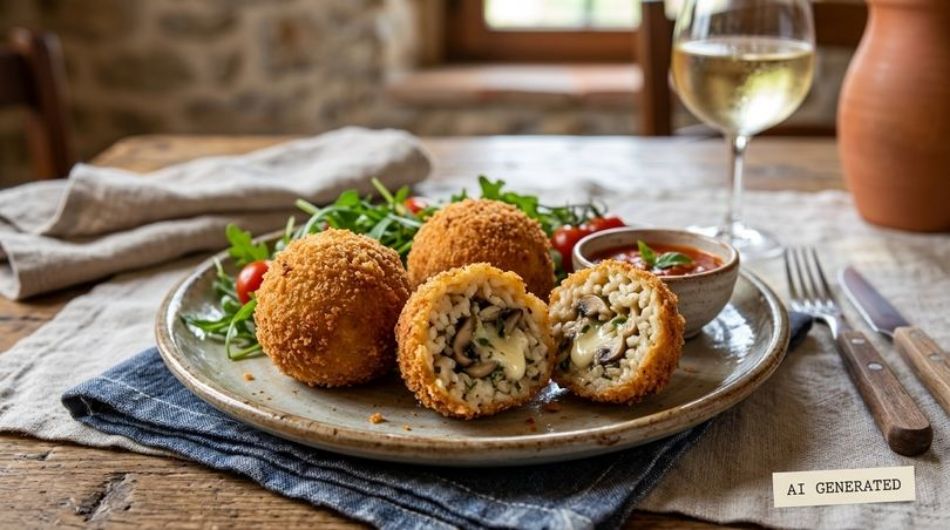
Arancini with fresh champignon mushrooms represent one of the most interesting and underestimated interpretations of the tradition. Champignon mushrooms, with their delicate but persistent flavor, their firm flesh and their ability to bind with fats and aromas, are the ideal ingredient for a filling that combines the earthiness of the woods with the sunniness of saffron rice. This variation is perfect for those looking for a substantial vegetarian alternative, for those who love mushrooms in all their forms, and for those who want to surprise with an arancino that has something different to tell.
Ingredients for 12 champignon arancini
For the rice
500 g Carnaroli or Roma rice, 1.2 liters vegetable broth, 1 sachet saffron, 50 g butter, 80 g grated Parmesan, salt to taste.
For the mushroom filling
400 g fresh champignon mushrooms, 1 garlic clove, 1 bunch parsley, 200 g mozzarella or provola cut into cubes, 2 tablespoons extra virgin olive oil, salt and pepper to taste, optionally a knob of butter for creaming.
For the breading
200 g type 00 flour, 350 ml water, 1 pinch salt, breadcrumbs to taste (or 2 beaten eggs and breadcrumbs, for a more traditional breading).
For frying
Peanut or sunflower seed oil in abundance.
Step-by-step preparation
1. Cook the rice.
Bring the broth to a boil, add the rice and the saffron dissolved in a ladle of hot broth. Cook, stirring occasionally, until the liquid is almost completely absorbed. Turn off the heat, cream with butter and Parmesan, spread the rice on a wide baking tray and let it cool completely. This step is crucial: the rice must be cold and compact.
2. Prepare the mushroom filling.
Clean the champignon mushrooms by removing the dirt with a damp cloth (avoid washing them under water, which would make them watery). Cut them into thin slices. In a pan, heat the oil with the crushed garlic, add the mushrooms and cook over high heat for 5-7 minutes, until they have released their water. Salt, pepper, add the chopped parsley and, if you like, a knob of butter to make them creamier. Let the filling cool as well.
3. Shape the arancini.
With lightly moistened hands, take a handful of rice, flatten it on the palm to form a hollow, place a tablespoon of mushrooms and a few cubes of mozzarella in the center. Close the rice around the filling, compacting well, and give the desired shape: round for the Palermo version, pointed for the Catania one. Compactness is essential: if the arancino is too soft, it will open during frying.
4. Bread them.
Prepare the batter by mixing flour and water until you obtain a smooth and thick mixture. Dip each arancino in the batter, letting the excess drip off, then roll it in the breadcrumbs. Alternatively, pass it in the beaten egg and then in the breadcrumbs. The double breading (batter + breadcrumbs) is the one that guarantees the most uniform crunchiness and reduces the risk of breakage.
5. Fry.
Heat the oil to 170-180°C. Fry the arancini a few at a time, turning them gently for even browning. It will take about 4-6 minutes. Drain them on absorbent paper and serve hot. The oil temperature is fundamental: too cold and the arancino absorbs oil; too hot and the surface burns before the inside is hot.
The oven and air-fryer variation
For a lighter version, champignon arancini can be cooked in the oven or in an air fryer. Bake at 180°C (fan) for 25-30 minutes, after spraying the surface with a drizzle of oil. In an air fryer, cook at 200°C for 15-18 minutes, turning them halfway through cooking. The result will be less greasy but still crunchy, ideal for those who want to reduce fats without giving up pleasure.
Perfect technique: breading, frying, oven
The success of an arancino depends on a series of technical details that separate a mediocre result from an excellent one. Knowing these secrets is what distinguishes the enthusiast from the beginner, and allows consistent results even for those approaching this preparation for the first time.
Breading: batter or egg?
Sicilian tradition includes two schools of thought. Breading with a batter of water and flour is the oldest and most widespread in rotisseries: it creates a thin and crunchy layer that seals the rice and prevents oil from penetrating. Breading with egg and breadcrumbs is more common in home cooking and offers a thicker and more rustic crust. For champignon arancini, batter is particularly suitable because the moist mushroom filling benefits from more hermetic protection.
A useful trick: let the breaded arancini rest in the refrigerator for 30 minutes before frying them. This step allows the breading to adhere better and reduces the risk of it detaching during cooking.
Frying: temperature and oil
The ideal oil for frying arancini is peanut seed oil, which withstands high temperatures well and does not alter the flavor. Alternatively, sunflower or corn oil. Extra virgin olive oil, although more aromatic, has a lower smoke point and tends to burn earlier. The optimal temperature is between 170°C and 180°C: if you do not have a thermometer, test with a cube of bread: it should turn golden in about 30 seconds.
Fry a few arancini at a time so as not to lower the oil temperature too much. If the arancini are cold from the refrigerator, let them sit at room temperature for a few minutes before immersing them, to avoid thermal shocks that could crack them.
Why arancini open (and how to avoid it)
The most common causes of breakage during frying are three: rice too moist, filling too watery, insufficient breading. The rice must be well dry and compact: if after cooking it is still wet, put it back on the heat for a few minutes or spread it out longer. The mushroom filling must be cooked until the vegetation water has completely evaporated. And the breading must cover every millimeter of the surface, without uncovered spots.
Storage, freezing and reheating
Arancini can be prepared in advance and stored in various ways, as long as some fundamental rules are respected. This flexibility makes them perfect for organizing lunches, dinners with friends or simply for having a ready supply in the freezer.
In the refrigerator: cooked arancini keep for 2-3 days in an airtight container. Raw, breaded and unfried ones can be kept in the refrigerator for 24 hours, covered, before cooking. In the freezer: raw and breaded arancini freeze very well. Place them on a tray, let them harden, then transfer them to freezer bags. They keep for 2-3 months. When needed, fry them still frozen, adding a few minutes to the cooking time, or cook them in the oven at 200°C for 30-35 minutes.
To reheat already fried arancini: the oven is the best method. At 160°C for 10-12 minutes, or in an air fryer at 170°C for 6-8 minutes, they recover much of their original crunchiness. The microwave, on the other hand, makes them soft and rubbery: avoid it, unless you are willing to sacrifice texture.
Frequently asked questions about arancini
Which rice is used for arancini?The most suitable rices are Carnaroli, Roma, Arborio and Vialone Nano. They must have a grain capable of absorbing liquids without disintegrating and of maintaining compactness after cooling. Avoid long-grain rices such as Basmati and Jasmine. |
What is the difference between arancino and arancina?The difference is mainly geographical and linguistic. In Palermo and western Sicily people say "arancina" (feminine), with a round shape. In Catania, Messina and eastern Sicily people say "arancino" (masculine), with a round or pointed shape. Both names are correct. |
What is the difference between arancino and supplì?Supplì is Roman, has an elongated shape, is made with rice and meat ragù and has a mozzarella heart. The arancino is Sicilian, is larger, can have much more varied shapes and fillings, and traditional breading uses a batter of water and flour rather than egg. |
Why do arancini open during frying?The main causes are: rice too moist or not compact enough, filling too watery, incomplete breading or oil at too low a temperature. To avoid this, dry the rice well, cook the mushrooms until the water has evaporated, bread carefully and fry at 170-180°C. |
Can arancini be frozen?Yes, raw and breaded arancini freeze very well. Place them on a tray, let them harden, then transfer them to bags. They keep for 2-3 months. Fry them still frozen, adding a few minutes to the cooking time. |
How are arancini reheated?The oven is the best method: 160°C for 10-12 minutes. In an air fryer, 170°C for 6-8 minutes. The microwave makes them soft and should be avoided if you want to maintain crunchiness. |
Which oil is used to fry arancini?Peanut seed oil is the most suitable due to its resistance to high temperatures. Alternatively, sunflower or corn oil. Extra virgin olive oil has a lower smoke point and tends to burn. |
Which cheese is used for arancini?For the ragù version, caciocavallo or provola. For the butter version, mozzarella or fiordilatte. For the mushroom variation, mozzarella or provola offer the right balance between stringiness and flavor. |
Growing mushrooms for your arancini: the value of freshness
The quality of a mushroom arancino depends to a large extent on the quality of the mushrooms themselves. Freshly harvested champignon mushrooms have a fuller flavor and a firmer consistency than those that have undergone long distribution chains. For those who grow mushrooms at home or are approaching this world, the satisfaction of using their own champignon mushrooms to prepare arancini is priceless.
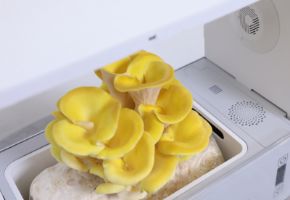
NaturNext was born precisely from this passion: making domestic cultivation of fresh and tasty mushrooms accessible to everyone. The NaturNext grow box, developed after years of research and testing, allows you to grow mushrooms directly at home, with a sensor system that controls temperature and humidity. For those who love cooking with fresh ingredients and for those who want to explore the world of mushrooms from a different perspective, growing your own champignon mushrooms is the first step toward arancini with authentic flavor. Discover more about the NaturNext philosophy and how domestic cultivation can transform your approach to cooking.
If you want to delve deeper into the world of mushrooms and their properties, we recommend exploring INRAN's resources on the nutritional benefits of mushrooms, and taking a look at the mushroom cultivation guidelines from the German Bundesinformationszentrum Landwirtschaft, which offers a clear overview of professional cultivation techniques. For those who want to explore the history and variations of arancini, RaiNews offers an interesting in-depth look at the origins of this street food.
This article was developed with the support of artificial intelligence and subsequently reviewed, corrected and validated by the technical team of NaturNext.eu, which guarantees its reliability and compliance with official sources.
The kingdom of mushrooms is an ever-evolving universe, with new scientific discoveries emerging every year about their extraordinary benefits for intestinal health and general well-being. From now on, when you see a mushroom, you will no longer think only of its flavor or appearance, but of all the therapeutic potential enclosed in its fibers and bioactive compounds. ✉️ Stay connected - Subscribe to our newsletter to receive the latest studies on: Nature offers us extraordinary tools to take care of our health. Mushrooms, with their unique balance between nutrition and medicine, represent a fascinating frontier that we are only beginning to explore. Continue following us to discover how these extraordinary organisms can transform your approach to well-being.Continue your journey into the world of mushrooms