


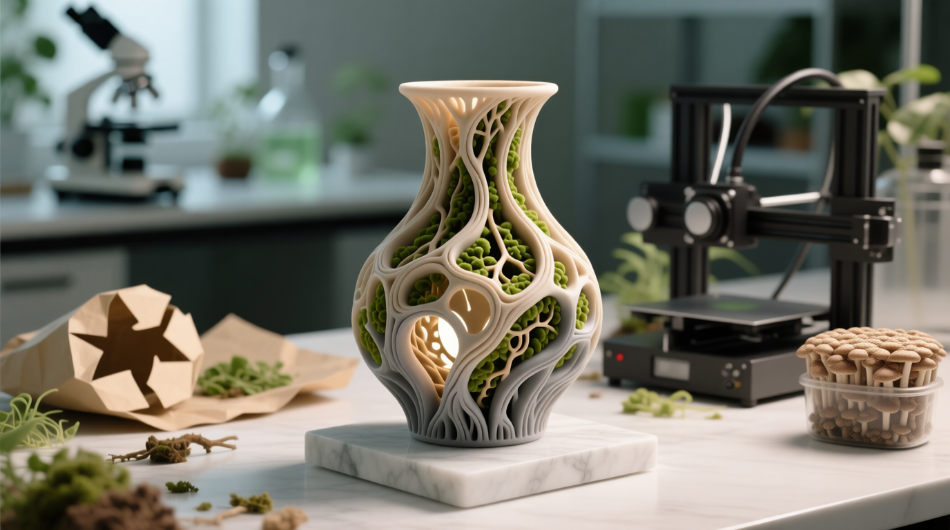
Welcome to a fascinating journey through one of the most promising frontiers of biofabrication: 3D printing. In particular, we will delve into 3D printing with mycelium, a technology that combines ancient mycological wisdom with the most advanced additive manufacturing techniques. We will discover how this innovation is paving the way for a new era of sustainable production, where objects are not only born from nature but return to it without leaving polluting traces.
3D printing with mycelium represents a perfect synthesis between biology and technology, offering concrete solutions to the environmental challenges of our time. Through this comprehensive guide, we will analyze the processes, materials, applications, and future prospects of this fascinating technology, with a scientific yet accessible approach for all enthusiasts of mycology and sustainability.
Biological 3D printing: a sustainable revolution
Before delving into the specifics of 3D printing with mycelium, it is essential to understand the broader context of biological 3D printing and its transformative potential. Additive manufacturing is revolutionizing production processes in numerous sectors, but when this technology meets biological materials, the possibilities become truly revolutionary.
Biological 3D printing, or bioprinting, represents the most advanced evolution of additive manufacturing, shifting focus from synthetic materials to organic and biodegradable ones. This approach not only reduces the environmental impact of production but paves the way for objects that possess unique properties impossible to replicate with conventional materials.
The origins of 3D printing with biological materials
The first experiments in 3D printing with biological materials date back to the early 21st century, when researchers began exploring the use of cellulose, starches, and other natural polymers as printing materials. However, it was only with the advent of more sophisticated 3D printers and an understanding of the properties of biological materials that this technology began to show its true potential.
Mycelium, the vegetative part of fungi, emerged as one of the most promising materials thanks to its extraordinary ability to grow into complex structures, its resistance, and its complete biodegradability. The first commercial applications of 3D printing with mycelium appeared around 2015, but research in this field is rapidly accelerating.
The environmental advantages of biological 3D printing
3D printing with biological materials like mycelium offers numerous environmental advantages compared to traditional production methods. Firstly, it significantly reduces the use of non-renewable resources, as the base materials are organic and often derive from agricultural or industrial waste. Secondly, the production process requires less energy than conventional methods, helping to reduce greenhouse gas emissions.
But perhaps the most significant advantage is the complete biodegradability of the final products. Unlike plastic, which can persist in the environment for centuries, objects 3D printed with mycelium decompose naturally in a few weeks or months, returning to the earth without releasing toxic substances. This characteristic makes them ideal for single-use applications or products with short life cycles.
Mycelium: understanding the living material
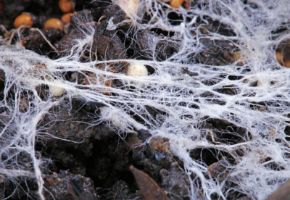
To fully appreciate the potential of 3D printing with mycelium, it is essential to understand the nature and properties of this extraordinary biological material. Mycelium represents the vegetative part of fungi, an intricate network of microscopic filaments called hyphae that extends into the growth substrate, absorbing nutrients and sustaining the fungus.
This mycelial network is not simply a passive material but a living organism with extraordinary capacities for adaptation, growth, and self-repair. When used in 3D printing, the mycelium is not "killed" but kept in a dormant state, ready to resume growth under appropriate conditions. This unique characteristic opens incredible possibilities for objects that can self-repair or modify over time.
Structure and composition of mycelium
Mycelium is composed primarily of chitin, the same polymer that makes up the exoskeleton of insects, and β-glucans, polysaccharides with unique structural properties. This combination gives mycelium surprising tensile and compressive strength, in some cases comparable to that of synthetic materials like expanded polystyrene.
The structure of mycelium is extremely complex and organized into a three-dimensional network that can adapt to different environmental conditions. This adaptability is one of the characteristics that make mycelium so interesting for 3D printing, as it allows for creating structures with variable mechanical properties simply by modifying growth conditions.
Mechanical properties of mycelium as a printing material
The mechanical properties of mycelium make it an ideal material for many 3D printing applications. Its density can vary from 20 to 200 kg/m³, depending on the fungal species used and growth conditions, while its compressive strength can reach values up to 0.2 MPa. These characteristics make it competitive with many synthetic expanded materials used in packaging and insulation.
One of the most interesting properties of mycelium is its ability to self-assemble and form strong connections between different hyphae. This means that, during the printing process, different layers of material can fuse together homogeneously, creating monolithic structures without weak points. Furthermore, mycelium possesses natural fire-retardant properties and good resistance to moisture, characteristics that make it suitable for various practical applications.
The 3D printing process with mycelium: technique and technology
The 3D printing process with mycelium combines traditional additive manufacturing techniques with the principles of fungal cultivation, creating a unique technological hybrid. Unlike conventional 3D printing, which uses inert materials, printing with mycelium involves a living organism that continues to develop after printing, modifying the final properties of the object.
This process can be divided into several phases, each requiring precise control of environmental and biological parameters. Understanding these phases is essential to appreciate the complexity and potential of this emerging technology.
Preparation of mycelium-based bioink
The first phase of the 3D printing process with mycelium is the preparation of the bioink, the material that will be extruded through the printer nozzle. This bioink is typically composed of live mycelium suspended in a nutrient medium that allows its survival during the printing process. The consistency of the bioink must be fluid enough to allow extrusion but viscous enough to maintain shape after deposition.
The formulation of the bioink is a critical aspect of the process, as it directly affects the viability of the mycelium and the final mechanical properties of the printed object. Researchers are experimenting with different combinations of nutrients, thickeners, and fungal species to optimize the properties of the bioink for different applications.
Printing parameters and environmental control
3D printing with mycelium requires precise control not only of traditional printing parameters (such as extrusion speed, temperature, and layer thickness) but also of the environmental conditions that affect mycelium viability. Temperature, humidity, and CO2 concentration must be maintained within specific ranges to ensure the mycelium remains viable but does not start growing uncontrollably during the printing process.
After printing, objects are typically transferred to an incubation chamber where the mycelium completes colonization of the substrate, forming a cohesive and uniform structure. This incubation period can last from a few days to several weeks, depending on the size of the object and the fungal species used.
Practical applications of 3D printing with mycelium
The applications of 3D printing with mycelium range from architecture to design, from packaging to medicine, demonstrating the versatility of this emerging technology. In this chapter, we will explore in detail some of the most promising applications, analyzing the specific advantages offered by mycelium in each context.
The ability of mycelium to grow into complex shapes and adapt to different conditions makes it particularly suitable for creating customized objects and for applications requiring lightweight yet resistant materials. Moreover, the intrinsic biodegradability of mycelium makes it ideal for single-use products or temporary applications.
Sustainable architecture and design
In the field of architecture and design, 3D printing with mycelium is opening new possibilities for creating organic and sustainable structures. Partition walls, furniture elements, and even structural components can be 3D printed with mycelium, offering an ecological alternative to traditional materials. These elements are not only biodegradable but also possess natural insulating properties that make them particularly interesting for sustainable construction.
One of the most ambitious projects in this field is the development of entire buildings 3D printed with mycelium. Although this application is still in the experimental phase, the prototypes made so far demonstrate the technical feasibility of this approach. These "living" buildings could in the future self-repair and adapt to environmental conditions, representing a significant step towards truly sustainable and responsive architecture.
Biodegradable and customized packaging
Packaging represents one of the most promising sectors for the application of 3D printing with mycelium. Traditional packaging, often made of plastic, is one of the main sources of environmental pollution. Mycelium packaging offers a completely biodegradable alternative that can be customized to fit the product to be packaged perfectly.
3D printing allows for the creation of made-to-measure packaging, reducing material waste and improving product protection during transport. Moreover, mycelium possesses natural cushioning properties that make it particularly suitable for packaging fragile products. After use, this packaging can be composted with organic waste, closing the cycle sustainably.
Future prospects and research developments
Research on 3D printing with mycelium is progressing rapidly, with new developments promising to further expand the applications and capabilities of this fascinating technology. In this chapter, we will explore the most promising directions of research and the potential future evolutions of 3D printing with biological materials.
From the integration of nanomaterials to the creation of hybrid structures, the possibilities are almost limitless. However, these innovations face significant challenges, from industrial scalability to regulation, which will require multidisciplinary collaboration and continuous investment in research.
Hybrid materials and mycelium-based nanocomposites
One of the most promising directions of research is the development of hybrid materials that combine mycelium with other natural or synthetic materials to improve their mechanical and functional properties. The integration of nanomaterials such as nanocellulose or silver nanoparticles can confer additional properties to mycelium, such as electrical conductivity or antimicrobial activity, paving the way for completely new applications.
These hybrid materials could revolutionize sectors like biodegradable electronics, where the combination of conductive properties and biodegradability is particularly valuable. Researchers are also exploring the use of mycelium as a "scaffold" for the growth of biological tissues, an application that could have significant implications for regenerative medicine.
Challenges and limitations of 3D printing with mycelium
Despite significant progress, 3D printing with mycelium must still overcome several challenges before it can be adopted on a large scale. The printing speed is currently lower than that of traditional 3D printing, due to the need to maintain controlled environmental conditions and the slow growth of mycelium. Furthermore, the durability and stability of printed objects in humid or variable environments still need to be optimized for many practical applications.
Another significant challenge is the standardization of processes and materials. Unlike synthetic materials, which can be produced with constant and reproducible properties, mycelium is a living material that can vary based on numerous environmental and genetic factors. Developing protocols that guarantee the reproducibility and reliability of printed objects is essential for the commercial adoption of this technology.
3D printing: towards a future printed in 3D with living materials
3D printing with mycelium represents one of the most exciting frontiers of biofabrication, offering a sustainable and innovative alternative to traditional production methods. Combining the versatility of additive manufacturing with the unique properties of biological materials, this technology has the potential to transform numerous sectors, from architecture to medicine, while simultaneously reducing our environmental impact.
As research continues to evolve, we can expect to see increasingly sophisticated applications of 3D printing with mycelium, fully exploiting the properties of this extraordinary material. From architectural structures that breathe and adapt to the environment, to intelligent packaging that signals content deterioration, the possibilities are limited only by our imagination and our understanding of biological processes.
The road to the large-scale adoption of 3D printing with mycelium is still long and will require collaboration between mycologists, engineers, designers, and many other professionals. However, the progress achieved so far clearly demonstrates that this technology is not just an academic exercise, but a practical and promising approach for a more sustainable future. As mycology enthusiasts, we have the unique opportunity to contribute to this revolution, bringing our knowledge of the fungal kingdom into an innovative technological context.
This article was developed with the support of artificial intelligence and subsequently reviewed, corrected, and validated by the NaturNext.eu technical team, which guarantees its reliability and compliance with official sources.
The kingdom of fungi is a constantly evolving universe, with new scientific discoveries emerging every year about their extraordinary benefits for gut health and overall well-being. From now on, when you see a mushroom, you will no longer think only of its taste or appearance, but of all the therapeutic potential it holds in its fibers and bioactive compounds. ✉️ Stay Connected - Subscribe to our newsletter to receive the latest studies on: Nature offers us extraordinary tools to take care of our health. Fungi, with their unique balance between nutrition and medicine, represent a fascinating frontier we are only beginning to explore. Keep following us to discover how these extraordinary organisms can transform your approach to well-being.Continue your journey into the world of fungi