



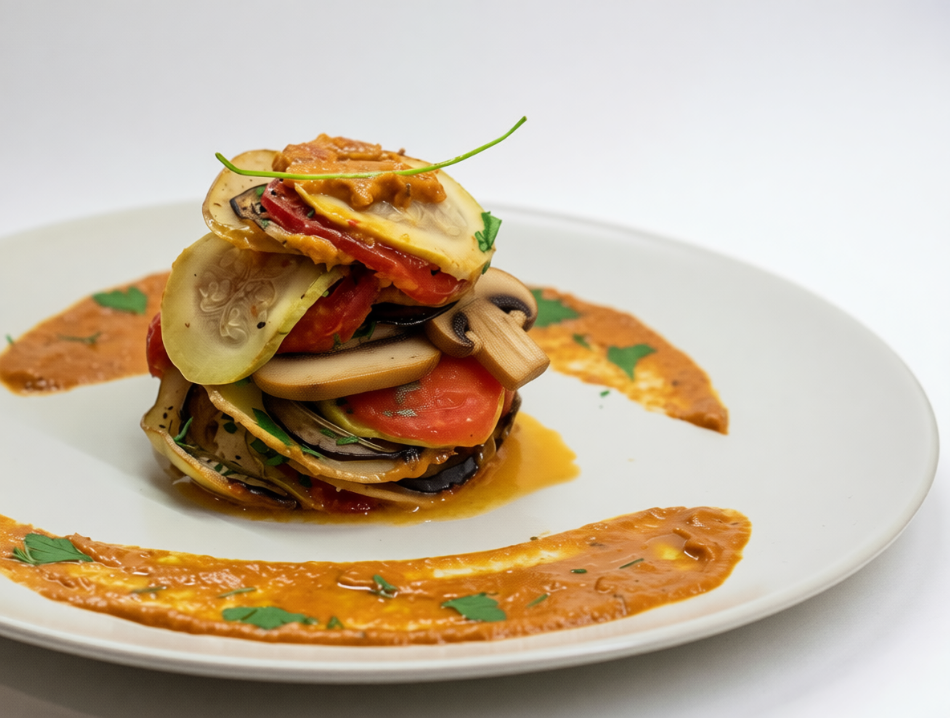
Ratatouille represents one of the most iconic dishes of Provençal cuisine, but its enriched version with mushrooms transforms this traditional preparation into a culinary experience deeply connected to the world of mycology. In this article, we will explore every aspect of this preparation, from the nutritional properties of the individual ingredients to the cooking techniques that preserve the bioactive compounds of mushrooms, creating a bridge between culinary tradition and mycological science.
Ratatouille has deep roots in the Provence region of France, where it originated as a peasant dish based on the use of seasonal vegetables. Its evolution through the centuries represents a fascinating case study of how culinary preparations adapt to local availability and gastronomic discoveries. The addition of mushrooms to this traditional preparation constitutes a relatively recent innovation that deserves to be analyzed from both a historical and nutritional perspective. The first written records of ratatouille date back to the 18th century, although similar preparations were probably already widespread in the Provençal countryside for centuries. The word "ratatouille" comes from the French "touiller", which means "to stir" or "to mix", referring to the cooking technique that involves the harmonious combination of different vegetables. The traditional version mainly includes eggplant, zucchini, bell peppers, tomatoes, and onions, cooked in olive oil with aromatic herbs. In Italy, ratatouille underwent an adaptation process that brought it closer to Sicilian caponata and the Calabrian ciambotta. The systematic addition of mushrooms represents a particularly interesting evolution for mycology enthusiasts, as it combines the nutritional benefits of Mediterranean vegetables with the unique properties of edible mushrooms. This adaptation gained popularity especially in the northern regions of Italy, where the tradition of mushroom foraging is particularly deep-rooted. The choice of mushrooms represents the crucial element that transforms a traditional ratatouille into a dish of mycological interest. Different mushroom species offer organoleptic, nutritional, and textural characteristics that profoundly influence the final result. In this section, we will analyze in detail the most suitable species, their properties, and food safety considerations. Porcini represent the prime choice for a high-end ratatouille. Boletus edulis has an intense aroma and firm flesh that withstands prolonged cooking well, a fundamental characteristic for a dish that requires medium to long preparation times. From a nutritional point of view, porcini provide significant amounts of protein (about 6.5g per 100g), fiber (4.2g), and minerals such as selenium and potassium. Champignons offer a more economical but still valid option from a gastronomic and nutritional point of view. Agaricus bisporus is rich in B vitamins, particularly niacin (B3) and riboflavin (B2), which participate in cellular energy metabolism. Their more delicate texture requires adding them to the preparation in later stages compared to porcini, to avoid excessive disintegration. Besides the classic Porcini and Champignons, numerous other species can enrich the ratatouille with unique aromatic notes. Chanterelles (Cantharellus cibarius) add a slight acidity, Winter Chanterelles (Craterellus tubaeformis) contribute with their characteristic yellow color, while Caesar's Mushrooms (Amanita caesarea) represent the peak of mycological exclusivity. It is essential to remember that only mushrooms perfectly identified by experts should be used in the kitchen, to avoid the risk of intoxication. The integration of mushrooms into ratatouille transforms an already nutritious dish into a concentrate of bioactive compounds with proven health benefits. In this section, we will analyze in detail the complete nutritional profile, highlighting the synergies between the components of Mediterranean vegetables and those of mushrooms, with particular attention to the mechanisms of action at the cellular level. Ratatouille with mushrooms is characterized by a moderate caloric intake (about 180 Kcal per 300g serving) and an excellent balance between macronutrients. Carbohydrates represent about 50% of the energy intake, proteins 15%, and fats 35%, predominantly in the form of monounsaturated fatty acids derived from extra virgin olive oil. This balance reflects the principles of the Mediterranean diet, recognized by UNESCO as an intangible cultural heritage of humanity. The interaction between the bioactive compounds of vegetables and those of mushrooms creates a synergistic effect that amplifies health benefits. The polyphenols from eggplant (nasunin) and tomatoes (lycopene) enhance the antioxidant activity of beta-glucans from mushrooms, while the sulfur compounds in garlic and onion improve the bioavailability of selenium present in mushrooms. This synergy represents an exemplary case of how the integration of different ingredients can create a nutritional profile superior to the simple sum of the parts. At the molecular level, the components of ratatouille with mushrooms act through multiple mechanisms. The beta-glucans from mushrooms modulate the immune response by stimulating the activity of macrophages and natural killer cells. The polyphenols from vegetables activate cellular detoxification pathways such as the Nrf2 factor, while selenium participates in the synthesis of glutathione peroxidase, a crucial enzyme in protection against oxidative stress. These mechanisms contribute to explaining the documented effects on controlling chronic inflammation and preventing degenerative diseases. The preparation of ratatouille with mushrooms requires attention to the cooking phases to preserve the organoleptic characteristics of each ingredient, while simultaneously maximizing the extraction of bioactive compounds. In this section, we will provide a detailed recipe, with precise indications on times, temperatures, and the most appropriate techniques from both a gastronomic and nutritional point of view. For 4 servings of ratatouille with mushrooms, the following ingredients are needed: The correct preparation of mushrooms is fundamental to the success of the recipe. Avoid absolutely washing mushrooms under running water, as they would absorb excessive liquids that would compromise their texture during cooking. Instead, clean the Porcini and Champignons with a damp cloth or a soft brush, removing every trace of soil. Cut the Porcini into slices about 1 cm thick, while the Champignons can be left whole if small or cut in half if larger. Cut the eggplants into cubes of about 2 cm, lightly salt and let them drain in a colander for 30 minutes to remove vegetation water and the slight bitter aftertaste. Meanwhile, prepare the zucchinis by cutting them into 1 cm thick rounds, the peppers, seeded and with internal white parts removed, and cut into strips, the onion thinly sliced, and the garlic finely chopped. This standardization of the cut is important not only for aesthetic reasons but especially to ensure uniform cooking of all ingredients. Cooking ratatouille with mushrooms requires attention to the sequence of adding ingredients, as different vegetables have different optimal cooking times. Scrupulously follow the following sequence to obtain the maximum from an organoleptic and nutritional point of view. In a capacious terracotta or stainless steel saucepan, heat 2 tablespoons of extra virgin olive oil over medium heat. Add the sliced onion and let it sweat gently for about 5 minutes, without letting it color. Add the chopped garlic and cook for a further minute, until it releases its characteristic aroma. At this point, add the peeled tomatoes, coarsely broken up by hand, and the Provencal herbs. Let cook over moderate heat for 15 minutes, stirring occasionally. Add the eggplants, previously drained and dried, to the tomato base, and cook for 10 minutes over medium heat. Subsequently, add the peppers and continue cooking for another 10 minutes. At this point, incorporate the zucchinis and porcini mushrooms, adjusting with salt and pepper. Cooking over moderate heat for 15 minutes with a lid will allow the vegetables to cook evenly without falling apart. In the last 5 minutes of cooking, add the champignons which, having a more delicate texture, require shorter exposure times to heat. Turn off the heat and let the ratatouille with mushrooms rest for at least 15 minutes with the lid closed. This rest is fundamental to allow the flavors to blend completely. When serving, garnish with fresh basil leaves and a drizzle of raw extra virgin olive oil. Ratatouille with mushrooms can be consumed hot, warm, or at room temperature, and develops even more complex aromas if consumed the day after preparation. The regular consumption of ratatouille with mushrooms provides documented health benefits, supported by extensive scientific literature. In this section, we will explore in detail the mechanisms through which the components of this dish exert their positive effects, with particular reference to the most recent studies in the nutritional and pharmacological fields. The combination of Mediterranean vegetables and mushrooms exerts a protective effect on the cardiovascular system through multiple mechanisms. The beta-glucans from mushrooms have been shown to significantly reduce LDL cholesterol levels by interfering with its intestinal absorption and increasing its fecal excretion. Simultaneously, the polyphenols from eggplant and tomatoes improve endothelial function and reduce oxidative stress on LDL particles, decreasing their potential atherogenicity. Controlled clinical studies have highlighted how the regular consumption of dishes based on vegetables and mushrooms can positively influence various metabolic parameters. In particular, an improvement in insulin sensitivity has been observed, a reduction in postprandial triglyceride levels, and a favorable modulation of blood pressure. These effects are attributable to the synergistic action of soluble fibers from mushrooms, potassium from vegetables, and polyphenolic compounds with ACE-inhibitory activity. The mushrooms present in ratatouille represent an exceptional source of immunomodulatory compounds, including the aforementioned beta-glucans but also specific lectins and proteoglycans. These molecules interact with receptors of the innate immune system, such as the Dectin-1 receptor and complement receptor 3, modulating the inflammatory response and enhancing immune surveillance activity. Simultaneously, the fibers from vegetables and mushrooms exert a marked prebiotic effect, promoting the growth of beneficial bacteria of the genus Bifidobacterium and Lactobacillus. Recent metagenomics studies have demonstrated that the regular consumption of preparations like ratatouille with mushrooms induces significant changes in the composition of the gut microbiota. In particular, an increase in bacterial biodiversity is observed, a relative increase in short-chain fatty acid-producing taxa (such as Faecalibacterium prausnitzii), and a reduction in pro-inflammatory species. This modulation of the microbiota contributes not only to gastrointestinal health but also to systemic protection through the gut-brain and gut-liver axes. For mycology enthusiasts who wish to use wild mushrooms in the preparation of ratatouille, it is essential to deepen the aspects related to foraging, identification, and safety. In this section, we will address the good practices for sustainable and safe foraging, with particular attention to the edible species that are best suited for this preparation. The foraging of wild mushrooms must be conducted with respect for forest ecosystems and according to sustainability principles. Always use a wicker basket to allow spore dispersal during transport, avoiding plastic bags that would accelerate the deterioration of the mushrooms. Cut the mushroom at the base of the stem with a sharp knife, without tearing it, to avoid damaging the underground mycelium. Collect only mature but not old specimens, leaving the too young ones in place to allow reproduction. In Italy, mushroom foraging is regulated by regional laws that establish daily quantitative limits, permitted periods, and any necessary permits. Before dedicating oneself to foraging, it is essential to inform oneself about the specific regulations of the region of interest. In general, the foraging limit varies between 1 and 3 kg per person per day, with the obligation in some regions to submit the harvest to the control of the mycological inspectorates of the local health authorities (ASL). The correct identification of mushrooms is a complex process that requires experience and specialized knowledge. There are no simple rules to distinguish edible mushrooms from toxic ones - the only safe method is the in-depth knowledge of each single species. For beginners, it is essential to be accompanied by recognized experts and attend mycology courses organized by accredited scientific associations. In case of doubts, it is always preferable not to consume the mushroom rather than risk even serious intoxication. Some edible species have toxic or poisonous "look-alikes" that can mislead less experienced foragers. The Porcino (Boletus edulis) can be confused with Boletus satanas, toxic; the Chanterelle (Cantharellus cibarius) with Omphalotus olearius, poisonous; the Meadow Mushroom (Agaricus campestris) with Agaricus xanthodermus, toxic. The distinction is based on multiple characteristics such as the color of the gills, the reaction to cutting, the growth habitat, and the organoleptic characteristics. Ratatouille with mushrooms can be preserved through various techniques that preserve its organoleptic and nutritional characteristics. In this section, we will analyze the domestic preservation methods and the transformations that allow extending the shelf life of the product, with particular attention to microbiological and nutritional aspects. Freshly prepared ratatouille with mushrooms can be stored in the refrigerator for 3-4 days, in airtight containers to avoid cross-contamination and odor absorption. For longer periods, freezing represents an excellent alternative, if conducted correctly. Rapidly cool the ratatouille after cooking, portion it into single-use containers, and remove the air before closing. Thaw slowly in the refrigerator and consume within 3 months to best preserve texture and flavors. The different preservation methods differentially influence the nutritional components of ratatouille with mushrooms. Refrigeration involves minimal losses of water-soluble vitamins (about 10-15% after 4 days), while freezing better preserves thermolabile compounds but can slightly alter the texture of the vegetables. Pasteurization for jar preservation determines more significant vitamin losses (up to 30% for vitamin C) but effectively preserves thermostable bioactive compounds like carotenoids and polyphenols. Ratatouille with mushrooms can be transformed into preserves through sterilization processes that allow its storage at room temperature for several months. This process requires attention to hygienic norms and sterilization parameters to avoid microbiological risks, in particular the development of Clostridium botulinum. Always use new jars and lids, fill the jars leaving 2 cm of headspace, and process in a boiling water bath for the appropriate time based on the jar size (generally 40-60 minutes for 500 ml jars). The transformation into preserves of ratatouille with mushrooms requires particular attention to the pH of the product. To be safely stored at room temperature, the final pH must be below 4.5. If the ratatouille does not naturally reach this acidity, it may be necessary to add citric acid or lemon juice. After sterilization, always check the vacuum of the jars by verifying that the center of the lid is concave, and store in a cool, dry place. Ratatouille with mushrooms lends itself to numerous gastronomic pairings and can be interpreted according to different regional culinary traditions. In this section, we will explore the most harmonious combinations and the variants that enrich the culinary repertoire of mycology and plant-based cuisine enthusiasts. Ratatouille with mushrooms can constitute a complete single dish when paired with sources of whole grains and proteins. Whole grain polenta represents a particularly well-suited traditional accompaniment, as its creaminess pleasantly contrasts with the texture of the vegetables and mushrooms. Other interesting pairings include pearled farro, hulled barley, or venere rice, which contribute with their nutritional profile and consistent texture. For additional protein intake, ratatouille with mushrooms can be accompanied by soft-boiled or poached eggs, fresh goat cheeses, or baked oily fish fillets. For a completely plant-based version, the addition of cooked legumes (chickpeas, lentils, or borlotti beans) creates a nutritionally complete dish from an amino acid point of view. In all these combinations, ratatouille with mushrooms serves as an element of moisture and flavor, reducing the need for additional seasonings. Ratatouille with mushrooms has inspired numerous regional variants that incorporate ingredients and techniques from local traditions. In Sicily, the addition of capers, olives, and pine nuts brings it closer to caponata; in Calabria, the use of chili pepper and 'nduja creates a spicy version; in Trentino, the incorporation of smoked speck and smoked ricotta transforms it into a richer and more structured dish. Each variant represents an intelligent adaptation to local availability and cultural preferences, demonstrating the versatility of this preparation. A particularly interesting variant is the Ligurian one, which pairs Porcini mushrooms with basil pesto added at the end of cooking. This combination enhances the herbal aromas and creates a complex and profoundly Mediterranean aromatic profile. For this version, it is essential to add the pesto with the heat off, stirring gently to avoid cooking it and to preserve its freshness and vibrant color. The health benefits of ratatouille with mushrooms are attributable to a complex mixture of bioactive compounds whose stability during cooking and preservation deserves scientific in-depth analysis. In this section, we will analyze in detail the behavior of the main bioactive compounds in relation to the different preparation techniques. The polyphenols from Mediterranean vegetables show different behaviors based on their chemical structure and cooking conditions. The flavonoids from eggplants (such as nasunin) are relatively thermostable and even show an increase in bioavailability after moderate cooking, while the phenolic compounds from tomatoes (such as chlorogenic acid) can undergo significant degradation with prolonged cooking at high temperatures. Steaming or cooking over moderate heat with a lid preserves polyphenolic compounds better than boiling or frying. Lycopene, the carotenoid responsible for the red color of tomatoes, represents a special case because its bioavailability increases significantly after heat treatment. Cooking processes break the cell walls of tomatoes and isomerize lycopene from the trans form (prevalent in raw tomatoes) to the cis form, more easily absorbable at the intestinal level. This explains why products based on cooked tomatoes, such as passata or peeled tomatoes, constitute more effective sources of lycopene compared to fresh tomatoes. Beta-glucans, structural polysaccharides of the fungal cell wall with demonstrated immunomodulatory activities, show remarkable thermal stability. During cooking, partial solubilization of these compounds occurs, passing into the cooking broth, increasing their bioavailability. Slow and prolonged cooking favors the extraction of beta-glucans without significantly degrading them, provided that temperatures above 100°C are not exceeded for excessively long times. The partial solubilization of beta-glucans during cooking affects the rheological properties of the preparation, giving a slight viscosity that contributes to the sensation of creaminess in the mouth. This effect is particularly appreciable when the ratatouille is prepared with a significant percentage of mushrooms and cooked over low heat for at least 30-40 minutes. Ratatouille: history and evolution in mediterranean cuisine
Provençal origins and european spread
The italian adaptation and the inclusion of mushrooms
Mycological analysis: selecting mushrooms for ratatouille
Porcini mushrooms (Boletus edulis): the excellence in ratatouille
Chemical-nutritional characteristics of Porcini
Component Amount per 100g Specific benefit Protein 6.5g Supply of essential amino acids Carbohydrates 4.3g Slow-release energy Fiber 4.2g Intestinal regulation Selenium 18.5μg Antioxidant and immune support Potassium 520mg Blood pressure regulation Champignon (Agaricus bisporus): the versatile alternative
Other edible mushrooms to vary the preparation
Complete nutritional composition of ratatouille with mushrooms
Macronutrients and energy balance
Comparative nutritional table
Nutrient Traditional ratatouille (100g) Ratatouille with mushrooms (100g) Percentage variation Energy (Kcal) 52 60 +15.4% Protein (g) 1.8 2.5 +38.9% Fat (g) 2.5 2.7 +8% Carbohydrates (g) 6.2 6.8 +9.7% Fiber (g) 2.1 2.8 +33.3% Potassium (mg) 280 350 +25% Selenium (μg) 0.5 5.2 +940% Bioactive compounds and their synergies
Mechanisms of Action at the Cellular Level
Complete recipe: ratatouille with Porcini and Champignon mushrooms
Ingredients and preliminary preparation
Phase 1: mushroom preparation
Phase 2: vegetable preparation
Cooking techniques and precise timings
Phase 3: cooking the aromatic base
Phase 4: sequential cooking of vegetables
Phase 5: resting and serving
Health benefits: scientific evidence and mechanisms of action
Cardiovascular and metabolic protection
Documented effects on metabolic parameters
Immunomodulatory and prebiotic activity
Modulation of the gut microbiota
In-depth: foraging, identification, and safety
Sustainable foraging techniques
Regional regulations and foraging limits
Safe identification of edible species
Species at risk of confusion
Preservation and processing of ratatouille with mushrooms
Refrigeration and freezing preservation
Effects of preservation on the nutritional profile
Transformation into homemade preserves
Considerations on microbiological safety
Gastronomic pairings and regional variations
Pairings with grains and proteins
Combinations with animal and vegetable proteins
Italian regional variants
The ligurian version with Porcini mushrooms and basil
Bioactive compounds of the dish and their stability
Polyphenolic compounds and their thermal stability
Lycopene and thermal processes
Beta-glucans from mushrooms and their behavior during cooking
Effect of cooking on rheological properties
Ratatouille with mushrooms establishes itself as an emblematic dish that skillfully unites the wisdom of Mediterranean culinary tradition with the most recent acquisitions of mycological and nutritional science. This preparation represents much more than a simple recipe, transforming into a true study on the synergies between bioactive compounds of plant and fungal origin. The detailed analysis of the nutritional components, optimal cooking methods, and preservation techniques demonstrates how an apparently simple dish can hide a fascinating complexity. For mycology enthusiasts, the mushroom version of ratatouille also offers the opportunity to explore the organoleptic characteristics of different species in a culinary context that enhances their peculiarities without overpowering them. The versatility of this preparation, capable of adapting to different regional and personal variants, guarantees its relevance and continuous renewal, keeping intact its link with the peasant roots of Provençal cuisine. Every bite of this ratatouille thus contains not only authentic and deep flavors, but also centuries of culinary history and decades of scientific research, making it a dish that satisfies both the palate and the intellect of those who approach the world of mushrooms with curiosity and respect. This article was developed with the support of artificial intelligence and subsequently reviewed, corrected, and validated by the NaturNext.eu technical team, which guarantees its reliability and compliance with official sources. Ratatouille: a dish divided between tradition, nutrition, and innovation
The kingdom of mushrooms is a universe in continuous evolution, with new scientific discoveries emerging every year about their extraordinary benefits for intestinal health and overall well-being. From today onwards, when you see a mushroom, you will no longer think only of its taste or appearance, but of all the therapeutic potential it holds in its fibers and bioactive compounds. ✉️ Stay Connected - Subscribe to our newsletter to receive the latest studies on: Nature offers us extraordinary tools to take care of our health. Mushrooms, with their unique balance between nutrition and medicine, represent a fascinating frontier that we are only beginning to explore. Continue to follow us to discover how these extraordinary organisms can transform your approach to well-being.Continue your journey into the world of mushrooms