



Chitin is the hidden factor that determines how truly digestible mushrooms are. Anyone who grows, studies, or simply loves mushrooms soon encounters a paradox: a food rich in beneficial compounds, yet often poorly assimilated. The reason lies in the structure of the fungal cell wall, where chitin forms a resistant matrix that traps proteins, beta-glucans, and minerals.
Heat, applied judiciously, is the primary tool for opening up this structure. But not all heat treatments are equivalent, and not all mushrooms respond in the same way. This article compares the available data on chitin, heat, and bioavailability, with an approach designed for those who want to understand not only what works, but why it works, and how to apply it concretely in home cultivation and conscious consumption.
In this article...
1. What is chitin and why it hinders bioavailability
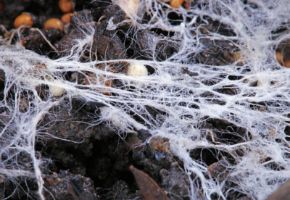
Chitin is a nitrogenous structural polysaccharide that constitutes the main component of the fungal cell wall. Its biological function is analogous to that of cellulose in plants: it provides rigidity and protection. However, while humans possess enzymes capable of partially degrading cellulose, chitin represents a more complex substrate. Scientific literature indicates that human gastric juice contains an active chitinase, capable of cleaving chitin to a limited extent. This fact is important because it refutes the idea that chitin is completely inert in the human gastrointestinal tract. Nevertheless, the efficiency of this enzymatic degradation is modest and variable, and chitin integrates into the fungal wall a three-dimensional network that physically traps nutrients.
Quantitative data helps to understand the scale of the phenomenon. An Italian study published in Food Chemistry analyzed widely consumed mushrooms (Agaricus bisporus, Pleurotus ostreatus, and the Boletus group), finding chitin contents ranging from 0.5 to 3.3 grams per 100 grams of fresh weight [ScienceDirect]. The variability is enormous and depends on the species, the stage of maturity, and the treatment undergone. An analysis conducted at the University of Illinois measured even higher values in some varieties: 8.0% chitin in mature raw portabellas and 7.7% in enoki, with a reduction to 2.7% after cooking [FAO AGRIS]. These numbers explain why a mushroom consumed raw can be heavy to digest: chitin is not broken down by chewing or gastric acidity in a short time.
The practical consequence is twofold. On the one hand, chitin limits the access of digestive enzymes to the proteins and polysaccharides enclosed in the fungal cell. On the other hand, it itself constitutes a functional dietary fiber: once it reaches the colon, it can act as a substrate for the gut microbiota. Chitin is therefore not an enemy to be eliminated, but a barrier to be modulated. The operational question becomes: which treatment allows preserving the beneficial compounds while reducing the resistance of the cell wall? The answer, according to available research, lies in controlled heat and, prospectively, in targeted enzymatic strategies.
2. The effect of heat: cooking, boiling, and structural transformations
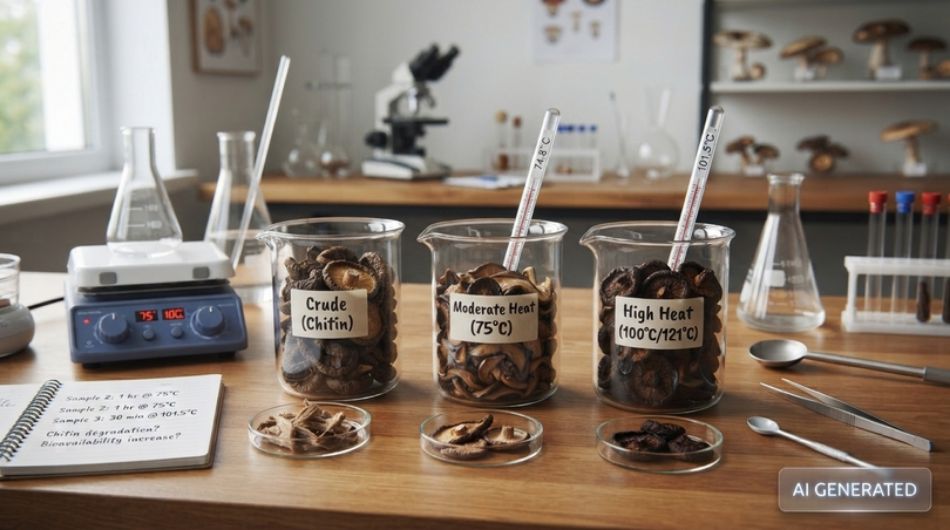
Heat is the most powerful and accessible modifier of fungal bioavailability. Heating produces two simultaneous effects: it denatures proteins and loosens the chitin matrix, making nutrients more accessible to digestive enzymes. The technical literature agrees on this point. Paul Stamets, an internationally renowned mycologist, synthesizes the position of the scientific community with a clear statement: raw mushrooms are largely indigestible due to their resistant cell walls, and adequate cooking is necessary to release proteins, B vitamins, minerals, and exclusive compounds.
A study published in Food Chemistry offers direct quantitative feedback on the effect of boiling. Researchers analyzed seven species of edible mushrooms before and after boiling, observing that boiling generally reduces the content of amino acids and phenolic compounds, but increases protein digestibility and improves the apparent bioaccessibility of several nutrients [RSC Publishing]. Microstructural analysis with a scanning electron microscope showed a visible disruption of the fungal cellular networks and the formation of structural discontinuities after treatment. In simple terms: heat opens gaps in the wall, and these gaps allow enzymes to reach what was previously inaccessible.
A crucial, often overlooked aspect concerns the loss of water-soluble compounds. Boiling in water can reduce the content of thermolabile and hydrophilic metabolites, such as certain phenols and vitamins. The optimal compromise does not consist of cooking as little as possible, but of cooking in a targeted manner: times sufficient to degrade the chitin, but not so long as to excessively disperse the beneficial compounds into the cooking water. For growers and enthusiasts, this awareness translates into a conscious choice of techniques: sautéing, steaming, or adding mushrooms to stewed preparations are options that reduce dispersion compared to prolonged boiling in abundant water.
3. Comparison between species and methods: the data
Not all mushrooms react to heat in the same way, and not all species present the same chitin load. The available data allows for a useful comparison for those who wish to guide their cultivation or purchasing choices. The following table summarizes the chitin and beta-glucan values detected in some widely consumed species, before and after heat treatment, based on the cited studies.
| Species / Condition | Chitin (% fresh weight) | Beta-glucans | Source |
|---|---|---|---|
| Agaricus bisporus (raw) | 0.5–3.3 g/100 g | Negligible | Manzi et al., 2003 [ScienceDirect] |
| Pleurotus ostreatus (raw) | In the range 0.5–3.3 g/100 g | 139–666 mg/100 g | Manzi et al., 2003 |
| Portabella (raw, mature) | 8.0% | ~0.2% | Dikeman et al., 2005 [FAO AGRIS] |
| Portabella (cooked) | ~2.7% | n.a. | Dikeman et al., 2005 |
| Enoki (raw) | 7.7% | Absent | Dikeman et al., 2005 |
| Enoki (cooked) | ~2.7% | Absent | Dikeman et al., 2005 |
Reading this data offers an important insight: cooking substantially reduces chitin, but the extent of the reduction varies with the species and the technique. In the case of portabella, values go from around 8.0% to about 2.7%, with a simultaneous increase in total dietary fiber. This means that heat does not "destroy" the fiber, but makes it more available and less compact. For beta-glucans, the situation is more nuanced: data indicates that mushrooms of the Pleurotus and Boletus genera contain significant quantities, while Agaricus is poor in them. Those looking for a mushroom with a richer beta-glucan profile will find in Pleurotus ostreatus and the Boletus group more interesting options compared to the common button mushroom.
A promising research front concerns the enzymatic degradation of the cell wall. A 2025 study on Pleurotus eryngii demonstrated that treatment with specific enzymes (lywallzyme II or snailase) significantly increases protein accessibility, with a yield of low molecular weight peptides (≤800 Da) up to 71% of the total after simulated digestion. This data opens a perspective that goes beyond home cooking: in the future, enzymatic bioengineering could make available mushrooms with superior protein bioavailability, particularly interesting for the alternative protein sector. For now, however, heat remains the most accessible and validated tool.
4. Implications for growers, researchers, and hobbyists
Understanding the relationship between chitin, heat, and bioavailability has different practical consequences depending on the role of the person approaching mushrooms. For professional growers, species selection and post-harvest management become levers to maximize the nutritional value of the product. For researchers, data on interspecific variability and the effect of enzymatic treatments indicate directions of investigation that are still little explored. For hobbyists, the awareness that cooking is not a marginal detail but a functional step transforms the approach to cooking and preservation.
An element that unites all these categories is freshness. Mushrooms grown at home or purchased from short supply chains maintain a water content and structural integrity that directly influence the response to heat. Mushrooms that are too old or poorly stored have cell walls that are already partially degraded, but also greater vulnerability to contamination and a loss of volatile compounds. Controlled home cultivation offers a hardly replicable advantage: the possibility of harvesting at the right time and cooking within a short time, reducing the window in which chitin remains in its most compact configuration.
For those involved in research, one aspect deserves attention: most studies on bioavailability use in vitro digestion models. These models are valuable but do not replace the complexity of the human gastrointestinal tract, where the microbiota, pH, and transit times vary considerably among individuals. Interindividual variability in the ability to degrade chitin is a factor that is still poorly quantified, and represents a research frontier with potential repercussions on the personalization of nutritional recommendations.
5. Growing high-bioavailability mushrooms at home
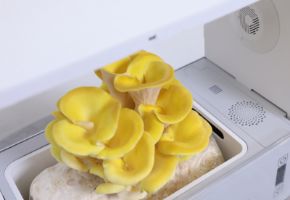
Home cultivation allows controlling variables that directly affect the quality of the mushroom and its response to heat. NaturNext.eu was founded in 2024 with the aim of making mushroom cultivation in a home environment accessible through a grow box designed to automatically manage humidity, temperature, lighting, and ventilation. The Grow Box Basic integrates humidity sensors, a thermometer, full-spectrum LED lights, and silent fans, creating the conditions for constant and predictable growth [NaturNext]. For those who grow with the goal of consuming fresh and well-structured mushrooms, the possibility of harvesting at the right point and controlling the supply chain from spore to table represents a concrete advantage in terms of potential bioavailability.
A second element of interest concerns lighting. The Growing Ledpoint LED Bar, available in the NaturNext catalog, uses 108 LEDs (36 UV at 305-315 nm and 72 white at 3800-4200K) with independent channel control via ZigBee. The UV component, in particular, has been associated with the stimulation of vitamin D synthesis in cultivated mushrooms, a fat-soluble compound whose presence enriches the nutritional profile of the harvest. For those who desire a technically informed approach to cultivation, the combination of environmental control and targeted lighting represents a step towards mushrooms that are not only fresh but also richer in functional compounds.
Naturally, cultivation is only part of the equation. The final bioavailability depends on the interaction between the quality of the raw mushroom and the applied heat treatment. A mushroom grown in optimal conditions and harvested at the right time will derive the maximum benefit from cooking that respects the times and temperatures described above. Conversely, a lower-quality mushroom will hardly be able to compensate for its shortcomings with a more aggressive culinary treatment. In this sense, the short supply chain is not a fad but a technical lever.
To delve into the practical aspects of cultivation, from substrate preparation to incubation management, NaturNext provides dedicated starter kits and species-specific guides. The suggested approach is that of someone who wants to understand the processes, not just follow instructions: knowing why a parameter is important makes it easier to adapt it to your own conditions, whether it is an apartment with variable temperature or a dedicated space with climate control.
6. Frequently asked questions
| Are raw mushrooms really indigestible? |
| Largely yes, due to chitin. The fungal cell wall is resistant to human digestive enzymes, and cooking is necessary to make proteins, vitamins, and minerals accessible. There are partial exceptions (such as truffles, consumed more for aroma than for nutritional value), but for most edible mushrooms, cooking is recommended. |
| Does cooking reduce chitin or simply make it more accessible? |
| Both. Data shows a measurable reduction in chitin content after cooking (for example, from 8.0% to 2.7% in portabella) and a simultaneous disruption of the structural matrix, which increases protein digestibility and nutrient bioaccessibility [FAO AGRIS]. |
| Which cooking method best preserves nutrients? |
| Techniques that reduce contact with abundant water (steaming, sautéing, stewing) tend to limit the dispersion of water-soluble compounds compared to prolonged boiling. The goal is to reach temperatures sufficient to modify the cell wall without excessively prolonging the treatment [RSC Publishing]. |
| Does home cultivation affect bioavailability? |
| Indirectly, yes. Growing at home allows you to harvest fresh mushrooms and control the time between harvest and consumption, reducing post-harvest degradation. A grow box like the one from NaturNext maintains stable conditions of humidity, temperature, and light, promoting uniform mushroom development. |
| Are beta-glucans affected by cooking? |
| The available data is less unambiguous than for chitin. Beta-glucans are more thermostable, but their accessibility can vary with the disruption of the cell wall. The species matters: Pleurotus and Boletus contain significant quantities of beta-glucans, while Agaricus is poor in them. |
What the comparison between chitin, heat, and bioavailability teaches us
The comparison between chitin, heat, and bioavailability does not end in a data table, but offers a practical key to understanding for anyone who wants to extract the maximum nutritional value from mushrooms. After examining the structure of the fungal cell wall, the effect of different forms of heat treatment, and the differences between species, a coherent picture emerges: bioavailability is not a fixed property of the mushroom, but the result of an interaction between its intrinsic composition, the way it is treated, and the context in which it is consumed. This awareness transforms a daily gesture — cooking a mushroom — into an informed choice, with tangible repercussions on the quality of the diet and the sustainability of the supply chain.
A summary of the key points
The first element to retain concerns the nature of chitin as a modulable barrier and not as an absolute obstacle. Data shows that chitin limits the access of digestive enzymes to nutrients, but that this limitation can be significantly reduced through controlled heat. The measured reduction in the transition from raw to cooked (with values in portabella dropping from 8.0% to about 2.7%) is not a technical detail, but proof that adequate treatment concretely changes the amount of nutrients the body is able to absorb. At the same time, the remaining chitin performs a valuable function as dietary fiber, feeding the gut microbiota: the goal is not to eliminate it, but to manage it.
The second point concerns the specificity of the species. Not all mushrooms present the same chitin load nor the same beta-glucan profile. The comparison between Agaricus, Pleurotus, Boletus, and Enoki shows substantial differences that affect cultivation, purchasing, and consumption choices. Those looking for a mushroom with a richer beta-glucan profile will find in Pleurotus ostreatus and the Boletus group more interesting options compared to the common button mushroom, while those who prioritize practicality and availability can turn to more widespread species, knowing that heat treatment remains the decisive factor for bioavailability.
The third element is methodological in nature: research on fungal bioavailability is evolving and still presents wide margins for in-depth study. Most studies use in vitro digestion models, which do not replicate the complexity of the human gastrointestinal tract, and interindividual variability in the ability to degrade chitin remains poorly quantified. The prospects opened by the enzymatic degradation of the cell wall (with yields of low molecular weight peptides up to 71% after simulated digestion) indicate that the future could reserve mushrooms with superior bioavailability, but for now, heat remains the most accessible and validated tool.
From theory to practice: indications for conscious consumption
The practical implications of this comparison can be summarized in a few operational recommendations, valid both for those who grow and those who buy. Freshness is the first factor to safeguard: recently harvested and properly stored mushrooms maintain a structure that responds better to heat treatment, while mushrooms that are too old present greater vulnerability to contamination and a loss of volatile compounds. Controlled home cultivation, such as that made possible by the NaturNext grow box, offers a hardly replicable advantage in this sense: the possibility of harvesting at the right time and cooking within a short time, reducing the window in which chitin remains in its most compact configuration.
The second factor concerns the choice of cooking technique. Techniques that reduce contact with abundant water (steaming, sautéing, stewing) tend to limit the dispersion of water-soluble compounds compared to prolonged boiling. The goal is to reach temperatures sufficient to modify the cell wall without excessively prolonging the treatment, balancing the need to degrade chitin with that of preserving vitamins and phenols. For growers and hobbyists, this awareness translates into a conscious choice of techniques, which takes into account the species and the intended use of the harvest.
The third factor is the combination between the quality of the raw mushroom and the applied treatment. A mushroom grown in optimal conditions and harvested at the right time will derive the maximum benefit from cooking that respects the times and temperatures described, while a lower-quality mushroom will hardly be able to compensate for its shortcomings with a more aggressive treatment. In this sense, the short supply chain is not a fad but a technical lever: knowing where the mushroom comes from and how it has been managed is an integral part of its final bioavailability.
A look at the future of research and cultivation
The comparison between chitin, heat, and bioavailability finally opens a reflection on the future. On the one hand, enzymatic research is exploring paths that could make available mushrooms with superior protein bioavailability, with potential repercussions on the alternative protein sector. On the other hand, home cultivation is becoming increasingly accessible thanks to technologies that automate the control of humidity, temperature, lighting, and ventilation, making it possible to obtain constant harvests even in limited spaces. The combination of scientific research and cultivation technology could redefine the way we conceive of mushrooms: no longer just a food, but a modulable system of nutrients and bioactive compounds.
For those who approach this world with curiosity, the most important conclusion is perhaps the simplest: mushrooms are not a neutral food, but a complex organism that responds predictably to those who understand its structure. Knowing why cooking is necessary, why the species matters, and why freshness is decisive is not an expert's luxury, but an accessible skill that concretely improves the quality of what we bring to the table. The comparison between chitin, heat, and bioavailability is therefore not an academic exercise, but a practical guide for those who want to extract the maximum value from one of the most fascinating foods in the natural kingdom.
Continue to explore the world of mushrooms with our guides dedicated to home cultivation and NaturNext products, and discover how to turn this knowledge into more conscious daily choices.
This article was developed with the support of artificial intelligence and subsequently reviewed, corrected, and validated by the technical team of NaturNext.eu, which guarantees its reliability and compliance with official sources.
The kingdom of fungi is a constantly evolving universe, with new scientific discoveries emerging every year about their extraordinary benefits for gut health and general well-being. From now on, when you see a mushroom, you will no longer think only of its taste or appearance, but of all the therapeutic potential it holds in its fibers and bioactive compounds. ✉️ Stay connected - Subscribe to our newsletter to receive the latest studies on: Nature offers us extraordinary tools to take care of our health. Mushrooms, with their unique balance between nutrition and medicine, represent a fascinating frontier that we are only just beginning to explore. Continue to follow us to discover how these extraordinary organisms can transform your approach to well-being.Continue your journey in the world of mushrooms