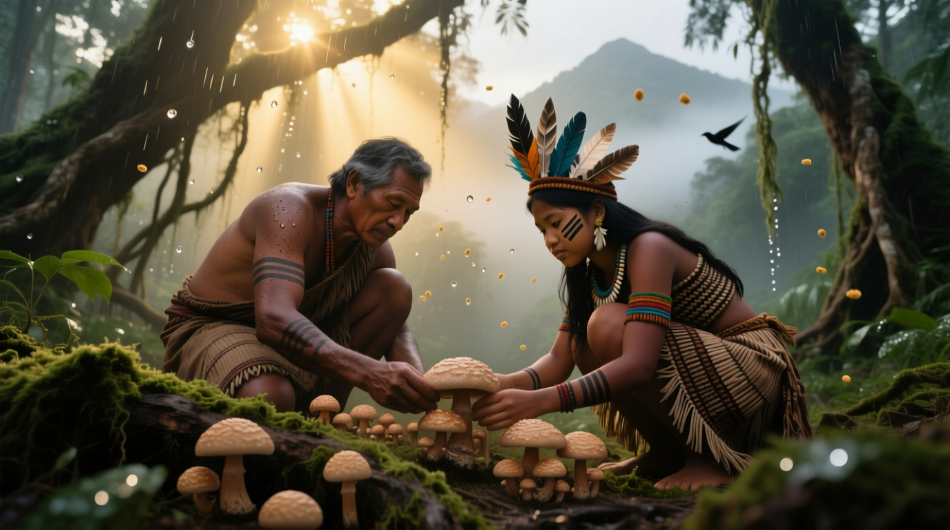
When we think of mycology, the science that studies fungi, our minds often turn to modern laboratories, microscopes, and scientific publications, but never to indigenous peoples. However, there is another immense body of knowledge, perhaps even older and more deeply rooted, preserved by ancient peoples around the world. These communities, in symbiosis with their landscapes for millennia, have developed a holistic and sophisticated understanding of the fungal kingdom, which goes far beyond the simple distinction between edible and poisonous species.
The vast and fascinating kingdom of fungi hides one of the best-kept secrets of our planet's biodiversity. While most people recognize only a few dozen edible or poisonous species, the reality is that the fungal world represents one of the most unexplored frontiers of contemporary biology. This article aims to reveal the extent, importance, and future prospects of this extraordinary, still largely unknown, biodiversity, with particular attention to the Italian and Mediterranean context.
A quiet yet powerful revolution is taking place in the food production landscape, fusing the principles of mycology with the most advanced genetic engineering techniques. This article aims to delve deeply into the world of engineered yeast, the microorganisms reshaping our approach to protein production. For mycologists and mushroom breeders, accustomed to manipulating complex eukaryotic organisms, these developments represent not only a scientific curiosity but a logical extension of their expertise in a cutting-edge field. We will analyze every aspect of this technology, from its biological foundations to practical applications, with particular attention to the influence of critical environmental parameters such as light, its specific spectra, and photoperiod management—elements familiar to anyone engaged in controlled cultivation.