



Guttation in mushrooms is a fascinating spectacle that transforms mycelium and carpophores into seemingly sentient organisms, capable of "crying". This phenomenon, known as guttation, is not a tear of sadness, but a sophisticated physiological mechanism that reveals the intimate connection between the fungal kingdom and the surrounding environment. For the expert grower, the mycology enthusiast, or the researcher, guttation is a signal, an indicator that shows the health status of the mycelium, the efficiency of the substrate, and the microclimatic conditions.
In this article, we will delve into the beating heart of the fungal world, exploring every nuance of guttation. We will analyze what it means when a crying mushroom appears in our crops, how to distinguish it from other exudates, and what measures to adopt to best interpret and manage this natural event. Not just theory: we will connect these concepts to the daily practice of cultivation, suggesting how to optimize conditions for a vigorous and productive mycelium. We will talk about substrates, mushroom spawn, cultivation techniques, and how proper lighting, such as that offered by LED strips from Ledpoint.it, can positively influence the life cycle of your basidiomycetes.
Get ready to discover that the mushroom's "crying" is actually a complex language, a window into its well-being that every mycologist should learn to read. From what to do about guttation to what guttation means, passing through specific cases like calla lily guttation what to do (a botanical parallel that teaches us a lot), this journey will provide you with the tools to become an attentive interpreter of your mycelia.
📖 In this article...
What is guttation in mushrooms? Definition and mechanisms
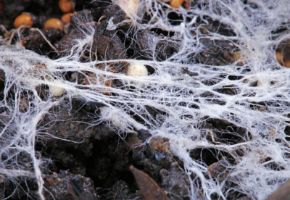
Guttation is a physiological process by which fungi (and many plants) expel droplets of liquid through specialized structures. In basidiomycetes, this phenomenon typically manifests on the surface of the mycelium, on primordia, or on the cap of the carpophore. Unlike transpiration, which is a gaseous process, guttation is a release of liquid water, often rich in metabolic compounds, which derives from positive root pressure or water imbalances. In fungi, this mechanism is linked to osmotic regulation and the removal of waste metabolites, but also to responses to specific environmental stimuli.
From a scientific point of view, guttation is the result of hydrostatic pressure generated inside the hyphae, which pushes water outward through hydathodes or apical pores. This flow is favored by a humidity-saturated environment, low transpiration, and active nutrient uptake from the substrate. In the case of cultivated mushrooms, abundant guttation is often an indication of high-quality mushroom spawn and a well-colonized substrate, where metabolic activity is high. However, when the drops become excessive or change color, we might be facing a sign of stress or contamination.
A fascinating aspect is that the chemical composition of the guttation liquid varies depending on the species, the stage of development, and environmental conditions. Recent studies have identified amino acids, sugars, enzymes, and even antibiotic compounds within it, suggesting a defensive role. For the grower, guttation is therefore a monitoring tool: observing the frequency, appearance, and position of the drops can provide valuable clues about the health status of the crop.
Guttation in basidiomycetes: a sign of health or stress?
When we talk about mushroom guttation, we refer to an event that can have multiple interpretations. In basidiomycetes, such as Pleurotus, Lentinula, or Psilocybe, the appearance of drops on surfaces is often associated with active colonization and high relative humidity conditions. In an optimal cultivation environment, with excellent quality substrate spawn and proper microclimate management, guttation is a sign of vitality. The drops are clear, transparent, and form mainly on the active growth zones of the mycelium.
However, excessive guttation or guttation accompanied by chromatic alterations (yellowish, brown, or reddish drops) can be a warning sign. In cases of guttation, what to do becomes a crucial question. A dark or cloudy liquid could indicate the presence of bacterial contaminants or substrate decomposition. Similarly, if guttation occurs under poor ventilation conditions, it could be a symptom of CO₂ accumulation that the mycelium tries to compensate for through an increase in internal pressure.
An interesting parallel is with plants: calla lily guttation is a common question among gardeners. In calla lilies, guttation is often a normal phenomenon, but if the drops are sticky or pigmented, it can signal water stress or an excess of fertilizers. In mushrooms, the principle is similar: guttation must be interpreted in the overall context of the system. A crop that "cries" in a controlled and constant manner is a healthy crop, actively metabolizing the nutrients of the substrate.
To help growers distinguish between physiological guttation and a stress signal, we have gathered some key indicators in the following table:
| Appearance of guttation | Probable meaning | Recommended action |
|---|---|---|
| Clear, transparent, abundant drops | Active colonization, good humidity, efficient metabolism | Maintain conditions; monitor ventilation |
| Yellowish or amber drops | Possible accumulation of secondary metabolites or onset of oxidative stress | Check temperature and CO₂ levels; increase air exchange |
| Dark, brown drops or with sediment | Potential bacterial or yeast contamination; decomposing substrate | Isolate the crop; reduce humidity; consider the use of natural antimicrobials |
| Absence of guttation in humid conditions | Possible nutrient deficiency or drying stress | Check the water content of the substrate; supplement with fresh mushroom spawn |
The "crying mushroom": interpretation and cultural meaning
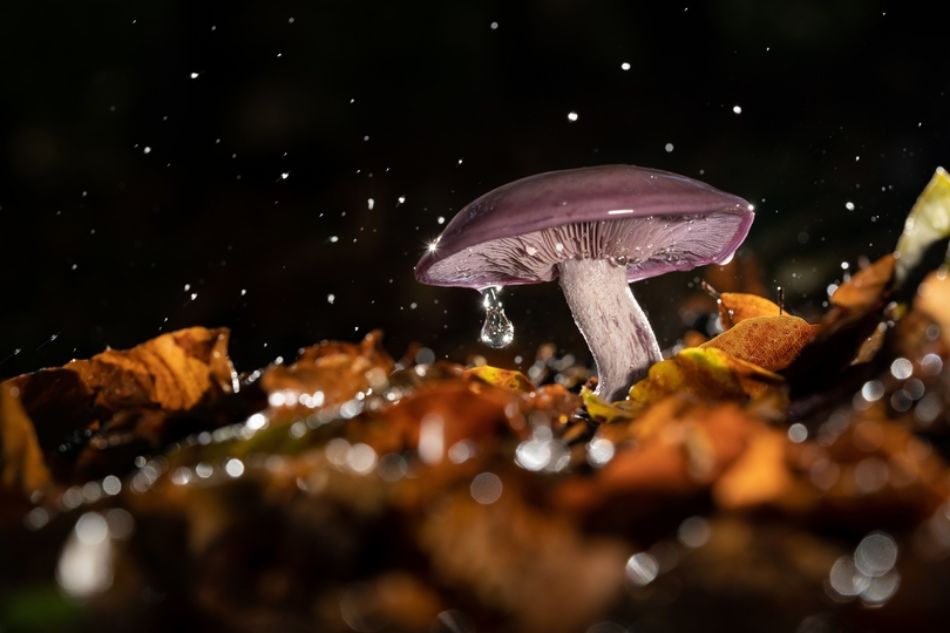
The expression crying mushroom evokes a poetic and almost anthropomorphic image. In many cultures, the presence of drops on mushrooms has been interpreted as a sign of impending rain or as a message from the gods. Today we know that guttation is a perfectly explainable phenomenon, but its charm remains intact. For the modern mycologist, a crying mushroom is a subject of study that reveals details about the fungus-substrate-environment interaction.
This fungal "tear" is not just water: it often contains enzymes that pre-digest the surrounding organic matter, facilitating nutrient absorption. Some researchers hypothesize that the drops may also attract or repel specific microorganisms, modulating the microbiome associated with the fungus. For the grower, observing a crying mushroom is an opportunity to refine one's observational skills and to understand more deeply the life cycle of their product.
Another interesting aspect is that guttation can vary depending on the growth phase. In the initial phases of substrate colonization, the mycelium tends to show more widespread guttation, while during fruiting, the drops concentrate on the primordia and the margins of the cap. This variation is a useful indicator for the grower who wishes to synchronize production phases.
Guttation: what to do? Practical guide for the grower
The question "what to do in case of guttation" is among the most frequent in mycology forums and among hobbyist growers. The answer is not unique, but depends on the context. If the guttation is clear and abundant, there is no need to intervene: it is a positive signal. If instead you notice anomalies, here is a checklist of actions:
- Check substrate humidity: a substrate that is too wet can favor excessive guttation and create conditions for contamination. Slightly reduce misting.
- Increase ventilation: insufficient air exchange leads to CO₂ accumulation, which the mycelium tries to compensate for with greater guttation pressure. Introduce slight passive or active ventilation.
- Check the temperature: thermal fluctuations or excessively high temperatures can stress the mycelium, altering the composition of the guttation liquid. Maintain a stable temperature around 22-25°C for most species.
- Inspect color and odor: if the drops emit an unpleasant odor or are cloudy, contamination may have set in. In this case, consider isolating the crop and, if necessary, removing the infected areas.
- Evaluate spawn quality: poor or absent guttation in the presence of high humidity could indicate low-quality mushroom spawn or inadequately pasteurized substrate. For high-performing substrates, you can rely on NatureNext products, selected to ensure mycelial vitality.
Furthermore, it is important to remember that guttation is a dynamic process. A healthy crop may show peaks of guttation at certain times of the day, often coinciding with nighttime humidity peaks. Learning to recognize these natural rhythms is part of the art of cultivation.
Substrate spawn and guttation: the role of nutrition
The link between substrate spawn and guttation is very strong. Spawn, which is the vegetative mycelium inoculated onto a starting substrate (such as grain, millet, or sawdust), is the engine of colonization. A vigorous spawn, rich in active hyphae, is capable of absorbing nutrients with great efficiency, generating an osmotic pressure that favors guttation. Therefore, choosing a top-quality mushroom spawn is the first step to obtaining a crop that "cries" in a healthy and productive manner.
A substrate well-colonized by quality spawn will show diffuse and uniform guttation, a signal that the mycelium is assimilating nutrients and preparing the ground for fruiting. Conversely, a weak or contaminated spawn will produce irregular or absent guttation, compromising the entire production.
To optimize yield, it is advisable to pair quality spawn with a balanced substrate, rich in carbon and nitrogen, and under controlled microclimatic conditions. In this framework, lighting also plays a role: the NaturNext grow box can stimulate mycelial growth and positively influence metabolic processes, including guttation.
Light and cultivation: the contribution of LED strips
Although mushrooms do not perform photosynthesis, light is an important environmental signal that regulates morphogenesis, carpophore orientation, and, in some species, pigmentation. Recent studies have shown that specific wavelengths, particularly in blue and red, can influence mycelial growth and productivity. In this context, the use of a grow bar for lighting cultivation chambers can make a difference.
Well-dosed light, with targeted spectra, not only improves the aesthetic quality of the mushrooms, but can also reduce water stress and optimize transpiration, indirectly influencing guttation. An evenly lit environment, without hot spots, helps keep environmental conditions constant, reducing fluctuations that could cause abnormal guttation. For the most demanding growers, adjustable intensity LED systems allow simulating natural conditions and studying the effects of light on fungal physiology.
Integrating proper LED lighting with careful management of the substrate and spawn is the key to obtaining excellent crops.
FAQ: frequently asked questions about guttation
What is the difference between guttation and condensation?
Guttation is an active process of liquid expulsion from the fungus, rich in metabolites; condensation, on the other hand, is water that passively deposits on surfaces due to temperature differences. Condensation is distilled water, while guttation contains organic compounds.
Is guttation always a positive sign in mushrooms?
Not always. Clear and moderate guttation is a sign of health. If the drops are dark, cloudy, or foul-smelling, it could be a signal of contamination or stress. In that case, consult the table above for corrective actions.
Which mushrooms show guttation most frequently?
Many basidiomycetes, such as Pleurotus ostreatus, Lentinula edodes (shiitake), Psilocybe cubensis, and Agaricus bisporus, show evident guttation under high humidity conditions. Mushrooms of the genus Mycena are also known for their "tearful" drops.
Calla lily guttation what to do? Is it related to mushrooms?
Calla lily guttation what to do is a botanical topic, but the principle is analogous: if calla lily leaves drip, it is often normal. If the drops are colored, it may indicate an excess of fertilizers. In mushrooms, the logic is similar: evaluate the context and act accordingly.
How does spawn quality affect guttation?
High-quality, vital, and pure mushroom spawn produces an active mycelium that generates balanced guttation. A weak or contaminated spawn leads to reduced or abnormal guttation.
Guttation: listening to the language of mushrooms
Guttation is much more than a simple "crying" of mushrooms: it is a chemical and physical dialogue between the mycelium and its environment. Learning to read it means getting in tune with the life cycle of the fungus, anticipating its needs, and responding promptly to stress signals. Whether you are a researcher, an environmental biologist, or a passionate hobbyist, guttation offers you a privileged window into the health of your crops.
Integrating theoretical knowledge and daily practice is the path that leads to excellent results. From choosing a quality substrate spawn to using appropriate LED lighting, every detail contributes to creating an environment where the mycelium can express all its potential. Remember: a mushroom that drips in a healthy way is a mushroom that is actively working to produce high-quality carpophores.
Keep observing, experimenting, and engaging with the mycologist community. Nature offers infinite nuances, and guttation is one of the most fascinating. With the right knowledge and adequate tools, you can transform every drop into an opportunity for learning and growth.
This article was developed with the support of artificial intelligence and subsequently reviewed, corrected, and validated by the NaturNext.eu technical team, which guarantees its reliability and compliance with official sources.
The kingdom of fungi is a constantly evolving universe, with new scientific discoveries emerging every year about their extraordinary benefits for gut health and general well-being. From now on, when you see a mushroom, you will no longer think only of its flavor or appearance, but of all the therapeutic potential it holds within its fibers and bioactive compounds. ✉️ Stay connected - Subscribe to our newsletter to receive the latest studies on: Nature offers us extraordinary tools to take care of our health. Mushrooms, with their unique balance between nutrition and medicine, represent a fascinating frontier that we are only just beginning to explore. Keep following us to discover how these extraordinary organisms can transform your approach to well-being.Continue your journey into the world of mushrooms