



In the vast and fascinating world of mushroom cultivation, substrate preparation represents a crucial phase that can determine the success or failure of an entire production cycle. Among the various substrate treatment techniques, one method that is gaining increasing consensus among the most experienced growers and mycology enthusiasts is pasteurization with hydrated lime, internationally known as lime pasteurization.
This alternative approach to traditional thermal techniques offers a unique combination of effectiveness, operational simplicity, and economic sustainability, making it particularly suitable for both small-scale and more intensive productions. In this article, we will explore in depth every aspect of this fascinating technique, from the chemical principles that govern its functioning to practical applications in different cultivation contexts, providing all the necessary tools to successfully implement this method in your cultivation routine.
Hydrated lime: let's start with pasteurization, why is it fundamental?
Before delving into the specifics of lime pasteurization, it is essential to fully understand the meaning and importance of the pasteurization process in mushroom cultivation. Unlike sterilization, which aims at the complete elimination of every form of microbial life present in the substrate, pasteurization has the more moderate but strategically more effective goal of selectively reducing the microbial load, eliminating potentially harmful microorganisms while preserving beneficial ones.
This microbiological balance is vital to create an environment favorable for the development of the mushroom mycelium, which during the substrate colonization phase must be able to compete effectively against potential contaminants. The choice of pasteurization method profoundly affects not only the effectiveness of the treatment but also the operational costs, the environmental sustainability of the process, and the final characteristics of the substrate.
The scientific foundations of lime pasteurization: the role of hydrated lime
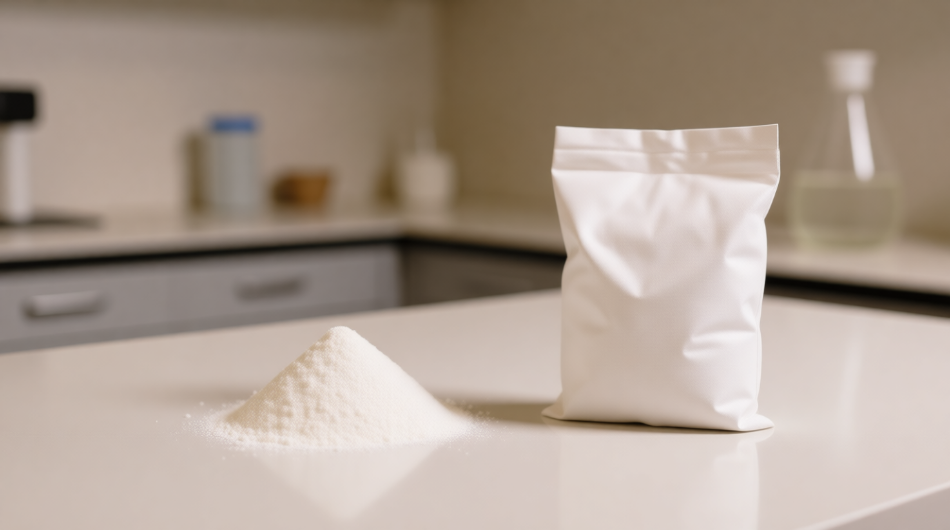
Pasteurization with hydrated lime, technically known as lime pasteurization, is based on chemical rather than thermal principles to create an environment selectively favorable to mushroom mycelium and unfavorable to competitor microorganisms. The active component of this process is calcium hydroxide (Ca(OH)₂), commonly known as slaked lime or hydrated lime, an alkaline substance that, when added to the water in which the substrate is immersed, drastically raises its pH to values between 11 and 12.5.
At this level of alkalinity, most contaminating microorganisms - particularly bacteria, competitor fungi, and many yeast species - cannot survive, while the mycelium of edible mushrooms, if exposed for controlled periods, shows remarkable tolerance. This different degree of sensitivity to the alkaline environment constitutes the heart of the method and explains its selective effectiveness. The action of lime is not limited solely to pH modification: recent studies have shown that calcium hydroxide interacts with the physical structure of the substrate, modifying its porosity and promoting a faster and more uniform colonization by the mycelium.
The mechanism of action of hydrated lime at the microbiological level
To fully understand the effectiveness of lime pasteurization, it is necessary to analyze in detail the mechanisms by which calcium hydroxide exerts its action on microorganisms. The high pH created by the dissociation of lime in water causes a series of metabolic and structural alterations in microbial cells. The cell wall of many competitor fungi and bacteria undergoes degradation processes, while intracellular enzymes see their functionality compromised due to the extremely alkaline environment.
Simultaneously, free calcium ions can interfere with cellular communication processes between microorganisms, reducing their ability to form protective biofilms. It is interesting to note that the mycelium of edible mushrooms shows greater resistance to these conditions, probably due to the different composition of the cell wall and more efficient osmotic regulation mechanisms. This differential resistance is what makes the selectivity of the treatment possible, creating a sort of "preferential lane" for the mycelium of the mushrooms we want to cultivate.
Advantages and disadvantages of lime pasteurization: an in-depth comparative analysis
The choice to adopt lime pasteurization over other substrate treatment methods must be based on an objective evaluation of its strengths and limitations. Among the most significant advantages we can include the extreme cost-effectiveness of the process: hydrated lime is a widely available product at low cost, and the treatment does not require expensive equipment like autoclaves or thermal pasteurizers.
Operational simplicity represents another point in favor, making this technique accessible even to novice growers or those with limited economic resources. From an environmental point of view, the method is more sustainable compared to thermal sterilization, consuming significantly less energy. However, it is also necessary to consider the critical aspects: the effectiveness of the treatment depends heavily on the correct management of operational parameters, particularly immersion time and lime concentration, and not all types of fungi respond the same way to the alkaline treatment. Furthermore, some particularly resistant contaminants, such as certain mold species, might not be completely eliminated, thus requiring particular attention during the inoculation and colonization phase.
| Parameter | Lime pasteurization | Thermal pasteurization | Autoclave sterilization |
|---|---|---|---|
| Equipment Cost | Very Low (only containers) | Medium (pasteurizer or boiler) | High (professional autoclave) |
| Operational Cost per Cycle | 1-2 € (only lime) | 5-15 € (thermal energy) | 10-25 € (energy and maintenance) |
| Energy Consumption | None or minimal | High | Very High |
| Effectiveness Against Contaminants | High on bacteria and many fungi | High on bacteria and fungi | Maximum (eliminates all microorganisms) |
| Selectivity for Fungal Mycelium | Excellent | Good | Low (eliminates beneficial microbes too) |
| Treatment Time | 12-24 hours | 2-4 hours + cooling | 2-3 hours + cooling |
| Operational Complexity | Low | Medium | High |
Practical guide to lime pasteurization: materials, dosages, and step-by-step procedures
Successfully implementing lime pasteurization requires a precise operational sequence and respect for well-defined parameters. The preparatory phase begins with the choice of hydrated lime: it is essential to use agricultural or food grade lime, free from chemical additives that could be phytotoxic to the mycelium. The preparation of the lime solution generally involves a concentration between 0.5% and 2% by weight, depending on the type of substrate and specific environmental conditions.
The substrate, preferably cut into pieces of uniform size to ensure homogeneous treatment, is completely immersed in the solution for a period ranging from 12 to 24 hours. During this time frame, it is important to keep the container covered to prevent carbonation of the lime from exposure to atmospheric carbon dioxide, a process that would reduce its effectiveness. At the end of the immersion period, the substrate is drained and left to dry superficially before inoculation, thus reaching the right balance between internal moisture and dry surface.
Detail of materials needed for lime pasteurization
The simplicity of lime pasteurization is also reflected in the modesty of the required tools. To correctly implement this technique, the following are sufficient: a container of adequate capacity for the volume of substrate to be treated (preferably food-grade plastic or stainless steel, while aluminum containers that could react with the lime should be avoided); a precision scale to accurately weigh the lime; protective gloves and goggles to handle the lime safely, as like all strongly alkaline substances it can cause irritation; a pH meter to monitor the effectiveness of the solution; a sieve or mesh for draining the substrate; and finally an ambient thermometer, as temperature can influence treatment times. The choice of container is particularly important: it must be sufficiently capacious to allow the substrate to be completely submerged, with a margin of at least 10 cm above the material level to avoid spills during mixing.
Table of hydrated lime dosages based on substrate type
| Substrate type | Lime quantity (g/liter water) | Immersion time (hours) | Target solution pH | Specific notes |
|---|---|---|---|---|
| Wheat Straw | 7-10 g/l | 12-16 | 11.5-12.0 | Fine straw requires less time |
| Oat Straw | 8-12 g/l | 14-18 | 11.8-12.2 | More resistant, benefits from longer times |
| Hardwood Chips | 10-15 g/l | 18-24 | 12.0-12.5 | Dense material, requires higher concentrations |
| Mixed Sawdust | 5-8 g/l | 10-14 | 11.0-11.8 | Fine material, shorter times |
| Substrate for Pleurotus | 6-9 g/l | 12-15 | 11.5-12.0 | Delicate balance for this species |
| Substrate for Shiitake | 12-16 g/l | 20-24 | 12.0-12.5 | Shiitake tolerates alkalinity well |
Monitoring and control of critical parameters during treatment
The success of lime pasteurization depends largely on the rigorous control of some operational parameters throughout the process. The pH of the solution is undoubtedly the most important parameter to monitor: values below 11 might not guarantee adequate pasteurizing action, while excessively high values (above 13) could be phytotoxic even for the mushroom mycelium.
The ambient temperature significantly influences treatment times: at higher temperatures (25-30°C) chemical processes are accelerated and shorter immersion times may suffice, while at lower temperatures (15-20°C) it is advisable to prolong the treatment.
The hardness of the water used can also influence the effectiveness of the process: particularly hard waters, rich in calcium and magnesium salts, can partially buffer the pH increase, requiring slight adjustments in the lime concentration. Keeping a detailed record of all these parameters for each treatment cycle allows for progressive refinement of the technique and identification of optimal conditions for one's specific cultivation setup.
Specific applications for different mushroom species: technique adaptation based on mycelial needs
Not all mushroom species respond the same way to lime treatment, making a differentiated approach necessary based on the specific variety to be cultivated. Mushrooms of the genus Pleurotus (oyster) generally demonstrate excellent tolerance to lime pasteurization and therefore represent an ideal candidate for this method, with colonization rates that under optimal conditions can reach 95-98% success.
Shiitake (Lentinula edodes) also responds well to the treatment, although it requires slightly higher lime concentrations and longer immersion times due to the denser and more compact nature of its preferred substrates. Different is the case of more delicate species like Agaricus bisporus (Champignon), which, while tolerating the alkaline treatment, benefits from more moderate concentrations and particular attention to the subsequent conditioning of the substrate. For exotic mushrooms like Reishi (Ganoderma lucidum) or Maitake (Grifola frondosa) it is necessary to proceed with greater caution, initially testing small batches to evaluate the specific response of the mycelium to the conditions created by the lime.
Parameter adaptation for main cultivated species
The fine-tuning of operational parameters based on the fungal species represents the most advanced aspect of lime pasteurization. For Pleurotus, which include varieties like gray, pink, and yellow oyster, the optimal range of lime concentration is between 6 and 9 grams per liter, with immersion times of 12-15 hours and a target pH of 11.5-12.0. These conditions create a sufficiently selective environment to effectively control the main contaminants without overly stressing the mycelium.
For Shiitake, known for its vigorous growth but also for its preference for more complex substrates like hardwood chips, higher concentrations (12-16 g/l) and longer times (18-24 hours) are generally necessary, with pH that can reach 12.5 without particular problems. Pioppino mushrooms (Cyclocybe aegerita) require a more conservative approach instead, with moderate concentrations (5-7 g/l) and short times (10-12 hours), being particularly sensitive to excessive alkalinity. The following table summarizes the optimal conditions for the most common species.
| Fungal species | Lime (g/liter) | Time (hours) | Target pH | Expected success rate | Preferred substrate |
|---|---|---|---|---|---|
| Pleurotus ostreatus | 6-9 g/l | 12-15 | 11.5-12.0 | 95-98% | Wheat/oat straw |
| Lentinula edodes (shiitake) | 12-16 g/l | 18-24 | 12.0-12.5 | 90-95% | Hardwood chips |
| Agaricus bisporus | 4-7 g/l | 10-14 | 11.0-11.5 | 85-90% | Specific compost |
| Cyclocybe aegerita | 5-7 g/l | 10-12 | 11.0-11.8 | 90-93% | Fine straw, sawdust |
| Ganoderma lucidum | 8-12 g/l | 16-20 | 11.8-12.3 | 80-85% | Hardwood chips |
| Grifola frondosa | 7-10 g/l | 14-18 | 11.5-12.0 | 75-80% | Enriched sawdust |
Hydrated lime: a valid alternative to classic pasteurization
Pasteurization with hydrated lime confirms itself as an extremely promising technique in the landscape of modern mushroom cultivation, representing an ideal meeting point between effectiveness, cost-effectiveness, and environmental sustainability. Its potential is particularly significant in contexts where economic resources are limited or where access to more complex and expensive technologies like autoclaves is not possible.
The future prospects of this method appear bright, with scientific research continuing to explore new applications and refinements. Recent studies are investigating the possibility of combining lime pasteurization with complementary biological treatments, such as the use of antagonist microorganisms, to create even more effective integrated protocols.
Other lines of research are focusing on optimizing operational parameters for less conventional fungal species, thus expanding the range of possible applications. The simplicity of the technique, combined with its demonstrated effectiveness, makes lime pasteurization one of the most interesting and promising methodologies for the future of sustainable mushroom cultivation, both at the amateur and professional level.
This article was developed with the support of artificial intelligence and subsequently reviewed, corrected, and validated by the NaturNext.eu technical team, which guarantees its reliability and compliance with official sources.
The kingdom of fungi is a universe in continuous evolution, with new scientific discoveries emerging every year about their extraordinary benefits for gut health and overall well-being. From now on, when you see a mushroom, you will no longer think only of its flavor or appearance, but of all the therapeutic potential it holds in its fibers and bioactive compounds. ✉️ Stay Connected - Subscribe to our newsletter to receive the latest studies on: Nature offers us extraordinary tools to take care of our health. Mushrooms, with their unique balance between nutrition and medicine, represent a fascinating frontier that we are only beginning to explore. Continue to follow us to discover how these extraordinary organisms can transform your approach to well-being.Continue your journey into the world of mushrooms