


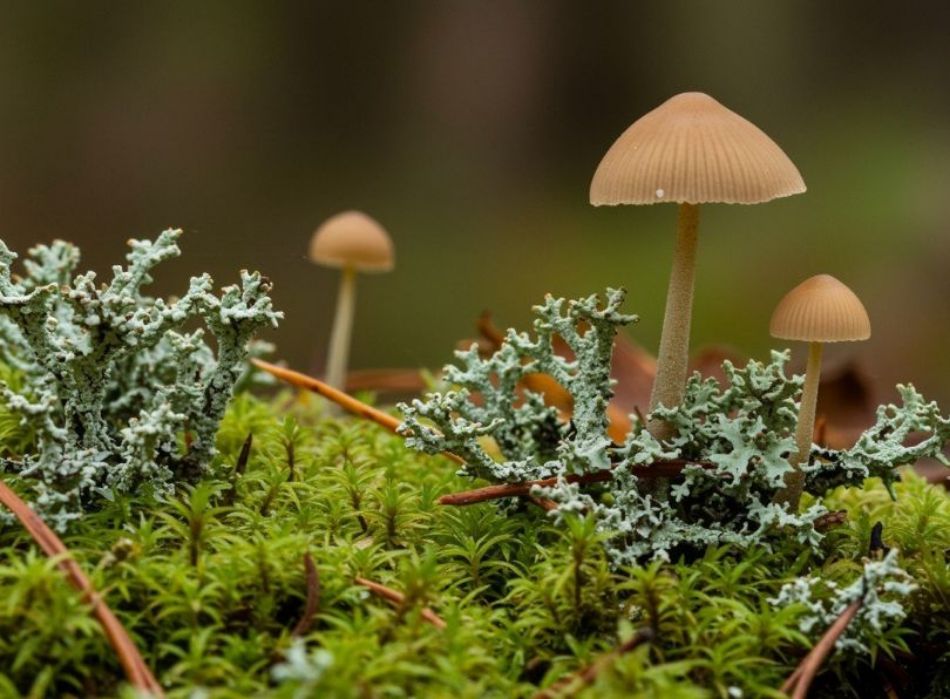
When discussing lichens and fungi, misconceptions are just around the corner, even for the most experienced enthusiasts. Fungi constitute an autonomous biological kingdom (Kingdom Fungi), while lichens are not a unified taxonomic group but an extraordinary evolutionary alliance: an obligate mutualistic symbiosis between a fungus (the mycobiont, generally an ascomycete) and one or more photosynthetic partners (the photobiont, represented by green algae or cyanobacteria).
The fungus provides a protected environment, absorbs water and mineral salts, while the alga or cyanobacterium produces sugars through photosynthesis. This union generates a completely new organism, with unique morphological and physiological properties absent in the individual components: the lichen.
To untangle this complex topic, we will explore every aspect: from thallus structure to ecological functions, from recent research to historical curiosities, because understanding lichens is fundamental for anyone who truly wants to comprehend the forest ecosystem in all its complexity.
Lichens: what are they?
What exactly are lichens? They are not plants, not mosses, and not even fungi in the strict sense. They are composite organisms, or rather "symbiotic organisms", resulting from the integration between a fungus (the mycobiont) and an organism capable of photosynthesis (the photobiont, a green alga or a cyanobacterium).
In this relationship, the fungus has lost the ability to live autonomously in nature for most species, becoming metabolically dependent on carbohydrates provided by the photosynthetic partner. The resulting vegetative body is called the thallus, and its form is the first major distinguishing characteristic for those approaching the study of these organisms.
The mycobiont
The mycobiont is almost always a fungus belonging to the phylum Ascomycota (only a small percentage, such as the genus Dictyonema, is represented by Basidiomycota). Its function is structural: its hyphae (fungal filaments) organize into specialized layers to protect the photobiont, regulate gas exchange, and absorb nutrients from the atmosphere and substrate.
Unlike non-lichenized fungi, the mycobiont has a slower metabolism and lacks the enzymes necessary to efficiently degrade cellulose or lignin; its survival is inextricably linked to the photosynthates produced by the alga.
This radically changes the ecological significance of lichens: while "free-living" fungi are the great decomposers, lichens become pioneer organisms, self-sufficient regarding carbon requirements. Research on lichens shows how the hyphae of the mycobiont form complex structures (such as the upper cortical layer) to create a stable microclimate and protect the alga from excessive light and dehydration.
The photobiont
The photobiont is the true metabolic engine of the lichen: it is usually a green alga, most commonly of the genus Trebouxia, present in over half of lichen species. When the partner is a cyanobacterium (for example Nostoc), in addition to photosynthesis, it is capable of fixing atmospheric nitrogen, transforming it into ammoniacal compounds usable by the entire consortium and, indirectly, by the surrounding ecosystem.
This is a crucial difference with fungi: no "pure" fungus is capable of fixing nitrogen. Lichens with cyanobacteria thus become fundamental for the natural fertilization of poor soils, rocks, and bark.
The combined metabolism produces so-called lichen acids (such as usnic acid), unique secondary metabolites absent in non-lichenized fungi, which perform protective functions against light, antibacterial activity, and chemical alteration of rocks (a key process for pedogenesis, i.e., soil formation).
Differences between lichens and fungi
For a mycologist, the distinction in the field is often clear: fungi (Macromycetes) produce ephemeral fruiting bodies that appear in specific seasons for reproduction, while lichens, in contrast, present a perennial thallus, visible and active year-round, growing at extremely slow rates (from fractions of a millimeter to a few millimeters per year).
From a nutritional standpoint, fungi are obligate heterotrophs and require ready-made organic matter (living or dead), while lichens are autotrophic for carbon thanks to the photobiont, but heterotrophic for nitrogen and minerals, which they absorb from the atmosphere and substrate. However, they share with fungi the hyphal architecture and, in the mycobiont, reproductive structures (asci or basidia). The following table details the differences between fruticose, foliose, and crustose lichens and compares them with fungi.
| Characteristic | Fungi (non-lichenized) | Lichens (lichenized fungi) |
|---|---|---|
| Nutrition | Heterotrophic by absorption. Roles: decomposers (saprophytes), parasites, mycorrhizal symbionts. Depend on external sources of organic carbon. | Autotrophic for carbon (thanks to photobiont photosynthesis). Heterotrophic for water and mineral salts. The fungus is a "controlled" parasite or obligate mutualist. |
| Vegetative structure | Hyphal mycelium, often hidden in the substrate (soil, wood, tissues). Temporary fruiting bodies (cap, stem, hymenophore) produced only for reproduction. | Organized, perennial thallus, visible year-round. Distinct morphologies: crustose (adhering like paint), foliose (with flattened lobes), fruticose (shrubby or pendulous). |
| Reproduction | Primarily via sexual spores produced in specialized structures (basidia, asci). Also asexual reproduction via conidia or mycelial fragmentation. | Dual strategy: 1) Sexual: the mycobiont produces fungal spores in apothecia or perithecia. 2) Vegetative: propagules (isidia, soralia, cephalodia) containing both symbionts, ensuring continuity of the symbiosis. |
| Secondary metabolites | Produce a wide range of compounds: mycotoxins (for defense), antibiotics (e.g., penicillin), volatile compounds responsible for odors. | Produce unique lichen acids (e.g., usnic acid, atranorin, lecanoric acid). These have chelating functions (alter rocks), antibacterial, antiviral, antifungal, and UV protection roles. |
| Typical habitats | Soils rich in organic matter, decomposing litter, dead wood, excrement, symbiosis with plant roots. Prefer humid and shady environments. | Colonize extreme and poor substrates: bare rocks, tree bark, bare soils, artificial surfaces. Dominate in prohibitive environments such as deserts, tundra, high mountains, and polar regions. |
| Growth and longevity | Extremely variable: the mycelium can live long, but fruiting bodies are ephemeral (from hours to a few weeks). Rapid growth. | Very slow growth, from 0.1 mm to 5 mm per year. The thallus is perennial and can live for decades or centuries in stable environments. |
| Relationship with water | Require liquid water in the substrate to activate metabolism and growth. They are homeohydric organisms (must maintain internal water balance). | They are poikilohydric: they completely dehydrate during dry periods, entering a state of quiescence, and reactivate within minutes with atmospheric moisture alone (rain, fog, dew). |
This comparative analysis definitively clarifies what type of organisms lichens are. Although the mycobiont is a fungus in every respect, the lichen as a "superorganism" possesses emergent properties that make it a unique biological entity, with an ecological role completely different from that of non-lichenized fungi.
The ecological role of lichens
Lichens are considered pioneer organisms par excellence: they are among the first to colonize virgin surfaces such as newly exposed rocks, lava flows, or tree bark. With their lichen acids, they corrode rock, and their hyphae trap dust and debris, initiating pedogenesis processes (soil formation). Fungi, on the other hand, generally intervene in later stages, colonizing already organic substrates or forming mycorrhizal symbioses with established plants. Both, however, are sentinels of environmental health.
Lichens, in particular, are bioindicators par excellence of air quality, being extremely sensitive to pollutants such as sulfur dioxide (SO2), nitrogen compounds (NOx), and heavy metals, which they passively accumulate since they absorb everything directly from the atmosphere. They create humid microhabitats for invertebrates, retain water, and in vast boreal areas (reindeer lichens) represent the main winter food resource for reindeer and caribou.
Fungi, instead, cleanse soil of heavy metals and plastics, connect plants in mycorrhizal networks, and decompose organic matter. In the global carbon cycle, they contribute approximately 0.5 Pg (petagrams) of carbon per year to terrestrial primary productivity, a far from negligible value, comparable to that of entire biomes.
Environmental sensitivity: what are lichens sensitive to
The extraordinary sensitivity of lichens derives from their very nature: lacking selective structures like roots, they absorb water and nutrients (and with them pollutants) directly from the atmosphere across the entire thallus surface. This makes them passive accumulators and, consequently, excellent indicators of air quality. The disappearance of epiphytic lichens (those growing on bark) from urban and industrial centers is an unequivocal signal of chronic pollution.
Fungi, particularly terrestrial species, are more sensitive to other factors such as soil compaction, eutrophication (excess nitrogen), and forest management. Integrating monitoring of both groups provides a complete picture of ecosystem health.
Lichens, mosses, and fungi: a comparison
Mosses and lichens are often discussed interchangeably because they share the same humid, poor habitats. But their nature is profoundly different. Mosses are bryophytes, therefore true plants (plant kingdom), with simple tissues and a life cycle alternating generations. Lichens are fungus-alga symbioses. Mosses, although tolerating dehydration better than vascular plants, are more demanding in terms of constant humidity compared to lichens. Fungi (especially Basidiomycetes), finally, prefer shade and soil moisture, avoiding direct exposure and drought. A resilience scale to drought can be outlined where lichens come first, followed by mosses, and finally fungi, with lichens being the undisputed champions of survival in extreme conditions.
Fruticose, crustose, and foliose lichens
To identify a lichen, the first question to ask is: what types of lichens exist? Thallus morphology is the first-level diagnostic character. This diversity of forms is a fascinating adaptive convergence to different conditions of light, humidity, and substrate, comparable in variety to fungal morphology.
- Fruticose lichens: have a three-dimensional, shrubby, bushy, or pendulous appearance. They are anchored to the substrate at a single point and branch in all directions. Classic examples are the genus Usnea ("old man's beard," hanging from branches) and the famous reindeer lichens (Cladonia rangiferina), which carpet the soils of Arctic and boreal tundras.
- Foliose lichens: the thallus is flattened, with a leaf-like structure, provided with lobes and often differentiated into an upper and lower surface. They adhere to the substrate but loosely, thanks to structures called rhizines, and can be partially lifted. Examples: Parmelia sulcata (common on bark) and Lobaria pulmonaria (once used as a remedy for lung conditions).
- Crustose lichens: represent the most primitive and adherent form. The thallus forms a crust intimately fused with the substrate (rock, bark), so that it cannot be detached without destroying the support. They are often colored and form patches. An example is the map lichen (Rhizocarpon geographicum), which with its yellow-green areoles delimited by black lines resembles a map.
The following table systematizes these differences and relates them to the fungal world.
| Lichen type | Example | Substrate | Analogy with fungi | Growth rate (mm/year) |
|---|---|---|---|---|
| Crustose lichens | Rhizocarpon geographicum (Map lichen), Lecanora sp. | Siliceous and calcareous rocks, smooth bark. | May resemble crusty molds or incrustations of some corticolous fungi, but are perennial and not ephemeral. | 0.1 - 0.5 (among the slowest). |
| Foliose lichens | Parmelia sulcata, Xanthoria parietina (yellow wall lichen). | Tree bark, branches, rocks, walls. | The lobed, flattened appearance may resemble the morphology of some polypores or bracket fungi, but it is not a fruiting body, rather the perennial vegetative thallus. | 1 - 3 |
| Fruticose lichens | Usnea barbata (Old man's beard), Cladonia rangiferina (Reindeer lichens), Alectoria sp. | Tree branches and trunks (pendulous species), bare soil (erect species). | The branched, coral-like appearance is similar to that of some coral fungi (e.g., Clavaria or Ramaria), but consistency and biology are completely different. | 1 - 5 (the fastest among lichens). |
Reindeer lichens (Cladonia rangiferina) are not just an evocative name: they constitute up to 90% of the winter diet of reindeer in Lapland and other Arctic regions, a role that no fungus plays so exclusively for a large mammal.
Reproduction and life cycle
Fungi reproduce mainly via spores, produced in specialized structures (hymenophores such as gills, pores, spines). Lichens adopt a more complex and dual strategy: the mycobiont (the fungus) can reproduce sexually, producing fungal spores in structures called apothecia (cup-shaped) or perithecia (flask-shaped). However, a fungal spore that germinates alone will not reconstitute a lichen: it must necessarily encounter and capture a compatible photobiont cell (alga or cyanobacterium) to recreate the symbiosis from scratch, a rather rare and uncertain event.
To overcome this problem, lichens have evolved ingenious vegetative reproduction structures: isidia (small coral-like protuberances on the thallus surface, containing both symbionts and covered by cortex) and soralia (areas where the cortex breaks, releasing fine powdery granules, the soredia, also composed of fungal hyphae and algal cells). These propagules guarantee efficient and faithful propagation of the entire symbiotic consortium. They combine the precision of the reproductive state with the efficiency of the vegetative one.
Data on lichen biodiversity in Italy
According to the most recent research on Italian lichens (Nimis & Martellos, 2023), our country hosts approximately 2,700 lichen species. For comparison, the higher fungi (Macromycetes, mostly Basidiomycetes) recorded in Italy exceed 5,000 species. But the connection does not end here: there are lichenicolous fungi, a heterogeneous group of fungi (often Ascomycetes) that live exclusively on lichens, parasitizing them.
Hundreds of these species are counted, representing a fascinating ecological bridge: fungi that attack lichens, demonstrating that the latter can in turn become substrate for other fungi. In this sense, lichens play a role analogous to that of plants for parasitic fungi, providing a stable, nutrient-rich, and low-competition substrate—a unique ecological niche.
Lichens and fungi: uses
For millennia, humans have interacted with fungi and lichens. Fungi play a prominent role in alimentation (Porcini, Truffles, Champignon, yeasts for bread and beer) and in medicine (from penicillin to modern medicinal fungi such as Reishi and Shiitake). Lichens have a less conspicuous but historically significant role: species like Umbilicaria esculenta are a prized food in Japan, while reindeer lichens, although not directly consumed by humans except in cases of famine, have sustained entire cultures of Sami herders through their herds.
In Europe, Lobaria pulmonaria was used in the "doctrine of signatures" to treat lung diseases, given its resemblance to lung tissue. Medicinal fungi boast a millennial tradition in the East. Today, scientific research is rediscovering lichen acids for potential anticancer and antiviral applications.
| Field | Fungi | Lichens |
|---|---|---|
| Food | Numerous edible species (Agaricus, Boletus, Tuber, Cantharellus). Yeasts for baking and fermented beverages. Cultivated or foraged. | Limited and geographically circumscribed use (e.g., Umbilicaria in Japan, Cladonia in Northern Europe as emergency flour). Not edible for humans in most cases due to bitter acids. |
| Traditional and modern medicine | Historical source of antibiotics (penicillin). Immunostimulant and adaptogenic fungi (Lentinula, Ganoderma, Cordyceps) used in traditional Asian medicine and now studied by pharmacology. | Used in European folk medicine (Lobaria) and other cultures for their astringent and antiseptic properties. Usnic acid (from Usnea) is studied for its antibacterial, antiviral, and antiprotozoal properties. Used in some eye drops and creams. |
| Dyeing and colorants | Limited use. Some fungi (e.g., Hydnellum, Phaeolus) produce pigments used to dye wool and natural fibers, but this is a niche practice. | Historically fundamental use. Litmus, a pH indicator, was obtained from lichens of the genus Roccella. Many lichens (e.g., Ochrolechia, Parmelia) have been used to dye wool and textiles in various shades of brown, yellow, purple. |
| Cosmetics and perfumery | Fungal extracts (e.g., Ganoderma, Trametes) are added to creams and lotions for their antioxidant and moisturizing properties. | Usnic acid is used in toothpastes, deodorants, and oral hygiene products for its natural antibacterial properties. Some lichen essences (e.g., Evernia, Pseudevernia) are used as fixatives in perfumery. |
It is important not to confuse lichens with algae: kombu algae (Saccharina japonica) is a brown marine alga, not a lichen. Its iodine richness has nothing to do with the antibiotic properties of usnic acid produced by lichens.
The role of lichens in ecology
Lichens are primary architects of ecosystems: as pioneer organisms, they are the first to colonize bare rock surfaces. The mechanical action of hyphae and the chemical action of lichen acids fragment rock, initiating the formation of a first soil layer. Their hyphae trap dust and organic debris carried by the wind. Upon their death, accumulated organic matter decomposes, further enriching the substrate and creating ideal conditions for the establishment of mosses and, subsequently, vascular plants.
Fungi enter the picture in different and complementary stages. Saprophytic fungi decompose the new litter produced by plants, while mycorrhizal fungi establish mutualistic symbioses with the roots of newly established plants, helping them absorb water and nutrients in exchange for sugars.
Thus, while lichens are soil builders, fungi are managers and maintainers that preserve fertility and connect soil to plant life. An emblematic fact: in Antarctica, where organic soil is almost absent, lichens represent the dominant form of vegetation, while higher fungi are extremely rare and limited to protected microhabitats.
Environmental monitoring projects with lichens
ISPRA (Italian National Institute for Environmental Protection and Research) and numerous regional environmental protection agencies (ARPA) have used lichens as bioindicators in standardized protocols for decades. The Lichen Biodiversity Index (IBL) is an official parameter for assessing air quality, particularly pollution from SO2 and nitrogen compounds. Fungi (Macromycetes) are increasingly used as indicators of soil health, its degree of maturity, forest continuity, and the impact of silvicultural practices. Integrating the two approaches provides a complete and reliable diagnostic picture of an ecosystem's state. Manuals and guidelines on lichen biomonitoring are available on the official ISPRA website.
The nature of lichens
Modern phylogenetic analyses based on DNA have revolutionized our understanding of lichens. The fundamental discovery is that lichenizing fungi do not constitute a monophyletic group (i.e., they do not all descend from a single exclusive common ancestor). On the contrary, the ability to enter lichen symbiosis has emerged independently and convergently in multiple lineages within the fungal kingdom, especially in Ascomycetes. Some groups of non-lichenized fungi (such as mycorrhizal fungi or certain saprophytes) are phylogenetically closer to certain lichens than they are to each other. This makes lichens an evolutionary adaptation of extraordinary success, repeated multiple times throughout history.
Very recent studies have further revealed an additional level of complexity: many lichens also host basidiomycetous yeasts (of the genus Cyphobasidium) within them, which seem to play a key role in thallus formation and structure, adding a third fungal symbiont to the already complex relationship. Today, the most accurate answer to the question what is a lichen is: a stabilized multiple fungal community in symbiosis with a photobiont (fungi rarely form such complex and integrated consortia).
The oldest lichens
Fossils of organisms interpreted as ancient lichens date back to approximately 400-415 million years ago (Early Devonian), a time when vascular plants were still in their infancy and life on land was scarce. This suggests that fungi associated with algae very early on, perhaps playing a crucial role in facilitating the transition of life from water to continents, contributing to the formation of the first soils. Today lichens are present on all continents, from the equator to polar regions, and in Antarctica they represent the dominant form of plant life, together with a few species of mosses and algae.
Practical identification guide
For mushroom foragers, during woodland excursions, it is common to encounter showy colored growths on trunks, branches, and rocks. Lichens can be gray-green (the most common color), bright yellow-orange (Xanthoria), yellow-green (Rhizocarpon), brown, black, whitish. Fungi, on the other hand, often present well-distinct caps and stems, with colors ranging from white to black, through all shades of brown, red, yellow, and purple.
However, some species may cause confusion and require attention: some gelatinous fungi (such as Exidia or Auricularia) may appear as amorphous masses on wood, but their soft consistency and appearance after rain distinguish them.
Lichen colors depend on the species and the presence of specific lichen acids that also function as protective pigments. For example, the common yellow wall lichen (Xanthoria parietina) owes its color to parietin, a pigment that protects it from excess light in open environments.
Simplified map to distinguish lichen from fungus
- Is the structure perennial and visible year-round, even in winter? Most likely a lichen.
- Does it grow on bare rock, living bark, or extremely poor soil? Most likely a lichen.
- After rain, does a fruiting body with stem and cap (or similar forms) appear and then disappear? It is a fungus.
- If gently scratched away, does it leave a colored trace and a visible underlying layer (medulla)? It is a lichen, probably of the crustose type.
- Does it have a coral-like, branched appearance, attached to the substrate at a single point (like a tiny shrub)? It is a fruticose lichen.
- Is it flattened like a leaf, liftable at the edges, with distinct upper and lower surfaces? It is a foliose lichen.
For those seeking visual support and wanting to compare lichen images of different species, the Acta Plantarum website offers a complete photographic atlas and interactive identification keys.
Symbiosis, parasitism, and trophic networks
Fungi maintain a variety of trophic relationships with other organisms: they are saprotrophs (feeding on dead matter), parasites (of plants, animals, or other fungi), or mutualists (mycorrhizae), while lichens represent a case of obligate mutualism for the fungus.
But lichens themselves can become a source of nourishment: there are lichenicolous fungi, fungi that eat lichens. But there are others that feed on lichens: besides the iconic reindeer and caribou, many small invertebrates (mites, springtails, insect larvae, snails, and slugs) feed on lichen thalli. There are also several bird species that use them not only as nesting material (exploiting their antibacterial and camouflage properties) but sometimes also as food.
Fungi, for their part, are the basis of equally complex food webs: larvae of many insects (such as fungus gnats) develop in fruiting bodies, and numerous mammals (wild boars, squirrels, deer) consume them voraciously. In summary, both fungi and lichens are crucial nodes in trophic networks, contributing decisively to energy flow and matter cycling in ecosystems.
Lichen and fungal biomass compared
To understand the quantitative importance of these organisms, a few data points suffice. In boreal coniferous forests (such as the taiga), the biomass of epiphytic lichens (those growing on branches and trunks) can reach surprising values, from 5 to 10 tons per hectare in mature forests rich in Usnea and Alectoria. Total fungal biomass (primarily the mycelium hidden in soil and wood) is even more imposing, potentially exceeding 15 tons per hectare.
Both, therefore, represent a non-negligible carbon reservoir. Lichens with cyanobacteria, moreover, contribute significantly to nitrogen input in ecosystems, with fixation rates varying from 1 to 10 kg of nitrogen per hectare per year—a fundamental input in oligotrophic (nutrient-poor) environments.
Lichens and fungi: a world of interconnections and symbioses
Today we have discovered that fungi and lichens share the mycobiont, but that lichens represent an advanced evolutionary stage thanks to a successful, obligate symbiosis with photosynthetic organisms. If fungi are the invisible engineers of soil, the great decomposers, and the silent connectors of plants through mycorrhizae, lichens are the bold pioneers, the soil builders, the colonizers of the most extreme environments.
Both are fundamental pillars for planetary health and functioning: a trunk richly colonized by foliose lichens is a signal of clean air and a healthy forest ecosystem, and therefore an environment potentially suited for the growth of prized fungi. Far from being simple "lower plants", lichens are complex organisms that teach us a fundamental lesson in cooperation and resilience.
And for those still wondering what lichens are good for in our daily lives, the answer is multifaceted: they give us cleaner air, create the soil we cultivate, nourish wildlife, and offer us unique molecules with potential medical applications. Fungi, for their part, nourish us, heal us, and sustain the forests we love.
Together, fungi and lichens weave the complex and wonderful web of life on Earth.
This article was developed with the support of artificial intelligence and subsequently reviewed, corrected, and validated by the NaturNext.eu technical team, which guarantees its reliability and compliance with official sources.