


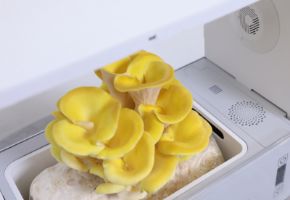
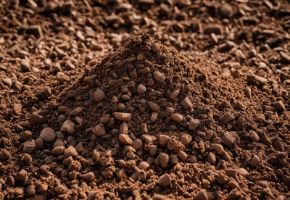

In the world of mushroom cultivation, few terms are as crucial and, at the same time, surrounded by an aura of mystery as the word spawn. For the mycology enthusiast, the environmental biologist, or the hobbyist who wishes to grow collectible specimens at home, spawn represents the beating heart of the cultivation project. It is the seed, the invisible engine that, if of high quality, will transform a simple substrate into a lush and productive mycelium. But how do you distinguish excellent spawn from a mediocre one? The answer lies in an often underestimated document: the label.
This article, designed for growers, researchers, and enthusiasts, aims to be the definitive guide to deciphering every piece of information on a spawn package label. We will learn to recognize the signs of quality, understand the differences between various types of grain, and make informed choices that will influence the success of the entire harvest. Whether you are a beginner or an expert mycologist, the ability to read a label will make you a more informed buyer and a more successful grower, taking your passion for the fungal kingdom to the next level. A transparent supplier is the first ally of a successful cultivation, and NaturNext.eu stands out for its attention to detail and the quality of its mycelium spawn products.
In this article...
What is spawn? The beating heart of mushroom cultivation
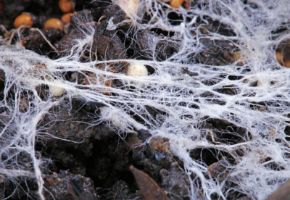
For those approaching the world of mushroom cultivation, the term spawn might seem technical and unfamiliar. In reality, the concept is simple and fascinating. Spawn, also known as grain mycelium, is a substrate (usually grains like rye, millet, or wheat) that has been completely colonized by the mycelium of a specific mushroom species. Mycelium is the vegetative part of the fungus, a network of filaments (hyphae) that absorbs nutrients and which, under favorable conditions, will give rise to fruiting bodies, i.e., the mushrooms we will harvest.
In practice, spawn is the "seed" or inoculant that allows you to start a cultivation quickly and effectively. Instead of starting from a spore, a slower process prone to contamination, an already active and growing product is used. The grain kernels act as a nutrient reserve for the mycelium, which completely colonizes them, transforming them into a powerful and compact block of fungal energy. This product is essential for anyone who wants to achieve predictable and high-quality results, both for home production and large-scale operations. The choice of grain type, its preparation, and the quality of the mycelium used are factors that determine the goodness of the mushroom spawn.
According to the latest industry research, using high-quality spawn can reduce substrate colonization times by up to 30-40% and increase the overall yield of a harvest by up to 20%, significantly reducing the risk of mold and bacterial contamination.
For mushroom collectors, spawn is the key to being able to replicate at home species that are otherwise difficult to find in nature. For an outdoor influencer, it is the perfect element to create educational content showing the entire life cycle of the mushroom, from the vegetative phase to fruiting. Without vital and high-quality spawn, any cultivation project, no matter how well planned, is destined to fail.
What is spawn used for? From grain to fruiting mycelium
The utility of spawn is twofold and fundamental in every stage of cultivation. Its primary purpose is to act as a vehicle for active and vigorous mycelium, ready to colonize a final substrate (bulk substrate), such as straw, sawdust, or composted manure. The grain, thanks to its starch and sugar content, provides the mycelium with the energy needed for explosive initial growth, which translates into rapid expansion in the new environment. This phase, called the "spawn run", is crucial: a healthy and aggressive mycelium will be able to outpace any contaminating organisms.
Secondly, spawn serves as a guarantee of genetic purity and vigor. A high-quality commercial product, like those offered by NaturNext, is the result of a careful selection and multiplication process on sterile substrates. This ensures that the grower receives mycelium specific to the desired variety, free from pathogens and with high fruiting potential. Using certified spawn means eliminating the uncertainty and variability that characterize spore cultivation techniques, making the process more professional and the results more consistent.
For an environmental biologist, the use of spawn is a valuable tool for studying the growth and decomposition dynamics of fungi in a controlled environment, replicating experiments with otherwise impossible precision. Grain mycelium allows for close observation of the fungus's reactions to different conditions (humidity, temperature, substrate composition) without the variables of the natural world.
Where to find spawn? Trusted channels and suppliers
The availability of spawn is now very wide thanks to the growing interest in mycology. It can be found mainly online, through specialized stores, or in some physical retailers of gardening and organic farming products. The choice of purchasing channel is as important as the choice of the product itself. Buying from a professional and specialized supplier offers the guarantee of a fresh, well-preserved product with adequate technical support.
Generalist marketplaces can be an option, but they often lack the traceability and specific expertise that a dedicated producer can offer. When looking for mushroom spawn, it is fundamental to evaluate the seller's reputation, the quality of the packaging, and the transparency of the information provided. A good supplier will gladly share details about the origin of the mycelium, the type of grain used, and the sterility conditions of the laboratory. In Europe, and particularly in Italy, the quality of mycelium spawn is constantly improving, with companies investing in research and development to offer increasingly high-performing products.
How many types of spawn exist? A guide to choosing the substrate
There is no single type of spawn, but several variants, each with specific characteristics that make it more or less suitable for a particular type of mushroom or cultivation phase. The choice depends on factors such as cost, availability, and the preferences of the mycelium itself. Here is an overview of the most common ones:
- Rye Grain Spawn: considered by many as the gold standard, rye grain offers an excellent balance between nutrition, structure, and moisture retention. Its medium-sized kernels provide a large surface area for mycelial growth and are particularly appreciated for mushrooms like Pleurotus ostreatus. According to a comparative analysis conducted on various substrates, whole rye has a starch content of 16-22% and a protein content of 4-8%, ideal for rapid and robust colonization.
- Millet Spawn: millet kernels are smaller and more compact, offering a very high density of inoculation points. This makes it an excellent choice for substrate spawn intended for fine substrates or tray production, as it distributes more evenly. Millet has a higher protein content (8-15%) compared to other grains.
- Wheat Spawn: similar to rye but with generally larger kernels and a higher starch content (18-25%). It is a valid and economical choice, but might be less suitable for mushrooms with specific nutritional requirements.
- Brown Rice Spawn: less common, but used for certain species or specific techniques (such as the PF Tek technique). Brown rice has a starch content that can reach 28%, making it an energetic substrate.
The choice of grain type is not trivial. An experienced grower will know how to read the needs of their mushroom and choose the most suitable starting substrate.
Comparative table of main spawn substrates
| Grain Type | Starch Content % | Protein Content % | Water Retention Capacity | Ideal for |
|---|---|---|---|---|
| Rye | 16-22 | 4-8 | 170-230 ml/100g | Pleurotus, Shiitake, and most mushrooms |
| Millet | 12-18 | 8-15 | 160-220 ml/100g | Fine substrates, multiple inoculation points |
| Wheat | 18-25 | 5-10 | 150-200 ml/100g | Valid and economical alternative |
| Brown Rice | 20-28 | 6-12 | 140-190 ml/100g | Specific techniques (e.g., PF Tek) |
How to use spawn? A practical manual for inoculation
The use of spawn is an operation that requires attention, but with the right precautions, it is within everyone's reach. The standard procedure, known as "rye grain to bulk", involves mixing the spawn with a larger and less nutritious fruiting substrate, such as straw or sawdust. Here are the fundamental steps:
- Bulk substrate preparation: the final substrate must be sterilized or pasteurized to eliminate any contaminating agents. Its moisture content is critical: generally, a ratio of about 60-70% water is targeted.
- Mixing (spawning): in an environment as sterile as possible (working near a flame or in a laminar flow hood), the spawn is broken up and mixed with the bulk substrate. The mixing ratio is crucial. A spawn-to-substrate ratio of 1:3 (i.e., 1 part spawn to 3 parts substrate) is the most common and ensures rapid colonization. Higher ratios (e.g., 1:5) require more time and increase the risk of contamination.
- Incubation: the mixture is then placed in a dark place with a controlled temperature (generally between 20°C and 25°C for the most common species). In this phase, the mycelium will spread from the spawn throughout the bulk substrate, completely colonizing it. Times vary from one to three weeks.
The transition "from spawn to bulk substrate" is a moment of great vulnerability. Any contaminant introduced at this stage will have an initial advantage, potentially compromising the entire harvest. Correct and sterile use of mushroom spawn is the secret to minimizing failures and maximizing yields.
Where to buy spawn? The importance of the supply chain
The choice of where to buy spawn is perhaps the most important decision for a grower. In addition to convenience, one must consider the freshness, vitality, and genetic purity of the product. A serious retailer, like NaturNext.eu, stands out for the transparency of its production process. Here are some criteria for making the right choice:
- Producers vs. Retailers: buying directly from a laboratory that produces the spawn guarantees greater freshness and continuous quality control. The product travels less and undergoes less stress.
- Certifications and traceability: a reliable supplier provides information on the strain used, the type of grain, and the production date. This transparency is a sign of professionalism and quality.
- Reviews and community: word of mouth and reviews from other growers are an excellent resource for evaluating a supplier's reliability. An active community is a positive sign.
Although it is possible to find spawn on generalist sales platforms, buying directly from industry specialists offers the advantage of specialized technical support and guaranteed quality. This is particularly important for researchers and professionals who need reproducibility and reliability in their experiments.
How to tell if spawn is high quality? The secrets of the label
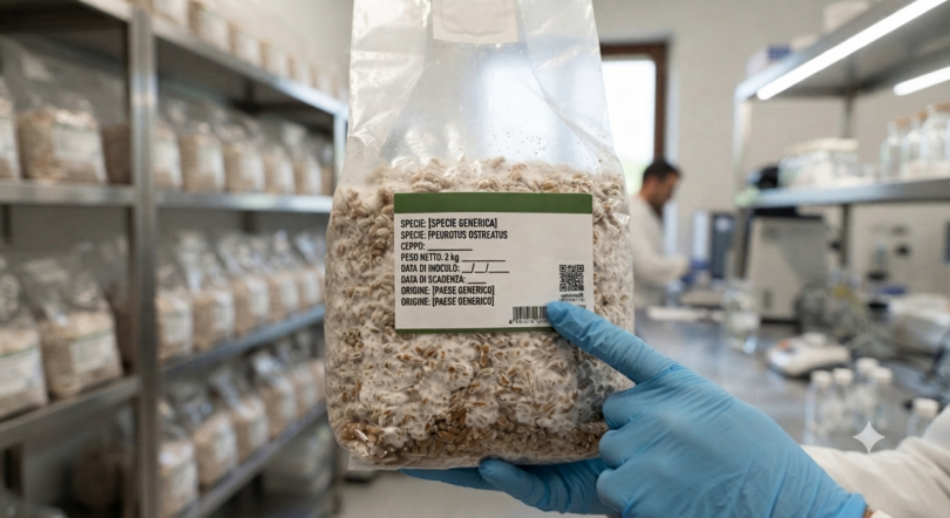
This is the central question for every grower. A high-quality spawn label is the producer's business card and contains all the information to evaluate its goodness. Here is how to decipher it like an expert:
- Strain and species name: The scientific name (e.g., Pleurotus ostreatus) and, if available, the specific strain (e.g., "P. ostreatus var. colombia") must be clearly indicated. This guarantees you receive exactly the product you ordered.
- Production and expiration date: Freshness is everything. Spawn produced less than two weeks ago is at its peak vitality. The expiration date, if indicated, gives you an idea of its shelf life (generally 2-4 months if refrigerated).
- Storage conditions: A serious label will report the optimal conditions for storage (e.g., "Store at +4°C"). The cold chain is fundamental to preserving the vitality of the mycelium.
- The starting substrate: The type of grain used should be clearly specified. This will help you make the best choice for your application.
- Sterility guarantee: A quality product comes from a sterile production process. Indications such as "Produced in a sterile environment" or "Produced by a certified laboratory" are a good sign.
- Instructions for use: Clear and detailed instructions are a sign that the producer not only sells a product but cares about your success.
NaturNext.eu is an example of how this information is presented clearly and transparently, allowing the customer to make an informed choice. A label that does not provide this basic information should raise more than a few suspicions.
How much does spawn cost? An analysis of prices and value
The cost of spawn can vary significantly based on several factors: the type of grain, the mushroom species, the quantity purchased, and the quality of the producer. In general, the price per kilogram ranges between 10 and 30 euros for amateur products, while for rarer strains or professional packages the price can be higher. However, price should not be the only evaluation parameter.
Low-quality spawn may cost less, but it might have reduced vitality, be more prone to contamination, or have a slower growth rate. This translates into a higher risk of failure and lower yield, nullifying the initial savings. A high-quality product, with vigorous and pure mycelium, is an investment that pays off handsomely in terms of success and productivity.
It is useful to consider "value" rather than "cost". A quality product may require a higher purchase price, but it guarantees a much higher probability of success, which makes it, in the long run, the most economical option. For researchers and professionals, the reproducibility of results is an invaluable asset that justifies any additional cost.
How long does spawn last? Storage and vitality
The lifespan of spawn, understood as its vitality and ability to colonize a substrate, depends almost exclusively on storage conditions. If stored correctly, in a cold and stable environment (around +2°C - +4°C), quality grain spawn can maintain its efficacy for several weeks, up to 2-3 months. The low temperature slows down the mycelium's metabolism, putting it in a sort of "stasis" and preserving its energy for when it will be used.
Storage at room temperature, on the other hand, accelerates the aging process. The mycelium will continue to grow slowly, consuming the grain's nutrient reserves and weakening. A sign of aging is the appearance of yellow exudates (metabolites) or a "gummy" consistency of the kernels. These signs indicate that the mycelium is stressed and its efficacy is reduced.
To prolong the life of mycelium spawn, the golden rule is: keep it in the refrigerator until the moment of use. Once the package is opened, it should be used within a few days, as sterility is lost and it is exposed to contamination.
When does spawn expire? Interpreting expiration dates
Unlike food, spawn does not "expire" abruptly, but progressively loses its efficacy and vitality. The expiration date on the label is an indication provided by the producer to guarantee the quality of the product up to that moment, if stored under optimal conditions. Beyond that date, the spawn might still be usable, but with a reduced probability of success.
The factors that determine the "actual" expiration are multiple:
- The mushroom species: some species have a more resistant and long-lived mycelium than others.
- Storage conditions: storage at an ideal temperature (+4°C) prolongs its life, while thermal fluctuations or higher temperatures drastically shorten it.
- The packaging: a sealed package vacuum-sealed or in a modified atmosphere lasts longer.
The practical rule is: the fresher the spawn, the better. When receiving spawn, it is good practice to check the production date. If the product is close to the expiration date, it is better to use it immediately or, in case of doubt, contact the supplier for advice. A professional supplier like NaturNext.eu ships the product fresh, guaranteeing maximum quality and longevity.
FAQ - Frequently asked questions about mushroom spawn
The fungal kingdom is a constantly evolving universe, with new scientific discoveries emerging every year about their extraordinary benefits for gut health and overall well-being. From now on, when you see a mushroom, you will no longer think only of its taste or appearance, but of all the therapeutic potential it holds in its fibers and bioactive compounds. ✉️ Stay connected - Subscribe to our newsletter to receive the latest studies on: Nature offers us extraordinary tools to take care of our health. Mushrooms, with their unique balance between nutrition and medicine, represent a fascinating frontier that we are only just beginning to explore. Keep following us to discover how these extraordinary organisms can transform your approach to well-being.Continue your journey in the world of mushrooms