



The cryogenics of mycelia today represents one of the most promising frontiers for safeguarding fungal biodiversity, an invisible but indispensable heritage for life on Earth. While the international scientific community raises the alarm about the silent extinction of hundreds of fungal species, cryopreservation techniques offer a concrete possibility of halting this loss, preserving genetic material in liquid nitrogen for centuries.
This article explores in depth the biological mechanisms, the methodologies applied in research laboratories, and the practical implications for growers, researchers, and mushroom enthusiasts, with particular attention to the solutions that NaturNext.eu makes available to those who wish to approach this extraordinary world.
In this article...
What mycelia are and why they are in danger
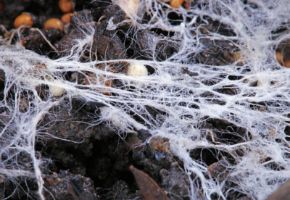
The mycelium is the vegetative structure of fungi, a branched network of filamentous hyphae that develops in the substrate and constitutes the true biological entity of the fungal organism. While the fruiting body, the mushroom we pick and eat, represents only an ephemeral reproductive phase, the mycelium is the silent engine that operates for years, sometimes for centuries, beneath the soil surface or inside wood. Understanding the nature of the mycelium is the first step toward appreciating the importance of its conservation.
The biology of the mycelium: a vital network
The mycelium develops through the apex of the hyphae, cellular filaments that elongate and branch in response to chemical and physical gradients. Hyphae can be septate, with cross-walls separating cellular portions, or coenocytic, with multiple nuclei sharing a continuous cytoplasm. This modular architecture gives the mycelium extraordinary plasticity: it can explore vast surfaces, translocate nutrients over considerable distances, and establish symbioses with plants through mycorrhizae. Growth rate varies considerably among species, from a few millimeters per day to several centimeters, and depends on environmental factors such as temperature, humidity, and nutrient availability.
The longevity of the mycelium is equally impressive. Some individuals of Armillaria ostoyae in the forests of Oregon are estimated to be thousands of years old and extend for square kilometers, potentially representing the largest and longest-lived organisms on the planet. This longevity, however, does not protect mycelia from contemporary threats. Habitat destruction, nitrogen pollution, and climate change are eroding fungal diversity at an unprecedented rate, making ex situ conservation an urgent necessity.
Current threats: a worrying picture
According to the April 2025 update of the IUCN Red List, of 1,300 fungal species assessed, at least 411 are at risk of extinction. The main factors include agricultural and urban conversion, which has replaced the habitats of 279 species, pollution from fertilizers and engine exhaust threatening 91 species, and deforestation responsible for endangering at least 198 species. Climate change adds further pressure: over 50 fungal species in the United States are at risk due to altered fire regimes, with species such as Gastroboletus citrinobrunneus classified as Endangered [citation:4].
These figures, alarming as they are, represent only the tip of the iceberg. Of the estimated 2.5 million fungal species, only 155,000 have been named and just 1,300 assessed for the Red List [citation:11]. Scientific awareness of the crisis is recent, and resources dedicated to fungal conservation remain marginal compared to those allocated to animals and plants. In this context, the cryogenics of mycelia emerges not as an academic exercise, but as an essential operational tool to ensure that fungal genetic heritage is not lost before it is fully understood.
The cryogenics of mycelia: principles and techniques
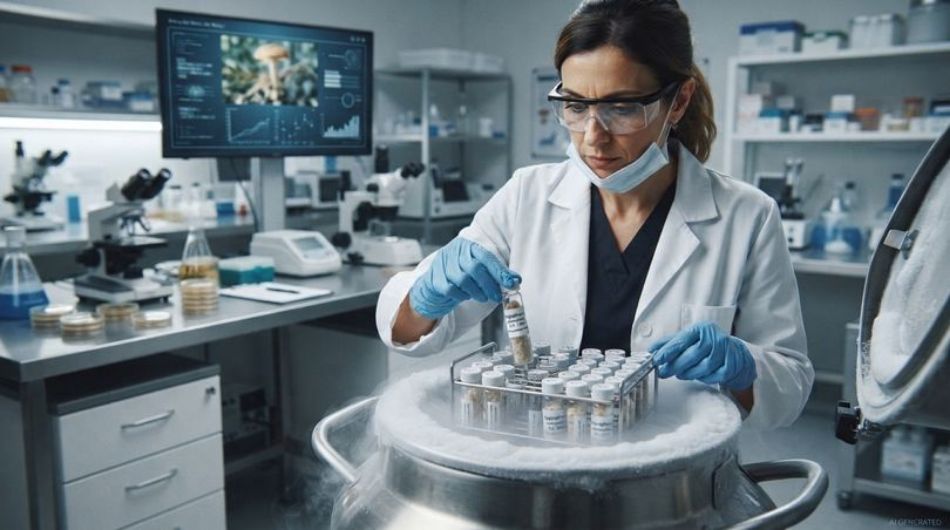
Cryopreservation, or cryogenics applied to biological systems, consists of maintaining cells and tissues at extremely low temperatures, typically in liquid nitrogen at -196°C, virtually halting all metabolic activity. For mycelia, this technique offers the possibility of preserving the vitality and genetic stability of the material for decades or centuries, overcoming the limitations of traditional maintenance methods on agarized substrate, which require periodic subculturing and entail risks of genetic drift and contamination.
How cryopreservation of mycelia works
The process begins with the selection of vital and genetically stable cultures. The mycelium is grown under controlled conditions until it reaches an optimal physiological state, typically in the active growth phase but before nutrient depletion. Subsequently, the material is treated with cryoprotective agents, substances such as glycerol, dimethyl sulfoxide (DMSO), or sucrose that penetrate cells and reduce the formation of lethal ice crystals during freezing. The choice of cryoprotectant and its concentration vary depending on the species and the type of mycelium.
Freezing can be slow and controlled, with a gradual decrease in temperature (typically 1°C per minute) until reaching -40°C or -80°C before transfer to liquid nitrogen, or rapid, with direct immersion in nitrogen. Slow freezing is generally preferred for filamentous mycelia, as it allows the outflow of intracellular water and reduces the risk of damage from crystallization. There are also vitrification protocols, which use higher concentrations of cryoprotectants and ultra-rapid cooling to achieve a glassy rather than crystalline state, but their application to fungi is still being optimized.
The thawing phase is equally critical. Too slow warming can allow ice recrystallization and damage cell membranes, while rapid warming in a thermostatic bath at 35-40°C, followed by immediate dilution of the cryoprotectant, maximizes the recovery of vitality. After thawing, the mycelium is transferred to fresh medium and evaluated for growth resumption capacity, morphology, and, when possible, ecological functionality.
Specific applications: the case of truffles
A particularly significant example of the application of mycelial cryogenics concerns truffles (Tuber spp.), ectomycorrhizal fungi of great economic and ecological value. A study conducted on Tuber borchii as a model species developed a specific protocol for the cryopreservation of the mycelium, verifying the infective capacity of the preserved material through the inoculation of Quercus robur seedlings. The results demonstrated that the protocol is suitable for the long-term conservation of Tuber mycelium and opens the possibility of creating a germplasm bank to preserve truffle diversity.
This type of research is crucial because truffles, like many other ectomycorrhizal species, are particularly sensitive to habitat disturbance and require years to re-establish functional symbiotic associations. The possibility of preserving vital and infective mycelium in liquid nitrogen means having certified genetic material available for reintroduction and environmental restoration programs, without depending on the availability of seasonal fruiting bodies or collection in the wild. For growers and specialized nurseries, this opens interesting prospects also in the production sector, where the availability of quality, genetically characterized inoculum represents a limiting factor.
Limits and challenges of fungal cryogenics
Not all fungal species respond in the same way to cryopreservation. Mycelia that produce resistance structures such as chlamydospores or sclerotia tend to survive better, while species with particularly delicate hyphae or without robust cell walls may show lower recovery rates. Cell membrane composition, the presence of secondary metabolites, and the nutritional state of the starting culture significantly influence cryotolerance. For this reason, protocols must be optimized case by case, often through empirical approaches that require time and resources.
Another challenge concerns the evaluation of genetic stability after cryopreservation. Although liquid nitrogen virtually halts all enzymatic activity and minimizes the risk of mutations, it is necessary to verify that the recovered material maintains its original characteristics, especially when it comes to strains intended for conservation programs or biotechnological applications. Techniques such as DNA fingerprinting analysis and genomic sequencing allow genetic integrity to be monitored, but they represent an additional cost that limits large-scale adoption, especially for smaller collections or independent researchers.
Species at risk of extinction and IUCN data
The IUCN Red List of fungi, although still incomplete, provides an increasingly detailed picture of the conservation status of known species. The 411 species currently classified as threatened represent about one third of the 1,300 species assessed, an alarming proportion that exceeds that of many better-studied taxonomic groups [citation:4]. Threat categories reflect different pressures: some species are vulnerable due to the loss of specific habitats, others due to widespread pollution, and still others due to the interaction between climate change and disturbance regimes.
Emblematic cases and lessons from research
Among the best-known species, Tricholoma colossus, the so-called "giant mushroom," is classified as Vulnerable due to the loss of old-growth coniferous forests in Scandinavia and Russia, where 30% of these forests have disappeared since 1975 [citation:11]. This species, like many others, depends on ecological conditions that develop over centuries of forest evolution and cannot be quickly recreated with intensive silviculture. Another example is the European species Hygrocybe intermedia, threatened by excess nitrogen in grassland soils, which alters fungal communities and favors more competitive species.
These cases illustrate a fundamental principle: the conservation of fungi cannot be separated from the conservation of ecosystems. The cryogenics of mycelia, therefore, does not replace habitat protection but integrates it, providing a safety net for the most vulnerable species and an archive of genetic material for future reintroductions. Fungal germplasm banks, such as that of the University of Salamanca, which preserves spores and mycelia of fungi of socioeconomic and ecological interest [citation:15], represent nodes of an international network still being formed, but already operational in several countries.
The role of germplasm banks and collections
Fungal culture collections have existed for decades, but their mission has expanded. From simple repositories for taxonomic research, they have become critical infrastructures for biodiversity conservation, bioprospecting, and food security. Cryopreservation is the preferred method for long-term conservation, alongside techniques such as lyophilization and maintenance on agar at low temperatures for shorter periods. However, coverage is uneven: species of agricultural and medicinal interest are well represented, while those without immediate economic use receive less attention, despite their fundamental ecological role.
For growers and hobbyists, awareness of this infrastructure is important because many collections offer identification, conservation, and strain supply services. NaturNext.eu fits into this landscape as an access point for those who wish to explore fungal cultivation with professional tools, while promoting a culture of conservation that starts from the ground up. The cryogenics of mycelia is not reserved for large laboratories: with accessible equipment and adequate training, even passionate growers can contribute to the preservation of local strains, perhaps of rare species or traditionally cultivated varieties.
What growers, researchers, and hobbyists can do
The conservation of fungal diversity is not the exclusive task of scientists. Growers, independent researchers, and mycology enthusiasts can play an active role, adopting practices ranging from documenting local species to domestic cryopreservation of the most valuable strains. The key is understanding that every preserved strain represents a fragment of genetic diversity that is potentially unique and irreplaceable.
Conscious cultivation and strain conservation
For those already cultivating mushrooms, the first step toward conservation is the systematic documentation of the strains used: origin, isolation date, morphological characteristics, and cultivation performance. This practice, apparently trivial, lays the foundation for conscious management of genetic material and makes it possible to identify particularly interesting strains to preserve. Domestic cryopreservation, although it requires liquid nitrogen or -80°C freezers, is accessible to those with minimal space and resources; alternatively, techniques such as preservation on sterilized grains at low temperatures or controlled drying can maintain vitality for shorter but useful periods.
For growers of edible mushrooms, the temptation to favor only the most productive or commercially appealing strains is strong, but genetic diversity within cultivated species is a valuable resource for resilience. Strains with different characteristics may respond better to variable climatic conditions, resist specific contaminants, or possess distinct nutritional profiles. Preserving this variability, even in small personal collections, contributes to the health of cultivated fungal heritage. The cultivation products available on NaturNext.eu, from ready-to-use substrates to environmental control equipment, support this practice with solutions designed for different scales of activity.
Participatory research and citizen science
Scientific research on fungi benefits enormously from the contribution of citizens. Citizen science projects dedicated to mapping fungal diversity are filling enormous knowledge gaps, providing valuable data on the distribution, phenology, and conservation status of species. Initiatives such as those promoted by museum and university institutions allow anyone to report findings, contributing to building the body of knowledge necessary for targeted conservation actions. For those who desire deeper involvement, participation in mycology courses and collaboration with local collections offer paths of practical training.
The cryogenics of mycelia fits into this context as a transferable skill: the principles of cryopreservation, once learned, can be applied to different contexts, from the preservation of yeasts for baking to that of strains of medical interest. The dissemination of this knowledge, supported by accessible educational resources and an active community of practice, is perhaps the most important factor in ensuring that fungal diversity is not lost. NaturNext.eu contributes to this mission by making products and information available to those who want to approach cultivation and conservation with method and awareness.
Tools and products for conservation and cultivation
The practical approach to mycelial cryogenics and conscious cultivation requires adequate equipment, but not necessarily complex equipment. The choice of the right tools depends on objectives: a hobbyist who wishes to preserve a favorite strain has different needs from a grower managing a diversified collection or a researcher working on rare species. In all cases, the quality of the material and attention to sterility are determining factors for success.
From culture to conservation: an integrated supply chain
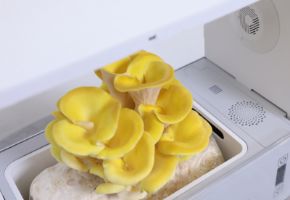
For those approaching fungal cultivation with the intention of preserving their strains, the path begins with quality substrates and cultivation systems that favor healthy and vigorous mycelial development. A well-nourished mycelium free of contamination is the basis for effective cryopreservation. NaturNext.eu offers a range of products covering the entire cycle, from ready-to-use substrates to tools for temperature and humidity control, up to equipment for working under sterile conditions. Exploring the dedicated cultivation section can help identify the most suitable solutions for one's needs.
Long-term preservation, however, requires a further step. For those who do not have liquid nitrogen, -80°C freezers represent an acceptable compromise for medium-term preservation of many strains, although not all species tolerate these temperatures as well as liquid nitrogen. Alternatively, lyophilization, more complex but feasible with dedicated equipment, offers stable preservation at room temperature. Regardless of the method chosen, accurate documentation of each step and periodic verification of vitality are essential practices for anyone who wants to manage a personal collection with rigor.
Frequently asked questions
| What exactly is the cryogenics of mycelia? |
| The cryogenics of mycelia is the set of techniques that allow the vegetative material of fungi to be preserved at extremely low temperatures, generally in liquid nitrogen at -196°C, maintaining its vitality and genetic stability for long periods. This method halts all metabolic activity and minimizes the risks of deterioration and contamination. |
| Why is it important to preserve the mycelia of species at risk? |
| Because the loss of a fungal species means the irreversible loss of a unique genetic heritage, with potential applications in medicine, agriculture, and bioremediation. Moreover, fungi play irreplaceable ecological roles: without them, forest and agricultural ecosystems would collapse. |
| Which fungal species are currently most threatened? |
| According to the IUCN Red List, many species dependent on old-growth forests, such as Tricholoma colossus, and species sensitive to nitrogen pollution, such as several Hygrocybe species, are in decline. Ectomycorrhizal species, which depend on symbioses with mature trees, are particularly vulnerable to deforestation. |
| Can a hobbyist grower cryopreserve their own mycelia? |
| Yes, although with some limitations. Liquid nitrogen requires specific equipment and safety precautions, but -80°C freezers, which are more accessible, allow medium-term preservation of many strains. It is essential to document protocols and periodically verify the vitality of the preserved material. |
| How can I contribute to the conservation of fungal diversity? |
| By documenting findings, participating in citizen science projects, preserving local strains in your own collections, and adopting cultivation practices that respect biodiversity. Even simply spreading correct knowledge about fungi and their ecological importance is a valuable contribution. |
A shared commitment to the future of fungi
The cryogenics of mycelia is not a technology of the future, but a concrete and already operational response to an ongoing crisis. While the IUCN Red List continues to record a growing number of threatened fungal species, germplasm banks and research laboratories demonstrate every day that ex situ conservation can make a difference, preserving genetic material that would otherwise be lost forever. This article has explored the biological foundations of the mycelium, cryopreservation techniques, data on biodiversity at risk, and the concrete actions that growers, researchers, and hobbyists can undertake: a path that combines scientific rigor and personal passion, and that sees in NaturNext.eu an ally for those who wish to approach this world with adequate tools and awareness.
The challenge before us is twofold. On the one hand, it is necessary to accelerate the assessment of the conservation status of fungal species, closing the gap between the 1,300 species currently assessed and the hundreds of thousands that still await study. On the other hand, it is necessary to spread the culture of fungal conservation far beyond the boundaries of specialized laboratories, involving local communities, growers, and enthusiasts in a collective commitment that starts from documenting findings and extends to domestic cryopreservation of the most valuable strains. Every preserved strain, every verified report, every shared knowledge represents a piece of that safety net we are building for the planet's fungal heritage.
Ultimately, the cryogenics of mycelia reminds us that biodiversity is not an abstract concept, but a reality made of invisible filaments, underground symbioses, and fragile balances. Protecting it means protecting the ability of our ecosystems to regenerate, the fertility of agricultural soils, and the availability of medicinal and food resources for future generations. Technology offers us the tools, science shows us the way, but it is the collective will to act that will make the difference. The time to start is now, and every contribution, however small, counts.
This article was developed with the support of artificial intelligence and subsequently reviewed, corrected, and validated by the technical team of NaturNext.eu, which guarantees its reliability and compliance with official sources.
The kingdom of fungi is a constantly evolving universe, with new scientific discoveries emerging every year about their extraordinary benefits for intestinal health and general well-being. From now on, when you see a mushroom, you will no longer think only of its flavor or appearance, but of all the therapeutic potential it holds within its fibers and bioactive compounds. ✉️ Stay connected - Subscribe to our newsletter to receive the latest studies on: Nature offers us extraordinary tools to take care of our health. Fungi, with their unique balance between nutrition and medicine, represent a fascinating frontier that we are only beginning to explore. Continue following us to discover how these extraordinary organisms can transform your approach to well-being.Continue your journey into the world of fungi