



The Neoboletus luridiformis, commonly known in Italy as Ceparolo or Bette, represents one of the most fascinating and controversial species in the European mycological landscape. This mushroom, once classified as Boletus luridiformis and later reclassified into the new genus Neoboletus in 2014, perfectly embodies the complexity of the fungal kingdom: an organism that drastically changes its color at the slightest touch, shifting from yellowish tones to an almost metallic deep blue, and which at the same time hides top-tier gastronomic qualities for those who know how to recognize it and handle it with due caution.
Its ambivalent reputation (excellent edible after adequate cooking, potentially toxic if consumed raw) makes it a species that intrigues both expert mycologists and simple foraging enthusiasts, offering food for thought ranging from molecular taxonomy to the most advanced biotechnological applications. Understanding Neoboletus luridiformis means delving into a territory where gastronomic tradition intertwines with contemporary scientific research, where every collected specimen tells a story of evolutionary adaptation, symbiotic relationships with trees, and extraordinary biochemical properties still under full study.
In this article...
Main characteristics and taxonomic identity of Neoboletus luridiformis
An evolving taxonomic history
The nomenclatural history of Neoboletus luridiformis is a paradigmatic example of how modern mycology is in constant ferment. First described by Christian Hendrik Persoon in 1796 under the name Boletus erythropus, an epithet derived from the Greek erythros (red) and pous (foot), referring to the reddish coloration of the stem, this mushroom has gone through over two centuries of taxonomic revisions before finding its definitive placement. The name Boletus luridiformis, proposed by Friedrich Wilhelm Gottlieb Rostkovius in 1844, instead highlights the morphological similarity to Boletus luridus (today Suillellus luridus), another red-pored species found in the same environments.
The phylogenetic analysis published in 2013 represented a watershed: demonstrating that B. luridiformis and numerous other red-pored boletes were genetically distant from the central group of the genus Boletus, researchers justified the creation of the new genus Neoboletus in 2014, with Neoboletus luridiformis as the type species. This reclassification was not a mere academic exercise, but reflected a deeper understanding of the evolutionary relationships within the Boletaceae family, which includes some of the most appreciated fungal species in the world.
The bluing phenomenon: a distinctive trait
What immediately distinguishes Neoboletus luridiformis from many other mushrooms is its spectacular bluing reaction when the flesh is cut, crushed, or simply handled with a certain energy. This chromatic transformation, which can manifest in a few seconds with tones ranging from light blue to deep ink blue, is the result of oxidative enzymatic reactions involving phenolic compounds present in the fungal tissues. Contrary to what the popular name "devil's bolete" or traditional beliefs might suggest, bluing is not an indicator of toxicity, but rather a completely benign chemical phenomenon, also observable in other perfectly edible species like Boletus edulis under certain conditions.
This characteristic has contributed to creating a dualism in the popular perception of the mushroom: on the one hand, the instinctive distrust in the face of an organism that "bleeds" blue; on the other, the appreciation of initiates who recognize in it one of the best edible boletes available in European woods. French mycological literature defines Neoboletus luridiformis as "the mycologist's reward", precisely to emphasize how in-depth knowledge transforms an apparently unsettling mushroom into a sought-after delicacy.
Synonyms and popular names in Italy
In the Italian context, Neoboletus luridiformis is known by several popular names that vary regionally. The names "Ceparolo" and "Bette" are among the most widespread, the first of which highlights the gustatory and morphological similarity with porcini (Boletus edulis and relatives), while the second represents a dialectal contraction of probable central-northern origin. In Piedmont and in some areas of Northern Italy, the term "feré" specifically identifies this species, testifying to the deep mycological knowledge of local communities.
Among other scientific and vernacular synonyms, Boletus erythropus (a name still widely used in literature, although taxonomically outdated), "brisa", "brisa negra", and denominations that emphasize the characteristic red-dotted stem, such as "flockenstieliger Hexenröhrling" in German (dotted-stem witch's bolete) or "dotted stem bolete" in English, are listed.
Detailed morphology: recognizing the Ceparolo with certainty
The cap: size, shape, and coloration
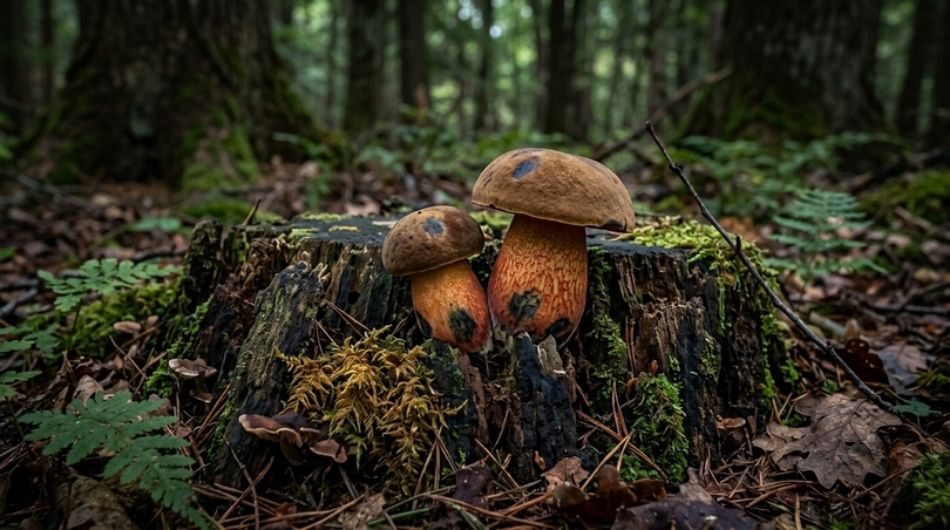
The cap of Neoboletus luridiformis represents one of the most evident diagnostic elements of the species. Its dimensions vary considerably, with specimens that can reach diameters between 5 and 20 centimeters, although the average generally hovers around 10-15 centimeters in mature specimens. In young specimens, the shape is hemispherical or hemispherical-convex, with margins rolled inward; as it grows, the cap expands to become convex-flattened, often maintaining a slightly raised and regular margin.
The surface of the cap has a texture that has been compared to that of chamois leather or velvet: it is dry, matte, and finely velvety to the touch, a characteristic that has earned the species the German name "Schusterpilz" (shoemaker's mushroom), in reference to the tactile sensation that recalls worked leather. The coloration is typically dark brown, chestnut brown, or chocolate brown, with variations that can include lighter tones tending towards brown-olive or, in particularly mature specimens or those exposed to specific growth conditions, almost blackish shades. It is not uncommon to observe lighter spots or marbling, of ochre or yellowish tones, which can extend over variable portions of the cap surface.
In conditions of high humidity, the cap may appear slightly viscid or shiny, while maintaining its underlying characteristic opacity. The reaction to handling is another distinctive trait: under pressure, the cap typically shows a more or less intense bluing, although this response is generally less spectacular than that observable in the flesh or pores.
The hymenophore: red pores and yellow tubes
The lower part of the cap, called the hymenophore, consists of tubes (not gills, as it is a bolete) that terminate in fine, roundish pores. In young specimens, the tubes are bright yellow or yellow-olive, while the pores covering them externally present a blood-red, orange-red, or vermilion-red coloration that represents one of the most characteristic and immediately recognizable traits of the species.
As the mushroom matures, the tubes tend to become yellow-olive or yellow-greenish, while the pores may fade towards orange or yellowish tones, particularly near the margin of the cap. This chromatic variability linked to the age of the mushroom represents a potential source of confusion for less experienced foragers, who might interpret faded pores as indicative of a different species.
The bluing reaction in the pores is particularly rapid and intense: at the slightest touch, the pores turn to an ink blue that can appear almost black in unfavorable lighting conditions. This response, combined with the basic red coloration, makes Neoboletus luridiformis immediately identifiable in most contexts, although the presence of other red-pored species (some toxic) still requires constant diagnostic attention.
The spore print, that is, the imprint of spores deposited on a light surface, is brown-olive in color, a useful datum for laboratory determination or to resolve any doubts in the field.
The stem: robustness and characteristic punctuation
The stem (or stipe) of Neoboletus luridiformis is robust, fleshy, and massive in appearance, with dimensions that typically vary between 5 and 15 centimeters in height and 1.5-5 centimeters in diameter. In young specimens, the stem appears cylindrical or slightly club-shaped, with a base that may be swollen; as it grows, it generally maintains a cylindrical or slightly tapered shape upwards. Its consistency is firm and compact, a characteristic that contributes to the gastronomic reputation of the species and makes it particularly suitable for prolonged cooking and preservation.
The surface of the stem is bright yellow, but what makes it immediately recognizable is the presence of a very fine and dense punctuation of bright red, carmine, or orange-red. This ornamentation, technically defined as "punctuation" to distinguish it from the "reticulation" that characterizes other bolete species, never forms a reticulated structure, not even in the most mature specimens or under anomalous growth conditions. The red dots can be more or less aggregated, especially in the upper portion of the stem, and in rare cases may converge to form pseudo-reticulated structures, but the fundamental tendency remains that of a diffuse punctuation rather than an organized reticulum.
The bluing of the stem upon handling or sectioning is rapid and intense, with the surface often taking on a "dirty" or brownish-bluish appearance after being touched. This characteristic, combined with the red punctuation, makes Neoboletus luridiformis virtually unmistakable to an attentive observer, although the need to distinguish it from similar but toxic species remains.
The flesh: color, consistency, and color change
The flesh (context) of Neoboletus luridiformis presents organoleptic characteristics that clearly distinguish it. The base color is bright yellow or straw yellow, particularly evident in the upper portion of the stem and the cap flesh; at the base of the stem, however, the color can shift towards reddish or brownish-red tones, sometimes with wine-like shades.
The consistency is firm, compact, and fleshy, with a homogeneous texture that does not present evident fibers. This characteristic contributes to its gastronomic excellence, as the flesh maintains a pleasant consistency even after prolonged cooking, without falling apart or becoming rubbery. The odor is weak and pleasant, slightly fruity, with notes that vaguely recall porcini; in more mature or decomposing specimens, however, an unpleasant odor, tending towards sour or putrid, may develop, which represents a useful indicator of the mushroom's state of preservation.
The taste, although rarely evaluated in the raw state for the safety reasons we will see, is described as sweet and pleasant. The bluing reaction in the flesh is among the most spectacular in the fungal kingdom: when cut, the yellow flesh turns almost instantly to an intense blue, which may subsequently lighten or remain for a considerable time. It is important to emphasize that this reaction is not correlated with toxicity and that the flesh, once cooked, completely loses the blue tone and regains a yellowish or brownish color.
Habitat, distribution, and seasonality of Neoboletus luridiformis
Geographical distribution and range
Neoboletus luridiformis has a predominantly European distribution range, with populations documented from Great Britain and Ireland to western Russia, through central and southern Europe. Its presence is reported throughout the entire Alpine and pre-Alpine area, with particular abundance in mountainous and hilly regions characterized by acidic or sub-acidic soils. In Italy, the species is relatively common in the northern and central regions, with significant presences in Piedmont, Lombardy, Trentino-Alto Adige, Veneto, Friuli-Venezia Giulia, Emilia-Romagna, and Tuscany; in the southern regions, its distribution appears more fragmented, mainly linked to internal mountainous areas.
The recent taxonomic revision based on molecular analyses has revealed an unsuspected complexity within what was considered a single taxon. In 2016, from what was Neoboletus luridiformis sensu lato, two morphologically very similar but genetically distinct species with differentiated habitats were separated: Neoboletus luridiformis sensu stricto, mainly associated with conifers, and Neoboletus praestigiator, linked instead to broad-leaved trees. This distinction, although not always easily applicable in the field without molecular analyses, is of considerable importance for understanding the ecology and distribution of the species in the strict sense.
Preferred habitats and symbiotic relationships
Neoboletus luridiformis is an ectomycorrhizal fungus, which means it establishes mutualistic symbiotic relationships with the roots of specific trees. This association is obligate for the fungus, which cannot complete its life cycle without interaction with the appropriate plant host. The species shows a preference for acidic or sub-acidic soils, rich in humus, often in contexts of coniferous woods (spruce forests, pine forests, fir forests) or mixed woods with a prevalence of conifers.
The main symbiotic trees include Norway spruce (Picea abies), Scots pine (Pinus sylvestris), and other pine species, as well as, to a lesser extent and with due taxonomic distinctions, some broad-leaved trees such as beech (Fagus sylvatica), oak (Quercus spp.), and linden (Tilia spp.). The presence of the fungus is often associated with acidic, siliceous, or otherwise non-calcareous soils, and its absence or rarity in calcareous areas represents a useful search criterion.
The typical habitat is represented by mature woods with a undergrowth rich in mosses, where the fungus often fruits near the trunks or in partially shaded clearings. The species prefers cool and humid, but well-drained environments, and can also be found in secondary woods or reforestations with appropriate host species.
Seasonality and climatic conditions
The fruiting season of Neoboletus luridiformis is rather extended, generally covering the period from June to October, with possible anticipations in May in particularly favorable years or in areas with a milder climate. The peak of abundance is typically recorded between August and September, corresponding to periods of abundant rainfall followed by warm but not sweltering days. The species shows a marked sensitivity to water availability: after periods of drought, fruiting may be scarce or non-existent, while rainy summers and mild autumns favor abundant production.
The optimal temperature for fruiting is indicatively between 15 and 22°C, with a certain tolerance for moderate thermal excursions. Early frosts can abruptly interrupt the season, while cold and rainy springs can delay the start of fruiting. Altitude does not seem to constitute a limiting factor within a rather wide range, with findings documented from sea level up to about 1500-1800 meters of altitude, although high-altitude populations tend to fruit later.
The "modra" phenomenon and the biology of the species
A fascinating aspect of the biology of Neoboletus luridiformis is represented by the bluing reaction, locally known as "modra" in several European mycological traditions. This phenomenon, not exclusive to the species but particularly evident in it, is the result of enzymatic reactions involving phenolic compounds (in particular derivatives of pulvinic acid and other secondary metabolites) present in the fungal hyphae. When the cells are damaged, these compounds come into contact with oxidative enzymes (polyphenol oxidases) that catalyze their transformation into blue-blackish pigments, probably with a defensive function against pathogenic microorganisms or predators.
Bluing is more intense in the flesh and pores than in the cap and stem, and its speed and intensity can vary depending on genetic factors, growth conditions, age of the mushroom, and water status of the tissues. It is interesting to note that the blue coloration disappears completely during cooking, when the flesh regains yellowish or brownish tones, indicating that the responsible pigments are thermolabile or that the enzymes that produce them are denatured by heat.
Nutritional and bioactive properties of Neoboletus luridiformis
Nutritional composition and food value
From a nutritional point of view, Neoboletus luridiformis shares with other edible boletes an interesting profile, characterized by high protein content (in terms of dry weight), low lipid content, and absence of cholesterol. The flesh, firm and compact, is rich in dietary fiber and represents a source of essential minerals, among which potassium, phosphorus, magnesium, and selenium stand out. The vitamin content includes B vitamins (particularly B2, B3, and B5) and vitamin D (ergosterol, a precursor of vitamin D2, activated by exposure to UV rays).
The amino acid profile is complete, with the presence of all essential amino acids, although fungal proteins have a lower digestibility compared to animal proteins due to the presence of chitin in the cell wall. This aspect, however, does not compromise the overall nutritional value, particularly relevant in vegetarian or vegan diets where mushrooms represent a precious source of alternative proteins.
Phenolic compounds and antioxidant activity
Scientific research has recently begun to systematically explore the phytochemical profile of Neoboletus luridiformis, revealing the presence of bioactive phenolic compounds of considerable interest. A study published in 2022 in the journal Frontiers in Nutrition represented the first complete characterization of phenols in this species, identifying 2,4-dihydroxybenzoic acid, homogentisic acid, and protocatechuic acid as main components, with 4-hydroxybenzoic acid and vanillic acid present exclusively in methanolic extracts.
The antioxidant activity of Neoboletus luridiformis extracts has been evaluated through multiple assays (ABTS, FRAP), demonstrating a significant scavenger capacity, although lower than that of Boletus edulis in the same tests. Aqueous extracts have shown superior antioxidant activity compared to methanolic extracts, suggesting that the responsible compounds are predominantly hydrophilic. These data, although preliminary, indicate that Neoboletus luridiformis can contribute to the intake of natural antioxidants in the diet, with potential benefits in the prevention of oxidative stress and related pathologies.
Antimicrobial and antibiofilm activity
One of the most interesting discoveries regarding Neoboletus luridiformis concerns its antimicrobial properties. The 2022 study evaluated the activity of aqueous and methanolic extracts against bacterial pathogens of clinical relevance, including methicillin-sensitive (MSSA) and methicillin-resistant (MRSA) Staphylococcus aureus, Pseudomonas aeruginosa, and Escherichia coli. The results demonstrated that both types of extract exert inhibitory activity against the tested strains, with minimum inhibitory concentrations (MIC) and bactericidal concentrations (MBC) documented for the first time for this species.
Particularly significant was the discovery of antibiofilm properties, that is, the ability of the extracts to prevent or disrupt the formation of bacterial biofilms. Biofilms, organized microbial communities resistant to conventional antibiotics, represent a growing therapeutic challenge in the clinical field. This study represents the first report of antibiofilm activity for Neoboletus luridiformis, opening promising perspectives for the development of antimicrobial compounds of natural origin.
The cytotoxicity of the extracts was evaluated on human fibroblasts (HFF-1), demonstrating an absence of toxic effects at the tested concentrations. This datum, although preliminary, suggests a favorable safety profile for the species' extracts, encouraging further research into their therapeutic potential.
Research perspectives and biotechnological potential
The biotechnological potential of Neoboletus luridiformis remains largely unexplored, but preliminary evidence indicates promising research directions. The presence of bioactive phenolic compounds with antioxidant and antimicrobial activity suggests potential applications in the pharmaceutical, nutraceutical, and food preservation sectors. The ability to inhibit bacterial biofilms could translate into innovative strategies for the treatment of infections associated with medical devices or chronic wounds.
The understanding of the molecular mechanisms underlying the bluing reaction could also reveal new oxidative enzymes with applications in biocatalysis or biosensing. The in vitro cultivation of the mycelium and the controlled production of secondary metabolites represent research frontiers that could allow exploiting the properties of the species without pressure on wild harvesting.
Gastronomic uses and safe preparation of the Ceparolo
An excellent but conditionally edible mushroom
Neoboletus luridiformis is universally recognized as a mushroom of excellent gastronomic quality, comparable or sometimes superior to porcini (Boletus edulis and relatives) for flavor, consistency, and culinary versatility. However, this reputation is inextricably linked to an essential condition: the species is toxic in its raw state and requires prolonged and complete cooking to be consumed safely. Consuming raw, undercooked, or even just quickly seared specimens can cause gastrointestinal disturbances of varying severity, including nausea, vomiting, abdominal cramps, and diarrhea, which generally resolve spontaneously within 24-48 hours but can be particularly unpleasant.
Toxicity in the raw state is attributed to the presence of thermolabile compounds (probably glycoproteins or hemolysins) that are inactivated by prolonged heat. This mechanism is similar to that of other conditionally edible fungal species, such as morels (Morchella spp.) and the gypsy mushroom (Cortinarius caperatus), which require adequate heat treatments to be consumed safely. Mycological literature recommends cooking for at least 15-20 minutes, preferably preceded by preliminary boiling with the elimination of the cooking water.
Preparation techniques and precautions
The safe preparation of Neoboletus luridiformis follows well-defined protocols that guarantee the inactivation of toxic compounds and preserve the organoleptic qualities of the mushroom. The first step consists of a careful cleaning of the mushrooms, removing dirt, pine needles, and debris with a soft brush or a damp cloth; immersion in water is not recommended so as not to compromise the consistency. The base of the stem, often woody or contaminated with soil, is generally discarded, while the rest of the mushroom can be sliced or cut into appropriately sized pieces.
Preliminary boiling represents a highly recommended step and in some traditions is considered mandatory. The sliced mushrooms are immersed in cold water and brought to a boil, maintaining the boil for at least 10-15 minutes. During this phase, a whitish foam will form on the surface, which must be removed with a slotted spoon; the cooking water must be discarded and the mushrooms rinsed with running water before proceeding with the final preparation. This treatment significantly reduces the risk of gastrointestinal disturbances and improves the digestibility of the mushroom.
The final cooking can take place in a pan, stewed, in the oven, or in more elaborate preparations (sauces, risottos, soups). The overall cooking time should be at least 20 minutes, even after preliminary boiling, to ensure the complete inactivation of thermolabile compounds. Cooked mushrooms can be preserved in oil, pickled, or frozen after heat treatment; drying, on the other hand, is not considered a safe method for this species, as toxic compounds are not inactivated by simple dehydration.
Comparison with porcini and gastronomic qualities
The organoleptic qualities of Neoboletus luridiformis place it at the top of the gastronomic hierarchy of boletes. The firm and compact flesh maintains its structure even after prolonged cooking, without becoming rubbery or falling apart, a characteristic that makes it particularly suitable for stewed preparations, preserves, and oil-pickling. The flavor is intense and aromatic, with notes that recall porcini but with its own personality, slightly more earthy and complex. Versatility in the kitchen is remarkable: it works excellently in first courses (tagliatelle, risottos), second courses (grilled, pan-fried, baked), and side dishes, as well as in preserved preparations.
The comparison with porcini (Boletus edulis), often considered the absolute reference among edible mushrooms, is inevitable but not entirely appropriate: Neoboletus luridiformis has a firmer consistency and a slightly more intense flavor, which some gourmets prefer precisely for its ability to "hold up" during cooking and to absorb the flavors of surrounding ingredients without losing its own identity. Foraging for the Ceparolo is also considered a rewarding activity for expert foragers, who appreciate the intellectual challenge of recognition and the satisfaction of bringing an excellent mushroom to the table, often overlooked by less experienced foragers.
Frequently asked questions
| Is Neoboletus luridiformis poisonous? |
Neoboletus luridiformis is toxic if consumed raw, but safe if adequately cooked. The species contains thermolabile compounds that are inactivated by prolonged cooking (at least 15-20 minutes, preferably after preliminary boiling). Never consume raw and always follow preparation recommendations. |
| How do you recognize the Ceparolo? |
The main distinctive traits are: dark brown velvety cap, red pores that blue upon touch, yellow stem with red punctuation (never reticulated), yellow flesh that turns blue when cut. The combination of these elements makes the species easily recognizable to an attentive observer. |
| Where and when is Neoboletus luridiformis found? |
It is found in coniferous and broad-leaved woods, on acidic soils, in Europe and in northern and central Italy. The main season runs from June to October, with a peak between August and September. It prefers cool and humid environments, often near Norway spruce and pines. |
| Does Neoboletus luridiformis have medicinal properties? |
Recent studies have highlighted antioxidant, antimicrobial, and antibiofilm activity of the extracts. Minimum inhibitory concentrations against pathogens such as MRSA and Pseudomonas aeruginosa have been identified. Research is still preliminary, but the perspectives are promising. |
| Can I cultivate Neoboletus luridiformis at home? |
Being an ectomycorrhizal fungus, Neoboletus luridiformis is not easily cultivable in a domestic environment without host trees. However, NaturNext.eu offers kits for saprophytic and mycorrhizal species that allow you to grow mushrooms at home successfully. To optimize growth, the use of specific LED lighting available on Ledpoint.it is recommended. |
Home cultivation and NaturNext technologies
Mushroom cultivation in a controlled environment
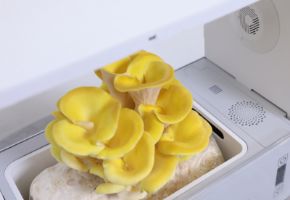
Domestic mushroom cultivation represents a rapidly expanding frontier for enthusiasts, researchers, and small producers. Although Neoboletus luridiformis is an ectomycorrhizal fungus and therefore difficult to cultivate in the traditional sense (requiring symbiosis with host trees), many saprophytic species and some mycorrhizal species can be successfully cultivated in controlled environments, offering notable satisfaction and higher quality products compared to commercial ones.
NaturNext.eu positions itself as a reference point for those wishing to approach fungal cultivation with professional tools and complete kits. The cultivation kits available on the site allow you to produce fresh mushrooms at home with simple procedures and guaranteed results, while ready-to-use substrates and selected mycorrhizae offer advanced solutions for more ambitious projects.
Lighting and microclimate: the role of LED technologies
Light plays a fundamental role in mushroom development, influencing fruiting, morphology, and the production of secondary metabolites. Recent studies have shown that specific wavelengths (particularly in the blue and red spectrum) can stimulate the formation of fruiting bodies and improve yield in controlled cultivation. LED technologies offer significant advantages over traditional light sources: low energy consumption, reduced heat, customizable spectrum, and long lifespan.
Ledpoint.it provides professional LED lighting solutions also suitable for domestic greenhouses, grow boxes, and fungal cultivation environments. Specific spectrum LED strips allow you to optimize growth and fruiting of cultivated species, while control systems allow you to program light-dark cycles according to the specific needs of each species. The integration of quality LED lighting with NaturNext cultivation kits represents the optimal solution for those wishing to maximize the results of their mycological passion.
Practical applications and future perspectives
Controlled cultivation is not only about edible mushrooms: medicinal species such as Hericium erinaceus, Ganoderma lucidum, and Lentinula edodes are increasingly in demand for their nutraceutical properties, and NaturNext.eu offers specific kits for their domestic production. Scientific research continues to explore new cultivable species and optimized protocols, opening fascinating scenarios for the future of mycoculture.
For mycology enthusiasts, domestic cultivation represents an ideal complement to field foraging: it allows you to observe up close the life cycle of mushrooms, experiment with different species, and guarantee yourself a constant source of fresh mushrooms even in adverse seasons. With the support of NaturNext.eu and the LED technologies of Ledpoint.it, anyone can transform their passion into a concrete and satisfying production.
This article was developed with the support of artificial intelligence and subsequently reviewed, corrected, and validated by the technical team of NaturNext.eu, which guarantees its reliability and compliance with official sources.
The kingdom of fungi is a universe in continuous evolution, with new scientific discoveries emerging every year regarding their extraordinary benefits for gut health and general well-being. From today onwards, when you see a mushroom, you will no longer think only of its flavor or appearance, but of all the therapeutic potential it holds within its fibers and bioactive compounds. ✉️ Stay connected - Subscribe to our newsletter to receive the latest studies on: Nature offers us extraordinary tools to take care of our health. Mushrooms, with their unique balance between nutrition and medicine, represent a fascinating frontier that we are only just beginning to explore. Continue to follow us to discover how these extraordinary organisms can transform your approach to well-being.Continue your journey into the world of mushrooms