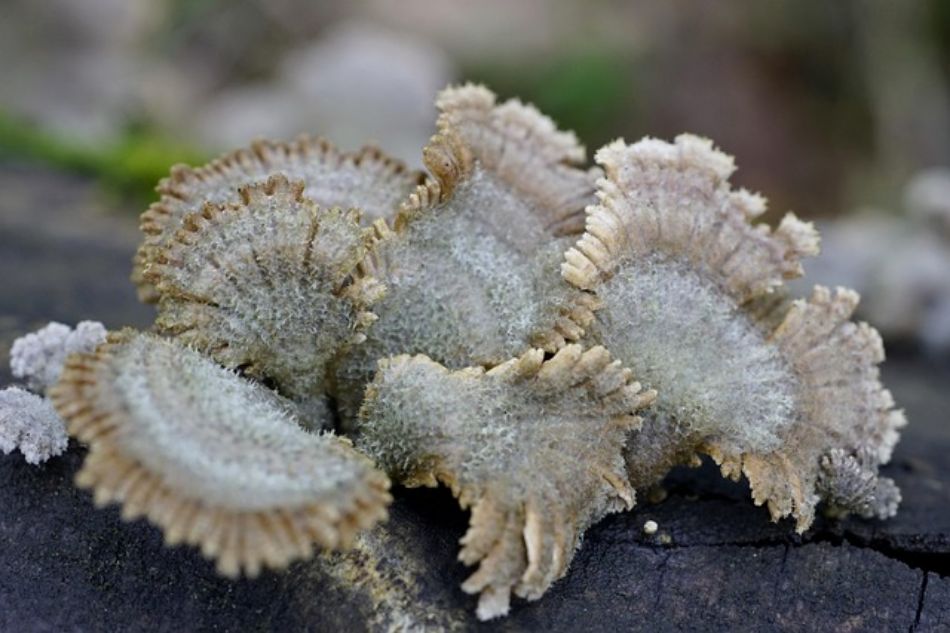
In the vast and fascinating kingdom of fungi, Schizophyllum commune represents a species of extraordinary interest for mycologists, botanists, and mycological enthusiasts. This small basidiomycete, often overlooked by casual collectors, actually harbors unique biological characteristics and properties that make it a prime subject of study in contemporary mycological research. Its exceptional hardiness, ubiquitous distribution, and peculiar reproductive features have made it a model for study in numerous fields of biology, from genetics to forest ecology. In this in-depth factsheet, we will explore every aspect of this extraordinary fungus, from its complex morphology to its role in ecosystems, and recent discoveries regarding its medicinal properties. Through scientific data, field observations, and detailed analyses, we will attempt to provide a comprehensive overview of an organism that, despite its modest size, represents a fundamental component of global fungal biodiversity.
In the vast and fascinating kingdom of fungi, there are organisms that defy convention and expectations, presenting themselves not as benign or fearsome entities, but as protagonists in a complex and ambivalent relationship with the plant world. Among these, the corn artichoke, scientifically known as Ustilago maydis, holds a position of extraordinary interest for mycologists, botanists, farmers, and, increasingly, for chefs and food enthusiasts. This basidiomycete fungus, a pathogen of corn, is not simply a disease to be eradicated, but a culinary and potentially nutraceutical resource of considerable value.
Fungal taxonomy is one of the cornerstones of mycology, a fascinating discipline that deals with the study and systematic classification of fungi. In this article, we will explore in depth the principles of fungal taxonomy, its historical evolution, traditional and modern classification methods, and how to navigate the complex world of mycological systematics. Through a detailed analysis of the morphological characteristics, habitats, and properties of the main taxonomic groups, we will provide a comprehensive guide for enthusiasts, mycologists, and mycologists who wish to deepen their knowledge of this extraordinary kingdom.