Welcome to this in-depth look at one of the most fascinating and crucial techniques in mushroom cultivation: inducing fruiting through temperature shock. In this article, designed for mycologists, botanists, and passionate growers, we will explore in detail the physiological mechanisms, application protocols, and scientific research surrounding the concept of shock, defined as an abrupt and controlled change in environmental conditions aimed at stimulating the transition from the vegetative phase of the mycelium to the reproductive phase, with the formation of the fruiting bodies we love to collect and cultivate. Shock, particularly temperature shock, is not a simple procedure, but a complex dialogue with the biology of the mushroom—a dialogue that, if understood, can elevate our cultivation practices to a higher level.

Among cultivation techniques, monosporic isolation represents one of the most refined and scientifically rigorous methodologies in the field of mycology applied to mushroom cultivation. This technique, which allows for obtaining genetically pure strains starting from the spores produced by basidia, constitutes the foundation for genetic improvement programs, vegetative compatibility studies, and the creation of isolated lines with specific characteristics. Through a meticulous process that combines principles of sterility, cell biology, and fungal genetics, mycologists and mushroom cultivators can select individuals with desirable traits such as high productivity, disease resistance, or adaptability to alternative substrates. In this in-depth analysis, we will meticulously examine every aspect of monosporic isolation techniques, starting from the biological fundamentals to the most advanced practical applications. We will analyze the operational protocols, the most effective culture media, the necessary equipment, and the most common problems, providing quantitative data, comparative tables, and references to recent scientific research. The goal is to create a complete and updated resource that can serve both the motivated beginner and the experienced researcher, with an approach that combines scientific rigor with practical application.
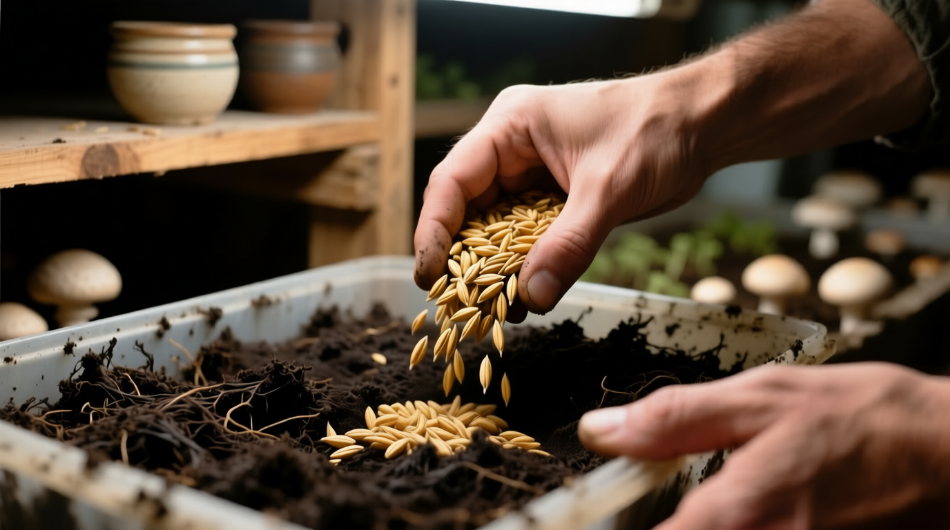
The transition from rye grain to bulk substrate represents one of the most delicate and crucial phases in the entire mushroom cultivation process. This step, known among experts as "spawning to bulk" or "bulk substrate preparation," marks the moment when the mycelium, which has successfully colonized the rye grains, is transferred to a larger, more nutritious environment that will favor fruiting. The choice of rye grain as the mycelium propagation medium is no coincidence: its nutritional composition, physical structure, and moisture-retaining capacity make it ideal for this intermediate stage between spore inoculation and fruiting body production. In this in-depth guide, we'll explore every aspect of this transition, from theoretical foundations to practical applications, providing scientific data, comparative tables, and detailed statistics that will allow you to fully master this technique. We will analyze critical parameters such as spawn-substrate ratios, optimal environmental conditions, colonization times, and strategies to minimize contamination, always with an eye to the specificities of rye grain as a mycelium carrier.