



Agaricus xanthodermus represents one of the most discussed and studied mushrooms in the Italian and European mycological landscape, a species that continues to generate confusion among foragers of all experience levels. Commonly known as the yellow-staining mushroom or yellow-stainer, Agaricus xanthodermus belongs to the vast family Agaricaceae and is distinguished by a unique and dangerous characteristic: its flesh, when cut, immediately turns an intense chrome yellow, a warning signal that nature itself offers to discourage consumption. This article explores in depth every aspect of Agaricus xanthodermus, from taxonomic classification to detailed morphology, from natural habitat to documented toxicity, while providing practical tools to reliably distinguish this toxic mushroom from related edible species. Whether you are a mycology researcher, a foraging enthusiast, a chef interested in natural cuisine, or a healthcare professional, this comprehensive guide to Agaricus xanthodermus will provide you with all the necessary information to thoroughly understand this species and interact with it in complete safety.
The importance of knowing Agaricus xanthodermus lies not only in its direct toxicity but also in the repercussions that confusion with edible species can have on public health. Every year, poison control centers record dozens of intoxication cases linked precisely to the involuntary consumption of Agaricus xanthodermus mistaken for the field mushroom (Agaricus campestris) or the horse mushroom (Agaricus arvensis). The superficial similarity between these species is such that even experienced foragers can make identification errors, especially when the specimen is examined in insufficient light or when fundamental olfactory and chromatic tests are neglected. For this reason, Agaricus xanthodermus has become a paradigmatic case study in mycology applied to food safety, and its in-depth understanding is considered an indispensable prerequisite for anyone approaching the harvesting of field mushrooms in the wild.
In this article dedicated to Agaricus xanthodermus, we will analyze every single aspect of this species' biology, integrating updated scientific data, field observations, statistics on intoxication cases, and practical advice for safe identification. We will discuss the morphological characteristics that distinguish it from its congeners, its preferred habitat, and its geographical distribution in Italy and worldwide, further delving into aspects related to toxicity, the symptoms of poisoning, and the chemical properties of the compounds responsible for the toxic reaction. There will also be direct comparisons with similar species such as Agaricus arvensis, Agaricus campestris, and Agaricus bisporus, as well as mentions of the possible confusion with Entoloma sinuatum, another dangerous mushroom frequently associated with episodes of poisoning from false field mushrooms.
In this article...
1. Taxonomic classification of Agaricus xanthodermus
The classification of Agaricus xanthodermus represents the fundamental starting point for any serious analysis of this fungal species. Understanding the systematic position of Agaricus xanthodermus within the tree of life means placing this mushroom in the broader context of fungal biodiversity, understanding its evolutionary relationships with both related and distant species. Agaricus xanthodermus, like all mushrooms of the genus Agaricus, belongs to the vast kingdom of Fungi, a kingdom of its own comprising heterotrophic organisms capable of playing a fundamental ecological role in the decomposition of organic matter and the recycling of nutrients in terrestrial ecosystems.
Agaricaceae Family: the systematic context
Agaricus xanthodermus is placed in the Agaricaceae family, one of the largest and most diversified families in the order Agaricales. The Agaricaceae family includes over 85 genera and about 1,300 described species, with a cosmopolitan distribution spanning all continents and almost all terrestrial habitats. This family includes mushrooms with extremely variable morphological characteristics, from classic "gilled mushrooms" with well-defined caps and stems, to more complex and atypical forms. Agaricus xanthodermus shares with all members of the Agaricaceae some fundamental characteristics: the presence of free gills (not attached to the stem), the production of brown spores in mass, and a generally fleshy and ephemeral fruiting body. The position of Agaricus xanthodermus within the Agaricaceae has been confirmed by numerous molecular phylogenetic studies based on the analysis of ribosomal DNA sequences, which have validated the traditional classification based on morphological characters.
The Agaricaceae represent a family of enormous relevance to humans, not only for the presence of toxic species like Agaricus xanthodermus, but also and above all for the numerous edible species that are commercially cultivated. The genus Agaricus alone generates a global market exceeding 15 billion dollars annually, dominated by the species Agaricus bisporus, the classic button mushroom found in every supermarket in the world. This context makes the correct identification of Agaricus xanthodermus even more important: in a family that includes some of the most consumed fungal species by humans, the presence of a toxic "impostor" creates the ideal conditions for identification errors with potentially serious health consequences.
Genus Agaricus: characteristics and diversity
The genus Agaricus, to which Agaricus xanthodermus belongs, was established by Carl Linnaeus in 1753 and currently comprises over 300 described species worldwide. Mushrooms of the genus Agaricus, commonly known as agarics or field mushrooms, are characterized by a fruiting body with distinct cap and stem, free gills that pass from pink to dark brown with spore maturity, a membranous ring on the stem, and brown spores in mass. The genus Agaricus has been the subject of intense taxonomic revisions in recent decades, thanks to the application of molecular phylogenetics techniques that have allowed clarifying the evolutionary relationships between different species and redefining the taxonomic limits of numerous entities.
Agaricus xanthodermus is placed within the section Xanthodermatei of the genus Agaricus, a monophyletic group that brings together species characterized by the ability to turn yellow when cut and the presence of volatile phenolic compounds responsible for the characteristic odor. The section Xanthodermatei comprises about 20-25 species worldwide, most of which are toxic or suspected of toxicity. This internal classification is fundamental because it encloses in a single group all the species that present the "yellow-staining syndrome", an essential diagnostic character for the safe identification of Agaricus xanthodermus and its related species.
Species Agaricus xanthodermus: nomenclature and synonyms
The binomial name Agaricus xanthodermus was assigned by Joseph-Henri Léveillé in 1870, although the species had been described previously under other names. The specific epithet "xanthodermus" derives from the Greek "xanthos" (yellow) and "derma" (skin), referring to the most evident characteristic of the species: the yellowing of the surface upon touch and of the flesh when cut. Among the most common synonyms of Agaricus xanthodermus are Agaricus xanthoderma (with the final "a", a form often used in Anglo-Saxon literature and in some mycological databases), Psalliota xanthoderma, and Pratella xanthoderma.
It is important to note that in some contexts, especially in French literature, Agaricus xanthodermus is known as agaric jaunissant, a term that literally translates to "yellowing agaric" and perfectly describes the most distinctive chromatic behavior of the species. The wording "agaric jaunissant agaricus xanthodermus" is frequently found in French dichotomous keys and Francophone mycology manuals, and represents a useful search term for those accessing international sources. Another relevant taxonomic variant is Agaricus xanthodermus var. griseus, a variety characterized by a more markedly gray cap color compared to the typical form, which some authors consider a simple chromatic variant and others tend to elevate to the rank of distinct species.
Agaricus xanthodermus and nomenclatural confusion
A frequent source of confusion in mycological literature concerns the wording Amanita xanthodermus, which appears in some less accurate texts but does not correspond to a valid species. Agaricus xanthodermus has no taxonomic relationship with the genus Amanita, a group that includes deadly species like Amanita phalloides. This nomenclatural confusion can be dangerous because it might lead a forager to underestimate the toxicity of Agaricus xanthodermus, erroneously associating it with a different genus. It is fundamental to clarify that Xanthoderma is not a genus of its own, but simply the specific epithet identifying the yellowing characteristic, correctly applied only to the species Agaricus xanthodermus (or to the variant Agaricus xanthodermus var. griseus).
Phylogenetic position of Agaricus xanthodermus
Molecular phylogenetic studies have confirmed that Agaricus xanthodermus belongs to a well-defined group within the section Xanthodermatei, along with other toxic species such as Agaricus moelleri, Agaricus placomyces, and Agaricus californicus. Analysis of ITS (Internal Transcribed Spacer) sequences of ribosomal DNA has demonstrated that species of the section Xanthodermatei form a monophyletic group, meaning a group comprising a common ancestor and all its descendants. This result is particularly relevant because it confirms that the ability to turn yellow and the production of toxic phenolic compounds are shared characters inherited from a common ancestor, and not independent adaptations arisen in different species. For researchers studying Agaricus xanthodermus, this information is essential because it means that toxicity is an evolutionarily conserved trait in this group, and that all species of the section Xanthodermatei must be treated with the utmost caution from a food safety point of view.
2. Morphological characteristics and outward appearance of Agaricus xanthodermus
The morphology of Agaricus xanthodermus constitutes the most important chapter for anyone who needs to identify this species in the field. The morphological characteristics of Agaricus xanthodermus have been described in detail by dozens of mycologists since the late 19th century, and today we have an extremely precise picture of the outward appearance of this mushroom. However, the static description of morphological characteristics is not sufficient to guarantee safe identification: it is also necessary to understand the dynamics of chromatic and olfactory changes that occur when the mushroom is handled, cut, or crushed. Agaricus xanthodermus is indeed a mushroom that "reveals" its true nature only through physical interaction with the observer, and this is the main reason why confusions with edible species are so frequent.
Cap of Agaricus xanthodermus
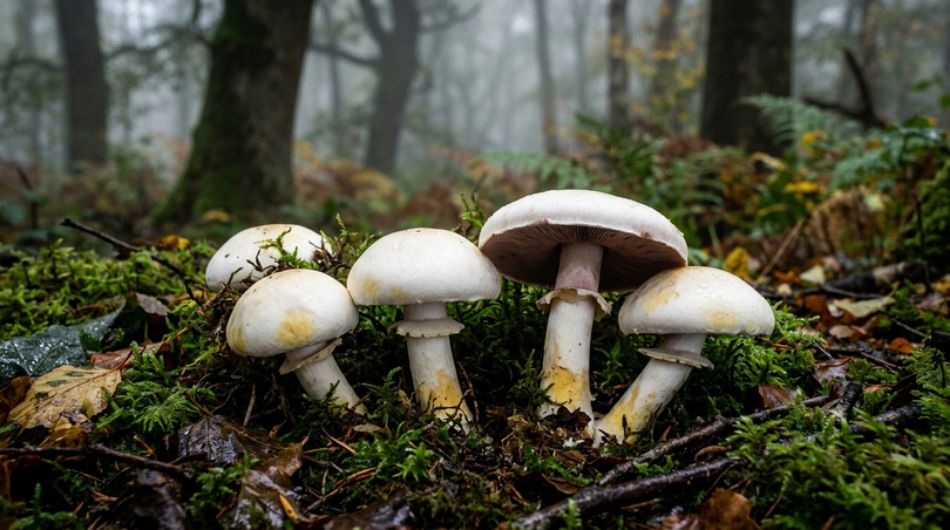
The cap of Agaricus xanthodermus is the first structure that attracts the forager's attention, and unfortunately, it is also the characteristic that most easily leads to error. The cap has average dimensions varying from 5 to 15 centimeters in diameter, exceptionally up to 20 centimeters in the most developed specimens. The shape is initially hemispherical, then convex, and finally flattened with the margin slightly involute in mature specimens. The cap surface is smooth, silky, or finely fibrillose, never scaly as observed in other species of the genus Agaricus. The color is white, ivory-white, or light gray, often with yellowish or brownish shades in the center, especially in specimens exposed to direct sunlight. In the variety Agaricus xanthodermus var. griseus, the cap presents a more pronounced and diffuse gray coloration, making it even more similar to some light-capped forms of Agaricus arvensis.
An important characteristic of the cap of Agaricus xanthodermus is its behavior upon touch: when the surface is gently rubbed with the fingers, a more or less intense chrome yellow staining is observed, particularly evident in the peripheral zone of the cap. This yellowing upon touch is one of the most reliable warning signals for identifying Agaricus xanthodermus, although it should be noted that in some young specimens or those grown in total shade, the reaction may be less evident. The margin of the cap may present remnants of the partial veil in the form of fleeting white threads, but it never forms a defined cortina as observed in other genera. The flesh of the cap is compact, white, with an odor that may initially seem pleasantly mushroom-like but quickly becomes unpleasant after cutting.
Stem of Agaricus xanthodermus
The stem of Agaricus xanthodermus is a diagnostic element of primary importance, because it is here that the yellowing manifests with greater intensity and rapidity. The stem has a length between 6 and 15 centimeters and a thickness of 1.5 to 3 centimeters, is cylindrical, often slightly club-shaped at the base (i.e., wider towards the bottom), and is solid inside. The surface is smooth, white, and turns notably yellow upon touch, assuming a bright chrome yellow color that is considered the most characteristic identification sign of Agaricus xanthodermus. This yellowing of the stem upon touch is so rapid and intense that some mycologists define it as "instantaneous": it takes just rubbing the stem with a finger to see a vivid yellow stripe appear at the point of contact within a few seconds.
The stem of Agaricus xanthodermus presents a membranous ring in a median or submedian position, which is the upper part of the partial veil that originally protected the immature gills. The ring is white, membranous, sometimes double (with a thinner upper zone and a thicker lower one), and has a smooth or finely serrated margin. Unlike what is observed in Agaricus arvensis, the ring of Agaricus xanthodermus does not present a crown of scales underneath and does not change color with age. The base of the stem is often slightly swollen and may present a variable amount of white mycelium, but it never forms a true volva like in mushrooms of the genus Amanita. When the stem is cut longitudinally, the internal flesh shows an intense yellow staining, especially in the area immediately below the ring and in the basal part.
Gills of Agaricus xanthodermus
The gills of Agaricus xanthodermus follow the typical pattern of the genus Agaricus: they are free (not attached to the stem), crowded, with intercalated lamellulae of varying lengths. The color of the gills varies with the developmental stage of the mushroom: in young specimens they are pinkish-white, then pass to salmon pink, pinkish-brown, and finally to dark chocolate brown when the spores reach full maturity. This progressive chromatic change of the gills is a character shared with all Agaricus and is not in itself diagnostic for distinguishing Agaricus xanthodermus from edible species. However, an important detail is that the gills of Agaricus xanthodermus, when rubbed or crushed, can take on a yellowish hue, a further clue that contributes to the diagnosis of this toxic species.
The color of the spores of Agaricus xanthodermus in mass is dark brown, as in all species of the genus Agaricus. Under an optical microscope, the spores appear elliptical, smooth, with average dimensions of 5-7 x 3.5-4.5 micrometers, with an evident germ pore at one end. Microscopic analysis of spores is a useful diagnostic tool for researchers and mycologists who need an objective confirmation of identification, but in field practice, macroscopic characteristics (yellowing and odor) remain the main criteria for recognizing Agaricus xanthodermus.
Flesh, odor, and chromatic reactions of Agaricus xanthodermus
The flesh of Agaricus xanthodermus is compact, white at the moment of cutting, and presents the most important chromatic reaction for the identification of the species: an intense and rapid chrome yellow staining that manifests within a few seconds of cutting in any part of the fruiting body. This yellowing is particularly evident at the base of the stem, but is also observed in the flesh of the cap and in the area below the ring. It is fundamental to note that the yellow of Agaricus xanthodermus is a bright chrome yellow, very different from the pale yellow or yellow-ochre that is sometimes observed in Agaricus arvensis or Agaricus campestris in old age or after prolonged exposure to air. The chromatic difference is qualitative, not just quantitative: the yellow of Agaricus xanthodermus is "electric", saturated, almost unnatural, and this intensity is the best discriminant between the pathological yellowing of the toxic species and the slight physiological yellowing of edible species.
The odor of Agaricus xanthodermus is the second pillar of identification, and for many expert mycologists, it is even the most reliable character. The odor of the freshly cut flesh of Agaricus xanthodermus has been described in multiple ways: ink, phenol, paint, pharmacy, illuminating gas, fuel, chemicals. This unpleasant and chemical odor is due to the presence of volatile phenolic compounds, mainly phenol and cresols, which are released when the mushroom cells are damaged by cutting. The odor may not be immediately perceptible in the intact mushroom, but becomes intense and unmistakable after cutting or crushing the flesh. An important detail is that some people have a reduced olfactory sensitivity to phenolic compounds, and might not perceive the odor of Agaricus xanthodermus with the same intensity: for these individuals, the chromatic test of yellowing becomes even more crucial.
Dimensions and morphological variability
The dimensions of Agaricus xanthodermus mushrooms can vary significantly depending on environmental conditions, nutrient availability, and the age of the fruiting body. In general, specimens that grow in environments very rich in organic matter (such as manure piles or compost) tend to reach larger sizes, with caps that can exceed 15 centimeters in diameter and stems over 15 centimeters long. Conversely, specimens that grow in poor meadows or sandy soils remain smaller and more delicate. This dimensional variability is important to know because a weak, small-sized Agaricus xanthodermus can appear even more similar to a young field mushroom, increasing the risk of confusion. The following table summarizes the main morphological characteristics of Agaricus xanthodermus in comparison with the most similar edible species.
| Characteristic | Agaricus xanthodermus | Agaricus arvensis | Agaricus campestris | Agaricus bisporus |
|---|---|---|---|---|
| Cap | 5-15 cm, white/gray, yellows on touch | 8-20 cm, white, does not yellow | 5-10 cm, white-brownish, does not yellow | 5-12 cm, white-brown, does not yellow |
| Stem | 6-15 cm, yellows violently on touch | 8-15 cm, does not yellow or slightly | 3-8 cm, does not yellow | 3-6 cm, does not yellow |
| Odor | Phenol, ink, pharmacy (unpleasant) | Anise, bitter almond (pleasant) | Delicate mushroom (pleasant) | Light mushroom (pleasant) |
| Gills | Pink → dark brown | Pink → chocolate brown | Pink → dark brown | Pink → brown |
| Ring | Membranous, simple | Large, crown-like, double | Thin, fragile | Membranous, persistent |
| Edibility | Toxic / Not edible | Excellent edible | Very good edible | Cultivated edible |
| Habitat | Parks, gardens, manure, compost | Open meadows, pastures | Meadows, pastures, roadsides | Cultivated on composted substrate |
3. Habitat and geographical distribution of Agaricus xanthodermus
Understanding the habitat of Agaricus xanthodermus is an essential element for the correct identification of this species and for preventing confusion with edible field mushrooms. Agaricus xanthodermus is not a mushroom found by chance: its distribution is strictly linked to certain environmental conditions and specific types of substrate, and knowing these ecological preferences can make the difference between a safe harvest and a risk of intoxication. The habitat of Agaricus xanthodermus is also a useful indicator for anticipating the presence of the species in a given territory, allowing foragers to pay special attention when in "at-risk" environments.
Ecological preferences and substrate
Agaricus xanthodermus is a saprotrophic species, meaning it feeds on decomposing organic matter, with a marked preference for soils rich in organic matter of animal or plant origin in an advanced state of decomposition. The growth zones of Agaricus xanthodermus include urban parks, public and private gardens, tree-lined avenues, flower beds, vegetable gardens, areas frequented by pets, manure piles, compost heaps, edges of controlled landfills, and in general all anthropized environments where organic matter accumulates in significant quantities. This preference for environments rich in decomposing organic matter partially distinguishes Agaricus xanthodermus from Agaricus arvensis and Agaricus campestris, which instead prefer open meadows and pastures with soils less rich in nitrogen.
The fact that Agaricus xanthodermus grows frequently in urban parks and gardens makes it particularly dangerous for occasional foragers, who can encounter it precisely in the most frequented places during Sunday walks. Many cases of intoxication from Agaricus xanthodermus occur precisely in urban or peri-urban contexts, where the forager does not expect to find toxic mushrooms and tends to be less careful than when operating in a natural environment. For those practicing urban foraging, it is indispensable to know the distinctive characteristics of the toxic Agaricus and to rigorously apply identification tests on every single collected specimen, without exceptions.
Geographical distribution in Italy
The geographical distribution of Agaricus xanthodermus in Italy is very wide: the species is present in all regions, from Piedmont to Sicily, from Liguria to Puglia, with a substantially homogeneous distribution across the national territory. Agaricus xanthodermus is found from the hilly belt (about 200-300 meters above sea level) up to the lower mountain belt (about 800-1000 meters), with occasional presence also at lower altitudes in coastal areas and at slightly higher altitudes in the more temperate areas of Southern Italy. The species is particularly abundant in the regions of the Po Valley (Lombardy, Emilia-Romagna, Veneto, Piedmont), where the density of human settlements and the frequency of anthropized environments create ideal conditions for its development.
In Tuscany, Agaricus xanthodermus is reported in all provinces, with particular frequency in the hilly areas around Florence, Siena, and Arezzo. An interesting fact concerns the locality of Larderello, in the province of Pisa, where the mushroom known as "larderello fungo" in local traditions has sometimes been associated with Agaricus xanthodermus due to the particularity of the area's geothermal environments. However, it is important to clarify that there is no endemic fungal species of Larderello called "larderello fungo": it is rather a local popular denomination that can refer to various species, including Agaricus xanthodermus, which indeed grows in those territories.
Global distribution and humid environments
Globally, Agaricus xanthodermus has a cosmopolitan distribution, having been reported throughout Europe, North America, South America, Asia, Africa, and Oceania. This wide distribution is probably linked to the species' ability to successfully colonize anthropized environments and to exploit organic waste produced by human activity as a substrate. Humid environments for mushrooms are generally favorable for the development of Agaricus xanthodermus, which requires a substrate moisture rate between 60% and 80% for optimal fruiting. However, unlike other fungal species that are strictly linked to humid forest environments, Agaricus xanthodermus tolerates relatively low humidity conditions well, provided the organic substrate it feeds on maintains an adequate water content.
The flora associated with Agaricus xanthodermus is extremely variable, given that the species is not mycorrhizal (i.e., it does not form symbiotic associations with plant roots) but saprotrophic. In urban parks, Agaricus xanthodermus is often found near ornamental trees such as lindens, plane trees, horse chestnuts, and maples, but this proximity is casual and does not indicate a direct ecological relationship. In rural meadows, the species can be found in association with grasses and legumes, but again the relationship is indirect, linked to the presence of manure or organic fertilizers in the soil.
Fruiting period and climatic factors
Agaricus xanthodermus fruits mainly in the summer-autumn period, with a peak between September and November in the regions of Northern and Central Italy, and between October and December in the southern regions. However, in particularly humid years with mild temperatures, the species can also fruit in mid-summer (July-August) or extend the appearance period until January in the more temperate areas of the Tyrrhenian and Ionian coasts. The climatic factors that favor the fruiting of Agaricus xanthodermus are essentially three: high humidity (frequent rains or morning fogs), moderate temperatures (between 15°C and 25°C), and substrate rich in available nutrients.
| Italian Region | Presence of Agaricus xanthodermus | Main Period | Predominant Habitat |
|---|---|---|---|
| Po Valley | Very common | September - November | Parks, gardens, roadsides |
| Tuscany | Common | October - December | Hills, gardens, rural areas |
| Lazio | Common | October - January | Urban parks, historical villas |
| Campania | Frequent | October - December | Vegetable gardens, gardens, peri-urban areas |
| Sicily | Present | November - January | Gardens, irrigated areas |
| Alps and Prealps | Rare above 800m | July - October | Anthropized meadows, alpine huts |
4. Distinctive features and identification of Agaricus xanthodermus
How to recognize Agaricus xanthodermus is the question every mushroom forager should be able to answer with absolute certainty before putting any mushroom resembling a field mushroom in their basket. The identification of Agaricus xanthodermus is based on a well-defined diagnostic protocol comprising three sequential tests: the chromatic yellowing test, the olfactory phenol odor test, and the morphological observation of macroscopic characters. Only the combination of these three tests can guarantee a reliable identification of Agaricus xanthodermus, and the omission of even one of them significantly increases the risk of error.
The three fundamental tests to recognize Agaricus xanthodermus
The first and most important test to identify Agaricus xanthodermus is the yellowing test. This test consists of vigorously rubbing the surface of the stem with the thumb: if the mushroom is Agaricus xanthodermus, a bright and intense chrome yellow spot will appear at the rubbed point within 5-10 seconds. The test should be repeated at multiple points on the stem (base, median zone, zone below the ring) and, if possible, also on the flesh of the cap exposed by cutting. The yellowing of Agaricus xanthodermus is rapid, intense, and lasting: the yellow spot does not disappear over time but tends instead to intensify and spread.
The second test is the olfactory test. After cutting the mushroom in half longitudinally, bring your nose to the exposed flesh and inhale deeply. If the mushroom is Agaricus xanthodermus, you will perceive a strong and unpleasant odor of phenol, ink, paint, or pharmacy. This odor is due to the volatilization of phenolic compounds (mainly phenol, p-cresol, and m-cresol) present in the mushroom's flesh. The odor may require a few seconds to fully manifest, especially if the mushroom has just been picked and the flesh is still cold. In case of doubt, you can crush a small fragment of flesh between your fingers and smell it: crushing the cells releases a greater amount of volatile compounds, making the odor more perceptible.
The third test is morphological observation, which includes examining the cap, stem, ring, gills, and overall dimensions of the mushroom. As we saw in the morphology chapter, Agaricus xanthodermus presents a combination of characters (smooth white-grayish cap, cylindrical stem with basal swelling, simple membranous ring, free gills) that, while not unique to this species, contribute to forming an overall diagnostic picture. Mushroom identification signs must never be considered in isolation, but always as a whole.
Difference between Agaricus xanthodermus and Agaricus arvensis
The difference between Agaricus xanthodermus and Agaricus arvensis is one of the most debated topics in applied mycology, because these two species are among the most easily confused in the field. Agaricus arvensis, known as the horse mushroom, is one of the most appreciated wild field mushrooms. The main differences between the two species can be summarized in the following points: Agaricus arvensis does not yellow when cut (or does so very slightly and slowly, with a pale yellow that has nothing to do with the chrome yellow of Agaricus xanthodermus); Agaricus arvensis has a pleasant odor of anise or bitter almond (not phenol); Agaricus arvensis has a large, crown-like ring, often double; Agaricus arvensis reaches larger dimensions; Agaricus arvensis grows preferably in open meadows and pastures, not in urban parks or gardens.
However, there are situations where the distinction between Agaricus xanthodermus and Agaricus arvensis can become more blurred. In conditions of poor lighting, for example, the chromatic yellowing test may be less evident. For these reasons, the golden rule in field mycology is: in case of doubt, do not pick. It is always preferable to leave a mushroom in place rather than risk intoxication, and this caution is particularly justified when it comes to distinguishing Agaricus xanthodermus from edible species of the genus.
Agaricus xanthodermus and Entoloma sinuatum
A particular comparison deserves the relationship between Agaricus xanthodermus and Entoloma sinuatum, two toxic mushrooms that are frequently associated in cases of poisoning from "false field mushrooms". Entoloma sinuatum is a mushroom of the genus Entoloma, strictly different from the genus Agaricus, but which is often confused with field mushrooms due to the superficial similarity of the cap and gills. Unlike Agaricus xanthodermus, Entoloma sinuatum does not yellow when cut and has no phenol odor: its toxicity is due to different compounds and the symptoms of poisoning by Entoloma sinuatum are generally more severe and prolonged compared to those caused by Agaricus xanthodermus.
The distinctive characteristics of Entoloma sinuatum compared to Agaricus xanthodermus include: pinkish spores in mass (not brown as in Agaricus), sinuate gills at the margin, a stem without a true ring, flesh that does not change color when cut, and a preferred habitat in broadleaf forests. Confusion between the two species occurs mainly when the forager does not perform identification tests and relies exclusively on the general appearance of the mushroom.
How to recognize the false field mushroom: a synthetic guide
How to recognize the false field mushroom is a skill acquired with field experience. The term "false field mushroom" is a generic denomination that can refer to various non-edible or toxic species resembling true field mushrooms of the genus Agaricus. In addition to Agaricus xanthodermus and Entoloma sinuatum, other confusable mushrooms include some species of the genus Clitopilus and the genus Tricholoma. To distinguish poisonous field mushrooms from edible ones, the diagnostic protocol must always include: checking for yellowing when cut, olfactory test, examining the spore print, and observing the ring.
5. Toxicity and health risks of Agaricus xanthodermus
The toxicity of Agaricus xanthodermus is the main reason why this species is so important to know and recognize. Agaricus xanthodermus is not a deadly mushroom like the Amanita phalloides, but its toxicity is sufficient to cause an acute gastrointestinal syndrome that can be particularly severe in the most vulnerable people. Understanding the toxicological mechanisms of Agaricus xanthodermus, the chemical compounds responsible for toxicity, and the clinical symptoms of poisoning is essential to correctly assess the health risks associated with the consumption of this species.
Toxic compounds of Agaricus xanthodermus
The toxicity of Agaricus xanthodermus is attributed mainly to the presence of phenolic compounds in the mushroom's flesh, in particular phenol, p-cresol (4-methylphenol), and m-cresol (3-methylphenol). These compounds are present in the form of inactive glucosidic conjugates, which are enzymatically hydrolyzed at the moment of cutting or chewing, releasing the free phenols in their active and toxic form. Free phenols are irritating substances for the mucous membranes of the gastrointestinal tract. An important aspect to underline is that the phenolic compounds responsible for the toxicity of Agaricus xanthodermus are thermostable, meaning they are not destroyed by cooking. This means that there is no culinary preparation method capable of making the consumption of Agaricus xanthodermus safe.
Symptoms of poisoning by Agaricus xanthodermus
The symptoms of poisoning by Agaricus xanthodermus constitute the "short-latency gastrointestinal syndrome". The typical Agaricus xanthodermus symptoms include: intense nausea, repeated vomiting, liquid diarrhea, abdominal cramps, cold sweats, and general weakness. In some cases, tachycardia and mild hypotension may appear. The latency period is between 30 minutes and 2 hours after ingestion. The duration of symptoms is generally 24-48 hours. In the most severe cases, especially in children and the elderly, fluid loss can cause significant dehydration requiring hospitalization. No cases of death attributable with certainty to the consumption of Agaricus xanthodermus have been reported.
What damage does the mushroom Agaricus xanthodermus cause and what does it produce?
The damage caused by Agaricus xanthodermus affects exclusively the gastrointestinal tract: irritation of the gastric mucosa, increased intestinal peristalsis, stimulation of vomiting centers, and loss of fluids and electrolytes. No side effects of Agaricus xanthodermus affecting the liver, kidneys, or central nervous system have been documented. Clarifying what the mushroom Agaricus xanthodermus causes and what the mushroom Agaricus produces means going into the detail of secondary metabolism: the species produces phenol, p-cresol, and m-cresol through the shikimate metabolic pathway. This production appears to be a defense strategy against predators, which are discouraged by the unpleasant odor.
6. The genus Agaricus: family, species, and field mushrooms
To fully understand the position of Agaricus xanthodermus, it is necessary to explore the genus Agaricus in its entirety. The genus Agaricus is one of the most important fungal genera from an economic, food, and scientific point of view, and its knowledge is fundamental for every mycology enthusiast, every catering professional, and every researcher.
What is the family and genus of field mushrooms?
The family of field mushrooms is the Agaricaceae family. The genus of field mushrooms is the genus Agaricus, which comprises over 300 species. Within this genus, the majority of species are edible, but there are also toxic species like Agaricus xanthodermus. The genus includes the most cultivated species in the world: Agaricus bisporus (button mushroom), which alone accounts for about 40% of global production.
Is the Agaricus mushroom poisonous? Are there any poisonous Agaricus?
The question "is the Agaricus mushroom poisonous" admits a nuanced answer: the genus is not poisonous, as it predominantly comprises edible species, but there are some poisonous Agaricus. Answering "are there any poisonous Agaricus", the answer is yes. Toxic Agaricus are a minority, but their frequency in anthropized environments makes them very "visible". Awareness that poisonous Agaricus exist is the first step towards safe foraging.
Agaricus bisporus and Agaricus campestris
The mushroom Agaricus bisporus is the classic button mushroom. The question "what does Agaricus Bisporus mean" finds its answer in the microscopic peculiarity of bearing two spores per basidium. Agaricus bisporus is absolutely edible. Agaricus campestris is the wild field mushroom: it does not yellow when cut, has no phenol odor, and grows in open meadows.
Shaggy mushroom and ecological role
The shaggy mushroom (Agaricus augustus) is easily distinguished from Agaricus xanthodermus by the scales on its cap and the bitter almond odor. As for what the Agaricus mushroom does in the ecosystem, the answer is that it plays a fundamental role as a decomposer, transforming dead organic matter into mineral compounds available for plants. Agaricus xanthodermus, specialized in the decomposition of nitrogen-rich matter, plays a specific role in recycling this element.
7. Poisonous and toxic field mushrooms: a complete overview
The topic of poisonous field mushrooms is of fundamental importance for safety. Although the majority of species in the genus Agaricus are edible, there are toxic species that cause intoxications. Understanding what the poisonous field mushrooms are is an indispensable prerequisite for anyone practicing foraging.
How many toxic field mushrooms are there and what are they?
The question "how many toxic field mushrooms are there" is answered by the number of about 15-20 species out of 300 in the genus Agaricus. The main toxic species, in addition to Agaricus xanthodermus, include: Agaricus moelleri, Agaricus placomyces, and Agaricus californicus. Answering "what are the poisonous field mushrooms Agaricus Xanthodermus" and "which field mushroom is poisonous", the answer every forager must know is: Agaricus xanthodermus, the yellow-staining mushroom.
Is the wild field mushroom Agaricus xanthodermus poisonous?
Answering explicitly: yes, the wild field mushroom Agaricus xanthodermus is poisonous. Toxicity is intrinsic to the species and does not depend on the environment in which it grows. There is no difference in toxicity between a specimen growing in a natural meadow and one in an urban garden. The adjective "wild" does not modify the toxicity of the species.
8. How to recognize field mushrooms: a practical guide
How to recognize field mushrooms is a skill that requires practice and knowledge of objective diagnostic criteria. In this section, we will systematically answer the most frequent questions about recognition.
How to recognize a good or bad field mushroom
To recognize a good or bad field mushroom it is necessary to systematically perform: observe the habitat (open meadows for edibles, parks/manure for Agaricus xanthodermus), cut the mushroom and observe the chromatic reaction, smell the flesh (phenol = toxic, anise/mushroom = edible), examine the ring, verify the color of the spore print.
How to know if a field mushroom is toxic or edible
A field mushroom is edible only if identified with certainty as a recognized edible species. There are no infallible "empirical rules": old popular beliefs are completely devoid of scientific foundation. The only safe way to distinguish a toxic field mushroom is to apply the diagnostic protocol based on macroscopic characters, and in case of doubt submit the mushroom to a mycological inspector.
How to recognize the toxic field mushroom and the false field mushroom
Here is an operational synthesis: cut, rub, smell. Cut the mushroom in half: observe if the flesh yellows. Rub the stem: check for chrome yellow. Smell: look for the phenol odor. If even one test is positive, do not pick. To recognize good field mushrooms, the same protocol must give negative results and the habitat must be consistent with edible species.
9. Use and consumption: Is Agaricus xanthodermus edible?
The question "is Agaricus xanthodermus edible?" admits only one answer: no, Agaricus xanthodermus is not edible. There are no exceptions, there are no "special methods" of preparation, and there are no local traditions that consume this species.
Culinary use and mushroom consumption precautions
The culinary use of Agaricus xanthodermus is non-existent. For edible species, the precautions for mushroom consumption include: always cook mushrooms, do not consume them raw, do not consume mushrooms picked in polluted areas, do not store cooked mushrooms for more than 24 hours, introduce mushrooms into the diet gradually.
10. Mushroom harvesting and preservation methods
Mushroom harvesting requires knowledge, respect for the environment, and respect for regulations. Even if Agaricus xanthodermus is not intentionally harvested, it is important to know how to behave when encountering a suspicious specimen.
Safe harvesting, cleaning, and preservation methods
For safe mushroom harvesting you need: a wicker basket (never plastic bags), a curved knife, a small brush, a field guide. When picking a possible field mushroom, it is essential to cut the whole mushroom and immediately perform identification tests. If suspicious, leave it in place. Mushroom preservation methods vary: refrigerator for 3-5 days, drying, in oil, freezing. Preservation of dried mushrooms is practical and durable. For cleaning wild mushrooms, use a soft brush. For preparing mushrooms for consumption, work in a clean environment and cook at an adequate temperature for at least 15-20 minutes.
Harvesting regulations
Regulations vary from region to region. In general: obligation of a harvesting permit, daily limit (generally 3 kg), ban on plastic bags, obligation of control by an ASL mycological inspector for non-experts.
11. Nutritional properties and benefits of the genus Agaricus
Although Agaricus xanthodermus has no nutritional applications due to its toxicity, the genus Agaricus includes species with properties of great interest. Answering "what is the Agaricus mushroom good for", it is necessary to distinguish the species.
Nutritional properties and use in medicine
Edible field mushrooms are low in calories and rich in proteins, fibers, B vitamins, selenium, potassium, and antioxidant compounds. Agaricus blazei is studied for its alleged immunomodulatory properties. Answering the question "when to take Agaricus" as a supplement, always consult a doctor.
Agaricus xanthodermus and the nutritionist
For the nutritionist, the message is clear: Agaricus xanthodermus has no place in a balanced diet. There are no healthy preparation methods, safe doses, or circumstances that justify its consumption. The nutritionist must know how to recognize the symptoms of poisoning to promptly advise seeking emergency care (poison control center hotline: 02 6610 1029).
12. Scientific applications and recent studies on Agaricus xanthodermus
Agaricus xanthodermus plays a significant role in scientific research in various fields: toxicology, evolutionary biology, and biotechnological applications.
Toxicological research and evolutionary biology
The toxicology of Agaricus xanthodermus has characterized the responsible compounds: phenol, p-cresol, m-cresol, and their glucosidic conjugates. The application of techniques such as LC-MS/MS mass spectrometry has allowed confirming the phenolic profile. The biology of Agaricus xanthodermus is studied in the phylogenesis of the section Xanthodermatei: studies suggest that the ability to produce toxic compounds evolved only once, about 10-15 million years ago.
Biotechnological applications and comparative toxicology
The biotechnological applications of mushrooms for Agaricus xanthodermus include the possible use of phenols as antimicrobial agents or in the bioremediation of soils. Comparative toxicology positions the toxicity of Agaricus xanthodermus as significantly lower than that of Amanita phalloides, but higher than that of weakly toxic species, helping clinicians manage intoxication cases.
13. Cultivation, nutrition, and lighting of Agaricus mushrooms
The cultivation of Agaricus mushrooms represents one of the most advanced and profitable sectors of applied mycology, but focuses its attention almost exclusively on the edible species of the genus. Understanding how an Agaricus mushroom feeds and develops is fundamental to appreciating the ecological differences between cultivated species and Agaricus xanthodermus, which remains an exclusively wild species and strictly to be avoided in any food production context.
How the Agaricus mushroom feeds: the decomposition process
Answering the question "how does the Agaricus mushroom feed", it is necessary to describe the process of extracellular digestion. The mycelium of Agaricus secretes into the surrounding substrate a complex of hydrolytic and oxidative enzymes (cellulases, ligninases, proteases, amylases) capable of breaking down complex molecules of organic matter into simple molecules absorbable through the cell walls of the hyphae. This extraordinary enzymatic capacity allows Agaricus to exploit a vast range of organic materials as a food source, and it is the same capacity that allows Agaricus xanthodermus to thrive in environments rich in decomposing organic matter. However, while cultivated species are fed with controlled and sterilized substrates, Agaricus xanthodermus feeds on manure, compost, and urban waste, absorbing substances that contribute to the synthesis of its toxic phenolic compounds.
Are there safe methods to cultivate Agaricus xanthodermus?
The answer to this question, which frequently comes from researchers studying the toxicology of Agaricus xanthodermus, is technically yes in the laboratory, but with rigorous premises. In a research environment, Agaricus xanthodermus can be cultivated on agar-agar to produce mycelium intended for scientific studies. However, there is no valid reason to cultivate Agaricus xanthodermus outside of an academic research context. Cultivating this toxic species for food purposes is dangerous, as the spores of Agaricus xanthodermus could disperse and contaminate crops of edible species.
The role of lighting in mushroom cultivation
Lighting in mushroom cultivation is a parameter often underestimated by amateur growers, but of great impact on product quality. Mushrooms of the genus Agaricus are not photosynthetic, but respond to light stimuli by modifying the morphology of the fruiting body. Adequate lighting during fruiting promotes compact fruiting bodies with regular caps, while lack of light produces "etiolated" mushrooms with long, thin stems. The ideal lighting for Agaricus mushrooms is provided by LED lamps with a cold spectrum (5000K-6500K), intensity of 500-1000 lux, and photoperiods of 12 hours light / 12 hours dark.
Where do cultivated field mushrooms grow?
The cultivation of Agaricus bisporus takes place in closed and highly controlled environments (grow rooms) through precise phases: composting of organic matter, pasteurization, inoculation of mycelium, incubation, covering with peat soil (casing), and fruiting. This specialty production cycle guarantees that the risk of finding Agaricus xanthodermus in a commercially cultivated mushroom is absolutely zero. Buying cultivated mushrooms in certified stores is the safest way to consume field mushrooms without the risk of encountering the wild toxic field mushroom.
14. Data, statistics, and market surveys on mushrooms
The mushroom sector represents a rapidly expanding economic segment globally, but it hides a silent challenge linked to food safety. Analyzing market data on mushrooms and clinical statistics on intoxications is essential to understand the real impact of Agaricus xanthodermus on public health and on the economic dynamics of the mycological sector. The numbers tell a clear story: despite the spread of controlled cultivation, the toxic field mushroom continues to claim victims among less expert foragers, generating significant health and economic costs that could be easily avoided with correct basic information.
| Parameter | Data | Source/Year |
|---|---|---|
| Global cultivated mushroom production | Over 40 million tons/year | FAO, 2023 |
| Agaricus bisporus share of global production | ~40% (~16 million tons) | FAO, 2023 |
| Italian production of cultivated mushrooms | About 85,000 tons/year | ISTAT, 2023 |
| Mushroom intoxication cases in Italy/year | 1,500-2,000 cases | Italian Poison Control Centers |
| Estimated cases attributable to Agaricus xanthodermus | 100-200 cases/year | Italian mycological literature |
| Percentage of cases from confusion with field mushrooms | ~15-20% of total intoxications | Poison Control Centers |
| Global mushroom market value | Over 50 billion dollars/year | Market Research, 2024 |
| Forecast annual growth (CAGR 2024-2030) | 6-8% | Industry Reports, 2024 |
| Per capita mushroom consumption in Italy | About 2.5 kg/year | ISTAT, 2023 |
| Percentage of wild mushrooms on total consumption | ~5-8% (declining) | Industry studies, 2023 |
| ASL mycological inspections/year in Italy | About 200,000-250,000 | Ministry of Health |
These data highlight a significant paradox: despite the sharp decline in the consumption of wild mushrooms in favor of cultivated ones, cases of intoxication from Agaricus xanthodermus remain numerically high and constant. This demonstrates that the problem is not the quantity of mushrooms picked, but the severe lack of specific information on poisonous field mushrooms. Agaricus xanthodermus toxicity generates a peak in emergency room visits in autumn, clogging emergency departments for a syndrome that is, in the vast majority of cases, entirely preventable. Recent market surveys indicate that food safety will become the main competitive factor in the next decade in the mushroom sector: consumers are increasingly attentive, and companies that invest in traceability and training will gain a clear competitive advantage.
The economic impact of intoxications linked to the agaricus xanthoderma yellow-staining mushroom is often underestimated. If direct costs (drugs, blood tests, short hospital stays) and indirect costs (lost working days, follow-up visits, ASL mycological inspection system) are calculated, the estimate easily exceeds 100,000-400,000 euros per year for the Italian National Health System alone. A minimal investment in targeted information campaigns on the recognition of Agaricus xanthodermus would have an economic return (ROI) enormously higher than the cost of treating individual intoxication episodes.
15. Nature's perfect deception: why a single second can save your life
Agaricus xanthodermus is, without a doubt, one of the most successful and insidious mimics in the entire fungal kingdom. It hides in plain sight, wearing the harmless "uniform" of a common white-toned field mushroom, betraying its true dangerous identity only at the moment it is wounded, revealing that electric chrome yellow and that phenol odor that should never be ignored by any forager. In an era where the return to nature, foraging, and wild cuisine are rapidly growing practices, the profound knowledge of Agaricus xanthodermus no longer represents an academic luxury reserved for mycologists alone, but a true survival tool and public health safeguard. Do not let a candid and reassuring appearance deceive your judgment: respect the unmistakable signals the mushroom offers you, always and extremely meticulously perform the yellowing and odor tests, and remember that the difference between a delicious dinner based on true field mushrooms and a night of suffering in the emergency room can be measured in a few, fundamental seconds of attention. Nature is extraordinarily generous with its edible field mushrooms, but it is relentless and uncompromising with those who underestimate its chromatic and olfactory warnings.
This article was developed with the support of artificial intelligence and subsequently reviewed, corrected, and validated by the NaturNext.eu technical team, which guarantees its reliability and compliance with official sources. The kingdom of fungi is a continuously evolving universe, with new scientific discoveries emerging every year on their extraordinary benefits for intestinal health and general well-being. From now on, when you see a mushroom, you will no longer think only of its flavor or appearance, but of all the therapeutic potential it holds within its fibers and bioactive compounds. ✉️ Stay connected - Subscribe to our newsletter to receive the latest studies on: Nature offers us extraordinary tools to take care of our health. Mushrooms, with their unique balance between nutrition and medicine, represent a fascinating frontier that we are only just beginning to explore. Keep following us to discover how these extraordinary organisms can transform your approach to well-being. Continue your journey into the world of mushrooms