





Today, after facing a weekend on the front lines of collective disappointment, we want to explain why there are no mushrooms in some forests. How many times has it happened that friends who “hit the jackpot” with porcini point you to the exact spot of their abundant harvest—only for you to arrive and find nothing? Perhaps, if you were lucky, just a handful of insignificant mushrooms and maybe a couple of suspicious species that even the boldest would hesitate to toss in a pan because they are likely toxic. And so, while heading back home, you start persistently wondering: why are there forests that never yield anything?
We want to explain the reason—though part of it may not please you.
The issue isn’t that some forests lack mushrooms—it’s that certain habitats are compromised
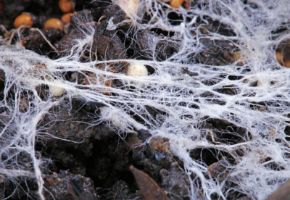
Let’s start with a concept that overturns common perception: forests do not “produce” mushrooms like trees produce apples. The mushrooms you see are merely the fruiting bodies; beneath the soil, the mycelium may exist without ever producing a visible carpophore. The true organism—the “plant,” if you will—is the mycelium, a dense network of white filaments (hyphae) living underground or within wood.
These mycelia, for the vast majority of sought-after mushrooms (porcini, chanterelles, Russula mushrooms, etc.), do not live alone. They exist in a mutualistic symbiosis with trees. Here, the correct term is mycorrhiza: fungi envelop tree roots in a mycelial sheath, delivering water and minerals (especially phosphorus) the trees would struggle to absorb alone, while trees supply the fungi with sugars (organic compounds) from photosynthesis.
This also means that without the right tree species present and healthy in the forest, mycelia cannot thrive or fruit properly. No healthy mycelium = no mushrooms. This simplifies a complex topic—many additional factors influence this dynamic.
The mushroom production cycle
For mycelia to fruit—to trigger the emergence of harvestable mushrooms—three conditions must align simultaneously, often over an extended period. If even one is missing, it becomes clear why some forests yield no mushrooms.
| Factor | Requirement | What inhibits it |
|---|---|---|
| 1. Soil conditions | Correct pH (slightly acidic for many species), consistent—but not stagnant—moisture, soft structure, rich humus content. | Compaction (from excessive foragers or animals), prolonged drought, waterlogging, active limestone, pollution. |
| 2. Plant partners | Presence of suitable, healthy tree species. E.g.: Porcini mushroom (Boletus edulis) with Beech, Fir, Oak, Chestnut. | Clear-cutting, tree diseases (e.g., chestnut blight), forests too young or too old, monocultures. |
| 3. Atmospheric conditions | Balanced mix of rain (not storms) and warmth. Typically: sustained rainfall followed by 5–10 days of cool nights and mild days (15–20°C / 59–68°F). | Frost, dry winds, excessive heat after rain (which “cooks” the mycelium), torrential rains washing away nutrients. |
Now, reflect on your own local areas. How often did all three conditions align simultaneously last year? There’s your answer.
Forest soil: an essential protagonist
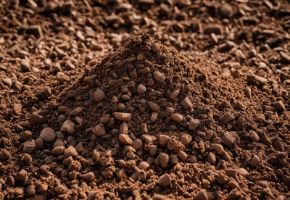
Novice foragers look at the trees. Experienced mushroom hunters study the ground. Soil type critically shapes fungal development. Here are practical examples drawn from research and field experience:
- Compact clay soils: retain water well but suffocate mycelia if too dense. Ideal after rain, yet crack and dry the subsoil in summer. Yield is “sporadic”—explosive but brief;
- Sandy or gravelly soils: drain too quickly. Water slips away rapidly; mycelia suffer drought. Require steady, non-torrential rainfall. Often nutrient-poor;
- Calcareous (alkaline) soils: problematic for many species. High pH (basic) discourages porcini and most prized mushrooms. You might find field mushrooms or certain adapted bay boletes. Visible white limestone rocks signal low productivity;
- Humus-rich, soft soils: airy, moisture-retentive without waterlogging, teeming with life (bacteria, insects) that recycles leaf litter into nutrients. Here, mycelia thrive and expand, enabling robust fruiting.
A Piedmont regional study analyzing 100 monitoring stations found that forests with medium-textured soil and high organic matter produced, under identical climatic conditions, 300% more carpophores (by weight) than forests with poor, compacted soil.
Forest management practices
Unfortunately, forests endure constant human-driven interventions—another reason why some yield no mushrooms:
- Clear-cutting: all trees removed. Roots die, taking symbiotic mycelia with them. Restoring balance requires decades—only after new trees mature and reestablish mycelial networks;
- Selective thinning: if done skillfully (removing diseased or aged trees while preserving healthy ones), it can stimulate fruiting by gently stressing mycelial networks. A highly delicate operation;
- Monoculture conifer reforestation: widespread in the 1960s–70s (e.g., spruce planted indiscriminately). Soils become highly acidic; needle litter decomposes slowly. Only conifer-specific fungi may appear (e.g., Lactarius deliciosus), while overall fungal biodiversity declines;
- Intensive grazing: livestock (sheep, cattle) compact soil with hooves, consume vegetation and seedlings, and deposit manure. Altered soil chemistry favors dung-loving saprophytic fungi but disrupts symbiotic relationships.
Climate: a pressing modern challenge
We now enter the undeniable reality of climate change. Mushroom seasons no longer follow patterns from 20 years ago—another reason why some forests stay empty...
| Climate phenomenon | Effect on fungi | Harvest outcome |
|---|---|---|
| Extreme spring (dry/flooded) | Mycelia “wake” poorly. Drought causes desiccation; flooding induces stress. | Sparse or absent spring harvest (morels, St. George’s mushrooms). |
| Long, dry summers | Mycelia enter forced dormancy, retreating deep underground. | After autumn rains, reactivation takes weeks. Seasons shift later and shorten. |
| Autumn with violent temperature swings | Mycelia require steady day/night thermal contrast—not thermal shock—to fruit. | Irregular production; stunted or malformed mushrooms. Mycelia fail to recognize optimal fruiting cues. |
| Mild winters | Mycelia rest poorly, depleting reserves. Parasites that once died in frost now survive. | Progressively weaker subsequent seasons. Non-native or subtropical species appear, displacing traditional ones. |
According to 30 years of data from the Trento Naturalistic Mycological Group, the optimal start of autumn porcini fruiting has shifted 15–20 days later compared to the 1990s, with productive windows significantly narrowed.
Human impact: another reason forests yield fewer mushrooms
Unpleasant as it is to state, it must be emphasized: forests subjected to continuous trampling produce less. Soil compaction is real—not just on main trails, but when crowds fan out and crush every square centimeter of leaf litter. Once compressed, soil can’t breathe; water won’t penetrate; oxygen vanishes—making survival and growth of underground mycelium nearly impossible.
Then there’s destructive harvesting: yanking or digging mushrooms damages underlying mycelia. Always use a knife to cut at the base. Avoid plastic rakes that scrape the soil—this destroys humus and young mycelial networks.
Equally harmful is overharvesting. Mushrooms release spores while fruiting; collecting every specimen—especially immature ones—severely limits reproduction. Studies indicate that in areas under intense harvesting pressure, average yields drop 20–30% within 5–10 years. Another reason to always leave some specimens—especially the most mature and robust—to complete their reproductive cycle.
Pollution: an additional risk factor
Fungi are notorious bioaccumulators. They absorb heavy metals, radioactive particles, and pollutants from soil and air. Forests near busy roads, agricultural fields using pesticides/fertilizers, or industrial zones may host intoxicated mycelia or produce potentially hazardous fruiting bodies.
Air pollution and acid rain alter soil pH, increasing acidity. Some species vanish; others (often less desirable) dominate. This phenomenon is widespread across northeastern Europe and increasingly documented in parts of Italy.
No mushrooms? Here’s how to choose the right forests!
Based on this analysis, here’s a practical decalogue to avoid repeated disappointment:
- Study geological maps: search online for your area’s geological maps. Favor siliceous (gravel, sandstone) or volcanic substrates for porcini. Avoid vast pure limestone zones;
- Observe the trees: seek mature, mixed forests: oaks, beeches, chestnuts, hazels;
- Analyze the soil: walk carefully. If the ground yields slightly underfoot—soft and humus-rich—you’re in promising terrain. Hard as pavement or swampy? Move on;
- Research forest history: neat young fir groves likely indicate clear-cutting 30 years ago. These ecosystems aren’t yet balanced. Prioritize forests undisturbed for at least 40–50 years;
- Keep a field journal: log weather events and observations (e.g., “Rained on X date—mushrooms appeared Y days later at Z°C”). Over time, you’ll decode local forest rhythms;
- Respect the forest: stay on trails when possible, harvest sustainably, leave no trace.
Remember: mindful foraging teaches us that the most beautiful mushrooms are often those left behind—completing their cycle to ensure harvests for years to come.
This article was developed with the support of artificial intelligence and subsequently reviewed, corrected, and validated by the NaturNext.eu technical team, which guarantees its reliability and compliance with official sources.
The fungal kingdom is a universe of constant discovery, with new scientific insights emerging yearly about their extraordinary benefits for gut health and holistic well-being. From now on, when you see a mushroom, you’ll no longer think only of flavor or appearance—but of the therapeutic potential held within its fibers and bioactive compounds. ✉️ Stay connected – Subscribe to our newsletter for the latest research on: Nature offers extraordinary tools for nurturing our health. Fungi, with their unique balance of nutrition and medicine, represent a fascinating frontier we are only beginning to explore. Follow us to discover how these remarkable organisms can transform your approach to wellness.Continue your journey into the fungal world