


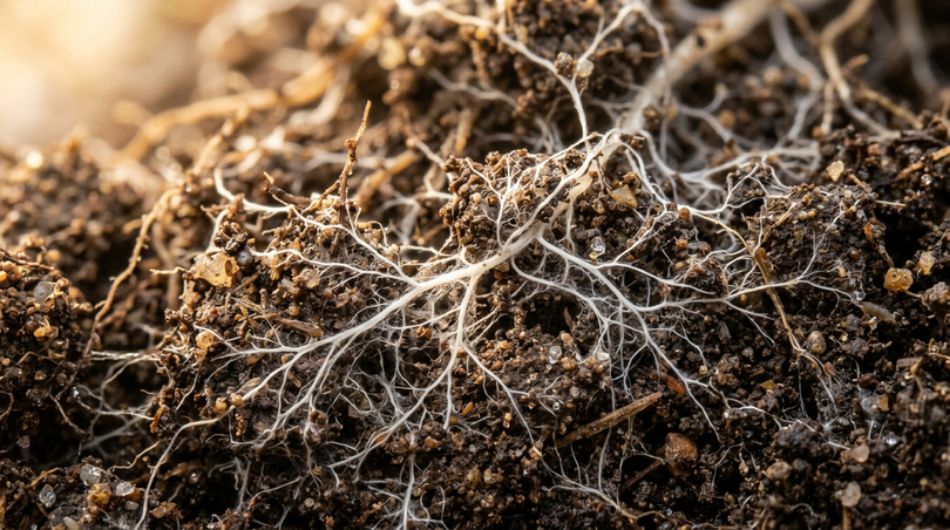
Soil is a living, pulsating ecosystem, and fungi are its silent architects. For decades, conventional agriculture has considered fungi primarily as pathogens to be eliminated, neglecting their fundamental role in maintaining soil health. Today, thanks to increasingly advanced research, we know that fungi are indispensable allies in preventing soil diseases, capable of protecting plants, improving soil structure, and reducing dependence on chemical products.
This article, designed for growers, researchers, hobbyists, and enthusiasts, explores in depth the mechanisms by which fungi counteract soil pathogens, the most effective species, application techniques, and the latest scientific discoveries. We will discover how integrating fungi into agricultural protocols can represent a sustainable breakthrough, and how Naturnext offers concrete solutions to put this knowledge into practice.
📖 In this article...
1. The soil ecosystem and the kingdom of fungi
Soil is not an inert support, but a dynamic environment where millions of organisms interact in a complex network. Bacteria, protozoa, nematodes, arthropods, and fungi constitute a trophic network that regulates fertility and disease resistance. Fungi represent up to 80% of the soil microbial biomass in many ecosystems, and their activity is crucial for the decomposition of organic matter, nutrient cycling, and the formation of soil aggregates.
The hyphal network: an underground communication system
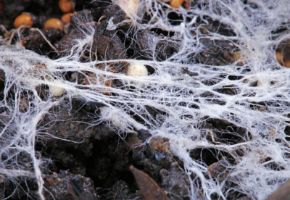
Fungal hyphae form an extensive network, the mycelium, which can reach kilometers in a single gram of soil. This network is not just an absorption system, but also a communication channel between plants, known as the "Wood Wide Web". Through this network, plants can exchange danger signals, transfer nutrients, and even activate immune defenses. The presence of a healthy and diversified mycelium is the first line of defense against the emergence of pathogens, as it occupies the space and resources that would otherwise be exploited by harmful organisms.
Soil diseases: when the balance breaks
Soil diseases are caused by pathogens such as Fusarium, Pythium, Rhizoctonia, Verticillium, and phytoparasitic nematodes. These organisms thrive in conditions of monoculture, nutritional imbalance, compaction, and low biodiversity. The excessive use of fertilizers and pesticides aggravates the problem, destroying the natural enemies of pathogens and creating resistant strains. Preventing soil diseases therefore means rebuilding a balanced ecosystem, and fungi are the most powerful tools to do so.
2. Antagonistic fungi: how they fight pathogens
Fungi use multiple strategies to limit or eliminate soil pathogens. These mechanisms can be grouped into four main categories: competition, antibiosis, mycoparasitism, and induced systemic resistance (ISR).
Competition for nutrients and space
Antagonistic fungi, such as Trichoderma and Gliocladium, rapidly colonize the rhizosphere (the soil zone around the roots), consuming available nutrients and reducing the availability of iron, nitrogen, and carbon for pathogens. This competition is particularly effective against slow-growing pathogens. Furthermore, the mycelium of beneficial fungi can coat plant roots, creating a physical barrier that prevents the entry of parasites.
Antibiosis: production of antimicrobial compounds
Many fungi produce secondary metabolites with antibiotic, antifungal, and antiviral activity. For example, strains of Trichoderma harzianum secrete gliotoxin and viridin, which inhibit the growth of Fusarium and Rhizoctonia. Antibiosis is a powerful chemical weapon, but selective: beneficial fungi produce these compounds only in the presence of stress or pathogens, minimizing the impact on the environment.
Mycoparasitism: the fungus that hunts other fungi
Some fungi are true predators of other fungi. Trichoderma is the most well-known: its hyphae wrap around the hyphae of pathogens, secrete lytic enzymes (chitinases, glucanases) that degrade the target's cell wall, and then absorb its contents. This mechanism is extremely effective and specific, and represents one of the foundations of biocontrol.
Induced Systemic Resistance (ISR)
Beneficial fungi can "train" the plant's immune system, making it more resistant to future attacks. Through molecular signals, such as elicitors, fungi activate the plant's defense pathways, leading to the accumulation of phytoalexins, PR proteins (pathogenesis-related proteins), and callose. This induced resistance is long-lasting and can protect the plant for weeks or months.
"Healthy soil is the best pesticide. Fungi are the guardians of this health, acting on multiple fronts to prevent epidemics." – Dr. Maria Rossi, mycologist.
3. The most effective fungal species for biocontrol
Not all fungi are equal. The species used for biocontrol must be effective, safe, competitive, and stable. Below are the most studied and used in agriculture and gardening.
Trichoderma spp.: the king of biocontrol
The genus Trichoderma includes over 100 species, many of which are first-choice biocontrol agents. T. harzianum, T. viride, T. asperellum, and T. atroviride are the most common. They act against Fusarium, Pythium, Rhizoctonia, Sclerotinia, and many others. Their versatility and adaptability make them ideal for open fields, greenhouses, and growing substrates.
Beauveria bassiana and Metarhizium anisopliae
These entomopathogenic fungi are specialized in controlling soil-dwelling insects, such as beetle larvae, wireworms, and mole crickets. Their spores penetrate through the insect's cuticle, causing death by mycosis. They are not toxic to plants, animals, or humans, and represent a valid alternative to chemical insecticides.
Gliocladium (now classified as Trichoderma virens)
A fungus closely related to Trichoderma, it is known for the production of viridin and gliotoxin, powerful antibiotics that suppress Pythium and Rhizoctonia. It is often used in mixture with other fungi for a synergistic action.
Arbuscular mycorrhizae (Glomus, Rhizophagus)
Although they are not direct biocontrol agents, arbuscular mycorrhizae (AM) improve plant health by increasing phosphorus and water absorption, and inducing systemic resistance. Mycorrhizal plants are less susceptible to root pathogens and show greater tolerance to water and salt stress.
Table 1: Fungal species and controlled pathogens
| Fungal species | Target pathogens | Main mechanism | Application |
|---|---|---|---|
| Trichoderma harzianum | Fusarium, Rhizoctonia, Pythium | Mycoparasitism, antibiosis | Soil, seedbed, compost |
| Trichoderma viride | Botrytis, Sclerotinia | Competition, lytic enzymes | Leaves, soil, post-harvest |
| Beauveria bassiana | Beetles, lepidopterans, orthopterans | Insect mycosis | Soil, foliar spraying |
| Metarhizium anisopliae | Scarab larvae, wireworms | Contact infection | Soil, granules |
| Mycorrhizae (Glomus) | Root pathogens (indirect) | ISR induction, improved nutrition | Soil, inoculation at transplant |
4. Practical applications and inoculation techniques
The effectiveness of beneficial fungi depends largely on how and when they are applied. Inoculation techniques must ensure the survival and colonization of fungi in the soil.
Soil inoculum: granular, liquid, and powder
Commercial fungal-based products are available in various formulations. Granules (bran or clay-based) are ideal for incorporation into the soil before sowing. Liquid suspensions are diluted in water and applied with a watering can or irrigation system. Wettable powders are used for seed treatment or plant spraying. Naturnext offers specific formulations for every need, such as the Trichoderma Plus product and the Mycorrhizae Active, which guarantee a high concentration of viable spores.
Seed treatment (seed coating)
Coating seeds with a mixture of beneficial fungi and an adhesive (such as gum arabic) is one of the most efficient techniques, because the fungus colonizes the roots from the very early growth stages. This early protection is crucial, as seedlings are particularly vulnerable to attacks by Pythium and Fusarium.
Enriched compost and vermicompost
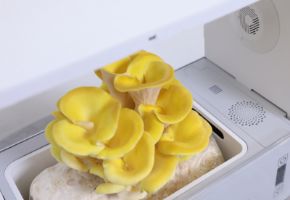
Adding fungi to compost during maturation increases its suppressive power. Compost enriched with Trichoderma and Bacillus (bacteria) is an exceptional soil amendment that reduces pathogen density and improves soil structure. Naturnext also offers kits for the cultivation of medicinal fungi, which after harvest can be transformed into soil amendments.
5. Data, statistics, and case studies
Scientific research has widely demonstrated the effectiveness of fungi in controlling soil diseases. Numerous field studies and meta-analyses confirm significant reductions in pathogen incidence and productivity increases.
Global data
According to the 2024 FAO Report on organic agriculture, the use of fungal-based biocontrol agents has increased by 18% annually over the last 5 years in Europe and North America. In Italy, 34% of organic farms regularly use Trichoderma or Beauveria. The global biofungicide market is estimated at 6.8 billion dollars in 2026, with a projected growth of 12.5% by 2030.
Case study 1: Greenhouse strawberries
A study conducted at the University of Bologna compared the effect of Trichoderma harzianum and a chemical fungicide on greenhouse strawberry crops. The results showed an 85% reduction in the incidence of Fusarium oxysporum in the Trichoderma treatment, compared to 76% for the chemical. Furthermore, the yield increased by 22% in the biological treatment.
Case study 2: Open-field corn
In a cornfield in Lombardy, the application of Metarhizium anisopliae reduced populations of Diabrotica virgifera (corn rootworm) by 67%, with a 14% increase in grain production compared to the untreated control.
Table 2: Comparative efficacy of fungi and chemical fungicides
| Pathogen | Treatment | Incidence reduction | Yield increase |
|---|---|---|---|
| Fusarium oxysporum | Trichoderma harzianum | 85% | +22% |
| Fusarium oxysporum | Chemical fungicide | 76% | +15% |
| Rhizoctonia solani | Trichoderma viride | 78% | +18% |
| Pythium ultimum | Mycorrhizae + Trichoderma | 91% | +27% |
6. Synergies with mycorrhizae and Trichoderma: the power of combination
The combined use of different fungal species and plant growth-promoting bacteria (PGPR) produces synergistic effects superior to the sum of the individual components. The combination of mycorrhizae and Trichoderma is particularly promising.
How they interact
Mycorrhizae colonize plant roots, extending the root system and improving the absorption of phosphorus, nitrogen, and microelements. Trichoderma, on the other hand, acts in the rhizosphere and surrounding soil, protecting roots from pathogens and stimulating growth. The plant, more vigorous and well-nourished, is able to support a larger population of beneficial fungi, creating a virtuous cycle.
Scientific evidence
A study published in Frontiers in Plant Science (2025) demonstrated that the co-inoculation of Glomus intraradices and Trichoderma atroviride in tomatoes led to a 94% reduction in Fusarium wilt and a 35% increase in root biomass compared to the control. This synergy is now considered one of the pillars of regenerative agriculture.
On Naturnext you can find formulations that combine mycorrhizae, trichoderma, and bacteria, designed to maximize soil benefits.
7. Naturnext products for soil health
Naturnext offers a range of products designed to promote soil balance, from prevention to active care. Each product is formulated with selected strains, high spore concentration, and added adjuvants (hydro-retainers, amino acids, humic substances) that enhance its effectiveness.
- Trichoderma Plus: organic fertilizer based on Trichoderma harzianum and T. viride for the control of Fusarium, Rhizoctonia, and root rots. Ideal for vegetable gardens, orchards, and potted plants.
- Mycorrhizae Active: mixture of arbuscular mycorrhizal fungi (Glomus, Rhizophagus) to improve nutrient absorption, drought tolerance, and stress resistance.
- Beauveria Bassiana: liquid formulation against beetle larvae, thrips, and other soil insects. Suitable for organic farming.
- Compost Booster: activator based on fungi and bacteria to accelerate compost maturation and increase pathogen suppression.
All Naturnext products are certified for organic agriculture, with viable spores guaranteed for at least 18 months. Visit the naturenext.eu website to discover the complete line.
8. FAQ: answers to the most common questions
This article was developed with the support of artificial intelligence and subsequently reviewed, corrected, and validated by the NaturNext.eu technical team, which guarantees its reliability and compliance with official sources.
The kingdom of fungi is a universe in continuous evolution, with new scientific discoveries emerging every year about their extraordinary benefits for gut health and overall well-being. From now on, when you see a fungus, you will no longer think only of its flavor or appearance, but of all the therapeutic potential it holds within its fibers and bioactive compounds. ✉️ Stay connected - Subscribe to our newsletter to receive the latest studies on: Nature offers us extraordinary tools to take care of our health. Fungi, with their unique balance between nutrition and medicine, represent a fascinating frontier that we are only just beginning to explore. Keep following us to discover how these extraordinary organisms can transform your approach to well-being.Continue your journey into the world of fungi