


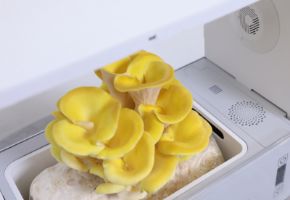
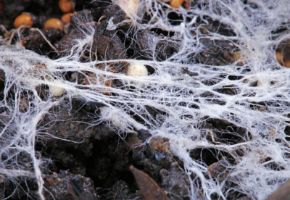

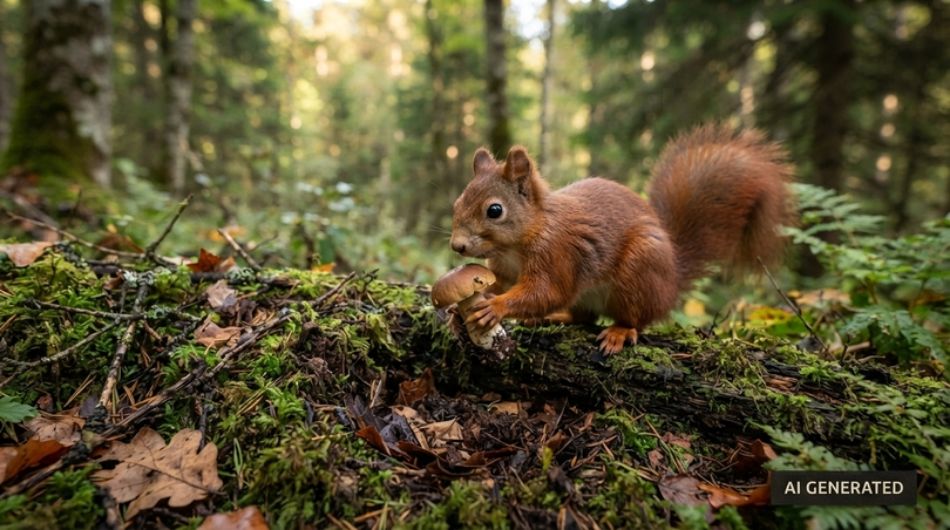
Squirrels are much more than just cute woodland dwellers: they are true forest gardeners, capable of dispersing fungal spores and supporting the mycorrhizal symbiosis that keeps trees alive. Watching them hide mushrooms among the branches means witnessing an ancient ecological mechanism, still poorly understood by the general public today. Understanding the link between squirrels and fungi opens up surprising scenarios for mycology enthusiasts, growers, researchers, and hobbyists who wish to delve into the hidden dynamics of the woods. At the heart of every healthy forest lies a network of relationships that escapes the human eye. Below the soil, fungal hyphae connect trees in a millennia-old chemical dialogue; above the ground, small mammals like squirrels transport, hide, and consume fungi, becoming unwitting protagonists of spore dispersal. This article explores in depth the relationship between squirrels and fungi, a theme that intertwines ecology, evolution, conservation, and cultivation. For mycology enthusiasts, growers, researchers, and hobbyists, understanding this link means accessing a new interpretative key to read the woods and improve one's own cultivation practices. Squirrels are not mere consumers: they are true forgotten gardeners, whose ecological role deserves attention and respect. Anyone who grows mushrooms, studies mycorrhizae, or simply loves nature benefits from knowing these dynamics. Spore dispersal by squirrels influences fungal biodiversity, tree regeneration, and even the productivity of natural and cultivated truffle orchards. Furthermore, the behavior of squirrels offers useful models for designing inoculation, conservation, and soil management strategies. NaturNext.eu accompanies this journey with products and resources designed for those who want to delve into the world of fungi in a scientific and practical way. Each paragraph that follows is designed to answer concrete questions and offer applicable insights. The diet of squirrels is much more varied than commonly believed. Nuts, seeds, shoots, fruit, insects, and fungi alternate depending on the season and availability. Mycophagy, or the consumption of fungi, is documented in numerous species of squirrels in North America, Europe, and Asia. Systematic studies have confirmed that fungi represent a significant component of their diet, especially in autumn and winter, when other resources are scarce. Historical observations from the 19th century, once considered anecdotal, are today supported by fecal analysis and tooth marks on fruiting bodies. Squirrels consume both epigeous and hypogeous fungi. Among the most documented genera we find Boletus, Elaphomyces, Gautieria, Hymenogaster, Tuber, and Russula. The preference for hypogeous fungi, such as truffles, is particularly significant: these fungi cannot disperse spores via wind and depend entirely on animals. Squirrels, with their developed sense of smell and digging habits, are among the main vectors for these spores. From a nutritional point of view, fungi are an ambivalent resource. They contain nitrogen, vitamins, and minerals, but much of the nutrients are locked in spores with digestion-resistant walls. Squirrels consume them because they are abundant, easy to find, and available when nuts and seeds are scarce. Furthermore, some bioactive compounds can aid digestion. From an evolutionary point of view, the relationship is beneficial for both parties: squirrels get food, and fungi get dispersal. Squirrels do not just eat mushrooms on the spot: they store them on trees for future consumption. A study conducted in Italian alpine environments analyzed these methods in detail. 49% of the samples were located between 1 and 2 meters from the ground; the modal class was represented by fungi placed against the trunk; 50% of the branches were oriented between south and west; only 6% of the samples were in optimal lighting conditions. These data reveal an adaptive behavior that maximizes energy efficiency and food preservation. For growers, these patterns offer interesting insights on optimal post-harvest storage conditions. The process of spore dispersal by squirrels is a fascinating example of coevolution. When a squirrel consumes a fungus, the spores are ingested along with the fruiting body. The mammalian digestive system, designed to break down carbohydrates and proteins, proves ineffective against fungal spores, whose walls contain chitin and other resistant substances. The result is that the spores pass through the digestive tract practically intact and are excreted with the feces in a site different from the one of origin. This mechanism is crucial for hypogeous fungi, whose spores would otherwise remain confined to the surrounding soil. How effective is the dispersal operated by squirrels? The answer depends on population density, diet, and space use patterns. Research conducted on small mammals has shown that these creatures are complementary in the type of fungi they disperse. Some species disperse predominantly spores of arbuscular mycorrhizal fungi, others of ectomycorrhizal fungi. For squirrels in particular, the role in the dispersal of ectomycorrhizal spores is particularly significant, as these form symbiotic relationships with oaks, beeches, birches, and conifers. Not all squirrel species are equally effective as dispersers. Research has identified significant differences between specialists and generalists. Generalists, which consume a variety of foods including fungi, can be particularly important because they use a variety of habitats and can disperse spores in areas that specialists rarely inhabit. This is crucial during seed germination and seedling growth, when mycorrhizal colonization is essential for survival. The word mycorrhiza comes from the Greek mykos (fungus) and rhiza (root) and describes a mutualistic symbiotic relationship between soil fungi and plant roots. It is estimated that 85-92% of vascular plant species are colonized by mycorrhizal fungi. Fungal hyphae, with a diameter ten times smaller than that of root hairs, are much more efficient at absorbing water and nutrients. In return, plants provide carbohydrates produced through photosynthesis. There are two main types: arbuscular mycorrhizae and ectotrophic mycorrhizae. The former are the most widespread, the latter are ecologically crucial in temperate and boreal forests. Squirrels, by consuming ectomycorrhizal fungi and dispersing their spores, close the cycle of mycorrhizal symbiosis. Without this step, the spores of hypogeous fungi would remain confined underground. Without colonization by ectomycorrhizal fungi, many tree species could not survive or grow. This makes squirrels true ecosystem engineers, whose impact extends far beyond their own survival. The diversity of fungal communities is fundamental to forest health. Different fungal species improve plant growth and fitness in different seasons and conditions. Maintaining diverse fungal communities is therefore vital for forest composition and drought resilience. Squirrels contribute to this diversity in complex ways, not only by dispersing spores of different species, but also by influencing where and which spores are deposited. Truffles represent an extreme case of evolutionary adaptation to animal dispersal. Unlike epigeous fungi, which release spores into the air, truffles develop completely underground and have no mechanism to disperse spores autonomously. Their only strategy is to attract animals with intense odors and appetizing textures. Squirrels are among the main consumers of truffles in many parts of the world, and in North America, where wild boars are absent, they take on even greater importance. The relationship between squirrels and truffles has ancient roots. Although fossil evidence of ectotrophic mycorrhizae is rare, it is believed that the first ectomycorrhizal fungi appeared during the Jurassic. The adaptation of truffles to produce odors attractive to mammals suggests a long history of coevolution. Squirrels, for their part, have developed adaptations to find and consume truffles: keen sense of smell, digging habits, and a digestion that preserves spores. Truffles are not only ecologically important, but also economically valuable. Black truffles and white truffles reach extremely high prices on the global market. Forests that produce truffles depend on the presence of mycorrhizal fungi and, indirectly, on the animals that disperse them. Understanding the role of squirrels in truffle dispersal has practical implications for truffle cultivation. When a forest is logged, the impact goes far beyond the loss of trees. The removal of host trees means the death of the mycorrhizal fungi that depend on them. Studies conducted in North American deciduous forests have shown that the richness, diversity, and biomass of ectomycorrhizal fungi decrease significantly in logged areas. This loss of fungal diversity has direct consequences on forest regeneration. Small mammals play an important ecological role by eating truffles and fungi and dispersing spores into new areas. This dispersal is particularly important when trees regenerate after disturbances such as logging. Research has shown that different mammal species are complementary in the type of fungi they disperse. To maintain the dispersal of ectomycorrhizal fungi after logging, it is therefore crucial to preserve the mammal species that disperse them. The implications for forest management are significant. Instead of considering small mammals as accessory species, forest managers should recognize them as allies in forest regeneration. Recommended strategies include the conservation of deadwood, the maintenance of vegetation patches, the retention of mature trees, and the diversity of tree species. These practices not only promote forest regeneration, but also maintain biodiversity and ecosystem functionality as a whole. Squirrels are not only spore dispersers, but also valuable indicators of forest ecosystem health. In the Pacific Northwest of the United States, tree squirrel species are part of a keystone complex that includes ectomycorrhizal fungi, Douglas fir, and spotted owls. The presence and abundance of squirrels can be used to evaluate the effectiveness of management practices in promoting biodiversity and sustainability. The relationship between squirrels and fungi is threatened by several factors: habitat loss, climate change, invasive species, and intensive forestry practices. Understanding and mitigating these threats requires an integrated approach that considers the interactions between fungi, plants, and animals as inseparable components of the forest ecosystem. The conservation of squirrels is therefore also the conservation of fungi and forests. Despite significant progress, important knowledge gaps remain. Promising research areas include the nutritional value of truffles, the relationship between truffle biomass and squirrel biomass, the importance of other foods, and the effects of management on truffle production. These questions are relevant not only for conservation biology, but also for practical forest management and mushroom cultivation. For mushroom growers, the relationship between squirrels and fungi offers valuable lessons. The first concerns the importance of symbiosis: mycorrhizal fungi cannot be grown in isolation, but require a host plant. The second concerns dispersal: squirrels disperse spores through feces, depositing them in specific sites. The third concerns biodiversity: healthy forests support different fungal species and different dispersers. Growers working in forest environments should consider fungal biodiversity as a resource, not as competition. Truffle cultivation is perhaps the most direct application of this knowledge. Truffles require appropriate host plants, suitable soil, fungal inoculum, and specific environmental conditions. The presence of squirrels and other natural dispersers can facilitate the inoculation of new plants. Instead of purchasing pre-inoculated seedlings, growers could consider encouraging squirrel populations in their truffle orchards, providing habitat and letting the squirrels do the dispersal work. For those who wish to delve deeper into mushroom cultivation and better understand the symbiotic relationships that support them, NaturNext.eu offers a range of products designed for enthusiasts, researchers, and growers. Growing kits, specialized substrates, guides, and resources are available to accompany every stage of the journey. To explore the full range and find the solutions best suited to your needs, visit the dedicated section on the NaturNext.eu website. The kingdom of fungi is a constantly evolving universe, with new scientific discoveries emerging every year about their extraordinary benefits for gut health and general well-being. From now on, when you see a mushroom, you will no longer think only of its flavor or appearance, but of all the therapeutic potential it holds within its fibers and bioactive compounds. ✉️ Stay connected - Subscribe to our newsletter to receive the latest studies on: Nature offers us extraordinary tools to take care of our health. Fungi, with their unique balance between nutrition and medicine, represent a fascinating frontier that we are only just beginning to explore. Keep following us to discover how these extraordinary organisms can transform your approach to wellness. In this article...
An invisible but essential bond
Why this topic matters to you too
Mycophagy in squirrels
What squirrels really eat
Which fungal species are consumed
Fungal genus Type Notes Boletus Epigeous Consumed by various species in Europe Elaphomyces Hypogeous Found in fecal samples Gautieria Hypogeous Documented in Ontario Hymenogaster Hypogeous Presence confirmed in feces Tuber Hypogeous Consumed by European and North American squirrels Russula Epigeous Observed in Sciurus vulgaris
Why squirrels eat fungi
Consumption and storage methods
Spore dispersal: the hidden mechanism
How passage through the digestive tract works
The effectiveness of dispersal: quantitative data
Differences between squirrel species
Squirrel type Feeding behavior Role in dispersal Northern flying squirrel Truffle specialist High efficiency, specialized populations American red squirrel Mycophagous generalist Significant disperser in boreal forests Eurasian red squirrel Opportunistic generalist Disperses spores of Tuber and other genera Golden-mantled ground squirrel Truffle consumer Adapted to foraging for hypogeous fungi
Mycorrhizal symbiosis
What is mycorrhiza and why is it important
The role of squirrels in the cycle
Fungal diversity and forest resilience
Truffles and squirrels: an evolutionary relationship
Why truffles depend on animals
Fossil evidence and coevolution
The ecological and economic value of truffles
Forest regeneration after disturbances
The impact of timber harvesting on fungal diversity
The role of mammals in recolonization
Forest management strategies
Conservation and forest management
Squirrels as indicators of forest health
Threats to the squirrel-fungus relationship
Perspectives for future research
What mushroom growers learn
Lessons from nature for cultivation
Practical applications for truffle cultivation
NaturNext products for enthusiasts
Frequently asked questions
Do squirrels only eat fungi? Which fungi are most important to squirrels? How do squirrels find truffles underground? Do spores survive passage through the digestive tract? Why do squirrels store fungi on trees? Are squirrels the only animals that disperse fungal spores? How can I encourage the presence of squirrels in my garden or woods? Continue your journey into the world of fungi
▼ Click for the answer
▼ Click for the answer
▼ Click for the answer
▼ Click for the answer
▼ Click for the answer
▼ Click for the answer
▼ Click for the answer