


Imagine walking on a coastal plain in the late Silurian, about 420 million years ago. There are no trees. There are no forests, no birdsong, not a single air-breathing vertebrate. The vegetation surrounding you barely reaches your ankles: tiny primitive vascular plants, carpets of bryophytes, crusts of algae and cyanobacteria colonizing the damp mud along watercourses. And then, occasionally, on the horizon, something absurd looms: a smooth, tapered, dark-colored column, as wide at the base as the trunk of an ancient oak and up to eight meters tall. It has no branches and no leaves. It has no visible roots. It is simply there, a biological monolith towering thirty or forty times higher than any other terrestrial life form on the planet. That monolith is called Prototaxites, and it is arguably the most baffling, most debated, and most fascinating fossil in the history of paleobotany.
For over one hundred and sixty years, the world's best naturalists have passed this enigma from hand to hand without being able to definitively solve it. Prototaxites has been called a tree, an alga, a lichen, a giant fungus, a wind-rolled plant mat. It has been attributed to conifers, brown algae, basidiomycetes, and in 2025 it was dramatically expelled from all known living kingdoms. Every generation of Prototaxites scholars has looked at Prototaxites with the tools of their time (the magnifying glass, the optical microscope, thin sections, isotope ratio mass spectrometry, Raman spectroscopy, and pyrolysis-gas chromatography), and every generation has come away with a different answer. Few biological entities have resisted classification for so long.
This article delves deeply into the Prototaxites mystery. We will approach this topic from the perspective of those who love fungi: enthusiasts, cultivators, researchers, amateur mycologists, foragers, and students. Because the story of Prototaxites is not just a paleontological curiosity: it is a wide-open window into what mycelium is capable of doing when no limits are placed upon it. It is the proof that filamentous architecture (the very same architecture you reassemble today in a bag of pasteurized substrate on your basement table) was, at a specific moment in Earth's history, the most successful biological architecture on the entire emerged planet. Understanding Prototaxites means understanding where the kingdom of fungi comes from, how far it can go, and why even today, four hundred million years later, mycelium continues to be the most underestimated biological technology in the world.
In this article...
1. What was Prototaxites: identity of an impossible giant
Before delving into the details of the scientific controversy, it is useful to establish precisely what Prototaxites is. Prototaxites is not a single species but a fossil genus that encompasses several described species, distributed over a surprisingly wide time interval. Remains attributed to the genus Prototaxites appear in the fossil record starting from the middle to late Silurian, about 430-420 million years ago, and thin out until they disappear in the Late Devonian, around 370-360 million years ago. That is sixty million years of continuous presence: an interval that, to give a sense of scale, is longer than all the time that has passed since the extinction of the non-avian dinosaurs to this day.
The dimensions of Prototaxites: the first terrestrial organism to surpass humans
The characteristic that made the genus Prototaxites Prototaxites famous even outside academic circles is its size. The best-preserved specimens of Prototaxites, particularly those attributed to Prototaxites loganii, reach and exceed eight meters in height, with a basal diameter that in some cases approaches one meter. The famous specimen described from the Devonian deposits of New York State measures about 8.8 meters. Prototaxites presents as a tapered structure, generally cylindrical or slightly conical, devoid of branching and devoid of any leafy structure.
To appreciate how extraordinary this fact is, one must compare it with the rest of the terrestrial biosphere of the time. In the late Silurian, the most evolved vascular plants (Cooksonia, Baragwanathia, the first representatives of the rhyniophytes) measured from a few millimeters to a few tens of centimeters. Even in the Early Devonian, when terrestrial flora diversified considerably, the average height of the vegetation remained on the order of decimeters. In that context, Prototaxites was not simply "large": it was a structural anomaly of two orders of magnitude. It was a skyscraper in the middle of a mowed lawn.
The anatomy of Prototaxites: an interweaving of microscopic tubes
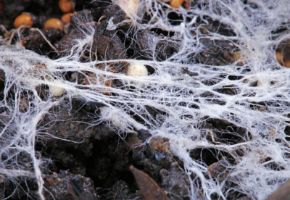
If size made Prototaxites famous, it is its internal anatomy that made it indecipherable. Cutting a thin section of a well-preserved Prototaxites fossil and observing it under a microscope reveals neither plant cells with squared cellulosic walls, nor conducting vessels, nor growth rings in the botanical sense, nor tracheids with annular or spiral thickenings. Instead, one finds something completely different: a very dense mass of intertwined microscopic tubes, with diameters roughly between 2 and 50 micrometers, arranged partly longitudinally and partly in an apparently chaotic manner, which anastomose, branch, and compact to form a solid pseudoparenchymatous tissue.
Francis Hueber, the Smithsonian scholar who dedicated decades to the study of Prototaxites, distinguished at least three types of tubes in the structure of Prototaxites. There are skeletal tubes, thick-walled, unseptate, with a supporting function and predominantly axial orientation. There are generative tubes, thinner and with more delicate walls, which seem to actively proliferate and fill spaces. And there are binding tubes, branched and wrapping, which connect the other two types to each other and confer cohesion to the whole. This tripartition is exactly what mycologists call a trimitic hyphal system, the tissue organization we find today in the woody fruiting bodies of many polypores, the so-called shelf fungi we see clinging to trunks in our woods.
Prototaxites technical sheet
| Characteristic | Data |
| Genus | Prototaxites Dawson, 1859 |
| Meaning of the name | "First yew" (from the genus Taxus), referring to the initial misattribution |
| Time interval | Middle Silurian – Late Devonian (about 430–360 million years ago) |
| Maximum documented height | About 8.8 meters (P. loganii) |
| Maximum diameter | Up to about 1 meter at the base |
| Internal structure | Intertwined tubes of 2–50 µm, three-type system |
| Presence of septa | Rare or absent in most tubes |
| Presence of lignin | Absent (phenolic compounds present but of a different nature) |
| Presence of chitin | Not detected in the most recent chemical studies |
| Hypothesized nutritional mode | Heterotrophy (saprotrophy or mixotrophy), supported by isotopic data |
| Geographic distribution | Cosmopolitan: North America, Europe, Africa, Australia, China, Saudi Arabia |
| Number of described species | Over a dozen, many of debated validity |
The main species of Prototaxites
Not all Prototaxites specimens were colossi. Prototaxites encompasses forms very different in size and depositional context, and it is this heterogeneity that makes a unified diagnosis difficult.
| Species | Type locality | Dimensions | Notes |
| P. loganii | Gaspé, Québec (Canada) and New York | Up to 8.8 m × 1 m | The type species, the giant par excellence |
| P. taiti | Rhynie chert, Aberdeenshire (Scotland) | A few centimeters | Exceptional cellular-level preservation |
| P. southworthii | North America | Medium | Well-documented tubular structure |
| P. milwaukeensis | Wisconsin (USA) | Medium | Described from Middle Devonian material |
| P. honeggeri | Devonian of Yunnan (China) | Variable | Interpreted as a lichenized structure |
The species that has taken on the role of protagonist in contemporary research is Prototaxites taiti, not because of its size (it is in fact minuscule compared to its North American cousins) but because of the quality of its preservation. It comes indeed from the Rhynie chert, the Scottish silicified deposit of about 407 million years ago that represents the most extraordinary taphonomic window we have on the Early Devonian terrestrial ecosystem. In the Rhynie chert, tissues were permineralized by silica so rapidly that cell walls, cytoplasmic contents, and even spores in life position are preserved. Studying Prototaxites there means being able to observe its microstructure in three dimensions, something impossible in the large compressed trunks from other localities.
2. Earth before forests: the world Prototaxites dominated
One cannot understand Prototaxites by isolating it from its context. An eight-meter Prototaxites does not arise in a vacuum: it arises in an ecosystem that allows it to exist, provides it with nourishment, and has not yet developed the competitors capable of supplanting it. The period of Prototaxites, from the Silurian to the Middle Devonian, is one of the most radical transition moments in the entire history of life, and knowing it is essential to understand why the tower fungi were able to prosper and then vanish.
A newly born terrestrial biosphere
Until about 470 million years ago, complex life was essentially confined to the oceans. The emerged lands were bare rocks, sands, muds, and microbial crusts. The transition to the subaerial environment was gradual and arduous: it required solving the problem of dehydration, that of mechanical support in the absence of the hydrostatic thrust of water, that of ultraviolet radiation, and that of reproduction without a continuous liquid medium. The first to succeed were probably forms akin to current bryophytes, followed by primitive vascular plants.
When Prototaxites appears, the conquest of the emerged lands is still a work in progress.
There are no deep soils as we understand them today: Silurian and Early Devonian paleosols are thin, poorly structured, and poor in organic matter. There are no deep roots, and therefore there is no cycle of chemical weathering of rocks that roots will later trigger. There is no forest litter. There is no shade. In such a landscape, a Prototaxites capable of erecting itself vertically for eight meters had absolutely nothing to compete with for aerial space.
Who was there, who was not
| Ecosystem element | Present in Late Silurian / Early Devonian? |
| Herbaceous vascular plants (rhyniophytes, primitive lycophytes) | Yes, but only a few centimeters or decimeters tall |
| Trees with true secondary wood | No, they appear from the Middle Devonian |
| Closed forests | No, first evidence at Gilboa (Middle Devonian) |
| Fungi (Ascomycota, Glomeromycota) | Yes, documented in the Rhynie chert |
| Mycorrhizae | Yes, arbuscular associations already present |
| Terrestrial arthropods (mites, springtails, myriapods, trigonotarbids) | Yes, abundant and diversified |
| Winged insects | No, they appear later in the Devonian/Carboniferous |
| Terrestrial vertebrates | No, the first tetrapods arrive in the Late Devonian |
| Seeds | No, reproduction still entirely by spores |
| Prototaxites | Yes, and dominant in height |
The ecological paradox of Prototaxites
The ecological picture of Prototaxites hides a paradox worth making explicit. Prototaxites, if it was truly a heterotroph (and as we will see, the isotopic evidence is robust), had to feed on organic matter produced by others. But in that ecosystem, primary production was modest: tiny plants a few centimeters tall, algal crusts, carpets of cyanobacteria. How could an eight-meter tower of several tons of biomass sustain itself on such a slender productive base?
The most accredited answer is time.
An organism with indeterminate growth, which does not need to complete a rapid life cycle, can accumulate biomass for decades or centuries, slowly and continuously degrading the organic matter of a vast area through an underground or superficial mycelial network that extends well beyond the visible erect structure. In this reading, what we see fossilized (the tower) is not the organism, but only its fruiting body or its accumulation structure. The true organism was the invisible network that fed it, exactly like today the Porcini mushroom you gather in the woods is only the tip of the iceberg of a mycelium that extends for square meters in the soil.
3. 1859: Dawson's discovery and the first great misstep
The scientific history of the genus Prototaxites begins on the Gaspé Peninsula, in Québec, in the mid-nineteenth century. It is a story worth telling in full, because it contains all the ingredients of good science: an accurate observation, a well-intentioned misinterpretation, a century-long controversy, and a series of reversals that continue to this day.
John William Dawson and the "first yew"
In 1859, the Canadian geologist John William Dawson, then principal of McGill College in Montreal and one of the most esteemed naturalists in North America, described large cylindrical fossil remains found in Devonian strata. Observing the internal structure of Prototaxites, Dawson noted elongated tubes that reminded him of conifer tracheids and concluded he was looking at the trunk of a primitive tree, related to yews. He thus coined the name Prototaxites, literally "first yew", and the type species Prototaxites loganii in honor of Sir William Logan, founder of the Geological Survey of Canada.
Dawson also interpreted the thinner tubes as hyphae of a fungus that had parasitized or decomposed the wood post-mortem. Ironically, he had identified the fungal component, but had relegated it to a secondary role. It would take almost one hundred and fifty years for the scientific community to consider the hypothesis that those tubes were not an intruder, but the organism itself.
Carruthers and the algal battle
Dawson's interpretation of Prototaxites did not convince everyone. In 1872, the British botanist William Carruthers, of the British Museum, attacked it head-on. In his view, the tubular structure had nothing to do with conifer wood and looked much more like the thallus of a large brown alga. He therefore proposed renaming the fossil Nematophycus, later corrected to Nematophyton, and considering it a giant marine alga dragged ashore by currents and buried in coastal sediments.
The dispute over Prototaxites between Dawson and Carruthers was long, bitter, and not without academic toxicity, as often happened in Victorian paleontology. For decades, in textbooks, Prototaxites appeared sometimes as a primitive conifer, sometimes as a giant alga, depending on the author's orientation. The algal hypothesis prevailed for much of the twentieth century, especially because it seemed to explain the absence of vascular structures and the preservation in depositional environments often associated with brackish or fluvial waters.
The Prototaxites problem that no hypothesis solved
Both interpretations of Prototaxites, however, were creaking. The conifer hypothesis was untenable: in the tissues of Prototaxites there is no trace of true tracheids, nor of bordered pits, nor of parenchymatous rays, nor of lignin in the strict sense. The algal hypothesis had an even bigger problem: large brown algae do not have rigid supporting structures because they do not need them, being supported by water. An eight-meter alga washed ashore would have collapsed into a gelatinous mass, would not have maintained a coherent cylindrical geometry, and above all would not have developed the tissue density that is instead observed in the fossils.
| Year | Author | Proposed interpretation | Weak point |
| 1859 | J. W. Dawson | Primitive conifer (ancestral yew) | No tracheids, no vascular tissue |
| 1872 | W. Carruthers | Giant brown alga (Nematophyton) | No alga can support 8 m out of water |
| 1919–1940 | Various | Alga or uncertain form | Descriptive interpretations, not very resolutive |
| 1976 | Schmid | Fungal affinity suggested | Hypothesis remained minority |
| 2001 | F. Hueber | Giant fungus (basidiomycete) | No certain spores or reproductive structures |
| 2007 | Boyce et al. | Heterotrophy confirmed by isotopes | Does not identify the taxonomic group |
| 2010 | Graham et al. | Rolled liverwort mats | Does not explain homogeneity and size |
| 2017 | Retallack & Landing | Giant lichen / mixotrophic fungus | Photosynthetic symbiont not documented |
| 2025 | Loron et al. | Extinct lineage, outside known kingdoms | Study on a single species (P. taiti) |
4. Hueber 2001: when Prototaxites became a fungus
2001 is the year that changed everything. After decades of patient work on hundreds of thin sections, the Smithsonian Institution paleobotanist Francis Hueber published a monograph that overturned a century and a half of interpretations and brought Prototaxites back to the center of the international debate. His thesis on Prototaxites is simple and radical: those tubes are not plant cells nor algal filaments. They are hyphae. And the organism is a fungus.
The anatomical argument
Hueber builds his demonstration on Prototaxites on a morphological basis. He documents in detail the presence of tubes of different calibers, their branching mode, the fusion points between filaments (anastomoses, typical of mycelial networks and practically absent in plant tissues), and the overall organization into an intertwined three-dimensional system. No known plant tissue, fossil or living, grows in this way. Plants build tissues by cell division starting from meristems, generating orderly rows of cells. Fungi build them by apposition and intertwining of filaments that elongate at the apex: two completely different constructive logics, and the second is the one that is read in the sections of Prototaxites.
The comparison with modern polypores
Anyone studying Prototaxites who has then collected a Fomes fomentarius (the classic tinder fungus that grows on beeches and birches) or a Ganoderma knows from direct experience how hard, compact, and woody a fungal fruiting body can be. That hardness does not derive from lignin, which fungi do not produce, but from the tight interweaving of thick-walled hyphae and chitin. A fungus can be structurally as solid as wood while having nothing in common with it at a chemical level.
Hueber proposed that Prototaxites was essentially this: a perennial fruiting body of extraordinary dimensions, built with the same trimitic logic as polypores, but developed vertically rather than as a shelf. In practical terms, imagine a Ganoderma that instead of protruding laterally from a trunk grows upwards for decades, layer by layer, until it reaches the height of a two-story house.
| Character | Conifer wood | Brown alga thallus | Polypore fruiting body | Prototaxites |
| Building unit | Cell with cellulosic wall | Cell/filament | Hypha | Hypha-like tube |
| Anastomoses between filaments | Absent | Rare | Frequent | Frequent |
| System with multiple types | No | No | Yes (mono/di/trimitic) | Yes |
| Lignin | Present | Absent | Absent | Absent |
| Support in air at 8 m | Possible | Impossible | Possible on a small scale | Documented |
| Indeterminate growth | Yes | Limited | Yes in perennial forms | Yes |
The weak points of the fungal hypothesis on Prototaxites
Intellectual honesty requires us to say that Hueber's hypothesis has never definitively closed the matter. The main problem with Prototaxites is reproduction: in no specimen of Prototaxites have unequivocally fungal reproductive structures been found with certainty: basidia, asci, organized hymenium, in situ spores attributable to the organism itself and not to contaminants. For an eight-meter fruiting body, the total absence of a recognizable sporogenous apparatus is an anomaly difficult to ignore.
The second problem with Prototaxites is the energy cost. Building eight meters of dense tissue requires a huge amount of carbon. An Early Devonian saprotrophic fungus, in an ecosystem with very reduced plant biomass, would have had to degrade impressive volumes of substrate. Not impossible on century-long time scales, but certainly challenging. These two knots have left the door open to all the alternative hypotheses we will see shortly.
5. Carbon isotopes: the proof it didn't photosynthesize
If the anatomy of Prototaxites leaves room for interpretation, isotopic geochemistry offers a different type of proof: it does not tell us what Prototaxites was, but it tells us with considerable solidity how it fed. And it is perhaps the most decisive contribution to the entire story.
How the δ13C ratio works
Carbon exists in nature in two main stable isotopes: 12C, which is largely prevalent, and 13C, which is heavier and rarer. Photosynthetic organisms discriminate against the heavy isotope: carbon fixation enzymes, particularly RuBisCO, preferentially incorporate 12C. The result is that all organisms that photosynthesize in the same environment, breathing the same atmosphere, end up having very similar δ13C values. Isotopically speaking, they are all on the same wavelength.
Heterotrophs like Prototaxites do not. An organism that feeds on others' organic matter inherits the isotopic signature of its food. If it eats different substrates (remains of different plants, microbial material, soil organic matter), its isotopic signature varies accordingly, individual by individual, even within the same population and the same geological layer.
The study by Boyce and colleagues (2007)
In 2007, C. Kevin Boyce and colleagues applied this principle to Prototaxites, measuring the δ13C of numerous specimens and comparing it with that of fossil plants found in the same deposits. The result was clear. The plants showed the expected tight clustering of values. Prototaxites, on the other hand, showed a very wide dispersion: specimens from the same site and the same stratigraphic level presented isotopic signatures that differed by several per mil, in a range incompatible with any photosynthetic organism.
The conclusion is hardly avoidable: Prototaxites did not produce its own nourishment through photosynthesis. It took it from the environment. Some specimens showed values compatible with feeding on plant material, others with substrates of microbial or pedogenic origin. This suggests not only heterotrophy but also a certain dietary versatility: Prototaxites ate whatever it found, just as a good generalist saprotroph does today.
| Type of organism | Expected δ13C variability in the same site | Interpretation |
| Photosynthetic vascular plant | Low, clustered values | Single carbon source: atmospheric CO₂ |
| Photosynthetic alga | Low-moderate | Carbon source predominantly dissolved |
| Lichen | Moderate | Photobiont + fungal component |
| Saprotrophic fungus | High, dispersed values | Heterogeneous substrates |
| Prototaxites | High, very dispersed values | Heterotrophy with variable diet |
Why this data matters to those who cultivate fungi
There is a practical lesson hidden in the isotopic history of Prototaxites, and it directly concerns those who work with fungi today. Substrate versatility is the characteristic that makes fungi cultivable in the first place. A photosynthetic organism needs light, an adequate spectrum, adequate intensity, and a photoperiod. A saprotroph only needs organic matter, moisture, and the correct temperature. This is why you can grow pleurotus on straw, on coffee grounds, on cardboard, on sawdust, or on cotton waste, while you cannot grow tomatoes in the dark of a basement.
Prototaxites took this versatility to the extreme, and it did so on the scale of an entire ecosystem. If you want to experiment with different substrates and truly understand how adaptable mycelium is, the cultivation kits and materials available on Naturenext.eu are the most direct starting point: starting from a standardized substrate and then consciously varying it is the best way to get a hands-on feel for that metabolic plasticity that isotopic data tells us about from 400 million years away.
6. Algae, lichens, and rolled liverworts: rival hypotheses
The fungal hypothesis on Prototaxites has never remained alone in the field. Precisely because the weak points highlighted above are real, other research groups have proposed alternative scenarios, some of which are surprisingly creative. It is worth examining them because each illuminates a different aspect of the problem.
Wind-rolled liverwort mats (Graham et al., 2010)
In 2010, Linda Graham and colleagues from the University of Wisconsin proposed a radically different solution. According to their reading, Prototaxites would not have been a single erect organism, but an aggregate: partially decomposed mats of liverworts (simple bryophytes that grew in layers on damp ground), colonized by fungi and cyanobacteria, and then rolled up on themselves by the wind or river floods to form cylindrical rolls that compacted and finally fossilized.
The model applied to Prototaxites has the merit of explaining the concentric stratification observed in cross-section and the coexistence of different biological elements in the same fossil. However, it has serious difficulties in accounting for the geometric regularity: the largest specimens of Prototaxites are remarkably uniform cylinders, with a coherent and continuous internal structure over meters in length, hardly compatible with a random mechanical rolling process. Furthermore, some specimens have been described in an apparently erect position and in connection with the substrate.
The giant lichen (Retallack & Landing, 2017)
Another proposal of great interest regarding Prototaxites is that advanced by Gregory Retallack and Ed Landing, who reinterpreted Prototaxites as a lichenized structure: a fungus, yes, but in symbiosis with a photosynthetic partner (green algae or cyanobacteria) distributed in the outer part of the body.
This reading of Prototaxites has a particular charm because it elegantly solves the energy problem. A mixotrophic organism, which degrades organic matter but also receives sugars from a photosynthetic symbiont, could have sustained much faster growth and a much greater biomass than a pure saprotroph. Lichens are also notoriously long-lived, resistant to dehydration, and capable of colonizing very poor mineral substrates: exactly the type of ecological profile needed to thrive on the scant paleosols of the Early Devonian.
The limit of the hypothesis is documentary: the presence of an organized algal layer, like the one observed in the section of a modern lichen, has not been convincingly and universally accepted in the studied specimens. Furthermore, Boyce's isotopic data, as we have seen, indicate a dispersion more typical of a pure heterotroph than of a mixotroph.
Systematic comparison of hypotheses on Prototaxites
| Hypothesis | Explains size? | Explains tubular anatomy? | Explains isotopes? | Explains mechanical support? | Current consensus |
| Primitive conifer | Yes | No | No | Yes | Abandoned |
| Giant brown alga | Partially | Partially | No | No | Minority |
| Giant fungus | Yes | Yes | Yes | Yes | Most widespread hypothesis |
| Giant lichen | Yes | Yes | Partially | Yes | Active, discussed |
| Rolled mats | Partially | Partially | Yes | Not applicable | Minority |
| Unknown extinct lineage | Yes | Yes | Yes | Yes | Emerging since 2025 |
7. The 2025 plot twist: a lost kingdom?
Just when the scientific community seemed to have settled on a reasonable consensus (Prototaxites as a giant fungus, with some reservations), a study arrived that shuffled all the cards again. In 2025, a group led by Corentin Loron, from the University of Edinburgh, published a reanalysis of Prototaxites taiti from the Rhynie chert that calls into question the organism's membership not only in the fungi, but in any known living kingdom.
The method: chemistry, not morphology
The strength of the new work on Prototaxites lies in the approach. Instead of limiting themselves to comparing shapes under a microscope (an exercise that, as we have seen, has produced one hundred and sixty years of contradictory conclusions), the group analyzed the chemical composition of the tube walls using vibrational spectroscopy techniques and molecular analysis on the organic residues preserved in the silica of the Rhynie chert.
The comparison was made with the true fossil fungi present in the exact same deposit. And this is the crucial methodological point: any observed chemical difference cannot be attributed to different conditions of fossilization, diagenesis, or contamination, because all samples have undergone the same taphonomic history. It is an almost perfect experimental control, rare in paleontology.
The result: no chitin, no lignin, nothing known
The results on Prototaxites surprised the authors themselves. In the walls of the Prototaxites tubes, no chitin was detected, the nitrogenous polysaccharide that constitutes the structural framework of the cell wall of practically all true fungi, from yeasts to basidiomycetes. The fossil fungi from the same deposit, on the other hand, showed chemical signatures consistent with chitin, demonstrating that the molecule is preservable in that context and that its absence in Prototaxites is not a preservation artifact.
Instead, aromatic compounds and phenolic polymers were detected whose signature somewhat recalls lignin, but without corresponding to the true lignin of vascular plants. In essence: Prototaxites is not chemically a fungus, not chemically a plant, not chemically an alga. The authors' conclusion is that it may represent a completely extinct eukaryotic lineage, devoid of living descendants, potentially of high rank: a branch of the tree of life that thrived for sixty million years and then died out without leaving heirs.
| Chemical marker | True fungi | Vascular plants | Algae | Prototaxites taiti |
| Chitin | Present | Absent | Absent | Not detected |
| Cellulose | Absent | Present | Present | Not detected |
| Lignin proper | Absent | Present | Absent | Not matching |
| Aromatic/phenolic polymers | Variable | Present | Variable | Present, but peculiar |
| Attribution to a known kingdom | — | — | — | Not possible |
Necessary cautions
It must be said clearly, because popularization of Prototaxites tends to oversimplify: this study does not "prove" that Prototaxites was not a fungus. It demonstrates that a species of the genus, P. taiti, presents a wall chemistry incompatible with the fungi known in the same deposit. There are at least three legitimate reservations.
- The first: P. taiti is a few centimeters tall, the North American giants are eight meters tall, and it is not a given that they belong to the same biological lineage. The genus Prototaxites could be an artificial container that gathers different organisms united only by the tubular structure.
- The second: the absence of a chemical marker after 407 million years is never absolute proof, however strong the internal control may be.
- The third: the notion of a "lost kingdom" is a suggestive but taxonomically cautious formulation to handle, and will require independent confirmation on other species and other deposits.
That said, the direction of the research is clear and fascinating: the more we refine our tools, the less Prototaxites resembles anything we know. And perhaps this is the deepest lesson this organism delivers to us: the biosphere of the past contained evolutionary solutions that we no longer have a way to observe, and our classification of living things is built on a sample (the current one) that might be much less representative than we think.
8. How it grew: the internal biology of Prototaxites
Beyond the taxonomic question, there remains a fascinating and largely independent technical question: how did this thing build itself? Reconstructing the physiology of Prototaxites without living relatives is an exercise in reverse engineering applied to paleontology, and the fossils of Prototaxites offer more clues than one might think.
Concentric growth
The cross-sections of the large specimens of Prototaxites show a structure organized in alternating concentric zones, with differences in the density and orientation of the tubes. These zonations are not growth rings in the botanical sense (there is no cambium, there is no secondary xylem) but they nevertheless testify to a progressive peripheral growth: new tissue was added to the outside, layer by layer, while the older internal material remained in place as an inert scaffold.
This constructive mode of Prototaxites is exactly that of the perennial fruiting bodies of many polypores. A Ganoderma applanatum or a Fomes fomentarius adds a new layer of hymenium and context over the previous one every season, and its age can be estimated by counting those layers. If Prototaxites functioned in the same way, the concentric zonations could be an archive of its longevity. The most prudent estimates speak of decades, while the more ambitious ones speak of centuries.
The problem of mechanical support in Prototaxites
A cylinder eight meters tall and one meter wide must support its own weight, resist wind-induced bending, and withstand the stresses at the base. Plants solve this problem with lignin, a cross-linked phenolic polymer that stiffens cell walls. Prototaxites did not have true lignin. How did it do it?
The answer lies in the geometry of the interweaving. A material composed of thin filaments with high tensile strength, densely intertwined and cemented at the points of contact, can achieve very high specific stiffness and strength. It is the principle of fibrous materials, from compressed felt to modern composites. The thick-walled tubes of Prototaxites, oriented predominantly in the axial direction and transversely bound by connecting tubes, effectively formed a natural composite: longitudinal fibers for compression and bending resistance, transverse bindings to prevent sliding and delamination.
It is a very elegant engineering solution, and we find it today in mycelium-based materials that industry is developing for packaging, insulation, and light construction. Nature had solved the problem of the reinforced fibrous composite four hundred million years before the invention of carbon fiber.
Water, humidity, and transport
Another physiological node of Prototaxites concerns water. Vascular plants transport water from roots to leaves by exploiting the tension generated by transpiration in a continuum of tracheids and vessels. Prototaxites had neither roots nor leaves nor vessels. It therefore had to maintain tissue hydration in another way.
The most plausible hypotheses about Prototaxites call upon mechanisms known in modern fungi: transport by cytoplasmic flow and osmotic pressure within the tube network, the ability to directly absorb atmospheric humidity, and above all a low-permeability external surface that limited losses. Fungi are masters at managing water: mycelium can redistribute fluids over considerable distances, and some basidiomycetes transport water through specialized mycelial cords (rhizomorphs) for meters or tens of meters.
This dependence on environmental humidity has an important ecological consequence: Prototaxites must have been tied to constantly humid environments: floodplains, river margins, coastal areas, zones subject to frequent fogs. And indeed, most of the finds come precisely from depositional facies of this type.
The reproduction of Prototaxites: the great black hole
If there is one aspect of Prototaxites on which our ignorance remains almost total, it is reproduction. We do not know with certainty either the sporogenous structures, nor the spores, nor the life cycle of Prototaxites. Some authors have reported structures interpretable as chambers or internal cavities that might have had a reproductive function, but nothing comparable to an organized hymenium.
| Biological function | Solution in plants | Solution in fungi | Solution in Prototaxites |
| Support | Lignin + vascular tissues | Thick-walled hyphal interweaving | Composite tubular interweaving |
| Nutrition | Photosynthesis | Heterotrophic absorption | Heterotrophy (isotopic data) |
| Water transport | Xylem, transpiration | Cytoplasmic flow, rhizomorphs | Presumably tubular network |
| Growth | Meristems | Hyphal apex, apposition | Peripheral concentric apposition |
| Reproduction | Spores/seeds | Spores from basidia or asci | Unknown |
| Defense | Secondary metabolites | Antimicrobial metabolites | Hypothesized phenolic compounds |
9. Devonian ecology: who ate the tower fungi
Prototaxites did not live in isolation, and one of the most recent and stimulating lines of research concerns the role of Prototaxites within the trophic network of its time. The ecological clues about Prototaxites are surprisingly concrete, because they are literally carved into the fossil.
The arthropod galleries
Several specimens of Prototaxites present internal cavities and galleries filled with coprolites (fossilized feces) of dimensions and morphology compatible with small terrestrial arthropods. Some galleries cut through the tissues in an evidently active manner, following branched paths that cannot be explained as simple fractures or post-depositional decomposition.
This means that Prototaxites was not just a passive structure of the landscape: it was a food resource and a habitat. Mites, springtails, myriapods, and other small invertebrates fed on it and found refuge in it. In an ecosystem where available biomass was scarce and fragmented, an eight-meter-tall tower of dense organic tissue represented an unparalleled concentration of resources: an ante litteram biodiversity hotspot, the Devonian equivalent of a large mature tree in a modern forest.
Prototaxites as an "ecological island"
It is useful to think of Prototaxites in terms of island ecology. In a plain where everything else is a few centimeters tall, each Prototaxites constituted a distinct microenvironment: it offered shade at the base, retained moisture, provided vertical surfaces colonizable by algae, cyanobacteria, primitive lichens, and other fungi, and hosted a fauna of specialized invertebrates. The communities that developed around and inside an individual of Prototaxites were probably different from those of the surrounding ground.
The role in the carbon cycle
There is also a global dimension to the role of Prototaxites. If Prototaxites was a large-scale decomposer, its role in the biogeochemical carbon cycle must have been significant. During the Devonian, profound changes occurred in atmospheric chemistry: CO₂ concentration dropped drastically and oxygen increased, largely due to the expansion of terrestrial vegetation and soil development.
An efficient decomposer accelerates the recycling of nutrients and returns carbon to the atmosphere, partially countering the sequestration operated by primary production. A world with many Prototaxites was a world where dead organic matter did not accumulate indefinitely, but was put back into circulation. The decline of these organisms coincides, not coincidentally, with the beginning of the great accumulation of undegraded plant biomass that will culminate in the Carboniferous and the formation of coal deposits.
10. Extinction: why the giants disappeared
Sixty million years of Prototaxites dominance, and then nothing. Towards the end of the Devonian, Prototaxites disappears from the fossil record and never returns. No recognizable descendants, no intermediate forms, no revival. What happened? There is no single answer, but the probable causes all converge towards the same epochal event: the birth of forests.
Archaeopteris and the vertical revolution
As Prototaxites declines, in the Middle and Late Devonian, Archaeopteris appears, considered the first true modern tree: it possessed secondary wood produced by a vascular cambium, a deep and branched root system, and a crown of fronds capable of intercepting light over large surfaces. Within a few tens of millions of years, Archaeopteris forms extensive forests over much of the emerged lands, with trees exceeding twenty to thirty meters.
For the first time in the planet's history, the height niche is occupied by photosynthetic organisms. And here the competitive advantage is completely reversed. A tree does not have to wait for someone else to produce organic matter: it produces it itself, and in enormously greater quantities. It grows faster, reproduces faster, colonizes more rapidly. In a competition for vertical space between a primary producer and a decomposer, the primary producer almost always wins.
The five causes of the decline of Prototaxites
| Factor | Mechanism | Effect on Prototaxites |
| Competition for space | Taller and faster-growing trees | Loss of height advantage |
| Shading | Dense canopies reduce light to the ground | Alteration of favorable microenvironments |
| New decomposers | Specialized lignicolous fungi | Direct competition for resources |
| Substrate change | Appearance of lignin in mass | Substrate more difficult to degrade |
| Soil development | Deep roots, structured soils | Reorganization of nutrient cycles |
The key: lignin changes the rules
Among all the factors that explain the end of Prototaxites, the chemically most interesting one is lignin. The first woody plants produce a polymer that, at the time, no decomposer was yet equipped to dismantle efficiently. Lignin is an irregular, cross-linked molecule, resistant to enzymatic hydrolysis: to degrade it, specialized extracellular oxidative enzymes are needed (lignin peroxidase, manganese peroxidase, laccase) which will appear much later, with the evolution of white-rot basidiomycetes.
The world, in short, changes substrate under the feet of Prototaxites. The easily degradable organic resources it fed on are progressively replaced by lignified biomass that its enzymatic apparatus was unable to attack with the same efficiency. Meanwhile, other fungal lineages develop exactly that capacity and conquer the niche of the forest decomposer: the niche they still occupy today, and which makes the cultivation of lignicolous species like Pleurotus, Shiitake, and Reishi possible.
There is an almost poetic symmetry in all this. Prototaxites dies because wood is born; and the fungi we cultivate today on logs and sawdust exist precisely because they have learned to eat that wood. If you are interested in working with lignicolous species and understanding this chemistry up close, the substrates and products for wood-based mushroom cultivation from Naturenext.eu allow you to observe the process firsthand: the degradation of lignin is visible to the naked eye in the substrate's color change from brown to white.
11. From Devonian giants to today's fungi
Closing the paleontological parenthesis on Prototaxites, it is worth tying up the loose ends and asking: what remains of Prototaxites in today's world? The short answer is "nothing and everything". Nothing, because no living organism descends directly from it. Everything, because the biological strategy it represented (the heterotrophic filamentous network) has not only survived, but silently dominates the terrestrial biosphere.
Mycelium as a winning technology
Mycelium, the architecture that Prototaxites took to the extreme, is one of the most efficient evolutionary inventions ever to appear. It is a modular, indefinitely extensible, repairable structure, capable of exploring space in all directions with a minimal investment of matter, of transporting resources between distant points, and of reacting in real time to the chemical gradients of the environment. It has no central organs, no critical breaking points, no maximum structural age.
Prototaxites demonstrated that this architecture can also be scaled upwards and made load-bearing. Modern fungi have taken a different path (investing in the underground network and dispersion, not in stature) but the repertoire is the same.
The true living giant: Armillaria
If after Prototaxites you wonder what the largest living organism on Earth is, the correct answer is not the blue whale and it is not the sequoia. It is a fungus. In the Malheur National Forest, in Oregon, a single genetically homogeneous individual of Armillaria ostoyae (the honey fungus, to be clear, a close relative of the species we gather in our woods) occupies an area of about 965 hectares, or almost ten square kilometers. Its age is estimated at at least two thousand four hundred years, with higher estimates reaching eight thousand.
The point is that no one sees it. That immense creature is almost entirely underground, made of mycelium and black rhizomorphs that insinuate themselves among the roots of trees. It emerges to the surface only for a few days a year, in autumn, in the form of tufts of edible fruiting bodies. Prototaxites had done the exact opposite: it had made visible and monumental what is hidden today.
| Organism | Size | Epoch | Strategy |
| Prototaxites loganii | 8.8 m in height | Devonian | Monumental erect structure |
| Armillaria ostoyae (Oregon) | ~965 hectares in extension | Current | Diffuse underground network |
| Fomitiporia ellipsoidea | Fruiting body over 10 m in length | Current | Giant perennial shelf |
| Phellinus / Ganoderma perennials | Tens of cm, decades of age | Current | Annual stratified growth |
| Sequoiadendron giganteum | Up to 95 m | Current | Photosynthesis + wood |
What Prototaxites tells us about the potential of fungi
The ecological moral of Prototaxites is this: fungi are not "minor" or accessory organisms. They are one of the three great strategies of complex life (alongside plant photosynthesis and animal mobility) and in at least one chapter of Earth's history, they occupied the dominant position in the landscape. When you observe a fungus in the woods or in your cultivation kit, you are looking at the emerged tip of a lineage that has already managed the planet.
12. What Prototaxites teaches the modern cultivator
This section on Prototaxites is dedicated to those who are not satisfied with wonder and want to take something home. Because as much as it seems like a very distant story, the biology of Prototaxites illuminates at least five practical principles that anyone who cultivates fungi (from the beginner with a kit on the balcony to the producer with a fruiting chamber) can apply immediately.
Principle 1: the substrate is the organism
The first practical lesson that Prototaxites delivers to us, through isotopic data, is that the composition of what the fungus eats determines the composition of what the fungus becomes. This is not just a figure of speech: the carbon signature of the substrate is literally transferred into the tissues of the organism.
In practice, this means that the choice and preparation of the substrate are not a logistical detail but the central decision of cultivation. The carbon/nitrogen ratio, lignin content, particle size, water retention capacity, and degree of sterility determine the colonization speed, yield, and even the nutritional profile of the final product.
Substrates compared
| Substrate | Suitable species | Treatment | Difficulty | Indicative yield (BE) |
| Wheat straw | Pleurotus spp. | Pasteurization 65–75 °C | Low | 75–120% |
| Sawdust + bran | Shiitake, Hericium, Reishi | Autoclave sterilization | Medium-high | 60–100% |
| Coffee grounds | Pleurotus ostreatus | Immediate use, fresh | Low | 50–90% |
| Hardwood logs | Shiitake, Pleurotus, Reishi | Inoculation with plugs | Medium | Low but multi-year |
| Manure compost | Agaricus bisporus | Composting + pasteurization | High | 20–35% |
| Master mix substrate | Wide spectrum of lignicolous | Sterilization | Medium | 80–150% |
Principle 2: humidity is the limiting factor
We saw earlier that Prototaxites was bound to constantly humid environments because it lacked a closed vascular system. The same dependence applies to the fungi you cultivate today. Mycelium has no cuticle, no stomata, no mechanism to actively limit transpiration: it exchanges water with the environment in a passive and continuous manner.
The operational implications are precise. During colonization, internal substrate moisture of around 60-65% by weight is needed, without free water that would favor bacteria. During fruiting, a relative air humidity of 85-95% is needed, but accompanied by adequate air exchange to avoid CO₂ accumulation. The combination of high humidity + ventilation is the real secret to successful fruiting, and most beginners' failures stem from the imbalance between these two parameters.
| Phase | Relative humidity | Typical temperature | CO₂ | Light |
| Incubation / colonization | Not critical (closed container) | 21–25 °C | High tolerated | Not necessary |
| Primordia induction | 90–95% | 15–20 °C | < 1000 ppm | Light/dark cycle useful |
| Fruiting | 85–92% | 16–22 °C | < 800 ppm | Indirect, 8–12 h |
| Harvest | 80–90% | Ambient | — | — |
Principle 3: patience is a biological strategy
A Prototaxites that takes decades to reach eight meters is not in a hurry, and this is precisely what allows it to get there. Indeterminate growth is a strategy, not a flaw.
Applied to home cultivation, the principle translates into a counterintuitive recommendation: do not rush the phases. The temptation to open a bag too early to check colonization, to induce fruiting before the substrate is fully colonized, or to harvest before the fruiting bodies are mature is the main cause of poor yields. A fully colonized substrate left to consolidate for a few extra days produces more abundant flushes that are more resistant to contamination.
Principle 4: sterility is competition, not hygiene
In the Devonian, Prototaxites lived in a world with very few competitors for the decomposer niche. This is probably one of the reasons for its success, and it is also the reason for its end when competitors arrived.
In modern cultivation, the same dynamic of Prototaxites plays out on a millimetric scale inside your substrate bag. Sterilizing or pasteurizing is not about "cleaning": it is about creating a temporarily empty niche where your mycelium can arrive first. Whoever occupies the space and resources first wins, exactly as in ecology. This explains why inoculation with abundant and well-distributed spawn works better than sparse inoculation even under the same hygienic conditions: it is not a matter of the quantity of mycelium, it is a matter of occupation speed.
Principle 5: diversify substrates to understand mycelium
The metabolic versatility documented in the isotopes of Prototaxites is a direct invitation to experimentation. Trying the same species on different substrates is the most formative exercise a cultivator can do: colonization times, mycelium density, fruiting body morphology, and flavor change.
For those who want to start in a structured way, the advice is to start from a controlled system and then introduce one variable at a time. The range of cultivation kits and equipment available on Naturenext.eu covers both the introductory and advanced levels, and allows you to build a progressive path without having to improvise the basic equipment.
13. Mycelium as material: the return of fungal architecture
There is one last chapter, and it is the one that makes the Prototaxites case suddenly highly relevant. Because the idea of using hyphal interweaving as a structural material (the idea that the fungus can be a scaffold and not just a food) is today at the center of a rapidly growing industrial sector.
Mycelial biomaterials
The principle, very close to that of Prototaxites, is simple: a waste lignocellulosic substrate (wood chips, rice husks, hemp shives, agricultural waste) is inoculated with a selected mycelium, left to colonize in a mold, and when the hyphal network has completely bound the particles, growth is stopped by drying or heat treatment. The result is a lightweight, insulating, biodegradable, fire-resistant composite material produced at room temperature with minimal energy consumption.
It is conceptually identical to what Prototaxites did: use fungal filaments as a binder and as reinforcement for a natural composite. The difference is that we do it in packaging molds and insulating panels, while it did it in eight-meter-tall columns, without molds and without engineers.
| Application | Main advantage | Development status |
| Protective packaging | Replacement of expanded polystyrene | Commercial |
| Insulating panels for construction | Low conductivity, good fire reaction | Pre-commercial / pilot |
| Alternative leathers and fabrics | Alternative to animal leather | Niche commercial |
| Furniture components | Lightness and formability | Experimental / design |
| Absorbents for remediation | Mycoremediation of soils and waters | Applied research |
| Substrates for regenerative agriculture | Recycling of lignocellulosic waste | Expanding |
Prototaxites as a precedent: the symbolic value
When a company proposes a structural panel made of mycelium, the first objection is always the same: "a fungus cannot bear loads". Prototaxites is the definitive refutation of that objection, and it is 400 million years old. An organism built entirely with fungal filaments stood upright for eight meters, resisted the wind, withstood the attack of arthropods, and continued to grow for decades. Biology has already validated the concept: we are just rediscovering it.
14. Myths to debunk and recurring errors about Prototaxites
Like all scientific subjects that capture the imagination, Prototaxites has generated a considerable amount of inaccuracies that circulate on popular science sites, social networks, and even in some school textbooks. It is worth lining them up and correcting them one by one.
"Prototaxites was the largest fungus ever"
Inaccurate. It was the tallest erect structure produced by a probable fungus, but not necessarily the largest fungal organism. In terms of overall biomass and occupied surface area, the Armillaria of Oregon is orders of magnitude larger. The difference lies in the distribution: one concentrated biomass vertically, the other distributes it horizontally underground.
"Prototaxites was a tree"
False. This is Dawson's original error, corrected already in the nineteenth century. It had no wood, no vascular tissues, no leaves, and almost certainly did not photosynthesize. The resemblance to a trunk is purely external and is the result of functional convergence: two different strategies to solve the same mechanical problem.
"Science has now established that it was a fungus"
Oversimplification. The fungal hypothesis has been the dominant one since 2001, but it has never been unanimous, and the 2025 study has seriously called it into question. The correct formulation is: Prototaxites was almost certainly a heterotrophic organism with a filamentous organization, whose precise taxonomic placement remains unresolved.
"Fungi from 400 million years ago were identical to those of today"
False. The Rhynie chert preserves fungi with recognizable affinities (in particular mycorrhizal Glomeromycota) but the large groups that dominate wood decomposition today, the white-rot basidiomycetes, diversified much later. The kingdom of fungi has a long and articulated evolutionary history, and Prototaxites might represent a lateral branch that is now severed.
"Prototaxites was edible / poisonous"
Misguided question. We have no data on its secondary metabolite biochemistry, and the question of edibility for an organism extinct for 360 million years is purely speculative. We know that arthropods ate it, which suggests it was not universally toxic, but this says nothing about its possible palatability or safety for a mammal.
15. Practical guide: how to study Prototaxites as an enthusiast
If after all this about Prototaxites you feel like going beyond reading, there are concrete ways to approach the topic even without a university laboratory. Here is a reasoned path, from the most accessible level to the most demanding one.
Basic level: Prototaxites in museums and collections
Specimens of Prototaxites are preserved in several institutions, particularly in North America and the United Kingdom. In Italy, natural science museums and university Earth science departments often keep Devonian comparison material and thin sections of plant fossils that allow one to become familiar with the microstructure of primitive plants and fungi. Visiting a paleobotanical collection with a competent guide is worth ten articles read.
Intermediate level: microscopy of current fungi
The best way to truly understand the anatomy of Prototaxites and what "trimitic hyphal system" means is to observe it. You need an optical microscope with objectives up to 40x or 100x, some basic reagents (3-5% potassium hydroxide, Congo red, lactophenol cotton blue), and a polypore collected in the woods. By finely sectioning the context of a Trametes versicolor or a Fomes fomentarius and disaggregating it in potassium hydroxide, the different types of hyphae can be seen clearly.
Once seen live, the sections of Prototaxites published in the scientific literature become immediately readable. It is the step that transforms passive reading into active understanding, and it is within reach of anyone who has a study microscope.
Advanced level: comparative cultivation
The most engaging level for those studying Prototaxites is experimental. Cultivating in parallel species with different ecological strategies (a primary saprotroph on straw, a lignicolous on sawdust, a weak parasite on a log) and observing how each colonizes its substrate allows one to build an ecological intuition that no book can convey.
Suggested experimental protocol
| Week | Activity | What to observe |
| 1 | Preparation and inoculation of 3 different substrates | Initial moisture, inoculum density |
| 2–3 | Incubation in the dark, constant temperature | Speed of mycelial front advancement |
| 4–5 | Completion of colonization | Mycelium density and color, rhizomorph formation |
| 6 | Fruiting induction | Time of primordia appearance |
| 7–8 | First harvest and weighing | Biological efficiency per substrate |
| 9–12 | Subsequent flushes | Yield decline, substrate exhaustion |
Document everything, as a researcher on Prototaxites would do: photographs at regular intervals, weights, temperatures, dates. In three months you will have a personal dataset that will tell you more about mycelium than any manual can explain to you.
How to read the scientific literature on Prototaxites
For those who want to go to the source, here are the fundamental works around which the entire debate on Prototaxites revolves:
| Reference | Contribution |
| Dawson, J.W. (1859) | Original description of the genus |
| Carruthers, W. (1872) | Algal hypothesis, Nematophycus |
| Hueber, F.M. (2001), Review of Palaeobotany and Palynology | Interpretation as a giant fungus |
| Boyce, C.K. et al. (2007), Geology | Carbon isotopic data, heterotrophy |
| Graham, L.E. et al. (2010), PNAS | Rolled liverwort mats hypothesis |
| Retallack, G.J. & Landing, E. (2014–2017) | Lichen hypothesis and paleosols |
| Hotton, C. et al. | Documented arthropod herbivory |
| Loron, C. et al. (2025) | Chemical analysis, extinct lineage hypothesis |
16. Frequently asked questions about Prototaxites
We gather here the questions about Prototaxites that recur most often among enthusiasts, students, and cultivators. The answers are concise but refer to the chapters where the topic is explored in depth.
Was Prototaxites really a fungus?It is the most widespread hypothesis since 2001, based on the intertwined tubular structure and isotopic data indicating heterotrophy. However, the 2025 chemical study on Prototaxites taiti did not detect chitin, the structural marker of true fungi, reopening the question. The most correct formulation today is: a filamentous heterotrophic organism of uncertain taxonomic position, perhaps belonging to an extinct lineage. |
How tall was it exactly?The largest specimens of Prototaxites loganii reach about 8.8 meters in height with basal diameters close to one meter. Other species were much smaller: Prototaxites taiti from the Rhynie chert measures a few centimeters. The genus therefore encompasses forms of very different sizes. |
When did it live and when did it go extinct?Prototaxites appears in the middle to late Silurian, about 430-420 million years ago, and is documented until the Late Devonian, around 370-360 million years ago. Its disappearance coincides with the establishment of the first Archaeopteris forests. |
Why is it called "Prototaxites" if it wasn't a tree?The name Prototaxites was coined by John William Dawson in 1859 and means "first yew", because the scholar mistakenly interpreted the fossils as trunks of primitive conifers. The rules of scientific nomenclature require keeping the original name even when the interpretation changes, for reasons of stability and priority. |
How did it feed if it didn't photosynthesize?Prototaxites fed by degrading organic matter present in the environment: plant remains, microbial mats, soil organic matter. The 2007 isotopic data show a δ13C variability incompatible with a photosynthetic organism and typical of a heterotroph with a heterogeneous diet. It probably had an extensive filamentous network that collected nutrients over an area much larger than the visible structure. |
How did it stand upright without lignin?Prototaxites managed this thanks to geometry: thick-walled tubes oriented axially, bound by transverse tubes and cemented at the points of contact, form a fibrous composite with high specific strength. It is the same principle as modern fibrous materials and the woody fruiting bodies of polypores. |
Is there anything similar today?No living organism structurally resembles Prototaxites. The closest comparisons are perennial polypores like Ganoderma and Fomes, which share the load-bearing hyphal architecture but not the size, and the large mycelial networks of Armillaria, which share the scale but not the erect structure. |
Where are Prototaxites fossils found?The distribution of Prototaxites is substantially cosmopolitan for the time: eastern Canada, New York State, Scotland (Rhynie chert), Germany, Czech Republic, Saudi Arabia, China, Australia. This indicates a remarkable dispersal capacity and a broad ecological tolerance. |
Does the fact that it has no chitin definitively rule out that it was a fungus?No, but it is a very weighty datum. The 2025 study is methodologically strong because it compares Prototaxites with fossil fungi from the same deposit, ruling out preservation differences. However, other species and other deposits still need to be verified before considering the matter closed. |
What is the relationship between Prototaxites and mushroom cultivation today?The link between Prototaxites and applied mycology is direct on a conceptual level: substrate versatility, dependence on humidity, indeterminate growth, and competition for the niche are the same principles that govern home cultivation. Studying Prototaxites helps to understand why certain cultivation practices work and others do not. |
Can fungi return to reaching those sizes?A return to the scale of Prototaxites is extremely unlikely in nature, because the height niche has been firmly occupied by photosynthetic plants for over 350 million years. In the laboratory and in industry, however, large mycelial structures are already being produced for construction and design applications: biology allows it, it is ecology that does not reward it. |
Did Prototaxites have an impact on the climate?Probably yes: Prototaxites acted indirectly on the climate system. As a large-scale decomposer, it accelerated the recycling of carbon, countering the accumulation of organic matter. Its decline coincides with the phase in which lignified plant biomass begins to be removed from degradation cycles, contributing to the drop in Devonian atmospheric CO₂. |
17. Essential glossary
| Term | Definition |
| Hypha | Cellular filament that constitutes the structural unit of the fungal body |
| Mycelium | Collection of hyphae, vegetative body of the fungus |
| Anastomosis | Fusion between two filaments that generates an interconnected network |
| Trimitic system | Fungal tissue organization with three types of hyphae: generative, skeletal, binding |
| Saprotroph | Organism that feeds on dead organic matter |
| Heterotroph | Organism that does not produce its own nourishment and obtains it from the outside |
| Mixotroph | Organism that combines autotrophic and heterotrophic nutrition |
| δ13C | Ratio between carbon isotopes used to reconstruct food sources |
| Chitin | Nitrogenous polysaccharide that constitutes the cell wall of fungi |
| Lignin | Phenolic polymer that stiffens the cell walls of vascular plants |
| Chert | Fine-grained siliceous rock; the Rhynie chert preserves fossils at the cellular level |
| Permineralization | Fossilization process in which minerals fill cellular spaces, preserving the structure |
| Taphonomy | Study of the processes that lead an organism to fossilize |
| Rhizomorph | Compact mycelial cord used by some fungi to explore and transport resources |
| Biological efficiency (BE) | Ratio between the weight of fresh mushrooms harvested and the dry weight of the substrate |
| Primordium | Initial bud of the fruiting body |
| Flush | Wave of fruiting |
18. Prototaxites, the giant that reminds us how little we know
At the end of this journey on Prototaxites, an image remains that is worth more than any table. A silent plain, devoid of songs and voices, covered by a green carpet a few centimeters high, and on that carpet a series of dark columns rising towards a sky without birds. No one planted those Prototaxites, no one designed them. They grew layer by layer, filament by filament, for decades, silently feeding on everything that died around them.
Prototaxites is the most effective reminder that paleontology has given us that the history of life is much stranger than our daily experience suggests. We have built our classification of living things on an instantaneous sample (the present) and we take for granted that today's categories are enough to describe four billion years of evolution. Prototaxites demonstrates that this is not so: there have been biological solutions that do not fit into any of our boxes, and that have died out leaving only a fossil and one hundred and sixty years of questions.
For those who love fungi, however, Prototaxites also offers a more intimate reading. Every time you open a bag of substrate and see the white mycelium that has conquered every interstice, you are observing the same strategy that four hundred million years ago built eight-meter towers. The scale has changed compared to Prototaxites; the logic has not. The kingdom of fungi has never ceased to be the invisible infrastructure of terrestrial life, and Prototaxites is the monumental proof that for a long moment it was also its visible structure.
If this story has intrigued you enough to want to touch it with your own hands, the next step is simple: put some mycelium in a substrate and watch it work. It is the experiment that Prototaxites has been conducting for 400 million years, and it still works!
This article was developed with the support of artificial intelligence and subsequently reviewed, corrected, and validated by the technical team of NaturNext.eu, which guarantees its reliability and compliance with official sources.
The kingdom of fungi is a constantly evolving universe, with new scientific discoveries emerging every year about their extraordinary benefits for gut health and general well-being. From now on, when you see a mushroom, you will no longer think only of its taste or appearance, but of all the therapeutic potential it holds in its fibers and bioactive compounds. ✉️ Stay connected - Subscribe to our newsletter to receive the latest studies on: Nature offers us extraordinary tools to take care of our health. Fungi, with their unique balance between nutrition and medicine, represent a fascinating frontier that we are only just beginning to explore. Continue to follow us to discover how these extraordinary organisms can transform your approach to well-being.Continue your journey into the world of fungi