



In the varied and fascinating world of fungi, the Ox Tongue (Fistulina hepatica) holds a position of absolute prominence, both for its peculiar morphological characteristics and its intriguing ecological role. This fungus is also known as Ox Liver due to its striking resemblance to fresh animal liver. This specimen represents an unmissable subject of study: its presence—often solitary and imposing—on the trunks of oaks and chestnuts never goes unnoticed, sparking curiosity and sometimes perplexity because of its singular appearance.
The Ox Tongue is not only an edible fungus but also an extraordinary example of evolutionary adaptation. Belonging to the Fistulinaceae family, this fungus is in fact a distant relative of the more common Porcini and Caesar’s Mushrooms, having followed a wholly original phylogenetic path. Its most evident peculiarity is undoubtedly its fleshy, moist consistency combined with a blood-red color that, when cut, may exude a pinkish liquid resembling serum—traits that have earned it vivid nicknames across Europe. Beyond appearance, what makes this fungus unique is its survival strategy: Fistulina hepatica is a weak parasitic saprobe that establishes a complex relationship with its host tree, significantly contributing to the decomposition of hardwood and the recycling of organic matter in the forest.
Let us now discover it!
Ox Tongue or Fistulina hepatica: taxonomy and nomenclature
Before delving into visual and olfactory features, it is essential to precisely define the scientific placement of the Ox Tongue: taxonomy provides the details needed to understand species relationships.
Scientific classification of the Ox Tongue
The Ox Tongue belongs to the group of Basidiomycetes—fungi that produce spores on structures called basidia. Its specific classification has undergone revisions over time; the table below summarizes its current placement.
| Kingdom | Fungi |
|---|---|
| Phylum | Basidiomycota |
| Class | Agaricomycetes |
| Order | Agaricales (previously classified under Boletales, but recent phylogenetic studies place it here) |
| Family | Fistulinaceae |
| Genus | Fistulina |
| Species | Fistulina hepatica (Schaeff.) With. |
Fistulina hepatica lends its name to the entire Fistulinaceae family, of which it is the most renowned and widespread representative in Europe. This family is distinguished by unique histological traits, such as the structure of the hymenium (the fertile layer), composed of separate tubules not easily detachable from the cap flesh—unlike in common Porcini (Boletaceae). Its placement within the Agaricales order—which mostly includes gilled mushrooms—may seem surprising but is confirmed by DNA molecular analyses that have revolutionized systematic mycology in recent decades.
Etymology and common names: why "Ox Tongue"?
The name Fistulina hepatica is rich in meaning: the genus Fistulina derives from the Latin "fistula," meaning "tube" or "reed," referring to the tubular structure of the hymenophore. The specific epithet hepatica comes from the Greek "hepar" (ήπαρ), meaning "liver," a clear reference to the appearance of the fresh fungus: fleshy, moist, reddish-brown in color, often with a glossy surface that closely resembles the parenchyma of a mammalian liver. Thus, this dual nomenclature captures the essence of the fungus: a tubular organism with a liver-like appearance.
Common names are a treasure of folk culture and descriptiveness: Ox Tongue is the most widespread name in Italy, instantly evoking the shelf-like or protruding tongue shape the fungus assumes, especially in young specimens. In other Italian regions, it is also known as Liver Fungus, Chestnut Tongue (due to its preference for this tree), or simply Fistulina. In English, it is called "Beefsteak Fungus" (for its marbled, blood-colored flesh) or "Ox Tongue." In French, it is "Langue de Bœuf" or "Foie de Bœuf." This wealth of appellations testifies to the deep-rooted fame this fungus has held in the collective imagination of foragers and its broad geographic distribution.
How to recognize the Ox Tongue?
Accurate identification of any fungus requires careful observation. The Ox Tongue, while quite distinctive and difficult to confuse with deadly species, presents details essential to know—especially to distinguish it from other wood-inhabiting fungi of similar texture but potentially toxic.
The fruit body: shape, size, and development
The fruiting body of Fistulina hepatica is annual and of polypore or shelf-like (dimidiate) type. It emerges as a small fleshy protrusion on the host tree trunk, often at wounds or pruning cuts. In juvenile stages, it may appear nearly globular or cushion-shaped, then rapidly develops into a characteristic semicircular or kidney-shaped shelf. Growth is often solitary, though multiple specimens close together on the same substrate are not uncommon. Size varies considerably: specimens may be just a few centimeters wide, but under optimal conditions, the cap can exceed 20–30 cm in width, with a basal thickness of 5–8 cm. Weight is notable due to high water content: mature specimens can weigh over one kilogram.
The cap (pileus)
The cap is the most striking and characteristic part: its upper surface (cuticle) is initially velvety and vivid orange-red, becoming smoother over time, slippery when wet, and fading to duller reddish-brown or chocolate-brown tones in very old specimens. A key feature, especially in young specimens, is the presence of tiny papillae or granulations on the surface, giving it a slightly rough texture. The cap margin is generally rounded and entire in youth, becoming wavy or lobed with age. Importantly, the cuticle is difficult to separate from the underlying flesh—unlike in many other polypores.
The hymenophore (fertile layer): tubes and pores
The underside of the cap—the hymenophore—is where spores are produced. In the Ox Tongue, this structure consists of short, distinct, non-stratified tubes (i.e., not layered annually). These tubes are easily separable from one another—a trait distinguishing Fistulina from common Porcini (where tubes are fused). They terminate in very small, dense, angular pores. Pore color is initially whitish or flesh-toned but rapidly turns brownish or reddish upon touch or with age—a pronounced oxidation reaction and an excellent identifying feature.
The flesh (context)
The flesh of Fistulina hepatica is what most surprises the forager: thick, compact, yet remarkably juicy and tender in young specimens, becoming more fibrous and leathery with age. Its unmistakable trait is its vivid blood-red or orange-red color, streaked with lighter veins (resembling the marbling of a steak), creating a unique "mottled" effect. When freshly cut, the flesh often exudes a pinkish or reddish serum-like liquid, enhancing the impression of "living meat." The odor is generally mild and fungal, sometimes with a faint acidic or fruity note. Raw flesh has a distinctly acidic taste—a helpful identification clue that diminishes significantly after cooking. The flesh shows no drastic color change when cut but may oxidize slightly toward brownish tones.
Stipe and attachment to substrate
The stipe in the Ox Tongue is often absent or very rudimentary: when present, it is lateral, stout, concolorous with the cap, and serves as an anchor to the woody substrate. In most cases, the fungus is sessile, attached directly to the host tree's wood with a broad base. This attachment zone is often the thickest, meatiest part of the fungus: the absence of a true stipe is an adaptation to its shelf-like, wood-inhabiting lifestyle.
Spores and hyphal structures
For scientific determination, microscopic analysis is essential. The spores of Fistulina hepatica are smooth, elliptical or ovoid, measuring 4–6 × 3–4 µm, and appear hyaline (transparent) under the microscope. The spore print in mass is salmon-pink—a distinguishing trait compared to Porcini (olive-brown spore print) and other polypores. The hymenium consists of 4-spored clavate basidia. A notable detail is the absence of cystidia (sterile cells) in the hymenium. The hyphal system is dimitic, composed of generative hyphae (thinner) and skeletal hyphae (thicker and rigid)—a structure contributing to the fungus's fleshy yet resilient consistency.
Habitat of Fistulina hepatica
Understanding a fungus's habitat and ecological interactions is indispensable for finding it in nature and appreciating its role in the forest ecosystem. The Ox Tongue is no exception: its presence is tied to specific substrate, climate, and host tree conditions. It is not a ubiquitous fungus, but where it appears, it often does so spectacularly, serving as an indicator of mature woodlands and a particular stage of wood decomposition.
Where is the Ox Tongue found?
Fistulina hepatica is widely distributed across temperate regions of the Northern Hemisphere. It is common throughout Europe—from the Mediterranean to southern Scandinavia—and also occurs in North America and parts of western Asia. In Italy, it is present in all regions, from the Alps to Sicily, though local frequency varies depending on host tree availability and climate. It favors hilly and mountainous zones up to approximately 1,200–1,400 meters elevation, where atmospheric humidity is more constant and broadleaf forests are well developed. Its appearance is typically late summer to autumn, from August to November, depending on rainfall and temperatures.
Relationship with host trees: oaks and chestnuts, the favorites
The Ox Tongue is a weak parasite and saprobe: it begins its life cycle as a parasite on living trees, entering through bark wounds, old pollarding cuts, or broken branches, but once the tree dies (even from other causes), it continues as a saprobe, decomposing dead wood. Its preferred hosts are broadleaf trees, particularly:
- Oaks (genus Quercus): especially downy oak (Quercus pubescens) and pedunculate oak (Quercus robur). Oak wood colonized by Fistulina develops a characteristic reddish-brown hue highly prized in fine woodworking, known as "brown oak" or "brown oak" in English.
- Chestnut (Castanea sativa): perhaps the most classic host, from which the vernacular name "Chestnut Tongue" derives; its presence on chestnuts is frequent and abundant.
- Other occasional hosts include walnut, beech, poplar, and rarely some fruit trees.
It is virtually absent on conifers. Its preference for living—but often already weakened or damaged—trees means Fistulina is not a primary lethal pathogen but still contributes to long-term structural weakening of the host. Therefore, searching for the Ox Tongue should focus on mature oak woodlands or chestnut groves, carefully examining living trunks, stumps, and large fallen branches.
Ecological role in the wood cycle: decomposer of hardwood
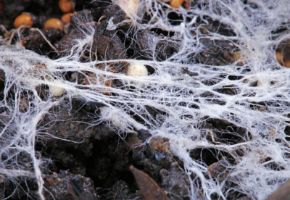
Ecologically, the Ox Tongue plays a crucial role in the carbon cycle and nutrient recycling within forests. As an agent decomposing hardwood (especially oak and chestnut), it aids in breaking down lignin and cellulose—the complex molecules constituting wood. Its mycelium, growing inside the wood, produces enzymes capable of degrading these substances, making them available to other soil organisms. This degradation process, known as brown rot (leaving a powdery, brown residue rich in modified lignin), is typical of certain polypores. Fistulina, however, is considered an intermediate rot agent, initiating a process later completed by other fungi and bacteria. Thus, its action paves the way for ecological succession among decomposer organisms, transforming dead wood into fertile humus.
Properties and culinary uses of the Ox Tongue
Despite its unconventional appearance and meat-like texture, the Ox Tongue (Fistulina hepatica) is a discreetly prized edible fungus, particularly appreciated by those who know how to prepare it. Its gastronomic value is subjective and highly dependent on the fruit body's age and preparation method. It is essential to remember that, as with all wild fungi, consumption is recommended only after certain identification by an expert and in moderate quantities, especially upon first tasting.
Edibility: assessment and precautions
Fistulina hepatica is classified as moderately edible or edible only after cooking: it contains no known human toxins, but raw consumption is discouraged not only due to its strongly acidic taste but also because, like all raw mushrooms, it may cause indigestion or intolerance reactions in sensitive individuals. Cooking is therefore mandatory. It is important to note that, due to its distinctive flavor and sometimes rubbery texture, it is not universally appreciated. Young, tender specimens are preferable; older, fibrous ones can be tough and of low culinary value. As always, begin with small portions to test individual tolerance.
Nutritional values and potential benefits
Nutritionally, the Ox Tongue resembles most edible mushrooms: it is low in calories, rich in water, fiber, and minerals, with a decent protein content. Its defining feature is high water content (up to 85–90% in fresh specimens), which lowers caloric density. It contains potassium, phosphorus, and smaller amounts of iron (whose bioavailability is not comparable to heme iron in meat, despite the color). Like all mushrooms, it provides B-group vitamins (especially B2 and B3). No in-depth studies exist on specific bioactive compounds in Fistulina, but folk tradition attributed astringent and refreshing properties to it, likely linked to its acidic taste. Its composition makes it an interesting ingredient for low-calorie diets and for those seeking plant-based alternatives with a "meaty" texture.
Harvesting and preservation
Harvesting the Ox Tongue should follow sustainability and ecosystem respect principles: collect only young specimens with firm, compact flesh, cutting them at the base with a sharp knife to avoid excessive damage to the mycelium within the wood. It is good practice to leave part of the fungus in place to aid spore dispersal. Older, leathery specimens or those heavily infested with insect larvae should be left to fulfill their ecological role.
Once harvested, the fungus is highly perishable due to its high water content: consume or process it the same day, or store refrigerated for up to 24–48 hours in a paper bag. For long-term preservation, the best methods are drying (which concentrates the acidic flavor) and freezing after blanching.
How to cook the Ox Tongue?
The secret to making the Ox Tongue palatable lies in counterbalancing or harmonizing its natural acidity. The recommended first step is a brief blanching in lightly salted water for 3–5 minutes, which helps reduce sharpness and expel excess moisture, concentrating flavors. After blanching, the fungus can be gently squeezed (like a sponge) and sliced or diced. Its texture and color make it suitable for dishes where it can replace or complement meat:
- sautéed in a pan: after blanching, quickly sauté in oil with garlic, parsley, and a pinch of chili. Adding a teaspoon of honey or a splash of red wine can balance residual acidity;
- stewed or in ragù: long, slow cooking in a tomato-based sauce with onion, celery, and carrot (classic soffritto) softens fibers and blends the flavor into a rich sauce;
- marinated: blanched slices can be marinated in oil, vinegar (or lemon), herbs, and spices for several hours, then grilled. Marinade transforms and enhances the acidic note;
- as a filling ingredient: finely chopped after cooking, it can be used in pasta fillings, stuffed vegetables, or vegetarian patties combined with breadcrumbs, eggs, and cheese.
Avoid using it in long-simmered broths or risottos, where acidity could unpleasantly permeate the entire dish. The ideal wine pairing is with soft, slightly fruity red wines that do not clash with the fungus's tartness.
Comparisons and similarities with other species
A cornerstone of safe mushroom foraging is the ability to distinguish the target species from others that may be toxic or inedible. Fortunately, the Ox Tongue (Fistulina hepatica) has such a distinctive appearance that confusion with deadly fungi is very rare. However, some species—particularly among wood-inhabiting polypores—may mislead less experienced foragers, especially when viewed from a distance or under poor lighting.
Comparison with other polypores with reddish or brown flesh
The polypore group (pored fungi) includes many wood-inhabiting species, some displaying red or brown coloration. The most relevant for comparison are:
| Species | Common name | Similarities to Fistulina hepatica | Key differences (distinguishing features) | Edibility |
|---|---|---|---|---|
| Fistulina hepatica | Ox Tongue | Red, succulent flesh on broadleaf wood. | Marbled flesh, acidic taste, whitish pores that brown on touch, separable tubes. | Edible |
| Pycnoporus cinnabarinus | Cinnabar Polypore | Bright orange-red cap and pore surface. | Thin, leathery, woody flesh (not succulent), uniformly vivid orange-red color, neutral fungal odor, non-acidic taste. Grows on dead wood of various broadleaves. | Inedible (tough) |
| Ganoderma lucidum (e.g., young) | Reishi or Lingzhi Mushroom | Shelf-like shape, sometimes glossy surface. | Fibrous, woody flesh; reddish-brown color with white/yellow margin; often lacquered surface; cream-colored pores that do not bruise like Fistulina's; no liquid exudation. | Inedible (woody), used in herbal medicine |
| Laetiporus sulphureus | Sulphur Polypore or Chicken of the Woods | Shelf-like growth on wood, fleshy when young. | Vivid sulfur-yellow to orange cap; yellow pores; white to yellowish flesh (never red); sweetish taste; often grows in overlapping clusters. | Edible when young (may cause reactions in sensitive individuals) |
Ox Tongue: a fungus waiting to be discovered
The future potential of Fistulina hepatica—whether in controlled cultivation for producing prized "brown oak" timber or harnessing its enzymes for biotechnological applications—remains largely unwritten. It falls to the scientific community, passionate cultivators, and independent researchers alike to continue investigating, experimenting, and documenting. This article, in its deliberate depth and meticulousness, aspires not to be an endpoint but a solid starting point—a detailed map for anyone wishing to explore, with respect and curiosity, the mysterious and captivating world of one of the most iconic fungi of our broadleaf forests.
May your next walk in the woods be enriched by the search for this extraordinary blood-red tongue that speaks the ancient language of decomposition and rebirth.
This article was developed with the support of artificial intelligence and subsequently reviewed, corrected, and validated by the NaturNext.eu technical team, which guarantees its reliability and compliance with official sources.