



In the global mycological landscape, Nameko (Pholiota nameko) occupies a position of extraordinary interest, straddling centuries-old Eastern culinary tradition and modern intensive mushroom cultivation. This basidiomycete, instantly recognizable by its gelatinous cuticle and amber-brown color, serves as a model organism for mycologists, cultivators, and enthusiasts alike to understand the ecology of lignicolous fungi, the potential of controlled cultivation, and the nutraceutical value of the fungal kingdom.
This technical datasheet aims to be the most comprehensive treatment available in Italian on Pholiota nameko, structured to answer every possible scientific and practical question. Through a multidisciplinary analysis spanning taxonomy to biochemistry, we will explore every aspect of this fungus in depth, providing quantitative data, references to scientific studies, and technical guidance for its cultivation.
What are Nameko mushrooms?
Before delving into technical details, it’s essential to address the fundamental question: what are Nameko mushrooms? The term "Nameko" (なめこ) is not merely a common name but a precise identity encompassing a biological entity, a gastronomic product, and an agricultural crop. Nameko mushrooms are the fruiting bodies of the higher fungus Pholiota nameko, a basidiomycete agaric belonging to the order Agaricales. Their distinctive and immediately perceptible feature is a thick, transparent, gelatinous layer covering the cap when the mushroom is fresh and under optimal humidity conditions. This gelatinous coating—primarily composed of hydrophilic polysaccharides—is not a mere aesthetic trait but a sophisticated evolutionary adaptation to prevent dehydration in humid forest environments.
From a cultural and commercial perspective, Nameko is one of the most important mushroom species in East Asia, particularly in Japan, where it has been industrially cultivated for decades and regularly consumed in a variety of traditional dishes, most notably miso soup. Its popularity stems from a unique combination of a pleasantly gelatinous texture (described in Japanese as "neba-neba"), a delicate yet deeply umami flavor, and relative ease of cultivation on artificial substrates.
For Western mycologists, Nameko also represents an intriguing case study of a non-native species that, due to its ecological traits, could potentially naturalize in habitats similar to its native range—though it is not currently considered invasive. In summary, when referring to Nameko mushrooms, we are speaking of a precisely defined fungal species, genetically and morphologically delimited, with a well-established cultural, culinary, and cultivation profile.
Taxonomic definition and synonyms
Accurate scientific definition is the starting point for any serious study. As noted, the currently accepted and correct name is Pholiota nameko (T. Itô) S. Ito & S. Imai. However, the taxonomic history of this fungus is rich with synonyms and reclassifications, reflecting the evolution of mycological systematics. The basionym is Collybia nameko T. Itô, published in 1929. Subsequently, the fungus was moved to other genera based on differing interpretations of morphological characteristics: it was known as Kuehneromyces nameko (based on veil and spore features), and more recently, some phylogenetic studies had associated it with the genus Cyclocybe (which includes the popular pioppino mushroom, Cyclocybe aegerita).
Advanced and comprehensive molecular analyses using multiple markers (ITS, LSU, tef1) have ultimately confirmed its stable placement within the genus Pholiota. This nomenclatural journey is important because it explains why older literature or outdated websites may use different names. For current scientific research, Pholiota nameko is the only name to use to ensure precision and data retrievability.
Taxonomy, systematics, and other Pholiota species:
To fully understand Nameko’s identity, it must be placed within its genus, Pholiota. This genus, traditionally included in the family Strophariaceae (though modern classifications tend to split this family), comprises lignicolous or terrestrial fungi, often with sticky or scaly caps, adnate gills, brown spore prints, and frequent presence of a partial veil leaving remnants on the cap or a ring on the stipe. The genus is quite large and complex, with numerous species that can confuse inexperienced collectors when compared to Nameko. Therefore, examining other types of Pholiota is essential for accurate identification and appreciating our protagonist’s unique traits.
Characteristics of the genus Pholiota
The genus Pholiota is characterized by a combination of morphological traits: brown-ochre or rust-brown spore print, presence of clamp connections in hyphae, caps often hygrophanous or viscid, and predominantly lignicolous growth (saprotrophic or parasitic). Many species display vivid colors (yellows, oranges) and fibrous scales on the cap. One historical taxonomic difficulty has been precisely delineating this genus from related genera like Kuehneromyces, Galerina, and Hypholoma—a challenge largely resolved only through phylogenetic analyses.
Main Pholiota species and comparison with P. nameko
Below is a comparative table of key Pholiota species, with emphasis on those that might be confused with Nameko in various parts of the world:
| Species | Main substrate | Cap | Stipe and ring | Edibility | Notes and differences from P. nameko |
|---|---|---|---|---|---|
| Pholiota nameko | Dead hardwood (Fagus, Quercus) | Hygrophanous, gelatinous when moist, orange-brown, smooth | With fugacious ring, dry surface | Excellent edible | The thick gelatinous cuticle is the absolute distinguishing feature. Spores 6–8 × 3.5–4.5 µm. |
| Pholiota adiposa (Beech tuft) | Living or dead beech trunks | Viscid, golden-yellow with dark fibrillose scales at center | Scaled below the ring | Edible after cooking, but mediocre quality | Lacks the thick gelatin of Nameko. Has prominent scales and predominant yellow color. |
| Pholiota aurivella (group) | Hardwood (often willow) | Very viscid, golden-yellow with appressed brown scales | With ring, scaled | Not edible; suspected of causing gastrointestinal distress | More yellow, marked scaliness, scaled stipe. No persistent gelatin. |
| Pholiota highlandensis (Charcoal burner's Pholiota) | Burnt ground (charcoal pits), rarely on wood | Hygrophanous, ochre to brown, slightly viscid when moist | Often without evident ring | Edibility unknown; avoid | Completely different habitat (burnt soil). Less viscid. |
| Pholiota squarrosa | Stumps and logs of hardwoods (often ash) | Dry, covered with raised, “tufted” scales (squarrose) | Scaled along entire length | Poisonous; causes severe gastroenteritis | Dry and scaly cap, scaly stipe. Not viscid. Dangerous species—do not confuse. |
| Pholiota limonella | Decaying conifer wood (spruce, fir) | Viscid, lemon-yellow, often with brown central scales | With ring, yellow above ring | Not edible | Grows on conifers (Nameko only on hardwoods). Bright yellow color. |
As the table shows, Pholiota nameko is clearly distinguished by the combination of its gelatinous (not merely viscid) cuticle, clustered growth on hardwood, fugacious ring, and absence of prominent scales on cap and stipe. The most dangerous potential confusion could be with toxic species like P. squarrosa, but the morphological difference is stark: P. squarrosa is dry and scaly, while Nameko is viscid-gelatinous and smooth. For deeper insight into the genus’s biodiversity in Europe, the Associazione Micologica Bresadola website offers exceptionally high-quality photographic profiles.
Anatomy and morphology: mycelium and carpophore structure
The visible part of the fungus—the fruiting body or carpophore—is merely its temporary reproductive organ. The true essence of the fungus, its permanent vegetative body, is the mycelium, a network of microscopic filaments called hyphae that extends through the substrate. Understanding the anatomy of Pholiota nameko therefore means examining both the macroscopic structure of the carpophore and the organization of the mycelium, which is crucial for cultivation.
The mycelium of Pholiota nameko: structure, function, and location
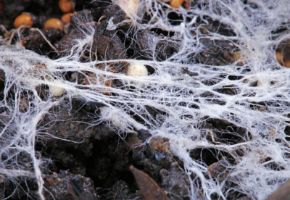
Where is the Nameko mycelium found? In nature, the mycelium of Pholiota nameko develops within the woody substrate it feeds on, penetrating dead hardwood (primarily beech) through the production of lignocellulolytic enzymes (laccase, peroxidase, cellulase) that break down structural polymers. This mycelium consists of septate hyphae, each cell containing two nuclei (dikaryon), typical of the dominant phase in the life cycle of basidiomycetes. The hyphae possess clamp connections at each septum—a bridge-like structure ensuring proper nuclear distribution during cell division. In culture on Petri dishes (agar), Nameko mycelium appears dense, cottony, pure white in early stages, and may become slightly ochraceous with age or in response to light. Growth is relatively rapid at optimal temperatures (23–25°C).
The primary function of the mycelium is nutritional and exploratory: it absorbs nutrients from the substrate and, when environmental conditions (temperature, humidity, or mechanical disturbance) signal a favorable moment, initiates aggregation and differentiation leading to primordia formation—the small buds that develop into carpophores. In mushroom cultivation, the mycelium is first multiplied on sterilized grain (spawn) and then inoculated into a pasteurized or sterilized substrate (e.g., sawdust-bran blocks), where it fully colonizes the mass in 3–4 weeks before being induced to fruit.
Detailed macroscopic description of the carpophore
The Nameko carpophore consists of a cap (pileus), gills (hymenophore), stipe, and ring. Here is an analytical breakdown with metric data:
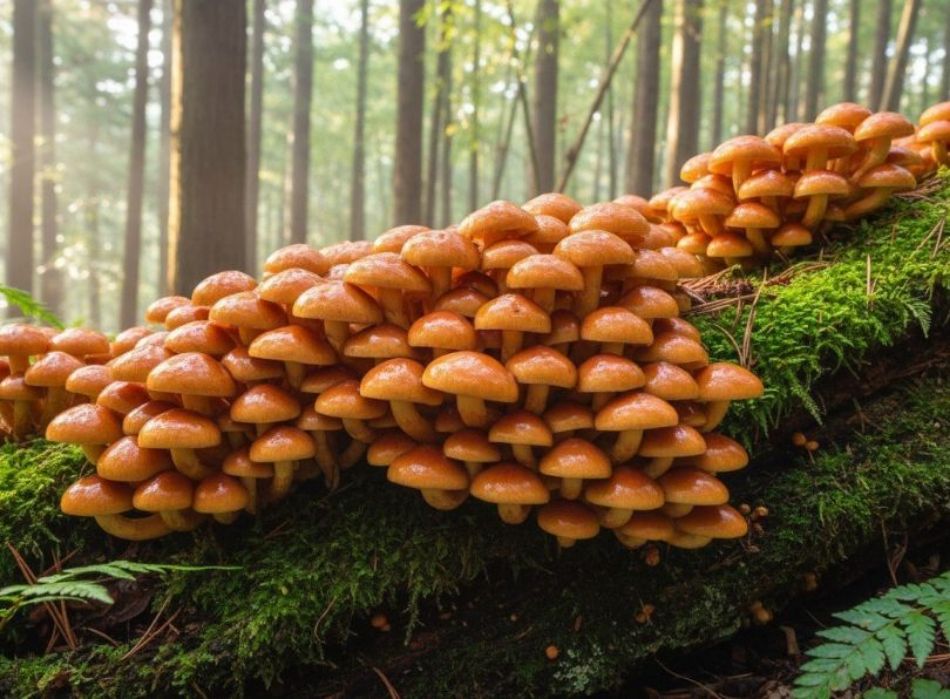
- Cap (pileus): diameter 2–5 (7) cm. From hemispherical-convex to plano-convex, often with a broad central umbo. Margin initially involute, then expanded. Surface smooth, covered by a thick, continuous gelatinous layer under humid conditions, giving it a glossy, “soaked” appearance. Color ranges from ochre-orange to reddish-brown, darker at the center. The gelatin is hyaline and can be rubbed off;
- Gills (hymenophore): crowded, with many lamellulae, pale cream in young specimens, becoming cinnamon-brown at maturity due to spores. Attachment from adnate to slightly decurrent. Spore print: rust-brown.
- Stipe and ring: central stipe, 3–8 cm × 0.4–1 cm, cylindrical, often curved at the base in clusters. Fibrous, tough texture. Dry surface (not gelatinous), similar in color to the cap but lighter, often with whitish fibrils. Bears a superior, membranous, narrow, fugacious ring, whitish, which often turns brown from deposited spores and may disappear in mature specimens.
- Flesh: thin, tender in the cap, more fibrous in the stipe. White-cream color, unchanging. Mild, pleasant fungal odor, sometimes slightly floury. Sweetish, delicate taste.
Microscopic analysis: spores, cystidia, and hyphal structures
Under optical microscopy (1000x), diagnostic features become refined. Spores are smooth, with thick walls, oval-elliptical or slightly almond-shaped, with a distinct germ pore. They measure (5.5)6.0–8.0(9.0) × (3.0)3.5–4.5(5.0) µm, with an average length/width ratio (Q) of about 1.7. They are hyaline (transparent) in KOH but brown in mass. Basidia are clavate, tetrasporic, measuring 20–30 × 5–7 µm.
Cheilocystidia (cystidia on gill edges) are abundant, variably shaped—often ventricose, utriform, or fusoid, sometimes with a capitulate apex—measuring 30–50 × 8–15 µm. Pleurocystidia (on gill faces) are similar but less numerous. The hyphal system is monomitic (only generative hyphae), with hyphae bearing clamp connections. These micromorphological data are essential for definitive identification, especially in dried or atypical specimens.
Habitat, distribution, and phenology: where do Pholiota nameko grow?
The question "where do Pholiota nameko grow?" has two levels of answer: the primary natural habitat where the fungus evolved, and cultivation environments where it is commercially produced. Understanding the former is crucial for appreciating the species’ ecology and potentially attempting semi-natural or outdoor cultivation.
Natural habitat and ecological niche
Pholiota nameko is an obligately lignicolous saprotroph, with a strong preference for dead hardwood in advanced decomposition. It does not form mycorrhizal relationships. The primary host tree in its native range is beech (Fagus crenata and F. japonica in Japan). It is also reported on oaks, chestnuts, and other hard hardwoods. It grows on fallen logs, large branches, and stumps, preferably in contact with the moist forest floor. Growth is cespitose-gregarious, with numerous individuals emerging tightly clustered from the same substrate point, forming dense, heavy tufts.
The typical forest habitat is temperate mixed hardwood forest, in hilly and mountainous zones (300–1800 m a.s.l.), characterized by a climate with hot-humid summers (monsoon-influenced) and cold winters. Ambient humidity is the most critical limiting factor: Nameko fruits only in sites where relative air humidity is persistently very high—often above 85%—as found in shaded valleys, along streams, or in dense forests with sparse understory and abundant moisture-retaining litter. Light is filtered, never direct.
Native geographic distribution
Nameko’s natural range is restricted to temperate East Asia: Japan (widely distributed from Hokkaido to Kyushu), Korea, China (northeastern and central provinces), and the Russian Far East (Primorsky Krai, Sakhalin Island). Outside this region, no native, naturalized populations exist. Any findings in Europe or North America are considered accidental introductions linked to cultivation (e.g., from discarded spent substrate blocks in forests) and have not, to date, established stable, self-sustaining populations. The species is therefore not considered invasive, but its potential ability to colonize native dead hardwood suggests caution in disposing of cultivation substrates.
Phenology: natural fruiting cycle
In nature, Pholiota nameko is a typically autumnal fungus. Fruiting occurs from late summer to early winter, peaking between September and November in the Northern Hemisphere. The main trigger for carpophore induction is dropping nighttime temperatures combined with autumn rains that saturate both the woody substrate and ambient air. In particularly wet and cool years, fruiting may begin as early as August or extend into December. In cultivation, replicating these conditions (thermal shock, increased humidity, fresh air exchange) allows fruiting year-round, with complete cycles of 8–10 weeks.
Is Pholiota nameko edible?
The question "Is Pholiota nameko edible?" has an unequivocally affirmative answer—but with necessary clarifications. Nameko is not only edible but is considered a first-quality edible mushroom, with a long and safe history of consumption in Japan and throughout East Asia. There are no reports of intoxications attributable to this species, provided it is correctly identified and in good condition (not spoiled or decomposed).
Consumption methods and precautions
Nameko is always consumed cooked. Although not known to be toxic raw (unlike many other mushrooms, such as morels), cooking improves digestibility, enhances umami flavor, and modifies texture, integrating the gelatin better into dishes. Cooking also destroys any thermolabile enzymes or compounds that might cause mild discomfort in sensitive individuals. The mushroom does not require pre-boiling or blanching (unlike some species that exude bitter latex) but can be added directly to soups, stews, or stir-fried for a few minutes.
The only risk associated with Nameko consumption is potential confusion with other species, particularly other Pholiota fungi growing on similar substrates elsewhere. As shown in the comparative table, species like Pholiota squarrosa (poisonous) or P. aurivella (suspected) are morphologically distinct, but an inexperienced collector might be misled by general color and lignicolous habitat. Therefore, in the West, wild harvesting of Nameko is strongly discouraged unless by expert mycologists within its native range. Safe consumption is guaranteed by purchasing cultivated Nameko, available in Asian specialty stores or online, often sold fresh, in brine, or canned.
Flavor profile and culinary uses
Nameko has a delicate, sweetish flavor with a pronounced umami note due to high glutamic and guanylic acid content. Its aroma is subtly fungal, not overpowering. The true uniqueness lies in its texture: the cap’s gelatin imparts a distinctive, viscous, enveloping mouthfeel (described in Japanese as "neba-neba"), naturally thickening sauces and soups. For this reason, it is an irreplaceable ingredient in dishes such as:
- miso shiru (miso soup): whole Nameko added in the final minutes of cooking;
- soba and udon: as a topping for hot noodle broths;
- nimono (Japanese stews): cooked with soy sauce, mirin, and dashi;
- temaki and other cold dishes: brined Nameko used as filling or garnish.
Its versatility makes it suitable for fusion with Western cuisine—for example, in risottos, omelets, or as a garnish for white meats.
What are the properties of Pholiota nameko?
Beyond gustatory pleasure, consuming Pholiota nameko offers tangible health benefits. Inquiry into its properties opens a field of active biochemical and pharmacological research. Studies—primarily conducted in Asia—have revealed an interesting nutritional profile and a range of potential biological activities attributed to specific metabolites.
Chemical composition and nutritional values
Composition per 100g of fresh Pholiota nameko (average values from scientific literature):
| Component | Amount | Notes and biological significance |
|---|---|---|
| Water | 88–92 g | High content, typical of fresh mushrooms. |
| Protein | 2.2 – 3.5 g | Contains all essential amino acids. High glutamic acid content. |
| Total carbohydrates | 4.5 – 6.5 g | Primarily complex polysaccharides (beta-glucans, chitin). |
| Dietary fiber | 2.3 – 3.5 g | High proportion due to chitin and beta-glucans in cell walls. |
| Total fat | 0.3 – 0.6 g | Low content, with predominantly unsaturated fatty acid profile. |
| Ash (minerals) | 0.7 – 1.0 g | Source of essential minerals. |
| Energy | 25–35 kcal / 105–145 kJ | Low-calorie-density food, ideal for hypocaloric diets. |
| Potassium (K) | 350 – 450 mg | Important for blood pressure regulation and fluid balance. |
| Phosphorus (P) | 90 – 130 mg | Essential for bone/teeth health and energy production (ATP). |
| Vitamin B2 (Riboflavin) | 0.25 – 0.35 mg | Cofactor in metabolic reactions; important for skin and vision. |
| Vitamin B3 (Niacin) | 4.0 – 6.0 mg | Important for energy metabolism and nervous system health. |
| Ergosterol (Vit. D2 precursor) | Trace – 0.1 mg | Precursor to vitamin D2, activated by UV exposure (even in sun-dried mushrooms). |
Nutraceutical properties evidenced by scientific research
Beyond macronutrients, Nameko contains bioactive compounds attributed—in preclinical studies (in vitro and animal models)—with several biological activities:
- Antioxidant activity: aqueous and ethanolic extracts of P. nameko have demonstrated significant free radical scavenging (DPPH and ABTS) and metal-chelating capacity. This activity correlates with phenolic compounds (gallic acid, caffeic acid) and complex polysaccharides. A 2018 study in the "Journal of Food Biochemistry" reported an ORAC (Oxygen Radical Absorbance Capacity) value comparable to other well-known medicinal mushrooms.
- Immunomodulatory and potential anti-tumor activity: beta-glucans (particularly beta-(1→3)/(1→6)-D-glucans) isolated from Nameko’s cell wall are classic immunomodulators. Murine model studies show these polysaccharides can stimulate macrophage activity, increase cytokine production (TNF-α, IL-6), and enhance Natural Killer (NK) cell activity. In carcinogenesis models, Nameko extracts inhibited proliferation of certain tumor cell lines (colon, lung carcinoma) and induced apoptosis. These effects are promising but not therapeutic and require clinical confirmation in humans.
- Hypoglycemic and hypocholesterolemic activity: in diabetic animal studies, Nameko polysaccharide administration reduced fasting blood glucose and improved glucose tolerance. Concurrently, total cholesterol, LDL, and triglycerides decreased, with a relative HDL increase. Proposed mechanisms include inhibition of digestive enzymes (alpha-glucosidase), interference with intestinal cholesterol/fat absorption, and dietary fiber effects.
- Prebiotic activity: indigestible Nameko fibers (chitin, beta-glucans) may serve as substrate for beneficial gut microbiota (e.g., Bifidobacterium, Lactobacillus), promoting a prebiotic effect.
- Anti-fatigue and adaptogenic properties: some studies on animals subjected to intense exercise suggest Nameko extract supplementation may delay fatigue onset, increase muscle and liver glycogen, and reduce oxidative stress markers induced by exercise.
It must be emphasized that these studies, while extremely interesting, are preliminary. Nameko consumption should be viewed as part of a healthy, varied diet—not a substitute for medications or medical therapies. For updates on research regarding fungal bioactive compounds, the PubMed database from the National Center for Biotechnology Information remains the authoritative primary source for scientific publications.
Cultivation of Nameko: from traditional techniques to modern myciculture
Pholiota nameko cultivation is now a standardized industrial process, enabling consistent production of high-quality mushrooms in controlled environments, independent of season. Techniques resemble those used for other lignicolous mushrooms like shiitake but with species-specific parameters tied to its ecological needs.
Cultivation methods: from "logs" to "bottles"
Historically, Nameko was cultivated on wood logs ("log-seggio" method), primarily beech, inoculated with spawn and placed in shaded forests. This method—still used for niche production—is inefficient and climate-dependent. Today, the prevailing industrial method uses artificial substrate in bags or bottles. The typical substrate is a mix of fine hardwood sawdust (80–85%) and wheat or rice bran (15–20%), supplemented with gypsum (1–2%) to regulate pH and structure. The mixture is hydrated to 60–65%, packed into micro-perforated polypropylene bags, and autoclaved at 121°C for 1.5–2 hours.
Industrial production cycle
The cycle proceeds through sequential phases, each with critical parameters:
- Inoculation: under sterile conditions (laminar flow hood), cooled substrate is inoculated with Nameko spawn (2–3% by weight). Spawn is typically sterilized grain fully colonized by a strain selected for yield and organoleptic qualities;
- Incubation (colonization): inoculated bags are placed in a dark or dimly lit chamber at 22–25°C and 70–75% relative humidity. In 20–30 days, dense white mycelium fully colonizes the block, forming a compact, white mass;
- Fruiting induction: upon full colonization, conditions are drastically changed to mimic autumn. The plastic bag is removed (or the top opened) to expose the block surface. Temperature is lowered to 10–16°C (thermal shock), relative humidity raised to 90–95% via ultrasonic humidifiers or vaporization, diffuse lighting provided (500–1000 lux for 10–12 hours/day), and adequate fresh air exchange ensured to keep CO2 below 1000 ppm. Primordia appear in 5–7 days;
- Development and harvest: primordia mature into full mushrooms in 4–7 days. Harvest is manual, preferably when caps are still convex and before the ring fully detaches. Entire clusters are cut at the base. After the first flush, the block undergoes a "rest" phase (return to incubation conditions for 7–10 days) before re-induction. 3–4 flushes can be obtained per block, with total yields reaching 100% of the initial dry substrate weight (e.g., 1 kg dry substrate → 1 kg total fresh mushrooms).
Challenges and solutions in Nameko cultivation
Main challenges include controlling contamination (green molds like Trichoderma) during colonization and optimal humidity management during fruiting: low humidity prevents characteristic gelatin formation, while excessive humidity or free water promotes bacterial rot. Selecting high-performing strains adapted to local conditions is another key factor for commercial success.
Our exploration of Pholiota nameko concludes here, yet its significance in mycology, cuisine, and science continues to evolve. This seemingly humble fungus—modest in stature and damp habitat—has revealed itself as an organism of extraordinary multidisciplinary interest. From its precise taxonomic placement within the vast genus Pholiota, which clearly distinguishes it from toxic or inedible relatives, to its unique morphology dominated by a gelatinous cuticle, Nameko embodies a perfect example of evolutionary adaptation. Its ecology as a specialized saprotroph on beech wood in Asian temperate forests defines its wild identity, while its docility in cultivation has driven global success, transforming it from a seasonal foraged product into a year-round commodity. Moreover, as we’ve seen, Pholiota nameko is an excellent edible mushroom, provided it is positively identified and cooked. Its properties extend far beyond basic nutrition, encompassing potential antioxidant, immunomodulatory, and metabolic effects supported by a growing body of scientific research—and its cultivation allows hobbyists and professionals alike to replicate its natural habitat in controlled settings. Nameko thus represents an ideal bridge between ancient foraging wisdom, innovative intensive myciculture, and the frontiers of nutraceutical science. For the mycologist, it’s a fascinating study subject; for the cultivator, a profitable challenge; for the gourmet, a unique source of flavor and texture. Its spread beyond Asia—though primarily cultivation-driven—enriches global culinary and cultural biodiversity, reminding us how deep knowledge of a single species can open windows into entire worlds of understanding.Nameko between tradition, science, and myciculture
This article was developed with the support of artificial intelligence and subsequently reviewed, corrected, and validated by the NaturNext.eu technical team, which guarantees its reliability and compliance with official sources.
The fungal kingdom is a universe in constant evolution, with new scientific discoveries emerging yearly about their extraordinary benefits for gut health and overall well-being. From now on, when you see a mushroom, you’ll think not just of its taste or appearance, but of the therapeutic potential held within its fibers and bioactive compounds. ✉️ Stay connected – Subscribe to our newsletter to receive the latest research on: Nature offers us extraordinary tools for health care. Mushrooms, with their unique balance of nutrition and medicine, represent a fascinating frontier we are only beginning to explore. Keep following us to discover how these remarkable organisms can transform your approach to wellness.Continue your journey into the world of mushrooms