



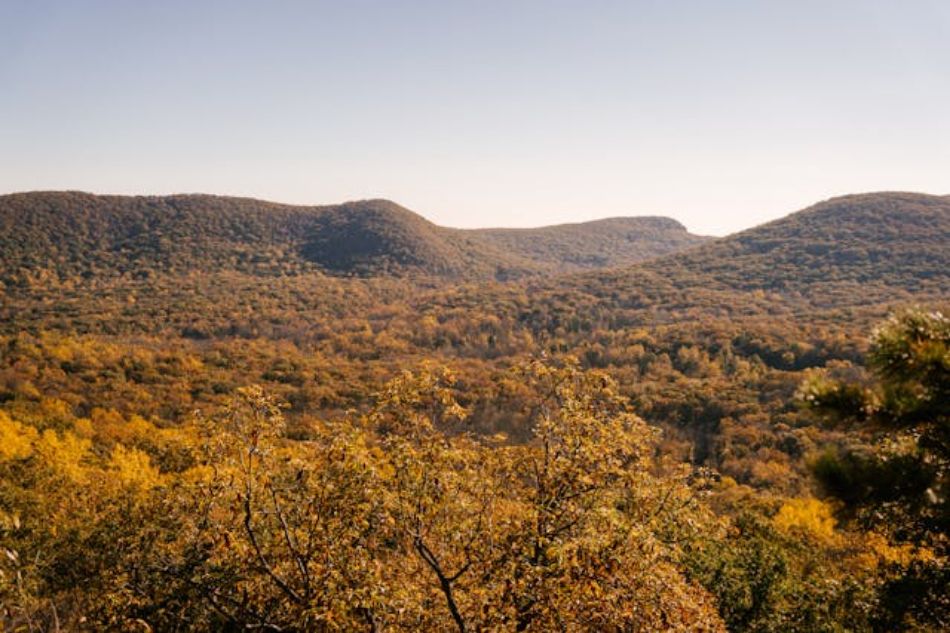
Monte Amiata rises like a gentle giant among the gentle hills of southern Tuscany, a dormant volcano whose geological history has shaped a unique environment, a sanctuary for biodiversity and, in particular, for the kingdom of fungi. This article aims to be a magnifying glass focused on this fascinating microcosm, an in-depth journey through the shady paths and centuries-old chestnut groves to discover the fungal treasures the mountain holds.
We will explore not only the most iconic species, such as the delicious Porcino, but also the lesser-known ones, examining the complex ecological relationships that bind them to their habitat, a mosaic of beech, fir and mixed forests that in autumn lights up with warm colors, transforming into a carpet of golden leaves under which fungal life teems. Through detailed morphological data, statistical analyses, curiosities and a careful examination of sustainable harvesting practices, this text aims to be a reference point for enthusiasts, mycologists and anyone who wants to deepen their knowledge of one of the richest and most interesting fungal ecosystems in Italy.
Monte Amiata: a dormant volcano rich in biodiversity
Before delving into the heart of Amiata mycology, it is essential to understand the stage on which this spectacle of nature takes place. Monte Amiata is not a simple mountain, but a Quaternary volcanic complex, whose last eruptive activity dates back about 300,000 years. This origin still forges its soil, its hydrography and, consequently, its extraordinary variety of life. Its summit, which reaches 1738 meters, dominates a territory ranging from Mediterranean scrub at lower altitudes to the imposing beech and white fir forests that envelop its peaks. It is precisely this diversity of environments, combined with a peculiar microclimate, that creates the ideal conditions for a myriad of fungal species.
Geology and Soils: The foundations of fungal life
The geological substrate of Monte Amiata is predominantly volcanic, characterized by trachytes, latites and rhyolites. The alteration of these rocks, over millennia, has given rise to soils with unique chemical-physical characteristics. The porosity and richness in minerals such as potassium, phosphorus and trace elements are determining factors for soil fertility and the development of a rich microbiota, including fungi.
The soils are generally acidic, a condition that favors specific fungal species, many of which establish symbiotic relationships (mycorrhizae) with the dominant forest plants. The following table summarizes the main pedological characteristics of the most significant forest areas for the mycology of Monte Amiata.
| Forest Type | Soil Composition | Average pH | Indicator Fungal Species |
|---|---|---|---|
| Beech Forest | Acidic brown soils, rich in humus, derived from volcanic rocks | 5.0 - 6.2 | Amanita caesarea, Boletus edulis, Cantharellus cibarius |
| Chestnut Grove | Deep and loose soils, rich in silica, often of anthropogenic origin | 4.5 - 6.0 | Boletus aereus, Lactarius deliciosus, Russula spp. |
| Fir Forest (White Fir) | Cool, moist soils, often with a deep humic horizon | 4.8 - 6.0 | Boletus edulis f. pinedorus, Hydnum repandum, Tricholoma terreum |
| Mixed Oak Forest | Brown soils, less deep, with good drainage | 5.5 - 6.8 | Boletus reticulatus, Amanita rubescens, Macrolepiota procera |
Climate and microclimate: the orchestra of the fungal seasons
The climate of Monte Amiata is of the sub-coastal Apennine type, characterized by abundant rainfall, especially in the autumn and spring periods, often exceeding 1500 mm per year. The frequent fogs that envelop the mountain's slopes, especially at medium-high altitudes, create a constantly humid microclimate, an essential condition for the fruiting of most epigeous fungi.
The diurnal temperature range, particularly pronounced in late summer and early autumn, acts as a trigger for carpogen induction in many species. The alternation of the seasons marks a precise mycological calendar: if spring sees the appearance of morels (Morchella spp.) and St. George's mushrooms (Calocybe gambosa), autumn is the queen season, with the explosion of porcini, Caesar's mushrooms, chanterelles and a myriad of other species.
The mycodiversity of Monte Amiata: a catalog in the woods
The fungal heritage of Monte Amiata is extraordinarily rich and varied. Mycological studies conducted in the area have recorded hundreds of species, many of great ecological and gastronomic interest. In this chapter, we immerse ourselves in the morphological, ecological and taxonomic description of the most representative species, dividing them by families and genera, to provide a recognition tool that is as accurate and useful as possible.
Porcini (Genus Boletus): the undisputed kings of the undergrowth
The term "Porcino" encompasses some of the most sought-after fungal species in the world, and Monte Amiata is one of their preferred habitats. Belonging to the Boletaceae family, they are characterized by the fleshy cap, the hymenium composed of tubes and pores (never gills) and the often robust stem. Correct identification of the different Boletus species is essential, not only for their commercial value but also to avoid unpleasant confusion with inedible or toxic species. Below is an examination of the four most common species on the mountain.
Boletus edulis (Penny Bun or Cep)
Perhaps the most famous, Boletus edulis is easily recognizable by its cap color varying from light brown to dark brown, often with a pale margin. The cuticle is moist and a bit slimy in wet weather. The pores, initially white, become yellowish and finally olive-green with maturity. The stem is stout, white or hazel in color, with a noticeable pale reticulation especially on the upper part. It grows mainly in the beech and fir forests of Monte Amiata, from late summer throughout autumn. Its flesh is firm, white and fragrant, and does not change color when cut.
Boletus aereus (Dark Cep or Queen Bolete)
Boletus aereus is considered by many gourmets to be the best for aroma and consistency. It is distinguished by its dark brown, almost black cap, with a velvety and dry surface. The pores are white and then yellow-green, the stem is stocky and robust, brown in color, with a whitish reticulation. It prefers broad-leaved woods, particularly the chestnut groves and turkey oak woods of Monte Amiata, where it fruits from June to October. Its presence is often an indicator of mature and undisturbed forests, and its collection is a real treasure for local foragers.
Boletus reticulatus (Summer Bolete)
As the name suggests, this species appears early, from late spring. The cap is light brown, with a cuticle typically cracked in a reticulate pattern, especially at the margin, under dry conditions. The stem is clavate and presents a white or light brown reticulation very evident along its entire length. It is a thermophilic species, which on Monte Amiata is often found in oak woods at medium-low altitudes.
Boletus pinophilus (Pine Bolete or Red Cep)
Less common than the previous ones but equally prized, the Boletus pinophilus has a cap of red-brown or wine-red color, with a granular and dry surface. The pores are white, then yellowish, and the stem is stocky, reddish-brown in color, with a barely noticeable reticulation. As the epithet indicates, it is a symbiont of conifers, and on Monte Amiata it is found mainly in pine and fir forests.
Amanita caesarea (Caesar's Mushroom): the emperor of the forest
The Amanita caesarea, or Caesar's mushroom, is a mushroom of rare beauty and exquisite flavor. Its morphology is unmistakable: when still in the "egg" stage, it is completely wrapped in a white membrane (universal veil) that makes it resemble an egg. At maturity, the cap expands, showing a bright, shining orange color, while the gills and stem are an intense golden yellow. The ring is wide and membranous, always yellow, and the volva is white, sack-like and free. It is a thermophilic species that grows especially in sunny, sparse broad-leaved woods, particularly under oaks and chestnuts, and its appearance on Monte Amiata often heralds the beginning of the autumn mycological season. It is essential not to confuse it with the deadly Amanita muscaria or other toxic Amanitas, from which it differs sharply by the yellow-orange colors of the gills and stem and the well-defined volva.
Cantharellus cibarius (Chanterelle): the yellow jewel
The Cantharellus cibarius is a likeable and easily recognizable mushroom due to its egg-yellow color and funnel shape. It does not have true gills, but pseudogills, that is, anastomosing folds that run down the stem, which is the same color as the cap. Its scent is fruity, similar to apricot. It grows in large groups, often forming so-called "fairy rings", in all types of woods on Monte Amiata, but with a preference for damp beech and fir forests. Its flesh is compact and resistant to cooking, making it ideal for sauces and preservation. It is important to distinguish it from the similar Hygrophoropsis aurantiaca (False Chanterelle), which has true gills and grows on rotten wood, and from Omphalotus olearius, which is toxic and strongly bioluminescent, growing on stumps and roots of broad-leaved trees.
Specific fungal habitats of Monte Amiata: where to look for hidden treasures
Mushroom foraging is not a random activity, but a science that requires an intimate knowledge of ecosystems. Each species has its preferences, its companion trees, its soil type. Let's now explore the main habitats of Monte Amiata, describing for each the most characteristic fungal species and their ecological relationships.
The monumental beech forests: the cathedral of Porcini
The beech forests of Monte Amiata, especially those at higher altitudes, are ecosystems of extraordinary beauty and complexity. The beech (Fagus sylvatica) establishes mycorrhizal symbiotic relationships with a large number of fungi. Under its canopy, in soil rich in humus and constantly moist, not only the prized Boletus edulis and Amanita caesarea fruit, but also a multitude of other species such as Russula spp., Lactarius spp. and the poisonous Cortinarius spp. The beech forest offers an ideal microclimate: the dead leaves form a thick layer that retains moisture and protects the mycelium. In these "green cathedrals", searching requires patience and a keen eye, as the mushrooms blend perfectly with the brown ground and golden leaves.
The fruit chestnut groves: a historical and mycological heritage
Chestnut groves are an identifying element of the Amiata landscape. These woods, once cultivated for the production of chestnuts and flour, now host a rich fungal community. The sweet chestnut (Castanea sativa) is an excellent symbiont for many fungi. It is under chestnut trees that one has the highest probability of finding the precious Boletus aereus, together with Boletus reticulatus and species of the genus Lactarius, such as Lactarius deliciosus (Saffron Milk Cap). Old stumps and dead chestnut wood are, furthermore, the ideal habitat for wood-inhabiting fungi such as Pleurotus eryngii (King Oyster Mushroom) and Armillaria mellea (Honey Fungus), the latter a weakness parasite that attacks already suffering trees.
The white fir forests: the realm of cold and humidity
Pure or mixed stands of white fir (Abies alba) give Monte Amiata a Nordic atmosphere. These cool, shady woods, often with a sparse undergrowth, are the elective habitat for a specialized mycofauna. Here, Boletus edulis often forms a specific morphological variety (sometimes indicated as B. edulis f. pinedorus), with lighter colors, along with species such as Hydnum repandum (Wood Hedgehog), with its characteristic spiny hymenium, and Tricholoma terreum (Dirty Tricholoma), a very common edible mushroom. The persistent humidity also favors the growth of numerous species of the genus Cortinarius, many of which are toxic, requiring great caution in identification.
Sustainable mushroom harvesting: rules, ethics and respect
The passion for mushroom harvesting must go hand in hand with a deep respect for the environment and the survival of the species. Monte Amiata, like the entire Italian territory, is subject to precise regulations for the harvesting of spontaneous epigeous fungi. Beyond the rules, there is an ethics of the forager, an unwritten but fundamental code of conduct for the conservation of the fungal heritage.
Regional legislation and harvesting permit
In Tuscany, mushroom harvesting is regulated by Regional Law 16/1999 and subsequent amendments. It is mandatory to possess a specific regional permit, obtained by passing an aptitude test on the knowledge of fungal species. The permit has a cost and a temporary validity. There are also daily harvesting limits (usually 3 kg per person), prohibitions on the use of rakes or other tools that could damage the humus layer, and periods of absolute prohibition to allow species reproduction. It is essential to check each year with the municipalities of Monte Amiata or the Forestry Carabinieri for any variations and for harvesting calendars.
Good practices for the conscious forager
Beyond the law, sustainability is practiced in the field. Here are some golden rules:
- Harvest only specimens in perfect condition and of which you are absolutely certain of their edibility. In case of doubt, it is better not to harvest or have the mushroom checked by an expert mycologist at the ASL Mycological Inspections.
- Use a wicker basket or aerated material to allow spore dispersal during transport.
- Clean the mushroom roughly on the spot, removing soil and leaves, and cut the stem at the base with a small knife, without uprooting the mycelium. It is not proven that pulling the mushroom damages the mycelium more than cutting, but the latter method allows for easier checking of the base of the stem, important for the identification of some genera (e.g., Amanita).
- Avoid unnecessarily trampling the undergrowth and do not destroy inedible or poisonous mushrooms, as they play a crucial ecological role.
Monte Amiata: a paradise for mushroom hunters
Monte Amiata confirms itself as a true paradise for mycophiles. Its complex geology, favorable climate and variety of forest environments create the conditions for one of the highest fungal diversities in central Italy.
Knowing this environment, its symbolic species, its fragile balances and the rules for respectful harvesting is not only a way to enrich one's pantry but an act of love towards a unique territory. Every excursion on the mountain, with one's gaze fixed on the golden carpet of leaves, is an opportunity to learn, respect and marvel at the complexity of nature that, silently, fruits under our feet.
This article was developed with the support of artificial intelligence and subsequently reviewed, corrected, and validated by the NaturNext.eu technical team, which guarantees its reliability and compliance with official sources.
The kingdom of fungi is a universe in constant evolution, with new scientific discoveries emerging every year about their extraordinary benefits for gut health and overall well-being. From now on, when you see a mushroom, you will no longer think only of its taste or appearance, but of all the therapeutic potential it contains in its fibers and bioactive compounds. ✉️ Stay connected - Subscribe to our newsletter to receive the latest studies on: Nature offers us extraordinary tools to take care of our health. Mushrooms, with their unique balance between nutrition and medicine, represent a fascinating frontier that we are only beginning to explore. Keep following us to discover how these extraordinary organisms can transform your approach to well-being.Continue your journey into the world of mushrooms