






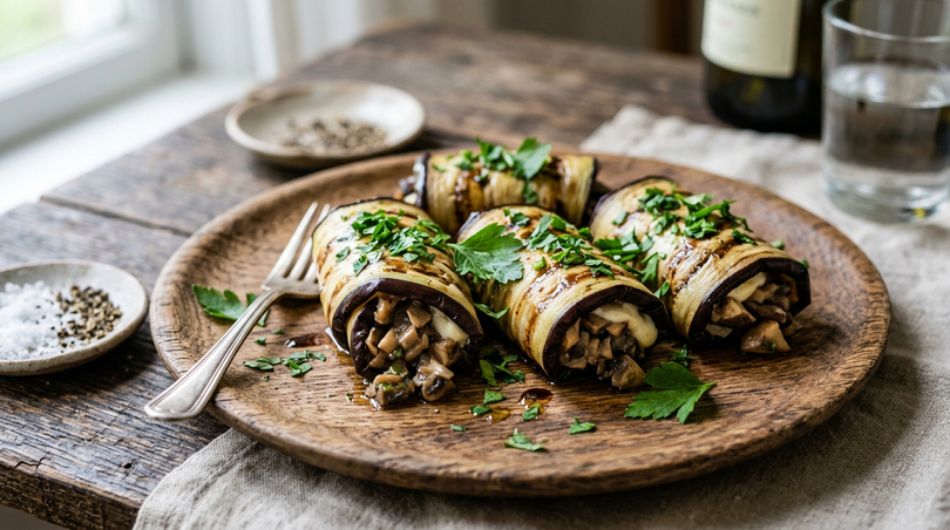
Eggplant rolls: two words that immediately evoke the warmth of Mediterranean cuisine, the aroma of the oven, and the versatility of a beloved vegetable. This dish, rooted in Sicilian and Apulian tradition, is now a true flagship for professional chefs, food bloggers, vegetarian restaurateurs, and passionate home cooks. But what makes eggplant rolls so special? The answer lies in their extraordinary ability to adapt to infinite variations, to enhance simple ingredients, and to transform into an elegant appetizer, a hearty main course, or a creative finger food.
In this comprehensive guide, we will explore every aspect of this iconic preparation. From cutting and grilling techniques to achieve perfect slices, to the most innovative fillings including mushrooms, cheeses, meats, and vegetables, down to the secrets for flawless cooking. Not only that: we will also delve into the nutritional side and historical curiosities, and as always, we will link every step to the products available on NatureNext.eu, your reference point for mushrooms and cultivation accessories.
Whether you are a chef looking for the perfect recipe for your restaurant, a food blogger seeking viral content, or simply a lover of good food who wants to impress your guests, this article was written for you. Get ready to discover all the secrets of eggplant rolls, with a special focus on mushroom variations, which add an unrepeatable earthy and umami note.
In this article...
The art of eggplant rolls
Eggplant rolls represent much more than a simple recipe: they are an expression of Italian cuisine that knows how to combine simplicity and refinement. Their preparation requires care and attention, but the final result rewards every effort. A well-made eggplant roll is a balance of textures: the softness of the grilled or fried eggplant, the creaminess of the filling, and the crispiness of the surface. Today, these eggplant rolls are protagonists on tables all over the world, appreciated both as an appetizer and as a single dish.
The versatility of the recipe allows you to range from simple and quick preparations to more elaborate versions. You can prepare baked eggplant rolls for a light dinner, or grilled eggplant rolls for a summer barbecue. Sicilian tradition proposes them with ricotta, while the Apulian variant adds tomato and caciocavallo cheese. But it is in the pairing with mushrooms that these eggplant bites reach unparalleled peaks of flavor.
Mushrooms, with their woodland aroma and meaty texture, pair perfectly with the sweetness of the eggplant, creating a combination that conquers even the most demanding palates. You can freely choose high-quality dried and fresh mushrooms, ideal for enriching your eggplant rolls and stunning your guests.
Market data
According to a 2024 food & beverage sector analysis, the search for eggplant-based recipes has grown by 25% compared to the previous year. This trend is driven by the growing attention towards plant-based diets and the rediscovery of traditional Mediterranean dishes. Furthermore, the market for cultivated mushrooms in Europe is expanding, with a 12% annual increase in demand, driven by their versatility in the kitchen and recognized health benefits.
Furthermore, a recent survey conducted on a sample of 500 professional chefs revealed that over 78% of them consider eggplants one of the most versatile vegetables for appetizers and main courses. Additionally, the use of mushrooms in fillings has increased by 34% in the last two years, a sign of growing interest in woodland flavors.
2. History and tradition: from Sicilian kitchens to the world
Eggplant rolls have a long and fascinating history, intertwined with the gastronomic culture of the Mediterranean. The first traces of this preparation date back to 19th-century Sicily, where eggplants, introduced by the Arabs, became a fundamental ingredient of popular cuisine. Sicilian housewives, skilled at reusing leftovers, began to stuff slices of eggplant with stale bread, cheese, and aromatic herbs, then rolled and cooked them.
Over time, the recipe spread throughout Italy, taking on different characteristics depending on the regions. In Puglia, for example, Apulian-style eggplant rolls include the use of caciocavallo and cherry tomatoes, while in Calabria, chili pepper is added for a spicy touch. The Sicilian variant, known as Sicilian-style eggplant rolls, is characterized by the use of salted ricotta, basil, and often a light breading.
Today, these eggplant rolls have become an international dish, reinterpreted by chefs all over the world. Their popularity is due to the simplicity of the ingredients and the possibility of adapting them to every dietary need: vegetarian, vegan, gluten-free. Eggplant rolls are now a classic of buffets and elegant dinners, and their presence on restaurant menus is constantly increasing.
3. Preparation techniques: how to make perfect eggplant rolls
The success of eggplant rolls largely depends on the correct preparation of the eggplants. The choice of the fruit, cutting, preliminary cooking, and rolling are crucial steps to achieve a flawless result. In this section, we will reveal all the secrets to preparing chef-quality eggplant rolls.
Choice and cutting of the eggplants
The quality of the eggplants is fundamental. Choose firm fruits, with shiny skin free of blemishes. Dark purple eggplants, elongated in shape, are the most suitable for eggplant rolls because they have fewer seeds and a more compact pulp. There are also striped or white varieties, which are equally well-suited. To obtain regular slices, cut the eggplants lengthwise, to a thickness of about 3-5 mm. You can use a mandoline to get perfectly uniform slices.
A chef's trick: after cutting the slices, lay them on a clean kitchen towel and sprinkle them with coarse salt. Let them rest for about 30 minutes: this process, called "purging", eliminates excess water and the bitter aftertaste (solanine). Subsequently, rinse the slices and dry them well with paper towels. This operation is particularly important if you intend to fry the eggplants, but it is also recommended for grilling.
Grilling or frying: which method to choose?
The choice of the preliminary cooking method depends on the result you want to achieve. Grilled eggplants give the rolls a smoky and light flavor, ideal for summer versions or for those looking for a lower-calorie dish. To grill the eggplants, brush the slices with a drizzle of oil and cook them on a well-heated grill pan for 2-3 minutes per side, until they are tender and marked with characteristic grill lines.
Frying, on the other hand, makes the eggplants softer and tastier. You can fry them in a pan with seed or olive oil, until golden brown, or dip them first in flour and then in egg for a light breading. Fried eggplants are the perfect base for rich and hearty eggplant rolls. Attention: frying requires draining excess oil well on absorbent paper.
The art of rolling
Rolling the eggplants without breaking them is the main challenge of this recipe. To make perfect eggplant rolls, follow these tips:
- Soft and flexible slices: make sure the slices are well cooked and flexible. If they are too hard, they will break during rolling.
- Not too abundant filling: distribute the filling evenly, leaving a margin of about 1 cm on the edges. Excessive filling will make rolling difficult.
- Roll from the shorter side: if the slice is very long, roll from the shorter side to obtain a compact roll of contained size.
- Secure the roll with a toothpick: to maintain the shape during cooking, you can secure each roll with a toothpick (which you will remember to remove before serving).
How to prevent the rolls from breaking during cooking
One of the most common doubts is: how can I prevent the rolls from breaking during cooking? Here are some effective strategies:
- Cook the eggplants to the right point: if you have grilled them, make sure they are well cooked but not excessively mushy.
- Use a binder: add an egg or a little breadcrumbs to the filling to make it more compact and help it adhere.
- Arrange the rolls in a narrow baking dish: if you bake them, place them next to each other in a baking dish, so they support each other and do not open up.
- Cook at a moderate temperature: too rapid and violent cooking could crack the eggplants. Better a medium temperature (180°C/350°F) and longer times.
4. The fillings: classic, innovative, and with mushrooms
The filling is the heart of eggplant rolls. The choice of ingredients determines the character of the dish, making it more classic, modern, light, or hearty. Below, we explore some of the most loved and innovative combinations, with a special focus on mushroom-based fillings.
Classic fillings
Traditional recipes are a safe and always appreciated starting point. Among the most famous, we find:
- Eggplant rolls with ricotta: the Sicilian classic, which provides a filling of ricotta (preferably sheep's milk), basil, pepper, and sometimes pine nuts or raisins. An alternative is the eggplant roll with ricotta and spinach.
- Eggplant rolls with mozzarella and tomato: the simple but irresistible filling, reminiscent of baked pasta. Perfect for eggplant rolls with mozzarella, to be cooked with tomato sauce and basil.
- Eggplant and ham rolls: a classic pairing in Italian cuisine. The salty flavor of the ham pairs well with the sweetness of the eggplant. Also perfect with mortadella.
- Eggplant rolls parmigiana style: a rolled version of the famous parmigiana, with a filling of parmesan, mozzarella, and basil, cooked in a bed of tomato sauce.
Innovative and light fillings
For those looking for something different or lighter, here are some creative ideas:
- Eggplant rolls with tuna and capers: a filling with a decisive flavor, perfect for a summer appetizer. It combines the creaminess of tuna with the savoriness of capers.
- Eggplant rolls with ground meat: a heartier version, similar to a meat roll. The meat filling (beef, pork, or a mix) is sautéed with vegetables and rolled in the eggplant.
- Vegetarian eggplant rolls with quinoa and vegetables: a vegan and protein-rich alternative, with quinoa, zucchini, bell peppers, and spices.
- Light eggplant rolls with cream cheese and salmon: a fresh and refined option, with spreadable cheese and smoked salmon.
- Eggplant rolls with pasta: an original recipe that features a filling of short pasta dressed with ragù or vegetables. A very hearty single dish.
The winning combination: eggplant rolls and mushrooms
The pairing of eggplants and mushrooms is a classic of autumn cuisine, but it can be enjoyed all year round thanks to dried mushrooms. Mushrooms, with their intense aroma, enhance the flavor of the eggplant and add an earthy note that makes the dish more complex and satisfying. Here's how to create impressive mushroom fillings:
- Porcini mushroom and ricotta filling: a revisited classic. The porcini, sautéed in a pan with garlic and parsley, are mixed with ricotta, parmesan, and an egg to bind. The result is a creamy and flavorful filling, perfect for baked eggplant rolls.
- Button mushroom and provola filling: a more delicate alternative, with sautéed button mushrooms and smoked provola. The melting provola will make the rolls irresistible.
- Mixed mushroom and sausage filling: for a decisive and tasty dish. Sausage and mushrooms (porcini, button, and poplar mushrooms) are browned and then rolled in the eggplant.
- Vegan mushroom and walnut filling: a cheese-free option, with sautéed mushrooms, chopped walnuts, breadcrumbs, and parsley. The umami of the mushrooms and the crunchiness of the walnuts create a perfect balance.
Dried mushrooms, once rehydrated, release a concentrated aroma that enriches the filling. Just soak them in warm water for 20-30 minutes, squeeze them, and use them as desired.
5. Cooking: oven, pan, grill, and variations
The final cooking of eggplant rolls is a decisive step for the success of the dish. Each method offers different results in terms of texture, flavor, and presentation. Here is an overview of the most common options.
Baked eggplant rolls
Baking is the most used method and guarantees a tasty and golden dish. Arranging the rolls in a lightly greased baking dish, sometimes with a bed of tomato sauce, keeps them moist and enhances their flavors. Brush the surface with a little oil and bake at 180-190°C (350-375°F) for 20-25 minutes, until they are well browned. If the filling contains cheese, the surface will gratinate, creating a crispy crust. Perfect for a winter dinner.
Pan-fried eggplant rolls
For a faster and crispier cooking, you can cook the rolls in a pan. After rolling them, brown them in a non-stick pan with a drizzle of oil, gently turning them on all sides. This technique requires a bit of skill not to break the rolls, but it gives extra crispiness to the surface. Ideal for eggplant rolls with breadcrumbs.
Grilled eggplant rolls
This version involves grilling the eggplants after they have been stuffed. The heat of the grill caramelizes the eggplants and gives a smoky flavor to the filling. They can be served hot or lukewarm, as cold eggplant rolls for a summer buffet. Perfect for those looking for a light and tasty dish.
Other methods and pairings
There are also more particular versions, such as sweet and sour eggplant rolls (cooked with vinegar and sugar) or eggplant rolls in oil (to be preserved as an appetizer). Furthermore, eggplant rolls with rice (Greek or Mediterranean style) represent a complete and tasty single dish.
6. Pairings and sauces: the final touch
Eggplant rolls are a dish that lends itself to a wide range of pairings. Here's how to best enhance them, both regarding side dishes and sauces. The choice of the right dressing can transform a good dish into a memorable experience.
Sauces and dressings for eggplant rolls
A well-made sauce can enhance and complete the flavor of the rolls. Below are some proposals.
- Tomato sauce: the classic fresh tomato sauce, lightly scented with basil, is the prime pairing for the rolls. Perfect for baked versions.
- Boscaiola sauce: a sauce based on mushrooms (porcini or button), cream, and parsley. The perfect combination for eggplant rolls with mushrooms.
- Béchamel sauce: for a richer and stringier version, béchamel (even vegetarian) is an excellent choice.
- Pesto and vegetable creams: a drizzle of pesto, or a zucchini or bell pepper cream, gives a touch of freshness and color.
What to pair with eggplant rolls?
Eggplant rolls can be served as an appetizer, main course, or single dish. Here are some suggestions for side dishes and pairings with other courses:
- Fresh salads: a mixed salad or an arugula and parmesan flake salad, for a light and balanced meal.
- Grilled vegetables: grilled zucchini, bell peppers, and onions are a perfect side dish.
- Baked potatoes or mashed potatoes: for a heartier dish.
- Wine: a full-bodied red wine like a Primitivo or Nero d'Avola pairs well with the tastier versions. For lighter ones, a rosé or a dry white like Vermentino are ideal.
7. Nutritional properties and benefits of eggplants
Eggplants, often celebrated for their versatility in the kitchen, are much more than a simple vegetable: they represent a true health ally, rich in essential nutrients and bioactive compounds. This fruit of the Solanaceae family, native to Asia but now a symbol of the Mediterranean diet, boasts an extraordinary nutritional profile that deserves to be explored.
First of all, eggplants are a very low-calorie food: with about 25 calories per 100 grams, they are ideal for those who wish to maintain or reach an ideal weight without giving up taste. This characteristic is due to their high water content, which exceeds 90% of their composition, and the presence of dietary fibers that promote a sense of satiety. Fibers, in particular, play a crucial role in regulating intestinal transit, helping to prevent constipation and keep the gut microbiota healthy. For those suffering from constipation or irregularity, eggplants represent a natural and tasty remedy, as confirmed by numerous clinical nutrition studies.
But the benefits of eggplants do not stop here. They are a precious source of vitamins and mineral salts. Among the vitamins, the presence of vitamin C stands out, a powerful antioxidant that supports the immune system and promotes iron absorption, and B group vitamins, in particular B1 (thiamine), B3 (niacin), and B6 (pyridoxine), essential for energy metabolism and the proper functioning of the nervous system. Vitamin K, on the other hand, plays a fundamental role in blood clotting and bone health. As for minerals, eggplants are particularly rich in potassium, a mineral that helps regulate blood pressure and the body's water balance, and magnesium, involved in over 300 enzymatic reactions, including muscle contraction and nerve impulse transmission. There are also traces of iron, calcium, and phosphorus, which contribute to the general well-being of the organism.
The true treasure of eggplants, however, lies in their antioxidant compounds, in particular anthocyanins, the pigments that give the skin its characteristic dark purple color. Nasunin, an anthocyanin specific to eggplants, has been the subject of numerous scientific studies for its extraordinary properties: it protects cells from oxidative stress, counteracts premature aging, and helps reduce chronic inflammation, a risk factor for many degenerative diseases. These antioxidants, together with other flavonoids and phenolic compounds, make eggplants a cardioprotective food, capable of improving blood circulation and reducing the risk of cardiovascular diseases.
Another often underestimated aspect is their beneficial effect on sugar and lipid metabolism. Eggplants, thanks to their low glycemic index, do not cause spikes in blood glucose, making them suitable even for those suffering from type 2 diabetes or those following low-carb diets. Furthermore, the soluble fibers present in the pulp help reduce the absorption of bad cholesterol (LDL), helping to keep total cholesterol levels under control and prevent atherosclerosis. For this reason, those with high cholesterol can consume eggplants with peace of mind, indeed, benefiting from them.
It is important, however, to consider some contraindications for conscious consumption. Eggplants contain solanine, a glycoalkaloid that in large quantities can be toxic, but its concentration is significant only in unripe eggplants. The purging process with salt, a staple of Italian cooking, not only eliminates excess water and the bitter aftertaste, but also reduces the solanine content, making the vegetable more digestible and safe. Cooking, furthermore, further neutralizes its presence. In rare cases, eggplants can cause allergic reactions or intolerances, especially in predisposed subjects. In case of kidney problems, on the other hand, it is advisable to moderate consumption due to their potassium content, but in general, for most people, eggplants are a safe and beneficial food.
Eggplants are not only a protagonist ingredient in iconic dishes like eggplant rolls, but also a concentrate of well-being that nature offers us. Whether grilled, baked, or sautéed, integrating this vegetable into your diet means making a conscious choice for the health of your heart, intestines, and mind.
8. FAQ - Frequently asked questions about eggplant rolls
What are the health benefits of eating eggplants?
Eggplants are rich in water, fiber, vitamins (A, B, C, K), and mineral salts (potassium, magnesium). Their antioxidant properties are due to the presence of anthocyanins, which help counteract free radicals and cellular aging.
Are eggplants good for the intestines?
Yes, thanks to their high fiber content, which promotes intestinal transit and regularity. They are also useful for microbiota health. Those suffering from constipation can eat them with benefits.
Do eggplants raise blood sugar?
Eggplants have a low glycemic index, so they do not cause spikes in blood sugar and can be consumed by those with diabetes.
Can people with high cholesterol eat eggplants?
Certainly, in fact, eggplants contain soluble fibers that help reduce bad cholesterol (LDL) levels.
What are the contraindications of eggplants?
They are generally well tolerated, but they contain solanine, a substance potentially toxic in large quantities. Solanine concentrates mainly in the skin and pulp of unripe eggplants. To avoid it, it is advisable to purge the eggplants with salt and consume them well cooked. Although rare, some people may experience intolerances or allergies.
When should you not eat eggplants?
In case of hypersensitivity or confirmed allergy. Furthermore, if you suffer from kidney problems, it is good to consume them in moderation due to their potassium content.
The key is the consistency of the slices: they must be soft and flexible enough. To achieve this, grill or fry them until tender, but not too mushy. Purge them with salt before cooking to eliminate excess water. Spread the filling in a thin layer, leave a free edge, and roll gently from the shorter side. Use a toothpick to secure the roll.
Among the most loved we find the classic with ricotta, basil, and pine nuts (Sicilian style), the version with mozzarella and tomato, and the one with ham. For those who love strong flavors, fillings with porcini mushrooms and cheeses (provola, parmesan) are a real success. Variants with ground meat or tuna and capers are perfect for those looking for heartier alternatives.
For a light version, grill the eggplants instead of frying them. Choose light fillings like lean ricotta, light cheeses, or vegan alternatives based on tofu, vegetables, and quinoa. Reduce the amount of cheese and use spices and herbs to give flavor without adding calories. Baking with a little oil is the best option.
Tomato sauce is the most classic and versatile. For a pairing with mushrooms, boscaiola sauce or a simple diced tomato and mushroom mix is perfect. Creamy sauces like béchamel or a light pesto give a touch of refinement. For summer versions, a drizzle of extra virgin olive oil, a little lemon, and oregano are excellent.
Play with colors and textures: use eggplants of different varieties (purple, white, striped) for visual impact. Create mini versions as finger food or eggplant skewers. Experiment with exotic fillings (curry, mango) or gourmet ingredients (truffle, shrimp). A careful presentation with mirror sauces or fresh herbs will make your photos viral.
At NatureNext.eu you find a selection of organic dried and fresh mushrooms, perfect for fillings. Organic extra virgin olive oil, aged cheeses, quality peeled tomatoes, and organic spices are the ingredients that make the difference.
For catering, prepare the grilled eggplants and the filling in large quantities. Organize an "assembly line" to stuff and roll. Bake the trays in the oven in batches and keep the rolls in a closed container in a warm place until serving. You can also prepare them in advance and reheat them in the oven just before serving, adding a little sauce to keep them moist.
For classic eggplant rolls or those with mushrooms, a medium-bodied red wine like a Chianti or Primitivo is ideal. For lighter or summer versions, a rosé or a still white like a Vermentino or Falanghina pair well.
Eggplant rolls: a journey into flavor and wellness
Eggplant rolls are much more than a simple recipe: they represent a journey into Italian culinary tradition, an opportunity to experiment with creativity, and a way to bring a healthy, tasty, and versatile dish to the table. Whether you choose the classic version, the one with mushrooms, or a modern reinterpretation, these eggplant rolls will always conquer the palate and eyes of your guests.
From today, you have all the knowledge to prepare perfect eggplant rolls. Remember the importance of choosing quality ingredients, of caring for every step with attention, and of not being afraid to dare with fillings and pairings. Cooking is an art and eggplant rolls are your canvas.
This article was developed with the support of artificial intelligence and subsequently reviewed, corrected, and validated by the NaturNext.eu technical team, which guarantees its reliability and compliance with official sources.
The kingdom of mushrooms is a constantly evolving universe, with new scientific discoveries emerging every year on their extraordinary benefits for gut health and general well-being. From now on, when you see a mushroom, you will no longer think only of its taste or appearance, but of all the therapeutic potential it holds within its fibers and bioactive compounds. ✉️ Stay connected - Subscribe to our newsletter to receive the latest studies on: Nature offers us extraordinary tools to take care of our health. Mushrooms, with their unique balance between nutrition and medicine, represent a fascinating frontier that we are only just beginning to explore. Keep following us to discover how these extraordinary organisms can transform your approach to wellness.Continue your journey into the world of mushrooms