



Ecological succession is one of nature's most fascinating processes: an orderly sequence of biological communities that, starting from bare or disturbed soil, leads to the formation of a mature and complex ecosystem. Fungi, often invisible to our eyes, are the true architects of this transformation. With their mycelial networks, they break down organic matter, create fertile humus, and establish symbiotic relationships that allow the first plants to take root and thrive. Without them, plant life would advance at dramatically slower rates, and many habitats would never reach their full expression.
In this article, we will explore in detail how fungi prepare the ground for new plants, analyzing the stages of succession, biochemical mechanisms, the latest scientific data, and practical implications for those working in forestry, agriculture, or simply for mycology enthusiasts. We will discover why fungi are called "ecosystem engineers" and how we can leverage this knowledge to restore degraded habitats or improve cultivation.
Whether you are a grower, researcher, or hobbyist, this content will provide you with a solid foundation to understand the underground dynamics that determine the success or failure of a planting project. And, as always, NaturNext.eu offers products and tools to support you at every stage, from mycorrhizal inoculation kits to specific substrates for germination.
In this article…
1. Pioneer fungi: first colonizers of bare soils
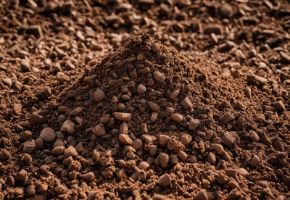
After a disturbance event (fire, landslide, abandoned area), the soil is often sterile, nutrient-poor, and with low water retention capacity. The first organisms to establish are saprotrophic fungi and some lichens, which, thanks to their extracellular enzymes, begin to degrade rock and residual organic matter. These pioneer fungi, such as species of the genera Aspergillus and Penicillium, secrete organic acids that solubilize minerals (phosphates, potassium, calcium), making them available for future plants.
A surprising fact: a study published in Soil Biology and Biochemistry (2021) showed that in post-fire soils, fungal biomass increases by over 300% within the first 60 days, anticipating the appearance of the first herbaceous plants by weeks. This "underground army" creates the chemical-physical conditions for germination, modifying pH and aggregating soil particles into stable microaggregates.
For growers, understanding this phase is crucial: the addition of selected fungal inocula can accelerate the recovery process. On NaturNext.eu, you can find substrates enriched with saprophytic fungal spores, ideal for initiating succession in challenging environments.
2. Saprophytic fungi and decomposition: the humus factory
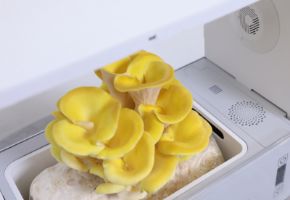
As the first pioneer plants (mosses, ferns, grasses) appear, the amount of litter and dead roots increases. This is where saprophytic fungi, nature's true recyclers, come into play. Species such as Pleurotus ostreatus, Stropharia rugosoannulata, and many agaricales produce an enzymatic arsenal (lignin-peroxidase, manganese-peroxidase, laccase) capable of depolymerizing lignin and cellulose, transforming plant debris into stable humus rich in humic substances.
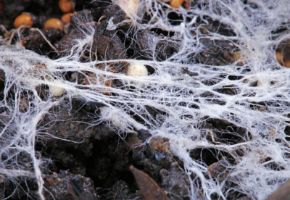
This activity is not marginal: it is estimated that in a temperate forest, saprophytic fungi degrade about 70% of the annual litter, releasing up to 150 kg of organic carbon per hectare each year. Moreover, their mycelium acts as a "biological glue," enveloping soil particles and improving structure and aeration. Well-aggregated soil retains water better and promotes root development.
For those who wish to mimic this process in the garden or on a small scale, NaturNext.eu offers saprophytic fungi starters for composting – a tool that accelerates the transformation of organic matter into fertile humus.
3. Mycorrhizae: the alliance that changes the game in succession
When vascular plants (perennial herbs, shrubs, trees) begin to compete for resources, ecological succession accelerates thanks to mycorrhizae. These symbioses between fungi and roots are among the oldest and most widespread on Earth: over 80% of terrestrial plants are involved. Ectomycorrhizal fungi (e.g., Boletus, Lactarius, Pisolithus) and arbuscular mycorrhizal fungi (Glomeromycota) extend the plant root system by a factor of 10-100, exploring soil volumes otherwise inaccessible.
In exchange for photosynthetic sugars, fungi provide plants with water, nitrogen, phosphorus, and micronutrients (zinc, copper, iron). This exchange is so efficient that mycorrhizal plants can survive in soils where non-mycorrhizal plants die. In ecological succession, the appearance of mycorrhizal fungi marks the transition from pioneer communities to intermediate communities, with greater biodiversity and productivity.
Numerous studies (including a 2022 meta-analysis in New Phytologist) confirm that plants associated with ectomycorrhizal fungi have a 45% higher survival rate in the first three years of growth compared to plants without symbionts. For foresters and nursery workers, targeted inoculation with selected fungal strains has become an increasingly common practice.
4. Fungi and soil: data, statistics, and case studies
To understand the real impact of fungi in ecological succession, it is useful to analyze some quantitative data. The following table summarizes the results of three studies conducted in different ecosystems, comparing key soil parameters in areas with and without fungal inoculation.
| Parameter | Non-inoculated soil | Soil with saprophytic fungi + mycorrhizae | Improvement (%) |
|---|---|---|---|
| Organic carbon (g/kg) | 12.4 | 28.9 | +133% |
| Available phosphorus (mg/kg) | 8.1 | 24.6 | +204% |
| Water-stable aggregates (%) | 34% | 72% | +112% |
| Microbial biomass (µg C/g) | 236 | 589 | +149% |
These data clearly show that the presence of an active fungal community accelerates the formation of fertile soil, increasing nutrient availability and physical structure – essential elements for the establishment of more demanding plant species.
An emblematic case study is that of the Białowieża Forest in Poland, where after a bark beetle epidemic, areas treated with Pisolithus tinctorius inocula showed a 68% regeneration of Scots pine seedlings in two years, compared to 22% in control areas. Similar interventions are now being replicated in reforestation projects in Italy, from the Alps to the Mediterranean Macchia.
5. Practical applications for growers, researchers, and hobbyists
Knowledge of fungi-driven ecological succession processes opens up highly interesting operational scenarios. For nursery workers and foresters, the use of mycorrhizal plants in nurseries is now an established practice that reduces post-transplant mortality and improves growth. For vegetable growers, the addition of saprophytic fungi to compost or mulch accelerates mineralization and provides a gradual supply of nutrients.
Hobbyists and amateur mycologists can experiment with cultivating fungal species that play a key role in succession, such as Stropharia rugosoannulata (known as the "garden giant" or "mulch mushroom") or Agaricus blazei, which, besides being edible, actively contribute to humus formation.
Finally, for researchers and students, monitoring the fungal community through environmental DNA (eDNA) techniques is revolutionizing the understanding of successions. The data collected allows for the modeling of increasingly targeted ecological restoration interventions.
❓ FAQ – Frequently asked questions about ecological succession and fungi
The fungal kingdom is an ever-evolving universe, with new scientific discoveries emerging every year about their extraordinary benefits for gut health and overall well-being. From today on, when you see a mushroom, you will no longer think only of its flavor or appearance, but of all the therapeutic potential it holds within its fibers and bioactive compounds. ✉️ Stay connected - Subscribe to our newsletter to receive the latest studies on: Nature offers us extraordinary tools to take care of our health. Fungi, with their unique balance between nutrition and medicine, represent a fascinating frontier that we are only beginning to explore. Keep following us to discover how these extraordinary organisms can transform your approach to well-being.Continue your journey into the world of fungi