




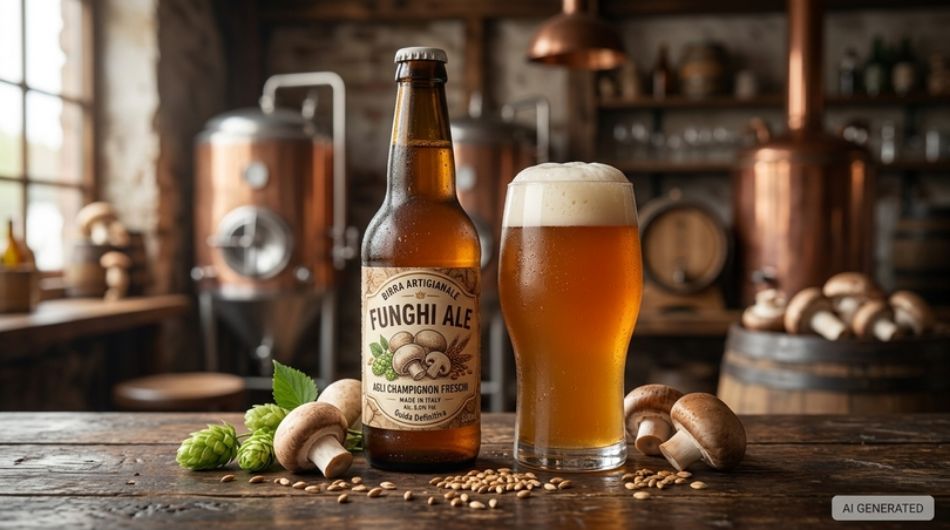
Welcome to a fascinating journey that combines the millennia-old tradition of craft beer with the still largely unexplored universe of mushrooms. In this article, we will delve into how fresh champignons can radically transform the aromatic profile of a craft beer, creating sensory experiences that are truly unique. Whether you are a novice homebrewer, an expert sommelier, a mushroom grower, or simply curious, you will find in these pages all the information you need to understand, produce, and appreciate this innovative frontier of fermentation.
Craft beer with champignons represents one of the most interesting trends in the contemporary brewing industry, capable of combining earthy flavors, umami notes, and an aromatic complexity that defies every convention. In a landscape where craft beer is now an undisputed protagonist of conscious consumption, the addition of fresh mushrooms opens up unprecedented scenarios for those seeking authentic and local flavors. Through market data, technical analysis, and practical advice, we will guide you step by step in discovering this fascinating synergy between yeasts, hops, and mycelium.
The craft beer sector in Italy has experienced exponential growth in recent years, with over 1,200 active independent breweries and steadily increasing per capita consumption. According to Unionbirrai data, the Italian craft beer market is worth over 500 million euros, with annual production exceeding 2 million hectoliters. In this context, innovation is the key to standing out, and craft beer with fresh champignons stands as one of the most promising frontiers for the future of the sector. Craft beer is not just a beverage, but a true cultural movement that involves producers, consumers, and researchers in an ongoing dialogue.
In this article...
1. Introduction to craft beer with fresh champignons
Craft beer has always been a product in constant evolution, capable of adapting to unusual ingredients and innovative production techniques. In recent years, brewers' attention has shifted toward the kingdom of fungi, and in particular toward fresh champignons, for their ability to bring earthy notes, umami, and surprising aromatic depth. Craft beer with fresh champignons is not just a passing fad, but a true revolution in the world of fermentation, which is winning over enthusiasts, sommeliers, and researchers throughout Italy and around the world. In an era when consumers are increasingly attentive to quality and product origin, craft beer represents a concrete response to the demand for authenticity and transparency.
This article aims to explore every aspect of this fascinating combination, from the definition of craft beer to production processes, from food pairings to the most creative recipes. Craft beer is a complex universe that deserves to be thoroughly understood, and the addition of fresh champignons represents one of the most interesting frontiers for anyone wishing to experiment with new flavors. Whether you are a hobbyist, grower, researcher, or simply an enthusiast, you will find in this guide all the information you need to approach this world with competence and curiosity. Craft beer with fresh champignons is an invitation to rediscover the deep link between nature and fermentation, between earth and hops, between tradition and innovation.
2. What is craft beer? Definition and characteristics
When we speak of craft beer, we mean a product made by small independent breweries, which follow traditional methods and use high-quality ingredients. Craft beer is distinguished from industrial beer by a series of fundamental characteristics: production in small batches, attention to raw materials, the brewer's creative freedom, and the absence of chemical additives or preservatives. Craft beer is therefore a living product, in constant evolution, reflecting the personality and philosophy of its producer. In Italy, the definition of craft beer was officially established by Law 135/2016, which sets out the requirements for being able to use this designation.
Definition of craft beer
According to the official definition given by Unionbirrai, craft beer is a beverage obtained from the fermentation of barley malt wort and/or other cereals, with the addition of hops, yeast, and water, produced by independent breweries that do not exceed 200,000 hectoliters per year and are not controlled by large industrial groups. Craft beer must also be unfiltered and unpasteurized, in order to best preserve its organoleptic qualities. These requirements guarantee consumers an authentic product, tied to the territory and to the brewer's expertise.
Difference between craft and industrial beer
The main difference between craft beer and industrial beer lies in the production process and the ingredients used. While industrial beer focuses on standardization and economies of scale, craft beer prioritizes quality, variety, and experimentation. Craft beer is often unfiltered and unpasteurized, which gives it a richer and more complex flavor, as well as a greater presence of yeasts and natural sediments. Industrial beer, on the other hand, is filtered and pasteurized to ensure a longer shelf life and a uniform taste in every batch.
Moreover, craft beer is produced in limited batches, often with local and seasonal ingredients, while industrial beer uses standardized raw materials and automated processes. Craft beer is therefore a unique, unrepeatable product that tells a story and a territory, while industrial beer is a mass product, designed to be identical to itself anywhere in the world. This difference is also reflected in price: craft beer costs on average between 6 and 12 euros per liter, compared with 1-2 euros for industrial beer.
Distinctive characteristics of craft beer
The characteristics that make craft beer unique are many. First of all, the quality of the ingredients: barley malt, hops, yeast, and water, but also fruit, spices, aromatic herbs, and indeed mushrooms such as fresh champignons. Craft beer also stands out for its variety of styles, ranging from IPAs to stouts, from lagers to weiss, up to original creations such as champignon beer. Each style has its own peculiar characteristics, which are reflected in color, aroma, taste, and alcohol content.
Another fundamental characteristic of craft beer is its versatility in cooking and food pairings. Craft beer can accompany dishes based on meat, fish, cheese, vegetables, and even bruschetta and appetizers. Its aromatic complexity makes it perfect for anyone wishing to experiment with new flavors and unexpected combinations. In addition, craft beer is often the protagonist of events and festivals, which help spread the culture of conscious drinking and create a community of enthusiasts.
3. The production process of craft beer
The production of craft beer follows a well-defined process, which includes several fundamental stages: malting, milling, mashing, boiling, fermentation, maturation, and bottling. Each stage is crucial for obtaining a high-quality craft beer, and the addition of fresh champignons requires specific precautions to preserve the aromas and flavors of the mushrooms. Milling the malt serves to break the grains and expose the starches, which will then be converted into sugars during mashing.
The main stages of production
Craft beer with fresh champignons is obtained by adding the mushrooms, previously cleaned and sliced, during the boiling or fermentation stage. This allows the earthy and umami notes to be extracted at their best, integrating perfectly with the malty and hoppy notes of the craft beer. Boiling generally lasts 60-90 minutes and serves to sterilize the wort, extract aromas from the hops, and coagulate proteins. During this phase, the addition of fresh champignons releases their characteristic aromas, which bind to the molecules of the wort.
Fermentation and maturation
Fermentation is the beating heart of craft beer production. It is during this phase that yeasts transform the sugars in the wort into alcohol and carbon dioxide, giving life to craft beer as we know it. For champignon beer, fermentation can be carried out with specific yeasts that enhance the earthy notes of the mushrooms, or with wild yeasts, to obtain an even more complex aromatic profile. The fermentation temperature varies depending on the style: top-fermented beers (ales) ferment at 18-24°C, while bottom-fermented beers (lagers) ferment at 8-12°C.
After fermentation, craft beer is left to mature for several weeks, during which further aromas develop and flavors stabilize. Craft beer with fresh champignons requires careful maturation, to prevent the fungal notes from becoming too invasive and to ensure a perfect balance among all ingredients. Maturation can take place in stainless steel, wood, or in the bottle, and the choice of container profoundly influences the final profile of the craft beer.
Innovations in the production process
In recent years, craft beer has seen the introduction of numerous innovations, such as the use of native yeasts, the addition of unusual ingredients, and the adoption of alternative fermentation techniques. Craft beer with fresh champignons represents one of these innovations, and is attracting the attention of brewers and researchers around the world. Among the most interesting techniques is mixed fermentation, which combines yeasts and lactic acid bacteria to obtain acidic and complex flavors.
Another important innovation is the use of modern equipment, such as stainless steel fermenters and temperature control systems, which make it possible to obtain higher-quality craft beer. Craft beer is therefore a product in constant evolution, benefiting from technological progress without losing its artisanal soul. The use of fresh champignons is also part of this trend toward innovation, and represents a frontier that is still largely unexplored.
4. Ingredients and recipes with champignons
The base ingredients of craft beer are four: water, barley malt, hops, and yeast. To these, special ingredients can be added, such as fruit, spices, aromatic herbs, and mushrooms.
The base ingredients of craft beer
Craft beer with fresh champignons uses high-quality fresh mushrooms, selected for their aroma and their ability to integrate with the beer's profile. Water makes up 90-95% of the beer's composition, and its quality directly affects the final taste.
Barley malt is the heart of craft beer, and its choice profoundly influences the beer's color, body, and flavor. Hops, on the other hand, provide bitterness and aromas, and their variety determines the style of the craft beer. Yeast is responsible for fermentation and helps define the final aromatic profile. For champignon beer, it is essential to choose neutral or slightly fruity yeasts that do not cover the earthy notes of the mushrooms.
How to use fresh champignons in beer
Using fresh champignons in craft beer requires some precautions. First of all, the mushrooms must be very fresh and of high quality, preferably locally grown or, even better, from home cultivation. Craft beer with fresh champignons can be produced by adding the mushrooms during boiling, to extract the most intense aromas, or during fermentation, to obtain more delicate and complex notes. The choice of when to add them depends on the desired aromatic profile.
The amount of champignons to use depends on the style of craft beer and the desired aromatic profile. Generally, it is recommended to use about 200-300 grams of fresh mushrooms per 20 liters of beer, but it is always good to experiment and adapt the doses to your personal taste. Craft beer with fresh champignons is a versatile product that can be customized in infinite ways. It is important to remember that the mushrooms must be cleaned thoroughly and cut into thin slices, to maximize the surface area in contact with the wort.
Traditional and innovative recipes
There are many recipes for craft beer with fresh champignons, ranging from more traditional versions to more innovative ones. A classic recipe calls for the use of fresh champignons, light barley malt, Saaz hops, and yeast for top-fermented beers. The result is a craft beer with a golden color, earthy notes, and a balanced bitter finish. The alcohol content is around 5-6% ABV.
For a more innovative version, fresh champignons can be used together with spices such as black pepper, rosemary, or thyme, to create a craft beer with a unique aromatic profile. Craft beer with fresh champignons can also be enriched with honey, cane sugar, or dried fruit, to obtain more complex and nuanced flavors. Another interesting idea is to use fresh champignons in a dark beer, such as a stout or porter, to create a contrast between the roasted notes of the malt and the earthy notes of the mushrooms.
5. Advantages and benefits of craft beer
One of the main advantages of craft beer is its superior quality. Craft beer is produced with high-quality ingredients and without the use of chemical additives, preservatives, or artificial flavorings.
Superior quality and taste
This translates into a richer, more complex, and more satisfying taste, which is rarely found in industrial beers. Moreover, craft beer with fresh champignons offers a unique sensory experience, thanks to the combination of earthy and umami notes with malty and hoppy notes.
In addition, craft beer is often produced in small batches, which guarantees greater attention to detail and stricter quality control. Craft beer is therefore not only a beverage, but a true sensory journey that involves all the senses and invites the discovery of new flavors and aromas.
Sustainability and support for small producers
Choosing craft beer also means supporting small local producers and promoting sustainable practices. Craft beer is often produced by independent breweries, which use local ingredients and low-impact techniques. Moreover, craft beer with fresh champignons can be produced using mushrooms grown at home, further reducing the ecological footprint. Short supply chains and ingredient seasonality are fundamental values for craft beer producers.
Another advantage of craft beer is its ability to create community and promote the culture of conscious drinking. Craft beer is often the protagonist of events, festivals, and tastings, which make it possible to meet other enthusiasts and discover new beers. Participating in these events is a way to support local producers and immerse oneself in the culture of craft beer.
Health benefits
Although craft beer is not a health product, moderate consumption can have some health benefits. Craft beer contains antioxidants, B-group vitamins, and minerals, which can contribute to general well-being. Moreover, craft beer with fresh champignons can provide the benefits of mushrooms, which are rich in fiber, protein, and bioactive compounds. Mushrooms, in particular, are known for their beta-glucan content, which supports the immune system.
It is important to emphasize that craft beer should be consumed in moderation and that health benefits are linked to responsible consumption. Craft beer is first and foremost a beverage to be enjoyed and shared, not a dietary supplement. Excessive alcohol consumption carries health risks, so it is essential to drink consciously and in moderation.
6. Food pairings and bruschetta
Craft beer with fresh champignons pairs perfectly with mushroom-based dishes, such as risottos, tagliatelle with porcini mushrooms, or simply grilled mushrooms.
Pairings with mushroom-based dishes
Craft beer enhances the earthy notes of mushrooms and creates a unique combination of flavors. Mushroom bruschetta are also an ideal pairing: quick bruschetta for aperitivo, oven-baked bruschetta, or tasty autumn bruschetta can perfectly accompany a craft beer with champignons. The fundamental rule is that the beer should have a structure and aromatic intensity similar to those of the dish.
For those who love to experiment, craft beer with fresh champignons can also be paired with meat dishes, such as burgers, sausages, or roasts, or with aged cheeses. Craft beer is a versatile product that adapts to many consumption occasions. For example, a craft beer with champignons can accompany a board of cured meats and cheeses, or a plate of pasta with ragù.
Bruschetta recipes to accompany craft beer
Bruschetta is a simple and tasty appetizer, perfect for accompanying craft beer. Here are some ideas: bruschetta with tomatoes and basil, oven-baked bruschetta with mushrooms and cheese, tasty autumn bruschetta with pumpkin and speck, quick winter bruschetta with lard and rosemary. Craft beer with fresh champignons pairs particularly well with mushroom bruschetta, which enhance its earthy notes. Tasty bruschetta recipes can be prepared in a thousand different ways, depending on tastes and seasons.
To prepare simple bruschetta recipes, simply toast slices of rustic bread, rub them with garlic, and dress them with extra virgin olive oil, salt, and your favorite ingredients. Craft beer can be served as an accompaniment, or used as an ingredient to marinate mushrooms or to prepare sauces and condiments. Bruschetta ideas are endless: you can range from classic bruschetta with tomato and basil to gourmet bruschetta with refined ingredients.
How to serve craft beer
To fully appreciate craft beer, it is important to serve it at the right temperature. Light and delicate beers, such as lagers and pilsners, should be served at 4-6°C, while dark and full-bodied beers, such as stouts and double malts, at 8-12°C. Craft beer with fresh champignons, having a complex aromatic profile, is served at a temperature of about 8-10°C. Serving temperature is fundamental to enhancing the aromas and taste notes of craft beer.
It is also important to use the right glass: a goblet or a pint glass, which allow you to best appreciate the aromas and foam of craft beer. Craft beer should be poured slowly, to avoid dispersing the bubbles and to form a compact and persistent head. A clean glass without detergent residue is essential to ensure perfect foam and an uncontaminated taste.
7. NaturNext products for growing mushrooms
To produce craft beer with fresh champignons, it is essential to have high-quality mushrooms. NaturNext.eu offers a wide range of products for home mushroom cultivation, ideal for hobbyists, growers, and researchers. With NaturNext cultivation kits, you can grow your own fresh champignons at home, guaranteeing maximum freshness and quality. Home mushroom cultivation is a fascinating and sustainable activity that allows you to always have fresh mushrooms available for your recipes and your beers.
NaturNext products include cultivation kits, ready-to-use substrates, and high-quality mycelium. By using these products, you can obtain fresh and healthy mushrooms, perfect for producing craft beer with champignons. In addition, NaturNext offers guides and technical support to help customers achieve the best results. Choosing quality mushrooms is the first step to obtaining an excellent craft beer with champignons.
Choosing NaturNext products means relying on a leading company in the sector, which guarantees quality, safety, and sustainability. Craft beer with fresh champignons starts with choosing the right mushrooms, and with NaturNext you can have the best. Visit the NaturNext.eu website to discover all available products and to begin your journey into the world of mushroom cultivation and craft beer.
8. Frequently asked questions (FAQ)
| What is bruschetta good for? |
| What is craft beer? |
| How is craft beer made? |
| What is the best Italian craft beer? |
| Where to buy craft beer online? |
9. The future of craft beer passes through mushrooms
Having reached the end of this journey into the world of craft beer with fresh champignons, it is time to take stock and look to the future with renewed enthusiasm. Craft beer today represents not only a product of excellence, but a true cultural phenomenon that continues to evolve and surprise. The addition of fresh champignons to a craft beer is not a simple commercial gimmick, but the result of careful and passionate research, which unites the Italian brewing tradition with an ingredient of a thousand properties such as the mushroom. Craft beer with fresh champignons perfectly embodies the spirit of the craft movement: experimentation, territoriality, quality, and sharing.
We have seen how craft beer differs from industrial beer through its production in small batches, the use of high-quality ingredients, and the absence of chemical additives. We explored the production process, from milling the malt to maturation, discovering how each stage is crucial to obtaining an excellent craft beer. We analyzed the ingredients, traditional and innovative recipes, and the many benefits of craft beer, from qualitative, environmental, and even health perspectives. And we dedicated ample space to food pairings, with particular attention to bruschetta, which represent one of the most versatile and appreciated appetizers to accompany a good craft beer.
The role of NaturNext.eu in this journey is fundamental. To produce a superior-quality craft beer with fresh champignons, it is essential to start with excellent mushrooms, and the cultivation kits, substrates, and mycelium offered by NaturNext represent the ideal choice for hobbyists, growers, and researchers. Craft beer with fresh champignons starts with choosing the right mushrooms, and with NaturNext you can have the best. We invite you to visit NaturNext.eu to discover all available products and to begin your journey into the world of mushroom cultivation and craft beer.
Ultimately, craft beer with fresh champignons represents a fascinating frontier that is still largely unexplored. Whether you are a novice homebrewer, an expert sommelier, a mushroom grower, or simply an enthusiast, this guide is intended as a starting point to delve deeper, experiment, and, why not, create your own personal version of craft beer with champignons. The future of craft beer passes through nature, creativity, and passion: and mushrooms, with their extraordinary potential, are ready to play a leading role. Craft beer is an invitation to rediscover the deep link between earth and fermentation, between tradition and innovation. Cheers and happy tasting!
This article was developed with the support of artificial intelligence and subsequently reviewed, corrected, and validated by the technical team of NaturNext.eu, which guarantees its reliability and compliance with official sources.
The kingdom of mushrooms is an ever-evolving universe, with new scientific discoveries emerging every year about their extraordinary benefits for intestinal health and general well-being. From now on, when you see a mushroom, you will no longer think only of its flavor or appearance, but of all the therapeutic potential contained in its fibers and bioactive compounds. ✉️ Stay connected - Subscribe to our newsletter to receive the latest studies on: Nature offers us extraordinary tools to take care of our health. Mushrooms, with their unique balance between nutrition and medicine, represent a fascinating frontier that we are only beginning to explore. Keep following us to discover how these extraordinary organisms can transform your approach to well-being.Continue your journey into the world of mushrooms