


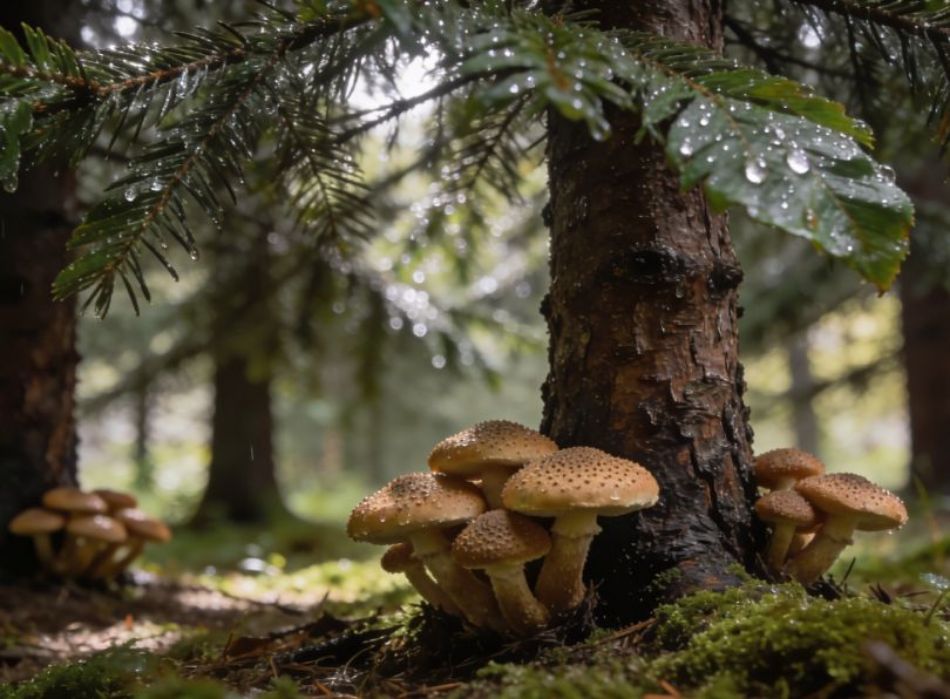
When we talk about coniferous trees, we're not just referring to a type of vegetation. We're talking about an entire ecological universe. Needle-leaved plants (conifers such as pine, fir, larch, and spruce) dominate cold and mountainous zones, creating an extreme habitat: acidic soils, slow-decomposing needle litter, and shady microclimates. In this harsh environment, a highly specialized fungal community has evolved. Fungi of coniferous forests are not a natural accident, but the result of millions of years of coevolution. Without these fungi, coniferous forests simply would not exist.
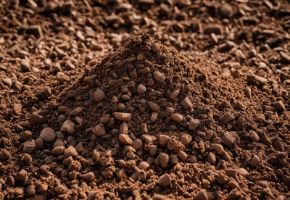
Meaning of "aghifoglie" (coniferous): "needle-shaped leaves". In mycology, synonymous with acidic mycorrhizal symbiosis. Needles, rich in resin and lignin, create a "mor" type humus, poor in bases. Only the most resilient fungi survive here.
Coniferous types and associated trees: The fungal habitat
Not all coniferous trees host the same fungi. Symbiotic specificity is a strict rule. Below is a table of the main host trees and their characteristic fungi.
Main coniferous trees and their symbolic fungi
| Tree (coniferous) | Needle type | Typical symbiotic fungus | Edibility |
|---|---|---|---|
| Norway Spruce (Picea abies) | Short, rigid needles, square cross-section | Russula emetica, Lactarius deterrimus | Toxic / requires cooking |
| Scots Pine (Pinus sylvestris) | Long needles, 2 per fascicle | Boletus pinophilus, Suillus luteus | Excellent |
| European Larch (Larix decidua) | Soft needles, deciduous in winter | Suillus grevillei, Hygrophorus speciosus | Good |
| Silver Fir (Abies alba) | Flattened needles, two white lines | Tricholoma pardinum | Toxic |
Coniferous characteristics: how they influence fungi
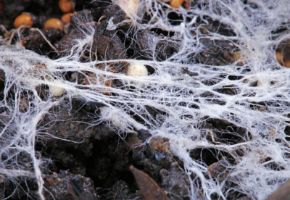
The main coniferous characteristics: waxy, resinous cuticle (difficult for bacterial attack; true decomposer fungi), constant shade, and acidic soil (pH 3.5–5.5). These favor genera such as Russula, Lactarius, Cortinarius, and Suillus. The needle litter creates an ideal gradient for hypogeal mycelia.
Coniferous fungi: the specialized community
We're talking about coniferous fungi (or fungi of conifers): mycorrhizal symbionts and saprotrophs. The former are inseparable from the tree; the latter grow on fallen needles.
Obligate mycorrhizal fungi (grow ONLY under conifers)
| Scientific name | Common name | Host tree | Price per kg (€) Italy | Rarity |
|---|---|---|---|---|
| Suillus luteus | Slippery Jack | Pine | 20–30 € | Common |
| Suillus granulatus | Weeping Bolete | Pine | 15–25 € | Common |
| Lactarius deliciosus | Saffron Milk Cap | Pine / Fir | 30–50 € | Medium |
| Gomphidius glutinosus | Sticky Spike | Fir/Pine | 0 € (not commercial) | Medium |
| Boletus pinophilus | Pine Bolete | Pine >50 years | 80–120 € | Rare |
| Cortinarius caperatus | Gypsy Mushroom | Pine/Larch | 40–60 € | Medium |
Saprotrophic fungi (grow on fallen needles)
Marasmius androsaceus (black foot), Mycena galopus (black milk), Gymnopus androsaceus – true primary decomposers of the resinous cuticle. Essential for litter recycling.
Coniferous trees: where are they found?
It's not enough to say that conifers are found in the mountains. Precise altitudinal zones determine the fungal community.
Distribution by altitudinal zone
Hills (300-800 m): Stone pines, Suillus luteus, Lactarius sanguifluus.
Mountains (800-1,600 m): Realm of Norway spruce and larch. Here you find Cortinarius varius, Hygrophorus pudorinus.
Subalpine (1,600-2,100 m): Mountain pine, hardy fungi like Arrhenia lobata, very short season.
The case of larch: the only conifer that loses its needles
In autumn, falling needles create a warm, humid microclimate. Under larch, Calocybe gambosa (St. George's Mushroom) grows to double its usual size. Evergreen coniferous trees (pine, fir) support fungi until December.
How to recognize conifer species from fungi (and vice versa)
If you're wondering about the difference between pine and fir, we can simplify by stating that Pine has needles in fascicles and hard cones. Fir: single needles on cushion-like shoots, upright cones that disintegrate. Here's a summary table for mycologists:
| Characteristic | Pine | Fir | Larch |
|---|---|---|---|
| Needles | Long (>5 cm), in fascicles | Short (<3 cm), single | Soft, in rosettes |
| Cone | Woody, takes years to open | Upright, disintegrates on tree | Small, falls intact |
| Indicator fungus | Suillus bovinus | Rozites caperatus | Suillus grevillei (yellow) |
If you're wondering about the difference between conifers and needle-leaved trees, we can state there is none in practical botanical terms: all needle-leaved trees are conifers. "Coniferous" specifically refers to trees with needle-shaped leaves (pine, fir, larch).
However, when asking about the difference between conifers and broadleaf trees: broadleaf trees have wide leaves, neutral-to-basic soil, and rapid decomposition; conifers have acidic soil, slow litter decomposition, and fungi such as Suillus, Cortinarius.
Coniferous examples and which plants are coniferous
Coniferous examples: Scots Pine, Norway Spruce, Larch, Spruce, Juniper (shrub), Yew (toxic to fungi).
Which plants are coniferous: all conifers with needle-shaped leaves.
List of coniferous trees: Pinus nigra, Picea excelsa, Abies alba, Larix decidua.
Coniferous plant names for mycologists
Pinus strobus (Eastern White Pine) hosts Lactarius vinaceorufescens; Picea sitchensis hosts Russula xerampelina (shrimp-like odor).
Frequently Asked Questions (FAQ) – Meaning and curiosities about conifers
Below we report some of the most frequent questions from our readers. Although our blog focuses on the world of fungi, this necessarily involves exploring the habitats where they live and the other plant species with which they coexist.
Summary table of search values (SEO market data)
| Keyword | Monthly Volume (Italy) | CPC (€) | Competition | Intent |
|---|---|---|---|---|
| Coniferous trees | 1,900 | 0.02 | 100% | Informational |
| Coniferous trees | 170 | 0.06 | 80% | Informational |
| Needle-leaved plants | 140 | 0.08 | 70% | Informational |
| Coniferous examples | 70 | 0.00 | 60% | Informational |
| Coniferous meaning | 70 | 0.00 | 50% | Informational |
| Coniferous types | 50 | 0.00 | 60% | Informational |
| Coniferous fungi | 10 | 0.02 | 60% | Transactional |
| Which plants are coniferous | 10 | 0.02 | 60% | Informational |
Why the fungal community of conifers is irreplaceable
Fungi of coniferous forests are not a byproduct of the woods: they are the forest's digestive system. Without Suillus and Lactarius, pines could not absorb phosphorus; without Mycena, needles would accumulate in meter-thick layers. When you search for "where are conifers found", remember you're protecting a fragile ecosystem threatened by global warming. In summary, for mushroom foragers:
- Go under pines for Porcini and Saffron Milk Caps.
- Under firs for Gypsy Mushrooms and Wood Blewits.
- Under larches for Larch Bolete.
- Search the edges between coniferous and broadleaf forests: maximum biodiversity.
If you're finally wondering what tree a conifer is, simply put, a conifer is a tree that produces cones (e.g., pine cones). And almost all conifers present in Italy are needle-leaved. Now you know what to look for, where to go, and which fungi to expect. Happy exploring to all! 🍂🍄
This article was developed with the support of artificial intelligence and subsequently reviewed, corrected, and validated by the NaturNext.eu technical team, which guarantees its reliability and compliance with official sources.