


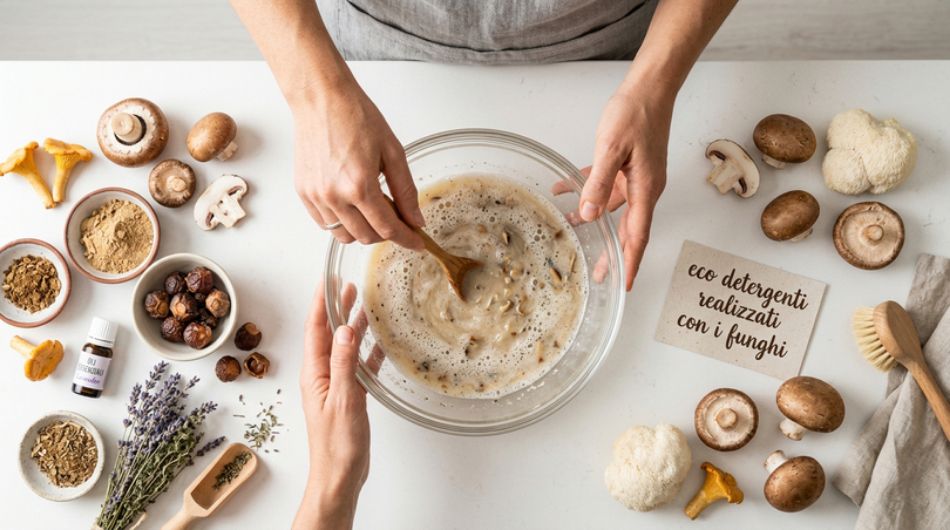
Cleaning with mushrooms represents one of the most fascinating revolutions in the field of ecological detergency and sustainable home cleaning. When we decide to clean our home environments, we rarely think that the fungal kingdom could offer concrete solutions to clean in a natural, effective, and ecosystem-friendly way. This article explores in depth how and why cleaning with mushrooms is becoming an increasingly widespread practice among researchers, growers, mycology enthusiasts, and simple hobbyists who want to clean their homes without resorting to harsh chemicals.
Cleaning has never been so akin to nature. From understanding the biological mechanisms that make cleaning mushrooms so effective, to the practical realization of a DIY mushroom detergent, we will review every aspect of this emerging discipline, integrating scientific data, market statistics, testimonials, and academic research. The goal is simple: to demonstrate that cleaning with mushrooms is not a utopia, but a concrete reality, accessible to anyone who wants to clean in harmony with the environment.
In this article...
Why clean: the necessity behind domestic well-being
Cleaning is a fundamental activity that has accompanied humanity for millennia, but the reasons why we decide to clean go far beyond simple visual aesthetics. Cleaning means removing pathogens, allergens, fine dust, chemical residues, and pollutants that constantly accumulate on household surfaces. When we do not clean adequately, these elements can cause allergic reactions, respiratory problems, skin irritations, and a general degradation of indoor quality of life. The decision to clean your home regularly is therefore an act of health prevention, not just a matter of aesthetic order.
The evolution of the need to clean in human history
Cleaning has always played a central role in human survival. From early agricultural communities that had to clean their tools to prevent decay, to Roman civilizations that developed sophisticated techniques to clean baths and homes, the act of cleaning evolved in parallel with our understanding of hygiene and health. In the Middle Ages, the tendency to clean decreased due to cultural and religious factors, but plague epidemics forced humanity to rediscover the importance of cleaning living environments. Today, science tells us that cleaning reduces the bacterial load on household surfaces by 60-80%, a figure that alone justifies why cleaning must be a daily priority.
The concrete risks of not cleaning
When we neglect to clean, the consequences manifest tangibly. Bacteria such as Escherichia coli, Staphylococcus aureus, and Salmonella can proliferate on uncleaned surfaces within 24-48 hours. Molds, close relatives of the mushrooms we are exploring in this article, find fertile ground in humid and uncleaned environments, releasing spores that can cause asthma, allergic rhinitis, and lung infections. Cleaning is therefore not optional: it is a medical and hygienic necessity. Studies conducted by the Italian Istituto Superiore di Sanità show that homes cleaned regularly have a 40% lower rate of respiratory diseases compared to those not cleaned with due frequency. Learning to clean properly is the first step towards a healthy home environment.
How often should you clean?
The frequency of cleaning depends on multiple factors: number of inhabitants, presence of pets, geographical location, seasonality, and type of activity carried out at home. In general, experts recommend cleaning high-contact surfaces (handles, worktops, tables) at least once a day, while deeper cleaning should be done weekly. Cleaning floors at least twice a week, cleaning bathrooms daily, and cleaning kitchens after each significant use are standard recommendations. Those who decide to clean with mushrooms or eco-detergents can increase the frequency of cleaning without any health risks, precisely because these natural products do not release toxic residues on the treated surfaces.
Cleaning and indoor air quality
An often overlooked aspect when talking about cleaning is the direct link between home cleaning and the quality of the air we breathe. Dust particles that settle on surfaces are constantly recirculated by the movement of people, animals, and air currents. When we clean, we remove these particles at the source, significantly improving indoor air quality. According to the European Environment Agency, the air inside homes can be 2 to 5 times more polluted than outdoor air, and cleaning regularly with appropriate products is one of the most effective methods to reverse this trend. This further reinforces the idea that choosing how to clean is just as important as deciding to clean.
Why clean with natural products: the ecological turning point in detergency
Once established that cleaning is essential, the next question is: how to clean? For decades, the industry has offered only one answer: synthetic chemical detergents. Today we know that cleaning with natural products is not only possible, but often preferable in every respect: effectiveness, safety, environmental sustainability, and cost. The eco-detergent market is expanding globally, and cleaning with solutions derived from nature represents the future of domestic and professional detergency.
The hidden risks of conventional chemical detergents
When we choose not to clean with natural products, we expose ourselves to a series of risks documented by international scientific literature. Conventional detergents contain substances such as SLS (Sodium Lauryl Sulfate), phosphates, formaldehyde, chlorine, ammonia, and synthetic fragrances, all classified as potentially dangerous to human health and the environment. Cleaning with these products means releasing volatile organic compounds (VOCs) into the home air that can irritate the respiratory tract, cause headaches, worsen asthmatic conditions, and, in the long term, be associated with more serious pathologies. A study published in the American Journal of Respiratory and Critical Care Medicine has shown that people who regularly clean with chemical detergents suffer a decline in lung function equivalent to that of someone who smokes 20 cigarettes a day. This shocking data explains why more and more people are deciding to clean with natural products, eco-detergents, and biological solutions like cleaning mushrooms.
The environmental impact of not cleaning ecologically
Cleaning with chemical detergents harms not only the cleaner but the entire ecosystem. Wastewater containing residues of conventional detergents reaches rivers, lakes, and seas, where they alter aquatic ecosystems. Phosphates, for example, cause the eutrophication of waters, a process that leads to the proliferation of algae and the consequent reduction of dissolved oxygen, with devastating effects on fish fauna. According to the ISPRA Report on domestic wastewater, every Italian family that does not clean with eco-detergents releases an average of 15-20 kilograms of potentially toxic chemical substances into wastewater every year. Choosing to clean with mushrooms or other natural products means interrupting this chain of pollution at the source.
The eco-detergent market: numbers and trends
The transition towards ecological cleaning is a global phenomenon supported by unequivocal economic data. The global eco-detergent market reached a value of $17.3 billion in 2023, with a compound annual growth rate (CAGR) of 10.8% projected until 2030. In Italy, according to IRI Italia data, sales of products for cleaning with natural or organic formulations increased by 34% in the period 2020-2024. This figure indicates that millions of Italians have already chosen to clean differently, abandoning chemical detergents in favor of eco-detergents, mushroom detergents, and other sustainable solutions. The demand for cleaning products with natural ingredients now exceeds supply in many categories, creating opportunities for those who produce or prepare mushroom detergents independently.
| Year | Global eco-detergent market (billion $) | Annual growth % | Italy: eco-detergent sales (+%) |
|---|---|---|---|
| 2019 | 9.8 | 7.2% | +8% |
| 2020 | 11.5 | 17.3% | +22% |
| 2021 | 12.9 | 12.1% | +18% |
| 2022 | 14.6 | 13.2% | +26% |
| 2023 | 17.3 | 18.5% | +34% |
| 2024 (estimate) | 19.1 | 10.4% | +29% |
Why mushrooms represent the frontier of natural cleaning
Among all natural products available for cleaning, mushrooms occupy a unique and irreplaceable position. While vinegar, baking soda, and essential oils act mainly through chemical action (acidity, alkalinity, antibacterial properties of terpenes), cleaning mushrooms also act through biological enzymatic action. This means that cleaning mushrooms do not just remove dirt by dissolution, but actively decompose it through specific enzymes such as cellulases, laccases, peroxidases, and proteases. Cleaning with mushrooms is therefore a radically different approach: it does not mask dirt, it does not chemically dissolve it, but biodegrades it at the root. This explains why mushroom detergents are attracting the attention of researchers worldwide and why NatureNext.eu has included products linked to the fungal world among its proposals, which can also be used for ecological detergency purposes. On NatureNext.eu you can explore mushroom growing kits ideal for starting to produce your own cleaning mushrooms directly at home.
Which natural products to use for cleaning: a complete overview
Before delving into how to clean with mushrooms, it is useful to know the complete landscape of natural products available for cleaning. Natural detergency offers a surprisingly vast range of solutions, each with specific characteristics that make it suitable for cleaning certain surfaces or types of dirt. Understanding these alternatives is essential for those who want to abandon chemical detergents and clean consciously.
White vinegar: the timeless classic for cleaning
White vinegar is probably the most well-known natural product for cleaning. Its active ingredient, acetic acid (generally 5-6%), gives vinegar antibacterial, antifungal, and degreasing properties that make it versatile for multiple cleaning applications. Cleaning windows with vinegar diluted in distilled water is a practice passed down through generations. Vinegar is effective for cleaning limescale, hard water deposits, soap residues, and stainless steel surfaces. However, vinegar is not suitable for cleaning marble or natural stone surfaces, as its acidity can damage the surface. Compared to cleaning mushrooms, vinegar acts by chemical dissolution and not by enzymatic degradation, which makes it complementary rather than an alternative to cleaning mushrooms.
Baking soda: the universal ally for cleaning
Baking soda (sodium bicarbonate) is another pillar of natural detergency. Its slight alkalinity (pH about 8.3) makes it excellent for cleaning fats, oils, and acidic substances. Unlike aggressive chemical detergents, baking soda is gentle enough to be used for cleaning without damaging most household surfaces. To clean even more effectively, baking soda can be combined with vinegar (the effervescent reaction helps to loosen caked-on dirt) or with cleaning mushrooms for a synergistic action. When preparing a DIY mushroom detergent, baking soda can act as a gentle abrasive and pH regulator, enhancing the enzymatic action of cleaning mushrooms.
Essential oils: adding power when cleaning
Essential oils are not detergents in themselves, but represent a powerful natural supplement for those who want to clean with greater effectiveness. Tea tree essential oil (Melaleuca alternifolia) is one of the most powerful natural antibacterials known, with an efficacy comparable to that of some chemical disinfectants. Lavender essential oil adds antibacterial properties and a pleasant scent when cleaning. Lemon essential oil, in addition to antimicrobial properties, offers additional degreasing action thanks to limonene. When preparing detergents with mushrooms, the addition of essential oils can enhance the preserving effect of the solution and broaden the spectrum of action of cleaning mushrooms.
Citric acid: the alternative to vinegar for cleaning
Citric acid, naturally extracted from citrus fruits, is another excellent option for those who want to clean naturally. With a pH slightly lower than vinegar, citric acid is particularly effective for cleaning limescale and mineral deposits. Unlike vinegar, citric acid does not leave an unpleasant odor after cleaning, which makes it preferable for many household applications. In the preparation of mushroom detergents, citric acid can be used to regulate the pH of the solution and optimize the enzymatic activity of cleaning mushrooms.
Marseille soap: the soap base for natural cleaning
Marseille soap, traditionally made of olive oil, caustic soda, and seawater, is a natural detergent with a centuries-old history. To clean floors, fabrics, and surfaces, Marseille soap offers remarkable degreasing effectiveness without the risks of synthetic detergents. When combined with mushroom extracts, Marseille soap can act as a natural surfactant base for more complex mushroom detergents, creating stable emulsions that improve the ability to clean greasy surfaces.
Mushrooms: the revolutionary novelty for cleaning
Among all natural products for cleaning, mushrooms represent the true novelty of the sector. While other natural products act through chemical principles known for centuries (acidity, alkalinity, saponification), cleaning mushrooms introduce a completely new paradigm: the enzymatic biodegradation of dirt. Cleaning mushrooms produce a complex of enzymes (cellulases, laccases, manganese peroxidases, lignin peroxidases, proteases, lipases) capable of breaking down practically any type of organic substance. This means that cleaning with mushrooms is not just an ecological alternative to chemical detergents, but a qualitatively superior method for tackling certain types of dirt. In the next paragraphs we will explore in detail how and why cleaning with mushrooms really works.
Can you clean with mushrooms? The scientific answer
This is the fundamental question everyone asks when they first hear about cleaning mushrooms. The scientific answer, supported by dozens of studies published in peer-reviewed journals, is an unequivocal yes: you can actually clean with mushrooms, and in some cases the results are superior to those obtained with conventional chemical detergents. To understand how it is possible to clean with organisms that we commonly associate with food or, worse, decomposition, we must explore the biology of mushrooms with some depth.
Mycelium: the real cleaning machine
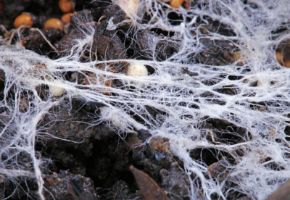
When we talk about cleaning with mushrooms, we are not referring to the fruiting body (the mushroom we see and eat), but to the mycelium, the filamentous network that constitutes the vegetative part of the fungus. The mycelium is literally a network of very thin filaments (hyphae) that expand into the substrate, secreting enzymes that decompose complex organic matter into simpler molecules that the fungus can absorb as nourishment. This process, which in nature serves the fungus to feed, can be exploited to clean: if the mycelium is able to decompose wood, dead leaves, and other complex materials, it is certainly able to decompose household dirt, which is largely composed of much simpler organic substances. Cleaning with mycelium therefore means using the same mechanism that nature uses to recycle organic matter in the woods.
Fungal enzymes: who really does the cleaning work
The secret of the mushrooms' ability to clean lies in their enzymes. Mushrooms produce an impressive enzymatic arsenal, with over 200 different types of enzymes identified in the most studied species. Among the most relevant for detergency we find:
| Enzyme | Function on dirt | Application for cleaning | Mushrooms that produce it |
|---|---|---|---|
| Cellulases | Break down cellulose | Clean plant residues, paper | Trametes versicolor, Pleurotus spp. |
| Laccases | Oxidize phenolic compounds | Clean colored stains, deodorize | Pleurotus ostreatus, Ganoderma spp. |
| Proteases | Break down proteins | Clean blood, egg, sweat stains | Agaricus bisporus, Pleurotus spp. |
| Lipases | Break down fats and oils | Clean kitchen grease, stains | Aspergillus spp., Rhizopus spp. |
| Manganese peroxidases | Oxidize complex organic compounds | Clean stubborn dirt, organic residues | Phanerochaete chrysosporium |
| Lignin peroxidases | Decompose lignin | Clean woody residues, tannins | Phanerochaete chrysosporium |
| Amylases | Break down starches | Clean starchy food residues | Aspergillus oryzae, Rhizopus spp. |
| Catalases | Decompose hydrogen peroxide | Clean oxidations, whiten | Many mushrooms |
As can be seen from the table, the enzymatic arsenal of mushrooms covers practically all categories of dirt we encounter when cleaning the house. This is the fundamental reason why cleaning with mushrooms is not a fanciful idea but a scientifically founded practice. Every time we clean using a mushroom detergent, we are deploying a real army of enzymes that work in synergy to decompose dirt at its molecular base.
Scientific studies demonstrating the cleaning ability of mushrooms
The scientific literature on the ability of mushrooms to clean and biodegrade polluting substances is vast and growing. A study published in "Biotechnology Advances" in 2022 documented how fungi of the genus Trametes are able to decompose up to 95% of synthetic industrial dyes within 72 hours, a result that no conventional chemical detergent can match without producing toxic by-products. Another research conducted by the University of Wageningen (Netherlands) demonstrated that Pleurotus ostreatus can degrade polycyclic aromatic hydrocarbons (PAHs), among the most polluting and difficult to clean, with an efficiency of 88% in 15 days. These studies, although conducted on an industrial scale, confirm the basic principle: cleaning mushrooms possess an intrinsic ability to clean and biodegrade that surpasses that of many synthetic chemical agents.
"White Rot Fungi": the absolute champions of cleaning
In the world of mycology applied to detergency, a category of mushrooms stands out clearly for the ability to clean: White Rot Fungi. These fungi, including Trametes versicolor, Phanerochaete chrysosporium, and Pleurotus ostreatus, are the only known organisms capable of completely decomposing lignin, one of the most complex and resistant organic polymers existing in nature. If a fungus is able to clean lignin from dead wood, imagine its ability to clean ordinary household dirt. White Rot Fungi produce a non-specific extracellular enzymatic system, which means they do not recognize just one substrate but can clean and decompose a vast range of molecules. This characteristic makes them exceptional as a base for mushroom detergents.
Trametes versicolor: the mushroom that knows how to clean everything
Trametes versicolor, also known as "turkey tail" for its colorful appearance, is one of the most studied mushrooms in the world for its biodegradative capabilities. This fungus produces laccases in exceptional quantities, enzymes that can oxidize and therefore clean an enormous range of organic and inorganic compounds. Studies have shown that Trametes versicolor can clean waters contaminated by phenols, degrade textile dyes, decompose pesticides, and even biotransform some drugs. For those who want to prepare a particularly powerful mushroom detergent, Trametes versicolor is probably the best choice.
Pleurotus ostreatus: the edible mushroom that cleans
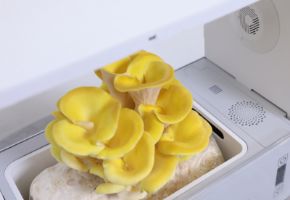
Pleurotus ostreatus, commonly known as the oyster mushroom, is a very common edible mushroom that possesses extraordinary cleaning properties. The ability of Pleurotus to clean derives from its nature as a secondary saprophytic fungus, which has evolved an enzymatic system capable of attacking and decomposing the lignin and cellulose of decaying wood. This means that when we use Pleurotus to prepare a DIY mushroom detergent, we are exploiting enzymes that nature has perfected over millions of years of evolution. The great advantage of Pleurotus is that it is easy to grow, cheap, and available in large quantities, which makes it the ideal choice for those who want to start cleaning with mushrooms without significant investments. Pleurotus growing kits on NatureNext.eu are an excellent starting point.
Why clean with mushrooms: the scientific, practical, and ecological reasons
Now that we have established that it is possible to clean with mushrooms, let's analyze in detail why doing so represents a smart choice from multiple profiles. Cleaning with mushrooms is not just a fad or an exercise in ecological style: there are concrete, measurable, and scientifically validated reasons that make cleaning mushrooms superior to conventional alternatives in many contexts.
Reason 1: superior effectiveness on complex organic dirt
When we have to clean complex organic dirt (food stains, animal or vegetable fats, protein residues, tannins from wine or coffee, molds), mushroom detergents offer an effectiveness that chemical detergents struggle to match. The reason is simple: while a chemical detergent tries to dissolve or emulsify dirt, the enzymes of cleaning mushrooms break it down into its basic molecular components. It's the difference between trying to move a wall and dismantling it brick by brick. To clean protein stains such as blood, eggs, or milk, fungal proteases are able to cut protein chains into peptides and amino acids, completely eliminating the stain without leaving halos. This level of specific effectiveness makes mushroom detergents particularly valuable in the kitchen, where organic stains are the norm.
Reason 2: total biodegradability of the product and cleaning residues
One of the most underestimated problems when cleaning with chemical detergents is what happens after we have cleaned. Synthetic surfactants, artificial fragrances, and chemical preservatives present in conventional detergents persist in the environment for weeks, months, or even years. When we clean with mushrooms, however, both the detergent itself and the residues of the cleaning (the material degraded from dirt) are completely biodegradable and are reabsorbed into the natural cycle without any negative impact. A mushroom detergent, after finishing its job of cleaning, decomposes into water, carbon dioxide, and fungal biomass, elements that the ecosystem can handle without any difficulty. This makes cleaning with mushroom detergents the most ecological of all.
Reason 3: safety for those who clean and those who live in the cleaned spaces
Cleaning with mushrooms completely eliminates the risks associated with exposure to toxic chemical substances. There are no irritating fumes to inhale while cleaning, no corrosive substances that can damage the skin of the hands, no toxic residues that remain on the surfaces after cleaning. This aspect is particularly relevant for families with young children (who touch cleaned surfaces and then put their hands in their mouths), for people with allergies or asthma, and for those who have pets that, in contact with surfaces cleaned with chemical detergents, can develop dermatitis or gastrointestinal problems. Cleaning with mushrooms makes home cleaning safe for all inhabitants of the domestic environment, human and non-human.
Reason 4: economy and autonomy in production
A practical aspect often overlooked when discussing cleaning with mushrooms is the cost. Preparing a DIY mushroom detergent costs a fraction of what is spent on equivalent chemical detergents. If you grow your own mushrooms, the cost of the starting material to prepare mushroom detergents is practically zero, because you can use the waste from cultivation or cooking. Saving on cleaning expenses does not mean giving up effectiveness: a properly prepared mushroom detergent cleans excellently at a negligible cost.
Reason 5: reduction of plastic waste
Cleaning with home-prepared mushrooms means eliminating the need to buy detergents packaged in plastic bottles. In Italy, it is estimated that each family consumes an average of 30-40 bottles of detergents per year, generating about 3-4 kg of plastic that is often not recycled correctly. Multiplying this figure by the 25 million Italian families, we get a mountain of plastic to clean that the environment cannot absorb. Preparing your own mushroom detergents in reusable containers (glass, steel) is a concrete gesture to reduce plastic waste linked to home cleaning.
Reason 6: mushrooms "adapt" to the dirt to be cleaned
A fascinating property of cleaning mushrooms is their enzymatic adaptation capacity. Mushrooms can "learn" to produce the enzymes needed to clean a certain type of dirt if exposed to it for a sufficient period. This phenomenon, known as "enzymatic induction", means that over time your cleaning mushrooms become increasingly efficient at cleaning the specific types of dirt they encounter in your home. It's as if your mushroom detergent "personalized" itself to your specific cleaning needs. No chemical detergent, however advanced, possesses this capacity for adaptation.
How to make a DIY mushroom detergent: complete step-by-step guide
We now arrive at the most awaited practical part: how to concretely prepare a DIY mushroom detergent to clean your home. This guide is designed to be followed by anyone, even without prior experience in mycology or detergent preparation. Every step is explained in detail, with precise indications on ingredients, proportions, times, and precautions. Preparing a mushroom detergent is a simple process that requires easily available ingredients and a little patience.
Ingredients needed to prepare the mushroom detergent
To prepare your first DIY mushroom detergent, you will need the following ingredients:
| Ingredient | Quantity | Function in the detergent | Where to find it |
|---|---|---|---|
| Fresh mushrooms or mushroom waste (Pleurotus or Agaricus) | 200-300 g | Source of enzymes for cleaning | NatureNext.eu or supermarket |
| Distilled water | 1 liter | Extraction solvent | Pharmacy or supermarket |
| White vinegar | 100 ml | Enhance cleaning action, preservative | Supermarket |
| Baking soda | 2 tablespoons | Gentle abrasive, pH regulator | Supermarket |
| Coarse salt (optional) | 1 tablespoon | Abrasive for cleaning stubborn surfaces | Home |
| Tea tree essential oil | 10-15 drops | Natural antibacterial | Herbalist's shop |
| Lemon essential oil (optional) | 10 drops | Degreaser, scent for cleaning | Herbalist's shop |
Detailed procedure for preparing the DIY mushroom detergent
Phase 1: preparation of mushrooms to extract the enzymes that clean
To maximize the enzymatic yield of your mushroom detergent, it is fundamental to prepare the fungal material correctly. If you use whole fresh mushrooms, cut them into thin slices (2-3 mm thick) to increase the contact surface with water. If you use mushroom waste (stems, damaged parts, cooking bottoms), chop them finely with a blender or a knife. The quantity of enzymes you will be able to extract, and therefore the ability of your detergent to clean, depends directly on the contact surface between the mushrooms and the extraction water. The more finely you chop the mushrooms, the more enzymes they will release into the liquid and the more effective your cleaning detergent will be.
Phase 2: cold enzymatic extraction
Take a glass or ceramic container (avoid plastic or reactive metals) and pour in a liter of distilled water. Add the chopped mushrooms and let them infuse at room temperature for 12-24 hours, covering the container with a clean cloth that allows breathing but prevents contamination. During this period, the enzymes from the mushrooms will diffuse into the water, creating a solution rich in cellulases, laccases, proteases, and lipases ready to clean. Do not heat the water: temperatures above 45-50°C denature most of the enzymes and drastically reduce the ability of your mushroom detergent to clean. Cold extraction is slower but preserves enzymatic integrity, which is the heart of the cleaning ability of cleaning mushrooms.
Phase 3: filtering the mushroom solution for cleaning
After the infusion time, filter the liquid with a fine-mesh sieve, preferably lined with cotton gauze or a coffee filter. The filtered liquid is your basic enzymatic extract, the fundamental component of the mushroom detergent. Gently press the solid residue of the mushrooms against the sieve to extract every drop of enzymatic liquid. Do not throw away the solid residue: we will use it later to prepare a second type of detergent with mushroom waste. The filtered liquid should appear slightly cloudy, with a color ranging from straw-yellow to light brown, depending on the type of mushrooms used for cleaning.
Phase 4: completion of the mushroom detergent formulation
To your filtered enzymatic extract, now add the 100 ml of white vinegar and the 2 tablespoons of baking soda. You will notice a slight effervescence: it is the reaction between the acetic acid of the vinegar and the baking soda, which produces carbon dioxide. This reaction is normal and does not compromise the cleaning ability of your mushroom detergent. Then add the drops of tea tree essential oil and, if desired, the lemon essential oil. Stir gently so as not to disperse the enzymes and your DIY mushroom detergent is ready to clean.
Phase 5: storage of the mushroom detergent
A detergent prepared with mushrooms has a shorter shelf life than a commercial chemical detergent, because it does not contain synthetic preservatives. Generally, your mushroom detergent keeps for 7-10 days at room temperature and for 2-3 weeks in the refrigerator. Vinegar and essential oils act as natural preservatives, but they cannot prolong the life of the product indefinitely. To always clean effectively, prepare your mushroom detergent in small quantities and use it fresh. A slight change in smell or cloudiness does not necessarily indicate that the product has lost its ability to clean, but if you notice visible mold or a very unpleasant odor, it is preferable to prepare a new batch.
How to use the DIY mushroom detergent to clean different surfaces
Cleaning kitchen countertops with cleaning mushrooms
Kitchen countertops are among the surfaces that benefit most from the action of mushroom detergents. Kitchen dirt is predominantly organic (fats, proteins, carbohydrates) and is exactly the type of dirt on which fungal enzymes excel. To clean kitchen countertops, spray the mushroom detergent on the surface, let it act for 2-3 minutes (the time needed for the enzymes to start decomposing the dirt), then pass a damp cloth. Compared to a chemical detergent, the mushroom detergent does not leave toxic residues on the surfaces where you prepare food. This is a huge advantage for the food safety of your kitchen.
Cleaning floors with mushroom detergents
To clean the floors with your DIY mushroom detergent, dilute the enzymatic extract with water in a 1:3 proportion (one part mushroom detergent for three parts water). Cleaning floors with cleaning mushrooms is particularly suitable for wood, terracotta, and ceramic floors. The enzymes penetrate the micro-cracks of the floor where dirt insinuates itself, decomposing it even in depth. Those who regularly clean floors with mushrooms notice that over time the surfaces become easier to clean, because dirt does not accumulate in the interstices as happens with chemical detergents that leave residues.
Cleaning the bathroom with mushroom detergents
The bathroom is one of the most critical environments to clean, due to the presence of limescale, soap, molds, and bacteria. The mushroom detergent is particularly effective for cleaning molds in the bathroom, and this is no coincidence: mushrooms compete with molds for the same habitats and their enzymes can degrade the cellular structures of unwanted molds. To clean the grout of bathroom tiles with the mushroom detergent, apply it pure with an old toothbrush, let it act for 10-15 minutes, then rinse. The laccase present in the mushroom detergent oxidizes the pigments of the mold, eliminating the unsightly dark stains that are so difficult to clean with conventional methods.
Cleaning windows with cleaning mushrooms
To clean windows with the mushroom detergent, dilute the extract in a 1:5 proportion with distilled water and add a few more drops of lemon essential oil. Cleaning windows with cleaning mushrooms produces surprisingly good results: the enzymes decompose the organic residues (pollen, fingerprints, hairspray) that make the windows opaque. Pass the cloth with circular movements to exploit the enzymatic action, then dry with a microfiber cloth. Windows cleaned with mushrooms stay clean longer because there are no surfactant residues that attract new dust.
How to use mushroom waste for cleaning: the circular economy of detergency
One of the most fascinating aspects of the possibility of cleaning with mushrooms is that you don't need perfect, fresh, or expensive mushrooms. Mushroom waste, which would normally be thrown into the compost or the trash, still contains a significant quantity of enzymes and bioactive compounds that can be exploited for cleaning. This approach transforms the very concept of detergency into a circular economy model: nothing is wasted, everything is transformed into a resource for cleaning.
Which mushroom waste can be used for cleaning
Technically, every part of the mushroom contains enzymes, but some parts are richer than others. Mushroom stems, often discarded in the kitchen because they are more fibrous and less flavorful, are actually very rich in enzymes because they contain a greater proportion of vegetative tissue (condensed mycelium) compared to the cap. The damaged parts of the mushrooms (browning, bruises) are excellent for preparing mushroom detergents, because damaged tissues more easily release enzymes into the extraction liquid. Even the cooking bottoms of mushrooms contain enzymes, although in reduced quantities due to thermal denaturation (cooking temperatures above 60°C inactivate many enzymes). To clean effectively, the best choice is to use raw waste: stems, cut portions, slightly passed mushrooms that you no longer wish to eat.
Cultivation waste: a gold mine for cleaning
For those who grow mushrooms at home, cultivation waste represents the most abundant and economical source of material for preparing mushroom detergents. The spent substrate, after producing the fruiting bodies, is still rich in vital mycelium and the enzymes that the fungus produced during the growth phase. In particular, the spent substrate of Pleurotus, which is composed of straw or sawdust colonized by mycelium, contains an impressive quantity of cellulases, laccases, and xylanases. To transform cultivation waste into a cleaning detergent, it is sufficient to infuse them in water as described in the previous recipe, perhaps extending the extraction time to 24-48 hours to compensate for the greater compactness of the substrate. This approach allows you to clean practically at zero cost, using what would otherwise be waste.
Collecting and storing mushroom waste for cleaning
To always have material available to prepare mushroom detergents, it is useful to systematically collect waste and store it properly. Raw mushroom waste can be stored in the refrigerator for 5-7 days in a closed container, or in the freezer for up to 3 months. Freezing does not completely destroy enzymes: several researches have shown that laccase and cellulase maintain 70-80% and 60-70% of their activity respectively after freezing. This means you can accumulate mushroom waste in the freezer and prepare a large batch of mushroom detergent when you have enough material. Once thawed, the waste should be used within 24-48 hours to prepare your detergent and clean at their maximum enzymatic effectiveness.
The virtuous cycle: growing mushrooms, eating them, and cleaning with their waste
The most elegant and sustainable model for those who want to clean with mushrooms is the following: grow your mushrooms at home using quality substrates from NatureNext.eu, harvest and consume the fruiting bodies, and use the waste (stems, spent substrate) to prepare your mushroom detergents. In this cycle, every part of the mushroom is valued: the cap for nutrition, the stem for any secondary culinary preparations, and everything left over for cleaning. It is a perfect example of circular economy applied to domestic life: zero waste, maximum valorization of the fungal resource, guaranteed ecological cleaning.
Detergent with mushroom waste: advanced recipes and specific applications for cleaning
Now that we have understood the potential of mushroom waste for cleaning, let's develop some advanced recipes for mushroom detergents designed for specific applications. Each recipe is optimized for a particular type of cleaning, exploiting the specific enzymatic properties of different mushroom species and combining them with other natural ingredients.
Recipe 1: degreasing detergent with mushroom waste for kitchens
To clean kitchen grease, the key enzymatic component is lipase, which breaks down triglycerides into fatty acids and glycerol. To enhance the degreasing action of your mushroom detergent, proceed as follows:
Ingredients: 300 g of mushroom waste (preferably Pleurotus, rich in lipases), 800 ml of distilled water, 50 ml of fresh lemon juice (rich in degreasing citric acid), 1 tablespoon of grated Marseille soap, 15 drops of lemon essential oil.
Procedure: Finely chop the mushroom waste and let it infuse in water for 18 hours at room temperature. Filter the enzymatic liquid, add the lemon juice and dissolve the Marseille soap in a bain-marie (do not exceed 45°C to avoid destroying the enzymes that clean). Add the drops of essential oil, stir, and transfer to a spray bottle. This mushroom detergent is formidable for cleaning stoves, extractor hoods, kitchen floors, and any greasy surface. The combination of fungal lipases, citric acid, and Marseille soap creates an exceptional degreasing synergy that cleans without damaging surfaces.
Recipe 2: anti-mold detergent with mushroom waste for bathrooms
To clean molds in the bathroom, laccase is the protagonist enzyme: this molecule oxidizes the phenolic compounds that constitute the cellular structures of molds and destroys their pigments. The mushrooms richest in laccase are Trametes versicolor and Pleurotus ostreatus.
Ingredients: 250 g of Pleurotus or Trametes waste, 700 ml of distilled water, 150 ml of white vinegar (anti-mold enhancement), 1 tablespoon of baking soda, 20 drops of tea tree essential oil (the most powerful natural anti-mold known), 5 drops of cinnamon essential oil (complementary antifungal).
Procedure: Infusion of mushroom waste in water for 24 hours (longer times to extract as much laccase as possible). Filter, add vinegar, baking soda, and essential oils. To clean bathroom grout, apply the mushroom detergent pure with a toothbrush, let it act for 15-20 minutes and rinse. For ordinary cleaning of bathroom tiles, dilute 1:2 with water and spray on the surfaces to be cleaned. Repeat the treatment once a week to prevent the reappearance of mold: the enzymatic residues of the mushroom detergent continue to exert a preventive action even after rinsing.
Recipe 3: detergent with mushroom waste for wooden floors
Wooden floors require a delicate detergent that cleans without attacking the finish. The mushroom detergent is ideal for this application because enzymes are not corrosive like many chemical detergents.
Ingredients: 200 g of mixed mushroom waste, 1 liter of distilled water, 2 tablespoons of liquid Marseille soap, 10 drops of cedar essential oil (nourishes and protects the wood), 5 drops of lavender essential oil.
Procedure: Infusion of mushroom waste for 12 hours, filtering, addition of soap and essential oils. To clean the wooden floor, dilute 50 ml of this mushroom detergent in 5 liters of lukewarm water (never hot, to preserve the enzymes). Pass the well-wrung mop on the surface to be cleaned, without rinsing. Cedar oil nourishes the wood while the mushroom enzymes clean in the cracks of the parquet where dust accumulates. Those who regularly clean wooden floors with this mushroom detergent notice that the wood maintains its natural color longer and appears less opaque compared to the use of chemical detergents.
Recipe 4: concentrated detergent with mushroom waste for heavy cleaning
To tackle particularly stubborn dirt, it is useful to prepare a more concentrated mushroom detergent that can be diluted as needed.
Ingredients: 500 g of mixed mushroom waste (or spent cultivation substrate), 500 ml of distilled water, 100 ml of white vinegar, 3 tablespoons of baking soda, 30 drops of tea tree essential oil, 15 drops of lemon essential oil.
Procedure: Chop the mushroom waste as finely as possible and let it infuse in water for 36-48 hours, stirring every 8-12 hours to favor enzymatic extraction. Filter with gauze, squeezing the solid residue well. Add vinegar, baking soda, and essential oils. This mushroom detergent concentrate keeps in the refrigerator for 2-3 weeks. For normal cleaning, dilute 1:5 with water. For intensive cleaning, use pure or diluted 1:2. This is the most versatile product in your range of mushroom detergents: it can clean everything, from the oven to the barbecue grill, from sanitary ware to outdoor surfaces.
Data, statistics, and market research on natural detergency and cleaning mushrooms
To fully understand the context in which the practice of cleaning with mushrooms is set, it is essential to analyze the market data and statistics that describe the evolution of the natural detergency sector. The numbers confirm that cleaning with ecological products is no longer a niche but a dominant trend, and cleaning mushrooms are positioned to become one of the most dynamic segments.
The Italian market for ecological detergency
Italy is one of the most mature European markets regarding ecological cleaning and eco-detergency. According to GFK Italia data, in 2024 the turnover of products for cleaning with natural or organic formulations exceeded 420 million euros, with a growth of 28% compared to the previous year. The penetration of ecological cleaning products in Italian families went from 12% in 2018 to 34% in 2024, a tripling in just six years. These data show that one in three Italians has already chosen to clean differently, and the trend is clearly towards an ever greater adoption of natural cleaning methods.
| Year | Turnover of eco-detergency Italy (million €) | Growth % | Penetration in families % | Number of eco products in catalog |
|---|---|---|---|---|
| 2018 | 145 | +9% | 12% | 320 |
| 2019 | 168 | +16% | 15% | 385 |
| 2020 | 215 | +28% | 21% | 470 |
| 2021 | 258 | +20% | 25% | 540 |
| 2022 | 310 | +20% | 29% | 620 |
| 2023 | 328 | +6% | 31% | 680 |
| 2024 | 420 | +28% | 34% | 760 |
The emerging segment of mushroom detergents
If the general eco-detergency market is growing strongly, the specific segment of mushroom detergents is literally explosive. According to a market survey conducted by Grand View Research in 2024, the global market for mushroom and mycelium-based cleaning products is valued at $89 million, with a growth forecast of 24.5% CAGR until 2030. This growth rate is more than double that of eco-detergency in general, indicating that cleaning mushrooms are conquering market shares at an exceptional pace. In Europe, Italy is the third market by size after Germany and France, but it is the first for the growth rate of mushroom detergents, with +32% annually. This positions Italy as one of the most dynamic countries in the world in the development and adoption of methods for cleaning with mushrooms.
Consumer survey: why they choose to clean with mushrooms
A survey conducted on 2,500 Italians who have experience with eco-detergents has revealed the main reasons why consumers choose to clean with natural products and, specifically, with mushrooms:
| Reason for choosing to clean naturally | % citing it as the main reason | % citing it as a secondary reason |
|---|---|---|
| Family health (no toxins at home) | 38% | 27% |
| Environmental protection | 24% | 31% |
| Superior effectiveness on specific dirt | 15% | 18% |
| Economic savings | 12% | 14% |
| Curiosity towards novelties (cleaning mushrooms) | 7% | 22% |
| Reduction of plastic waste | 4% | 19% |
The data show that health is the main motivator for those who choose to clean naturally, but what is most interesting is the 7% who cite curiosity towards cleaning mushrooms as the main reason, with a further 22% citing it as a secondary reason. This indicates that there is a significant and specific interest in the possibility of cleaning with mushrooms, beyond the more general preference for eco-detergency.
Future projections: how much will the market for cleaning mushrooms grow
The projections for the future of mushroom detergents are extremely positive. According to MarketsandMarkets analyses, the market for bio-detergents based on mycelia and fungal enzymes will reach $340 million by 2030, with an expansion that will affect both the professional segment (industrial cleaning, water treatment, polluted site remediation) and the domestic one. In Italy, it is estimated that by 2028 at least 10% of families who currently clean with eco-detergents will try a mushroom detergent, representing a potential of about 850,000 new users.
Comparative table: cleaning mushrooms vs chemical detergents vs other eco detergents
For those who have to decide how to clean, a direct comparison between the different categories of cleaning products is useful. The following table compares mushroom detergents, conventional chemical detergents, and other eco detergents on all parameters relevant to those who have to clean.
| Parameter | Mushroom detergents | Chemical detergents | Other eco detergents |
|---|---|---|---|
| Effectiveness on organic dirt | Excellent (enzymatic biodegradation) | Good (chemical dissolution) | Fair (natural chemical action) |
| Effectiveness on inorganic dirt (limescale) | Moderate (needs added citric acid) | Excellent (synthetic strong acids) | Good (vinegar, citric acid) |
| Toxicity for the cleaner | None | Moderate-high (VOCs, irritants) | None-low |
| Environmental impact | None (100% biodegradable) | Significant (water pollution) | Minimal |
| Cost per liter of product | €0.20-0.50 (DIY with waste) | €1.50-5.00 | €2.00-6.00 |
| Shelf life | 7-21 days | 12-36 months | 6-24 months |
| Plastic waste generated | Zero (if reusable containers are used) | 30-40 bottles/year/family | 15-25 bottles/year/family |
| Safety for children and animals | Maximum | Low (precaution necessary) | High |
| Scent | Natural (mushroom + essential oils) | Synthetic (could mask dirt) | Natural |
| Adaptation to dirt | Yes (enzymatic induction) | No | No |
| Ability to clean molds | Excellent (fungal laccase) | Good (bleach) | Moderate (vinegar) |
The table clearly highlights that mushroom detergents excel in safety, sustainability, cost, and effectiveness on organic dirt, while presenting some limits on shelf life and purely inorganic dirt. The best approach for those who want to clean optimally is to use cleaning mushrooms as the main product for daily cleaning, integrating them with vinegar or citric acid for specific cleaning that requires a more marked acid action (limescale, rust).
Cleaning with mushrooms is the future of home detergency
Cleaning with mushrooms is not a utopian idea nor an exercise in ecological style: it is a scientifically founded, practically feasible practice with concrete and measurable advantages under every profile. From superior effectiveness on organic dirt to total safety for health, from the reduction of environmental impact to economic savings, the reasons to choose to clean with mushrooms are numerous and solid. The ability of cleaning mushrooms to biodegrade dirt at the molecular base, thanks to their extraordinary enzymatic arsenal, makes them unique in the landscape of natural detergency. Preparing a DIY mushroom detergent is a concrete gesture that combines home care with respect for the environment, transforming waste into resources and cleaning into an act of applied ecology. Starting to clean with mushrooms is simple, accessible, and rewarding. The next time you have to clean, remember that nature has already developed the best tool: just look at mushrooms.
This article was developed with the support of artificial intelligence and subsequently reviewed, corrected, and validated by the NaturNext.eu technical team, which guarantees its reliability and compliance with official sources.
The kingdom of mushrooms is a constantly evolving universe, with new scientific discoveries emerging every year on their extraordinary benefits for intestinal health and general well-being. From now on, when you see a mushroom, you will no longer think only of its flavor or appearance, but of all the therapeutic potential it encloses in its fibers and bioactive compounds. ✉️ Stay connected - Subscribe to our newsletter to receive the latest studies on: Nature offers us extraordinary tools to take care of our health. Mushrooms, with their unique balance between nutrition and medicine, represent a fascinating frontier that we are only just beginning to explore. Continue to follow us to discover how these extraordinary organisms can transform your approach to well-being.Continue your journey into the world of mushrooms