


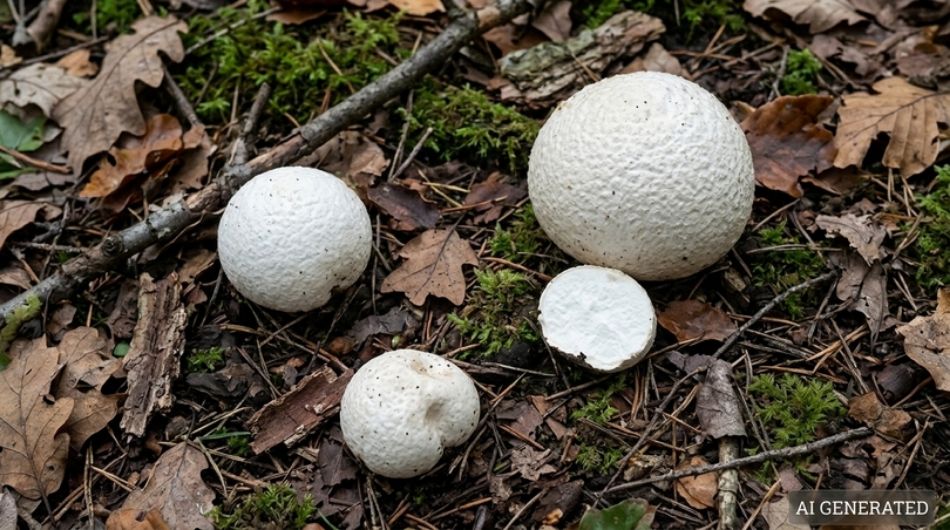
Bovista plumbea, commonly known as the grey puffball or paltry puffball, is a fascinating fungus that packs surprising biological complexity into just a few centimeters. This species, widespread in Europe and other regions of the Northern Hemisphere, represents an ideal meeting point for mushroom enthusiasts, growers, researchers, and simple curious minds who wish to approach the world of mycology with awareness.
In this comprehensive guide, we will explore every aspect of Bovista plumbea: from its unique morphology to identification techniques, from its natural habitat to possibilities for home cultivation, up to its edibility and recipes where it takes center stage, including variations with fresh button mushrooms. The goal is to provide a clear, detailed, and engaging tool capable of transforming a simple walk in the meadows into an opportunity for scientific and culinary discovery.
In this article...
1. Scientific Profile: Taxonomy and Classification of Bovista plumbea
Bovista plumbea was first described by Dutch mycologist Christian Hendrik Persoon in 1795. The genus name Bovista derives from the Latin bos (ox), perhaps referring to the rounded shape and firm texture of young specimens, while the specific epithet plumbea means "lead-colored," a clear reference to the grey-slate hue that the inner peridium assumes at maturity. The species belongs to the family Agaricaceae and the order Agaricales, although its "ball-like" morphology makes it immediately recognizable even to novices.
Historically, puffballs have been the subject of great interest both in gastronomy and ethnobotany. In many European rural traditions, Bovista plumbea was harvested when young and consumed locally, especially in regions where field mycology remains a living and rooted practice today. Its widespread presence in meadows and pastures has helped make it a "familiar" species for entire generations of foragers.
From a research perspective, Bovista plumbea has been studied for its reproductive biology, spore structure, and its role as a saprotroph in grassy soils. Its ability to disperse spores through an apical pore, utilizing wind and mechanical stress, is a classic example of evolutionary adaptation that fascinates biologists. Bovista plumbea is therefore much more than a simple fungus: it is a study model, a local food resource, and an indicator of the health of grassland ecosystems.
2. Detailed Morphology: Fruit Body, Peridium, Gleba, and Spores
The morphology of Bovista plumbea is relatively simple but rich in diagnostic details fundamental for safe identification. The fruit body, technically called the basidiocarp or sporocarp, appears as a globular sphere, sometimes slightly compressed, with a diameter ranging from 1.5 to 4 cm (in some exceptional specimens up to 5 cm). There is no stem: the fungus adheres directly to the substrate via a tuft of mycelial rhizomorphs, thin filaments that anchor the puffball to the grassy soil.
Exoperidium and Endoperidium: Two Envelopes, Two Functions
The outer envelope, called the exoperidium, is white, thin, and fragile. In young specimens, it appears smooth or finely tomentose, but over time it tends to crack into plates and detach, revealing the underlying layer. The endoperidium, on the other hand, is a tougher membrane, papery to the touch, which at maturity assumes the characteristic lead-grey color (from which the name plumbea derives). It is this inner layer that, once mature, opens at the apex through a small pore to allow the release of spores. The presence of two well-differentiated layers is one of the main distinguishing features of the species.
Gleba: The Heart of the Puffball
Inside the fruit body lies the gleba, a mass that in young specimens is white, firm, and homogeneous, similar to fresh cheese. With maturation, the gleba first becomes yellowish, then olive-brown, and finally brown-powdery, transforming into a mass of spores. The edible phase of Bovista plumbea coincides exclusively with the stage where the gleba is completely white and compact: any yellow, greenish, or brown tint indicates that the fungus is in advanced maturation and is no longer suitable for consumption.
Spores and Microscopic Apparatus
The spores of Bovista plumbea are oval, thick-walled, almost smooth, with dimensions between 5.0 and 6.5 µm in length and 4.0 and 5.5 µm in width. They feature a central lipid droplet and a pedicel of 7.5–11.5 µm. The structure of the spores and the capillitium (the set of sterile hyphae accompanying the spores) is a further element of microscopic identification, useful especially for distinguishing Bovista plumbea from congeneric species such as Bovista nigrescens.
| Characteristic | Description |
|---|---|
| Shape | Globular, spherical, or slightly compressed |
| Diameter | 1.5–4 (5) cm |
| Stem | Absent; anchorage via mycelial rhizomorphs |
| Exoperidium | White, thin, fragile, cracks into plates |
| Endoperidium | Lead-grey, papery, opens with apical pore |
| Gleba | White and firm when young; then yellowish, olive, brown, and powdery |
| Spores | 5.0–6.5 × 4.0–5.5 µm, oval, almost smooth |
3. Habitat and Distribution: Where the Grey Puffball Grows
The habitat of Bovista plumbea is one of the aspects that makes it so accessible to foragers: this species prefers open, grassy, and sunny environments. It is a helophilous species, meaning light-loving, and its fruiting is strictly associated with meadows, pastures, forest clearings, gardens, urban parks, fallow fields, and even edges of dirt roads. It shows no particular altitudinal preferences: it can be found both in plains and mountains, provided the soil is grassy and well-drained.
The geographical distribution of Bovista plumbea is wide: it is common throughout Europe, from the United Kingdom to the Iberian Peninsula, up to Eastern Europe, and is also found in North America (particularly in California) and in some regions of Asia. In Italy, it is reported in practically all regions, with greater frequency in hilly and plain areas characterized by stable meadows and pastures. Its ubiquity is evidenced by numerous records in international mycological databases such as Encyclopedia of Life (EOL) and GBIF.
An interesting aspect is that Bovista plumbea tends to fruit in large groups, forming colonies that can extend widely within meadows. It rarely appears as a solitary specimen. This gregarious behavior facilitates observation and harvesting but requires careful attention to distinguish young edible specimens from those that are already mature. The fruiting period ranges from spring to autumn, with peaks in summer and early autumn, depending on climatic conditions and precipitation.
4. Ecology and Role in the Ecosystem
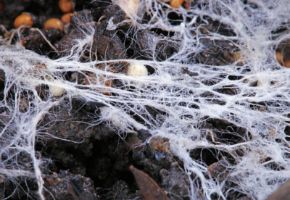
Bovista plumbea is a saprotrophic fungus, meaning it feeds on decomposing organic matter. Its mycelium colonizes the superficial layers of grassy soil, contributing to the degradation of plant residues, dead roots, and humus. In this sense, the species plays an important ecological role: it participates in the nutrient cycle and improves soil structure, favoring the availability of minerals for surrounding herbaceous plants.
Its presence in a meadow is often considered an indicator of good soil health, although the species is quite adaptable and tolerates poor and disturbed soils as well. The ability to disperse spores via wind, exploiting the apical pore that opens at maturity, is an adaptation that allows Bovista plumbea to rapidly colonize new grassy environments. The spores, light and resistant, can be transported over considerable distances, contributing to the spread of the species on a local and regional scale.
Another relevant ecological aspect is the indirect symbiosis with grazing animals: trampling and grazing keep the grass cover low and sparse, creating ideal conditions for the fruiting of the grey puffball. It is no coincidence that the species is particularly abundant in pastures and periodically mowed meadows. Bovista plumbea is thus a silent witness to the balance between human activity and nature, and its observation can become a pretext to reflect on the biodiversity of our everyday landscapes.
5. Edibility and Safety: When and How to Consume It
The edibility of Bovista plumbea is a topic that deserves great attention. The species is considered edible only when the internal gleba is completely white, firm, and homogeneous. In this phase, the fungus has a compact texture and a delicate flavor, which lends itself well to simple preparations such as breading and frying. However, it is crucial to emphasize that harvesting mushrooms for consumption always requires precise knowledge of the species and possible confusions.
Several authors and mycological sources describe Bovista plumbea as a "good but low-value" edible due to its small size and the speed with which the gleba matures and becomes powdery. Some sources even define it as having "no culinary value," preferring other larger and fleshier puffball species. However, in the local tradition of many Italian regions, the grey puffball is still harvested and consumed, especially breaded and fried, when specimens are young and the gleba is snow-white.
Golden Rule: If the gleba is not perfectly white, the fungus must be discarded. Any yellowish, greenish, or brown tint indicates that spores are maturing and the fungus is no longer edible. Furthermore, it is essential not to confuse Bovista plumbea with toxic or poisonous species growing in the same environments, such as some Scleroderma (earthstars with dark, compact gleba) or the juvenile forms of Amanita (so-called "eggs"), which may have a globular appearance but are deadly. Certainty of identification is the first step toward safe consumption.
To deepen aspects of edibility and safety rules, we recommend reading the dedicated sheet on the Fungipedia portal, which offers a detailed overview of the species' characteristics and its culinary evaluations.
6. How to Identify Bovista plumbea: Comparison with Similar Species
Identifying Bovista plumbea requires attention, especially when harvesting young specimens, since the globular shape and white color can be misleading. Here are the main features to observe:
- Small size: 1.5–4 cm in diameter, rarely larger.
- Absence of a stem: the fungus rests directly on the ground via rhizomorphs.
- Double envelope: white and fragile exoperidium, lead-grey and papery endoperidium.
- White and firm gleba in young specimens; then yellowish, olive, brown, and powdery.
- Apical opening: the mature endoperidium opens with a small pore to release spores.
Species with which Bovista plumbea may be confused include:
| Species | Main Differences | Notes |
|---|---|---|
| Bovista nigrescens | Thinner exoperidium, brown endoperidium instead of lead-grey; less common. | May be confused, but the endoperidium color is decisive. |
| Bovista dermoxantha | Smoother surface when young, absence of basal mycelial cord. | Related species, sometimes considered a synonym or variety. |
| Lycoperdon pratense | Larger size and presence of a sterile base similar to a stem. | Different genus, but similar habitat. |
| Scleroderma spp. | Dark gleba (blackish or violet) even when young, hard texture. | Toxic: absolutely avoid. |
| Amanita spp. (eggs) | Globular shape but with volva and ring (if developed); non-powdery gleba. | Deadly: distinction requires experience. |
For a visual and scientific comparison, you can consult the sheet on MykoWeb, which documents the species with accurate photographs and descriptions.
7. Home Cultivation: Tools and NaturNext.eu Kits
Home mushroom cultivation is a rapidly growing practice, supported by the availability of ready-to-use kits and accessible technologies. Although Bovista plumbea is not among the most commonly cultivated species at home (its yield is limited and harvesting is better suited to field research), interest in domestic mycology is driving many enthusiasts to experiment with saprotrophic species and create controlled environments for fruiting.
In this context, NaturNext.eu offers a range of products designed for those who wish to approach mushroom cultivation with professional and reliable tools. Among the flagship products:
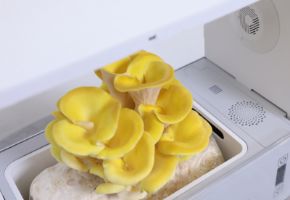
- Grow Box Basic: a state-of-the-art grow box that allows control of all environmental parameters (humidity, temperature, light, ventilation) for optimal mushroom growth. Compact dimensions (18×37×29.5 cm) and included USB-C cable.
- Starter Kit: combines the Grow Box with a substrate already inoculated for Pleurotus, offering a complete package to start immediately.
- Pleurotus Polmonarius Substrate: inoculated substrate ready for fruiting, ideal for those wanting to try their hand at gourmet mushroom cultivation.
Even though Bovista plumbea prefers meadows and is not a typical "kit species," the approach to home cultivation can represent an excellent training ground for understanding fungal biological cycles, humidity and light management, and the nutritional needs of mycelium. Experimentation with different species enriches the cultivator's knowledge base and paves the way for more ambitious projects, such as creating controlled micro-grassy environments for the fruiting of meadow species.
8. Recipes and Variations: From Breaded Puffball to Fresh Button Mushrooms
Bovista plumbea in the kitchen expresses its best when young and the gleba is still white and compact. The most classic and appreciated preparation is undoubtedly the breaded and fried puffball, a recipe passed down from peasant tradition that enhances the delicacy of the fungus and its texture similar to fresh cheese. Puffballs are cut into thick slices, dipped in beaten egg and breadcrumbs, and fried in hot oil until golden. The result is a dish crispy outside and soft inside, perfect as an appetizer or side dish.
Another very interesting variation is the breaded puffball with green sauce, a typical recipe from South Tyrol that pairs the crunchiness of the breading with a fresh herb-based sauce. The recipe, available on the Merano e dintorni portal, involves the use of fresh herbs, garlic, oil, and vinegar, and can also be prepared with other mushrooms, such as fresh button mushrooms or parasol mushrooms.
And it is precisely fresh button mushrooms that open a tasty chapter: many recipes designed for Bovista plumbea can be adapted to button mushrooms, which offer higher yields and easier availability. Fresh button mushrooms, with their delicate flavor and fleshy texture, lend themselves to being breaded and fried, or cooked in a pan with garlic and parsley, or used to fill pies and omelets. The versatility of fresh button mushrooms allows for experimentation in the kitchen even when the grey puffball is unavailable, keeping alive the connection with mycological tradition.
Other ideas for using Bovista plumbea in the kitchen include:
- Puffball carpaccio: thin slices of young fungus dressed with oil, lemon, salt, and pepper, garnished with zucchini and tomatoes.
- Puffball skewers: fungus cubes threaded onto skewers and grilled, with the addition of aromatic herbs.
- Pan-fried puffball: sautéed with garlic, oil, and a splash of white wine, served as a side dish.
- Puffball croquettes: combining the fungus pulp with a thick béchamel and passing the mixture in breadcrumbs before frying.
These simple and tasty preparations allow you to appreciate Bovista plumbea at its best and approach mushroom cuisine with creativity and respect for the raw material.
9. Frequently Asked Questions (FAQ)
| Is Bovista plumbea poisonous? |
| How do you recognize a mature Bovista plumbea? |
| Can Bovista plumbea be grown at home? |
| What are the main dangerous confusions? |
| Can I use button mushrooms instead of Bovista in recipes? |
Bovista plumbea Between Science, Cuisine, and Respect for Nature
Bovista plumbea, with its discreet elegance and extraordinary adaptability, represents an ideal bridge between the world of mycological research and the daily passion of foragers and enthusiasts. We have explored its unique morphology, the habitat of sunny meadows, the rules of safe and conscious edibility, and the recipes where it takes center stage, including variations with fresh button mushrooms. Whether it's a walk in the fields or a home cultivation experiment with kits from NaturNext.eu, the grey puffball reminds us that knowledge is the first ingredient for an authentic and safe relationship with the kingdom of fungi. Let us continue to observe, study, and respect these extraordinary organisms: every outing into the field is an opportunity to learn something new and to pass on a mycological culture rooted in curiosity and responsibility.
This article was developed with the support of artificial intelligence and subsequently reviewed, corrected, and validated by the technical team of NaturNext.eu, which guarantees its reliability and compliance with official sources.
The kingdom of fungi is a constantly evolving universe, with new scientific discoveries emerging every year regarding their extraordinary benefits for gut health and general well-being. From now on, when you see a mushroom, you won't just think about its taste or appearance, but about all the therapeutic potential it holds within its fibers and bioactive compounds. ✉️ Stay connected - Subscribe to our newsletter to receive the latest studies on: Nature offers us extraordinary tools to take care of our health. Fungi, with their unique balance between nutrition and medicine, represent a fascinating frontier that we are only beginning to explore. Keep following us to discover how these extraordinary organisms can transform your approach to well-being.Continue your journey into the world of fungi